

Japan Handicrafts Market Size & Forecast:
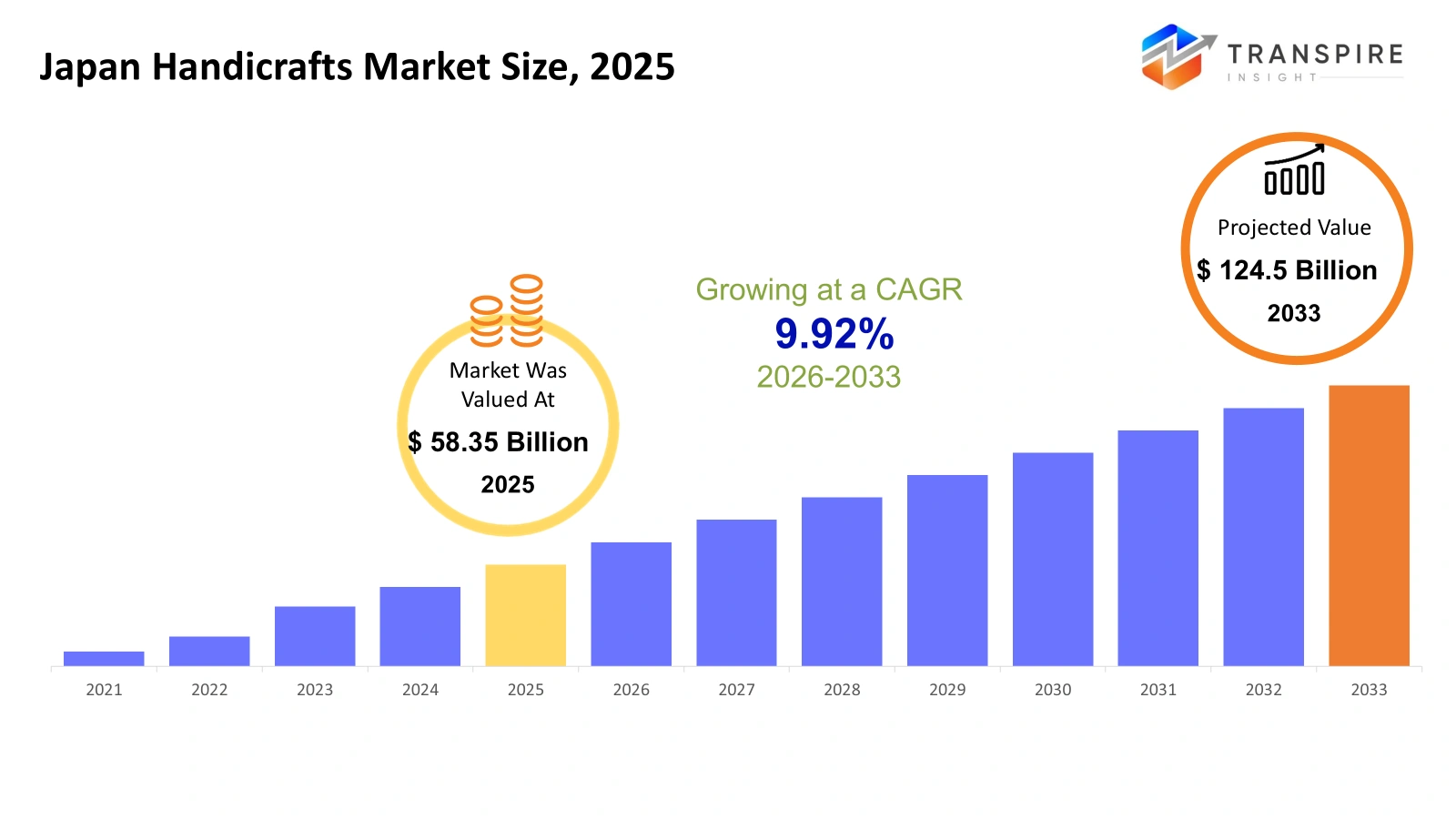
- Japan Handicrafts Market Size 2025: USD 58.35 Billion
- Japan Handicrafts Market Size 2033: USD 124.5 Billion
- Japan Handicrafts Market CAGR: 9.92%
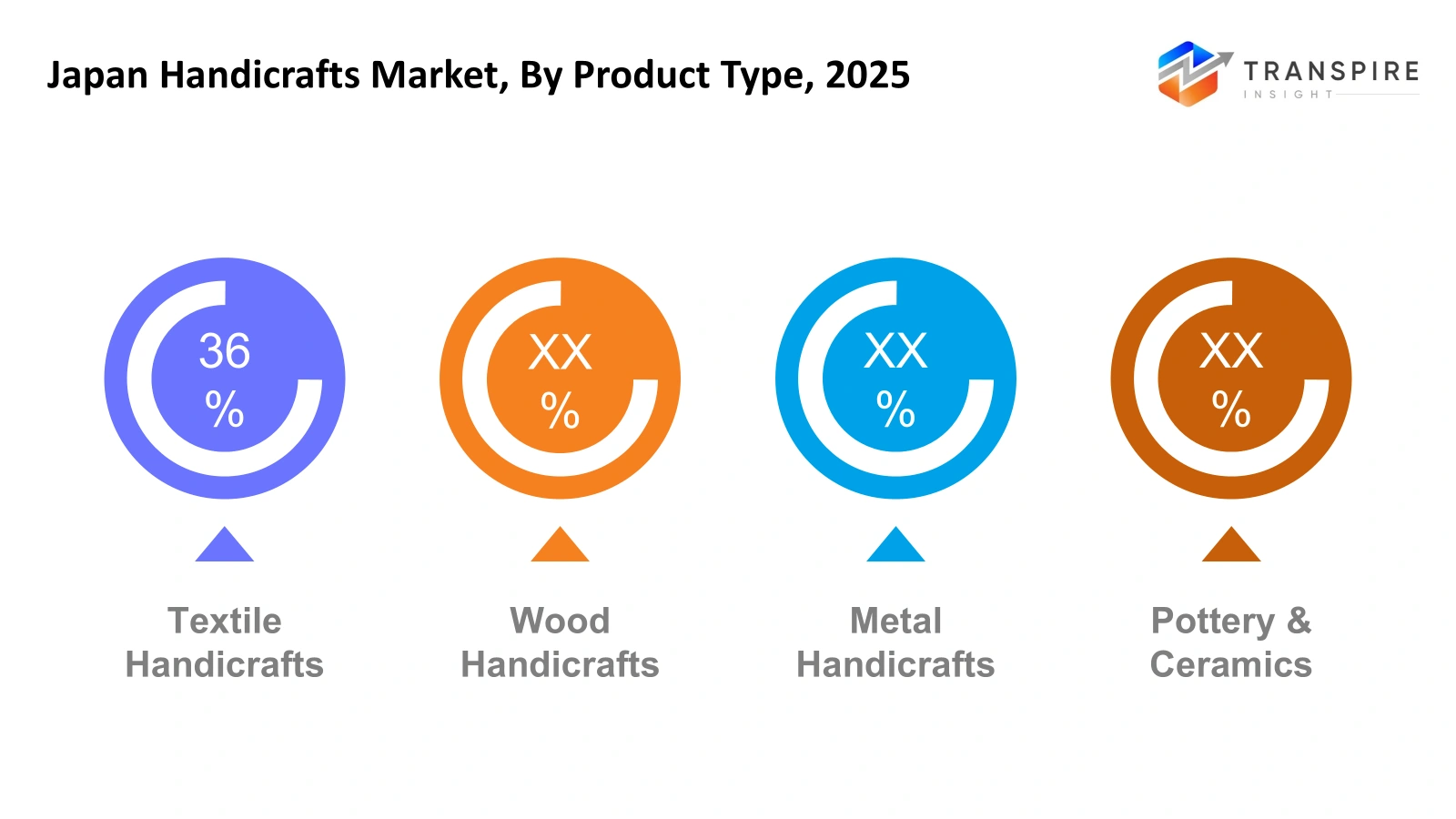
- Japan Handicrafts Market Segments:By Product Type (Textile Handicrafts, Wood Handicrafts, Metal Handicrafts, Pottery & Ceramics), By Distribution Channel (Retail Stores, Online Platforms, Exhibitions).
To learn more about this report,  Download Free Sample Report
Japan Handicrafts Market Summary:
The Japan Handicrafts Market size is estimated at USD 58.35 Billion in 2025 and is anticipated to reach USD 124.5 Billion by 2033, growing at a CAGR of 9.92% from 2026 to 2033. Japan's handicrafts market displays its full beauty through traditional craftsmanship, which has been practised for centuries, and contemporary design preferences. The artisanal products, which include delicate pottery, hand-woven textiles and intricately carved woodwork, demonstrate authentic artistic expression through their meticulous craftsmanship. The global market for Japanese handicrafts has expanded because collectors and environmentally aware consumers show increasing interest in these sustainable products. The market for handmade products continues to grow because people increasingly appreciate these items, which help maintain traditional skills for future use.
Key Market Trends & Insights:
- The worldwide demand for authentic handmade products has increased because consumers now prefer Japanese handicrafts which showcase their traditional craftsmanship and cultural value.
- Artisans create modern products that attract contemporary customers through their combination of traditional techniques and current design elements, which maintain their authentic cultural identity.
- Online platforms have opened global access to local artisans who operate small workshops because they can now serve international customers who value their exceptional high-quality handicrafts.
- The buyers display growing interest toward eco-friendly materials together with sustainable production methods, which enable them to buy products that match their moral purchasing patterns while supporting traditional craftsmen.
- Handicrafts function as important keepsakes for tourists who visit Japan's heritage sites because these items help increase sales in local markets while they support the preservation of regional cultural heritage.
- The rising trend of partnerships between traditional craftsmen and contemporary designers enables the creation of new products which help expand market access while maintaining traditional artistic methods.
- Consumers and institutions have increased their interest in protecting endangered craft techniques, which has resulted in government funding for workshops and cultural education programmes.
Japan Handicrafts Market Segmentation
By Product Type
- Textile Handicrafts: Japanese textile handicrafts, which include kimono fabrics and handwoven scarves and embroidered items, demonstrate centuries of cultural artistic heritage. The products establish Japan's handicraft identity through their combination of heritage and craftsmanship and sustainable textile materials, which attract both domestic and international customers.
- Wood Handicrafts: Japanese wood handicrafts showcase their technical expertise through wooden carvings and furniture production, which demonstrates their ability to execute precise joinery techniques and demonstrate meticulous craftsmanship. The artisans select premium wood materials that deliver both visual appeal and practical use. The rising demand for sustainable handmade wooden home decor has created a market for domestic customers and collectors who want genuine cultural artifacts.
- Metal Handicrafts: Japanese metal handicrafts, which include samurai replicas and decorative items and jewelry, demonstrate advanced forging, engraving, and casting skills. The products combine traditional artistic skills with contemporary design elements, which attract customers who value both durability and sophisticated design and cultural traditions. The limited edition products draw collectors from all over the world.
- Pottery & Ceramics: Japanese pottery and ceramics, including Kutani ware and Raku pottery, display traditional Japanese artistic techniques through their distinctive glazes and hand-painted patterns, which have existed for centuries. These handcrafted products function as practical items while maintaining decorative appeal, which draws worldwide attention from art enthusiasts, interior designers, and collectors who appreciate timeless artistic quality.
To learn more about this report, Download Free Sample Report
By Distribution Channel
- Retail Stores: Customers at traditional retail stores and specialty handicraft shops can experience direct contact with Japanese craftsmanship through tactile product demonstrations. The outlets operate through three core services, which include curated collections and personalized services and regional specialties that help customers discover artisanal products while supporting local businesses.
- Online Platforms: E-commerce platforms are transforming how Japanese handicrafts reach global audiences. Through online sales channels, artisans present their work to international customers who can access detailed product information and select from various purchasing methods, which enhances their understanding of genuine handmade Japanese crafts.
- Exhibitions: The craft exhibitions and fairs which take place in Japan function as cultural exhibitions. They enable artisans to showcase their original creations while engaging in direct sales to customers. The events increase visibility for traditional techniques which they teach to audiences. This approach helps to generate sustainable interest in Japanese handicrafts
Country Insights
Japan's handicrafts market exists as a permanent business because it has developed through many centuries of cultural heritage which combines traditional artistic methods with contemporary design approaches. The country recognises Kyoto, Kanazawa and Okinawa as special areas because they showcase their distinct crafting methods, which include creating delicate pottery and ceramics and making detailed woodwork and textile arts. Consumers in Japan appreciate these products because they find them beautiful and because the products tell authentic stories about Japanese cultural heritage. The demand from international markets has increased because e-commerce platforms and cultural tourism enable global audiences to find authentic Japanese handmade products. Government programmes and local organisations assist artisans through their efforts to promote craftsmanship and deliver training programmes and safeguard techniques facing extinction. Sustainable practices are becoming more popular because environmentally minded customers choose to purchase natural materials together with ethically crafted products. The handicraft industry in Japan flourishes because it combines the need to protect cultural heritage with the current buying habits of consumers and the worldwide demand for authentic handcrafted goods.
Recent Development News
Made‑in‑Japan artisanal products receive the spotlight in Tokyo shop collaborations.
A traditional Japanese crafts symposium is planned to explore global expansion.
|
Report Metrics |
Details |
|
Market size value in 2025 |
USD 58.35 Billion |
|
Market size value in 2026 |
USD 64.21 Billion |
|
Revenue forecast in 2033 |
USD 124.5 Billion |
|
Growth rate |
CAGR of 9.92% from 2026 to 2033 |
|
Base year |
2025 |
|
Historical data |
2021 – 2024 |
|
Forecast period |
2026 – 2033 |
|
Report coverage |
Revenue forecast, competitive landscape, growth factors, and trends |
|
Country scope |
Japan |
|
Key company profiled |
Minowa Handicrafts, Takumi Craft, Kyoto Traditional Crafts Center, Kinto Co. Ltd., Hakusan Porcelain Co., Yamato Craft Co. Ltd., Kutani Ware Co., Japan Traditional Crafts Aoyama Square, Hida Sangyo Co. Ltd., Noritake Co. Ltd., Kawai Kanjiro Studio, Kihara Porcelain Co., Maruni Wood Industry Inc., Nambu Tekki Company, Hoshino Resorts Craft Division. |
|
Customization scope |
Free report customization (country, regional & segment scope). Avail customized purchase options to meet your exact research needs. |
|
Report Segmentation |
By Product Type (Textile Handicrafts, Wood Handicrafts, Metal Handicrafts, Pottery & Ceramics), By Distribution Channel (Retail Stores, Online Platforms, Exhibitions). |
Key Japan Handicrafts Company Insights
The top Japanese handicraft companies today use their traditional craftsmanship methods to create products which they sell to customers in their home country and all worldwide markets. The companies protect traditional methods of production while they develop new products which include enhanced design features and superior quality and environmentally friendly components. Artisans work together with designers and e-commerce platforms to create online marketplaces which enable them to reach new collectors who have developed an interest in their work. Companies use storytelling methods to present their product heritage, which establishes emotional bonds with customers while building brand loyalty and preserving Japan's valuable handicraft traditions.
Company List
- Minowa Handicrafts
- Takumi Craft
- Kyoto Traditional Crafts Center
- Kinto Co. Ltd.
- Hakusan Porcelain Co.
- Yamato Craft Co. Ltd.
- Kutani Ware Co.
- Japan Traditional Crafts Aoyama Square
- Hida Sangyo Co. Ltd.
- Noritake Co. Ltd.
- Kawai Kanjiro Studio
- Kihara Porcelain Co.
- Maruni Wood Industry Inc.
- Nambu Tekki Company
- Hoshino Resorts Craft Division.
Japan Handicrafts Market Report Segmentation
By Product Type
- Textile Handicrafts
- Wood Handicrafts
- Metal Handicrafts
- Pottery & Ceramics
By Distribution Channel
- Retail Stores
- Online Platforms
- Exhibitions
Frequently Asked Questions
Find quick answers to common questions.
The approximate Japan Handicrafts market size for the Market will be USD 124.5 Billion in 2033.
The key segments of the Japan Handicrafts market are By Product Type (Textile Handicrafts, Wood Handicrafts, Metal Handicrafts, Pottery & Ceramics), By Distribution Channel (Retail Stores, Online Platforms, Exhibitions).
Major players in the Japan Handicrafts market are Minowa Handicrafts, Takumi Craft, Kyoto Traditional Crafts Center, Kinto Co. Ltd., Hakusan Porcelain Co., Yamato Craft Co. Ltd., Kutani Ware Co., Japan Traditional Crafts Aoyama Square, Hida Sangyo Co. Ltd., Noritake Co. Ltd., Kawai Kanjiro Studio, Kihara Porcelain Co., Maruni Wood Industry Inc., Nambu Tekki Company, Hoshino Resorts Craft Division.
The current market size of the Japan Handicrafts market is USD 58.35 Billion in 2025.
The Japan Handicrafts Market CAGR is 9.92%.
- Minowa Handicrafts
- Takumi Craft
- Kyoto Traditional Crafts Center
- Kinto Co. Ltd.
- Hakusan Porcelain Co.
- Yamato Craft Co. Ltd.
- Kutani Ware Co.
- Japan Traditional Crafts Aoyama Square
- Hida Sangyo Co. Ltd.
- Noritake Co. Ltd.
- Kawai Kanjiro Studio
- Kihara Porcelain Co.
- Maruni Wood Industry Inc.
- Nambu Tekki Company
- Hoshino Resorts Craft Division.
Recently Published Reports
-
Apr 2026
Bottled Water Market
Bottled Water Market Size, Share & Analysis Report By Product Type (Still Bottled Water, Carbonated Bottled Water, Functional Bottled Water, and Others), By Packaging (PET, Cans, and Others), By Sales Channel (Supermarkets/Hypermarkets, Convenience Stores/Drug Stores, Grocery Stores/Club Stores, Foodservice, and Others) and Geography (North America, Europe, Asia-Pacific, Middle East and Africa, South and Central America), 2021 - 2032
-
Apr 2026
Color Cosmetic Packaging Market
Color Cosmetic Packaging Market Size, Share & Analysis Report By Application (Mascara Packaging, Liquid Packaging, and Liquid Face), By Type (Tubes & Bottles, Pens & Markers, Compacts & Containers, and Droppers & Pumps), and Geography (North America, Europe, Asia-Pacific, Middle East and Africa, South and Central America), 2021 - 2031
-
Apr 2026
External Microphone For Camera Market
External Microphone For Camera Market Size, Share & Analysis Report By Type (Shotgun Microphone, Lavalier Microphone, and Others), By Application (Digital Camera, Professional Video Camera, and Others), and Geography (North America, Europe, Asia-Pacific, Middle East and Africa, South and Central America), 2021 - 2031
-
Apr 2026
Foot Orthotic Insoles Market
Foot Orthotic Insoles Market Size, Share & Analysis Report By Type (Pre-fabricated, and Custom-made), By Material (Thermoplastic, Composite Carbon Fiber, and Others), By Distribution Channel (Drug Stores, Hospitals & Clinics, and Others), and Geography (North America, Europe, Asia-Pacific, Middle East and Africa, South and Central America), 2021 - 2031