

Industrial Air Compressors Market Summary:
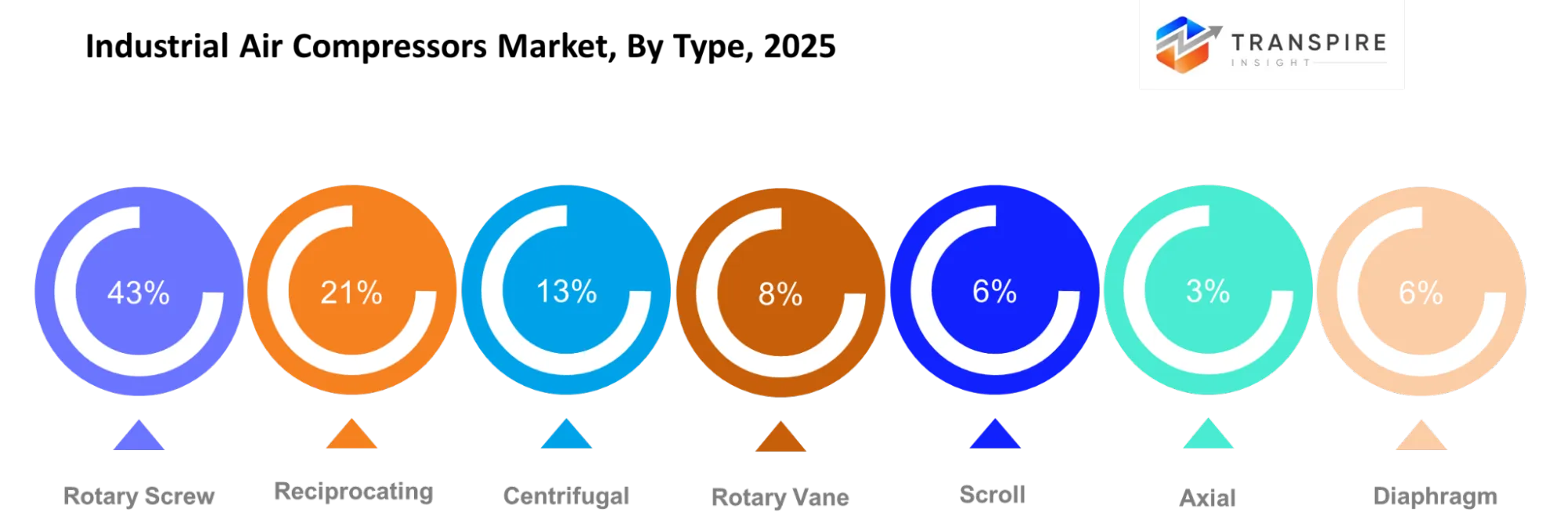
According to Transpire Insight, a detailed research report on the market reflects that the rotary screw compressors application segment dominates the Industrial Air Compressors Market, accounting for approximately 45% of the total market share worldwide. Atlas Copco AB leads the market with approximately (around USD 17.4 billion) in annual revenue and an estimated 12-16% market share, making it a leading contributor to market development, innovation, advanced industrial air compressor production, expanding manufacturing capabilities, and growth dynamics.
Market Snapshot
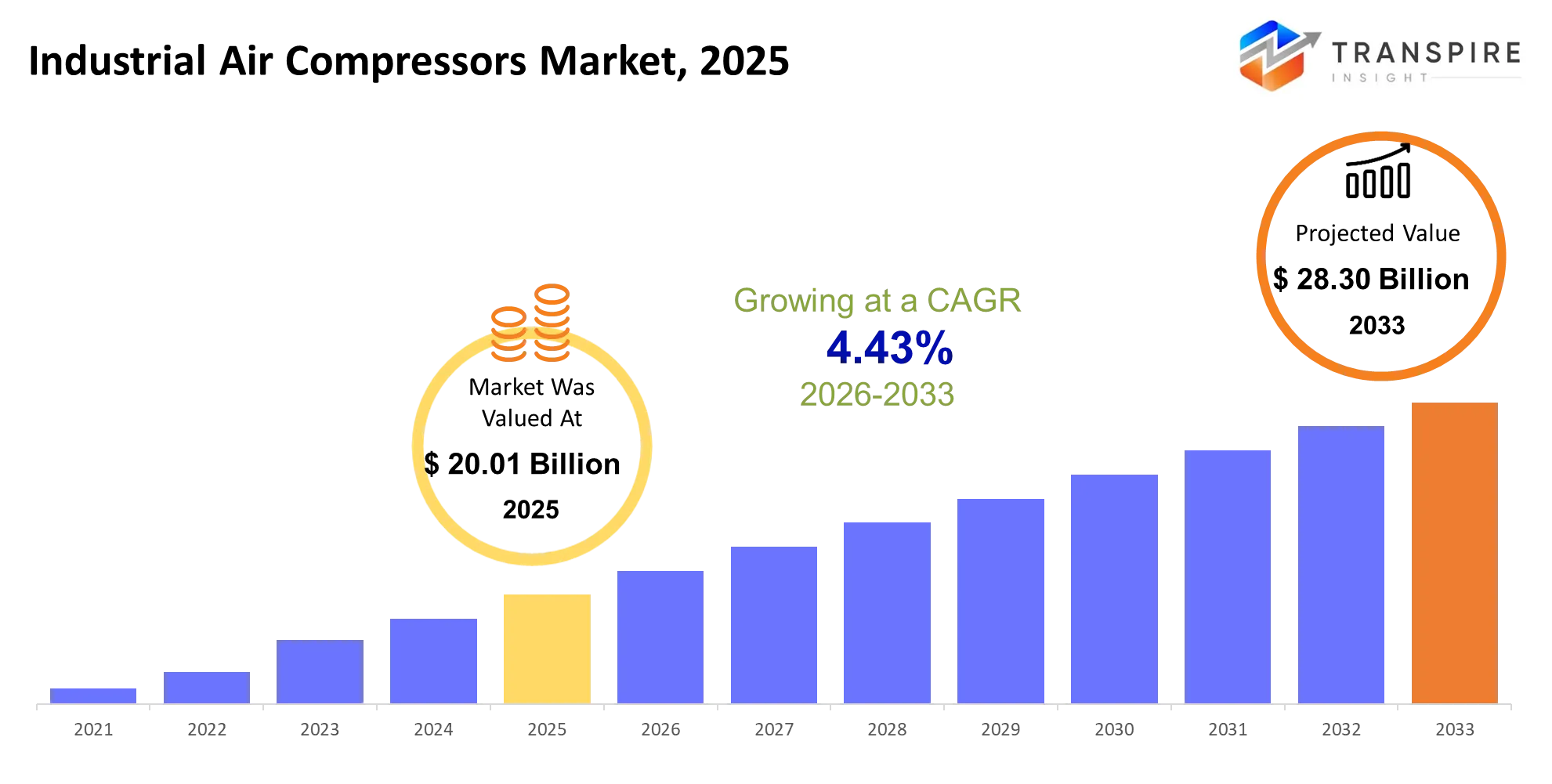
- Market Value (2025): USD 20.01 Billion.
- Expected Market Value (2026): USD 20.90 Billion.
- Estimated Market Value (2033): USD 28.30 Billion.
- Forecast CAGR (2026-2033): 4.43%
- Leading Region in 2025: Asia Pacific
- Second-largest Region: North America
- Fastest Growing Region: Europe
Introduction
Industrial Air Compressors Market is defined by the market of manufacturing and usage of heavy machinery equipment that converts power energy (electrical, diesel or gasoline) into potential energy in the form of compressed air. Such industrial air compressors are needed to provide constant high capacity of compressed air needed to drive pneumatic tools, robotics and assembly line operations in heavy industry. Industrial Air Compressor is defined as heavy duty machinery equipment of high capacity that operates either on continuous cycles or high volume cycles at commercial establishments. Contrary to the consumer grade equipment, industrial air compressors have a capacity of from 5 to 1,000 horsepower with standard pressures of 7 bars to 13 bars. Industrial air compressors have many advantages through their efficiency in energy usage, continuous operation, and increase in productivity, performance in maintenance, and compressed air quality. The new generations of air compressors, including rotary screw and Variable Speed Drive (VSD) air compressors, are designed in such a way that they make the most efficient use of power, which results in less costs of operation. Continuous duty air compressors help the industries to operate continuously with constant compressed air supply. These compressors work to drive pneumatic tools, assembly lines, robots, and material handling devices. Rotary and screw compressors use few parts that get worn out during operation, which makes maintenance easier.
For instance:- The North American Air Compressor Market is fueled by robust investment in industries such as manufacturing, oil & gas, and infrastructure. The growth is centered around energy-efficient, oil-free and IoT-based smart compressors. Government and corporate initiatives for sustainability also drive the adoption of newer technologies in place of traditional ones.
Market Highlights: -
- Asia Pacific is anticipated to hold almost 42% share of the Industrial Air Compressors Market over the predicted timeframe.
- North America is expected to grow at a rapid CAGR in the Industrial Air Compressors Market by holding almost 23% of the share during the forecast period.
- Europe is anticipated to hold almost 20% share of the Industrial Air Compressors Market over the predicted timeframe.
- By pressure, the Medium Pressure segment dominated the market and holds nearly 43% share in 2025 and is projected to grow at a substantial CAGR during the forecast period.
- By application, the Oil & Gas segment dominated the market and holds nearly 30% share in 2025 and is projected to grow at a substantial CAGR during the forecast period.
- By end user, the Manufacturing segment dominated the market and holds nearly 23% share in 2025 and is projected to grow at a substantial CAGR during the forecast period.
- White Goods (Air Conditioners and LED Lights): The ₹6,238 crore Production Linked Incentive (PLI) Scheme in India is aimed at supporting the manufacturing of components within the country until FY 2028-29, including the manufacturing of air-conditioner compressors. Capacity for manufacturing compressors raised from 1 million units in 2021 to 10 million units in 2025-26.
How is Technology Driving Growth in the Industrial Air Compressors Market?
The Industrial Air Compressors Industry is developing through efficient and connected technologies. The Variable Speed Drive (VSD) compressor is designed in such a way that it adjusts the speed of the motor based on the need of air, hence promoting efficiency and lower operation costs. The IIoT sensors monitor real-time pressure, temperature, vibration, and energy consumption data, thus allowing for predictive maintenance and reducing any unexpected breakdowns. The advanced technology oil-free compressors are becoming popular in the pharmaceutical industry, food processing, among others. This development is facilitated by high air quality standards in such sectors. Also, waste heat recovery captures the heat generated during the process of compressing and utilizes it for water heating and industrial processes.
|
Report Metrics |
Details |
|
Market size value in 2025 |
USD 20.01 Billion |
|
Market size value in 2026 |
USD 20.90 Billion |
|
Revenue forecast in 2033 |
USD 28.30 Billion |
|
Growth rate |
CAGR of 4.43% from 2026 to 2033 |
|
Base year |
2025 |
|
Historical data |
2021 - 2024 |
|
Forecast period |
2026 - 2033 |
|
Report coverage |
Revenue forecast, competitive landscape, growth factors, and trends |
|
Regional scope |
United States; Canada; Mexico; United Kingdom; Germany; France; Italy; Spain; Denmark; Sweden; Norway; China; Japan; India; Australia; South Korea; Thailand; Brazil; Argentina; South Africa; Saudi Arabia; United Arab Emirates |
|
Key company profiled |
Atlas Copco, Ingersoll Rand, Siemens, Hitachi, Kaeser Compressors, Gardner Denver, Sullair, Elgi Equipments, Kobelco, Quincy Compressor, BOGE, FS-Curtis, Campbell Hausfeld, Doosan Portable Power, Chicago Pneumatic |
|
Customization scope |
Free report customization (country, regional & segment scope). Avail customized purchase options to meet your exact research needs. |
|
Report Segmentation |
By Type (Reciprocating, Rotary Screw, Rotary Vane, Centrifugal, Scroll, Axial, Diaphragm, Others); By Pressure (Low Pressure, Medium Pressure, High Pressure, Ultra-high Pressure, Oil-free, Oil-lubricated, Variable Pressure, Others); By Application (Manufacturing, Oil & Gas, Food & Beverage, Healthcare, Automotive, Chemicals, Mining, Others); By Lubrication (Oil-filled, Oil-free, Water-lubricated, Dry-running, Synthetic-lubricated, Mineral-oil, Food-grade, Others); By Drive (Electric, Diesel, Gas, Hydraulic, Pneumatic, Hybrid, Direct-drive, Others); By Capacity (Below 50 HP, 50-100 HP, 100-250 HP, 250-500 HP, 500-1000 HP, Above 1000 HP, Variable Capacity, Others); By End User (Industrial, Commercial, Manufacturing, Energy, Construction, Transportation, Healthcare, Others) |
Market Drivers
The Industrial Air Compressor Market is being fueled by growing demand for energy efficiency, industrial automation, contamination-free compressed air, and growth in manufacturing activities. Stringent energy efficiency norms are prompting industries to upgrade old compressors with variable speed and efficient compressors that help cut down power usage. With the increase in adoption of smart factories, automated production lines, and pneumatic machines, there is continuous need for efficient compressed air in the manufacturing industry. The growing use of oil-free compressors in the pharmaceuticals, food and beverages industries is owing to stringent air quality norms. Alongside this, the process of industrialization and growth in manufacturing infrastructure in Asia Pacific, including the Make in India initiative in India, is creating new avenues for industrial air compressors players. There are various advantages that industrial air compressors can offer due to their efficiency when it comes to energy savings, automation, contamination, and production efficiency. Through the use of the Variable-Speed Drive (VSD), industrial air compressors adapt to the actual demand for air and prevent unnecessary energy wastage. Industrial automation, along with IoT-based monitoring, helps monitor various parameters such as pressure, temperature, vibrations, and the condition of equipment. There are no contamination problems in the case of oil-free compressors since they are suitable for industries such as pharmaceuticals, foods and beverages, and others where contamination can cause harm. Modern stationary compressors provide high-pressure compressed air for robotic and automated machines.
For Instance: -
- The South African market for industrial air compressors is experiencing steady growth due to increasing investments in mining, manufacturing, and infrastructure developments. The market growth depends significantly on heavy stationary compressors and energy-efficient systems. Growing investments in smart cities projects drive the national industrial adoption of the technology.
- As per IndexBox, the market for industrial compressors in Russia is characterized by new investments in petrochemical, gas processing, and industrial automation segments and a focus on energy efficiency and modernization.
Restrain
Restraining factors for the Industrial Air Compressors Market include huge energy losses due to compressed air leakages, substantial investments needed for purchasing compressors, and maintenance expenses. Lack of funds by small- and medium-sized enterprises will result in delayed upgrades and digitalization. Stringent environmental policies and noise pollution policies will add to the expenses of compliance. Supply chain problems may limit access to compressors.
|
Driver |
Relative Impact on Growth (%) |
Geographic Relevance |
Impact Timeline |
Demand Strength |
Growth Mechanism |
Key Beneficiaries |
Major Constraint |
|
Driver 1: Rising Industrial Energy-Efficiency Requirements |
30% |
Europe, North America, Asia Pacific |
Long-term |
High |
Lowers electricity consumption through efficient compressor technologies |
Compressor manufacturers, energy-service providers, industrial users |
High upfront costs delay replacement decisions |
|
Driver 2: Expansion of Manufacturing and Industrial Automation |
25% |
Asia Pacific, North America, Europe |
Medium-term |
High |
Expands compressed-air demand across automated production facilities |
Compressor manufacturers, automation vendors, manufacturers |
Manufacturing investment cycles remain economically sensitive |
|
Driver 3: Adoption of VSD and Smart Compressor Technologies |
18% |
North America, Europe, Asia Pacific |
Medium-term |
High |
Matches compressor output with real-time air demand |
Technology vendors, compressor OEMs, industrial end users |
Integration costs constrain smaller industrial facilities |
|
Driver 4: Growing Demand for Oil-Free Compressed Air |
15% |
Europe, North America, Asia Pacific |
Long-term |
High |
Prevents contamination across critical production processes |
Oil-free compressor OEMs, food, pharmaceutical, electronics industries |
Premium equipment prices restrict broader adoption |
|
Driver 5: Government-Led Manufacturing and Industrial Investments |
12% |
Asia Pacific, particularly India and China |
Medium-term |
Medium |
Creates new factories requiring reliable compressed-air infrastructure |
Equipment manufacturers, distributors, industrial contractors |
Policy incentives and investments vary across countries |
Analysis of Prices and Consumer Behaviour
The industrial air compressor market is led by rotary/screw compressors (47.0% of total market size; mainly because of the continuous nature of the product, its compact size, reliability, and applicability to harsh environments). Energy-efficient, variable speed and digital monitoring of compressors is more expensive than regular systems because such products have advanced control, drive technologies and monitoring capabilities. About 40.5% of industrial air compressor consumption comes from the manufacturing sector. Sales volumes depend on the wide range of applications of compressed air, including pneumatic tools, automation equipment, manufacturing lines, material handling processes. In terms of consumption, the manufacturing sector occupies about 40.5% of market share and is the largest end-user segment. The buying process of industrial consumers shows that energy efficiency, reliability, and life cycle costs are among the key factors in choosing a compressor system. The key factor in choosing industrial equipment is long-term service, maintenance, and life cycle agreements because industrial users try to avoid downtime and ensure a constant supply of compressed air in their facilities.
|
Investment Factor |
Why It Matters to Investors |
Opportunity |
Investment Implication |
|
Energy-Efficiency Replacement Cycle |
High operating energy consumption makes lifecycle cost a major purchasing criterion and supports replacement of inefficient legacy systems. |
Variable-speed drive compressors, efficient controls, leak-management solutions, heat recovery, and system optimization. |
Short-Medium Term: Strong retrofit and replacement potential; investors should favor suppliers with measurable energy-performance differentiation. |
|
Oil-Free & High-Purity Compressors |
Pharmaceutical, food & beverage, electronics, and other contamination-sensitive applications require stringent air-quality performance. |
Premium oil-free systems, filtration, dryers, monitoring, and integrated air-treatment solutions. |
Medium-Long Term: Higher-value applications can support product differentiation and stronger solution-level economics than commoditized equipment. |
|
Smart Compressors & Digital Monitoring |
Remote monitoring can improve uptime, maintenance planning, energy management, and equipment utilization, shifting competition toward connected lifecycle solutions. |
IoT sensors, predictive maintenance, cloud monitoring, intelligent controllers, and automated compressor-room optimization. |
Medium-Long Term: Creates opportunities for technology-led differentiation and recurring software/service revenue alongside hardware. |
|
Aftermarket & Service Revenue |
Compressors require maintenance, replacement parts, servicing, audits, and system optimization throughout their operating life. |
Preventive maintenance contracts, spare parts, audits, remote diagnostics, refurbishment, and compressed-air-as-a-service models. |
Short-Long Term: Service-heavy business models can provide recurring revenue and reduce dependence on new-equipment cycles. |
|
Asia-Pacific & Emerging Manufacturing Capacity |
Expanding manufacturing, automation, electronics, automotive, food processing, and infrastructure activity increases demand for reliable compressed-air systems. |
Local manufacturing, distribution networks, localized service centers, and energy-efficient systems across Asia-Pacific and emerging industrial economies. |
Medium-Long Term: Geographic expansion should prioritize industrial clusters where new capacity and equipment modernization occur together. |
|
Manufacturing Automation & Application Diversification |
Compressed air remains integral to automated production equipment, pneumatic systems, assembly, material handling, and process operations. |
Customized compressor packages for automated factories, electronics, automotive, chemicals, packaging, and other process-intensive industries. |
Long Term: Application-specific engineering and integrated solutions can create defensible positions beyond standard compressor sales. |
Who are the Key Players in the Industrial Air Compressors Market and how do they compete?
The competitiveness of the international market of industrial air compressors is determined by companies engaged in development of energy-efficient technologies, industry-specific solutions, and distribution network development worldwide. Competing not only on price but also through the creation of durable devices, energy efficiency, efficient compressor monitoring, variable-speed drives, and integration into industrial automation systems, such an approach to competition results in ongoing development of products and improved efficiency and reliability of enterprises.
Developing intelligent compressed-air solutions, energy-efficient compressors, and monitoring systems, Atlas Copco strengthens its competitive position. Creating powerful industrial compressors that are designed to be used in manufacturing, automotive, food and beverages, health care, and logistics sectors, companies stand out from the competitors. Ingersoll Rand creates its competitive position through provision of integrated compressed-air solutions and technologies and efficient cooperation with industrial production systems and energy management systems.
Top Companies in the Industrial Air Compressors Market
- Atlas Copco
- Ingersoll Rand
- Siemens
- Hitachi
- Kaeser Compressors
- Gardner Denver
- Sullair
- Elgi Equipments
- Kobelco
- Quincy Compressor
- BOGE
- FS-Curtis
- Campbell Hausfeld
- Doosan Portable Power
- Chicago Pneumatic
|
Company |
Est. Revenue Share Range |
Key Offerings |
Strategic Positioning |
Geographic Strength |
Technology Focus |
|
Atlas Copco |
12-16% |
GA/GR rotary screw; ZR/ZT oil-free; VSD compressors; SMARTLINK; air treatment |
leadership through energy-efficient integrated solutions |
Europe, North America, Asia Pacific |
VSD, oil-free compression, IoT monitoring, energy recovery |
|
Ingersoll Rand |
9-13% |
RS/R-Series; Nirvana; Sierra; E-Series; air treatment |
Technology-led portfolio with lifecycle service differentiation |
North America, Europe, Asia Pacific |
VSD, oil-free systems, intelligent controls, remote monitoring |
|
KAESER KOMPRESSOREN |
7-10% |
Rotary screw; oil-free screw; reciprocating; boosters; SIGMA AIR MANAGER |
Premium compressed-air system and efficiency specialist |
Europe, North America, Asia Pacific |
SIGMA Profile, intelligent controls, system optimization, VSD |
|
Hitachi Industrial Equipment Systems |
5-8% |
Oil-flooded screw; oil-free screw; reciprocating; scroll compressors |
Engineering-led solutions combining compressors with digitalization |
Asia Pacific, North America, Europe |
Oil-free compression, IoT, digitalized assets, energy optimization |
|
ELGi Equipments |
3-5% |
EG/EQ/EN; EG PM VFD; OF oil-free; air treatment |
Value-focused expansion with energy-efficient products |
Asia Pacific, Europe, North America |
VFD, PM motors, proprietary airends, oil-free technology |
|
Sullair |
3-5% |
LS Series; TS Series; ShopTek; oil-free compressors; AirLinx |
Reliability-focused industrial compression and service network |
North America, Asia Pacific, Europe |
VSD, AirLinx connectivity, rotary screw airends, controls |
|
Fusheng |
3-5% |
Oil-injected screw; oil-free screw; PM VSD; piston compressors; air treatment |
Broad portfolio with strong Asian manufacturing scale |
Asia Pacific, North America, Europe |
PM VSD, two-stage compression, oil-free systems, digital controls |
|
Kobelco Compressors |
2-4% |
Screw compressors; oil-free compressors; high-pressure systems; airends |
Specialized Japanese engineering and industrial reliability |
Asia Pacific, Japan, North America |
Oil-free screw, high-efficiency airends, VSD, precision controls |
|
Shanghai Hanbell Precise Machinery |
2-3% |
AA6 screw; PM variable-frequency; two-stage; low-pressure; oil-free scroll |
Regional challenger emphasizing screw-compression engineering |
Asia Pacific, Middle East, Europe |
PM motors, frequency conversion, intelligent control, efficient airends |
|
BOGE Kompressoren |
2-3% |
S-Series; SO oil-free; bluekat; reciprocating; turbo compressors |
Specialty positioning around customized clean-air solutions |
Europe, Asia Pacific, Middle East |
Class 0 oil-free, variable-speed drives, heat recovery, air management |
Market Segmentation
The Industrial Air Compressors Market share is divided into seven categories: By type, pressure, application, lubrication, drive, capacity and end user.
The Medium Pressure dominated the market, accounting for nearly 43% in 2025 and is expected to rise at a significant CAGR during the forecast period.
The Industrial Air Compressors Market is segmented by pressure into Low Pressure, Medium Pressure, High Pressure, Ultra-high Pressure, Oil-free, Oil-lubricated, Variable Pressure, Others. Among these, the Medium Pressure segment dominated the market, accounting for nearly 43% in 2025 and expected to increase at a significant CAGR during the forecast period. Medium Pressure is the dominant market segment owing to wide usage in industries including manufacturing, automotive, food processing, pharmaceuticals, and general industrial. The systems offer the best trade-off among operating pressure, energy efficiency, reliability, and equipment costs. The increased industrial automation and need for reliable compressed air systems will continue to drive growth in the forecast period.
The Oil & Gas dominated the market, accounting for nearly 30% in 2025, and is expected to rise at a significant CAGR during the forecast period.
The Industrial Air Compressors Market is segmented by application into Manufacturing, Oil & Gas, Food & Beverage, Healthcare, Automotive, Chemicals, Mining, Others. Among these, the Oil & Gas segment dominated the market, accounting for nearly 30% in 2025 and expected to increase at a significant CAGR during the forecast period. The oil & gas industry holds dominance because of widespread demand for efficient compressed air systems in all processes associated with exploration, drilling, production, refining, and processing. Air compressors used in industries provide energy for pneumatic instruments and process control. The growing investments in energy infrastructure and automation are additional factors stimulating demand for compressors.
The Manufacturing dominated the market, accounting for nearly 23% in 2025 and is expected to rise at a significant CAGR during the forecast period.
The Industrial Air Compressors Market is segmented by end user into Industrial, Commercial, Manufacturing, Energy, Construction, Transportation, Healthcare, Others. Among these, the Manufacturing segment dominated the market, accounting for nearly 23% in 2025 and expected to increase at a significant CAGR during the forecast period. The Manufacturing sector takes the lead because of the extensive application of industrial air compressors in pneumatic tools, automated production lines, assembly machinery, material handling, and process operations. Factory automation, industrialization, and efficient compressed-air systems are some of the driving forces behind the rising demand. Increased manufacturing investments and production capacities are additional factors fueling the market growth.
Regional Segment Analysis of the Industrial Air Compressors Market:
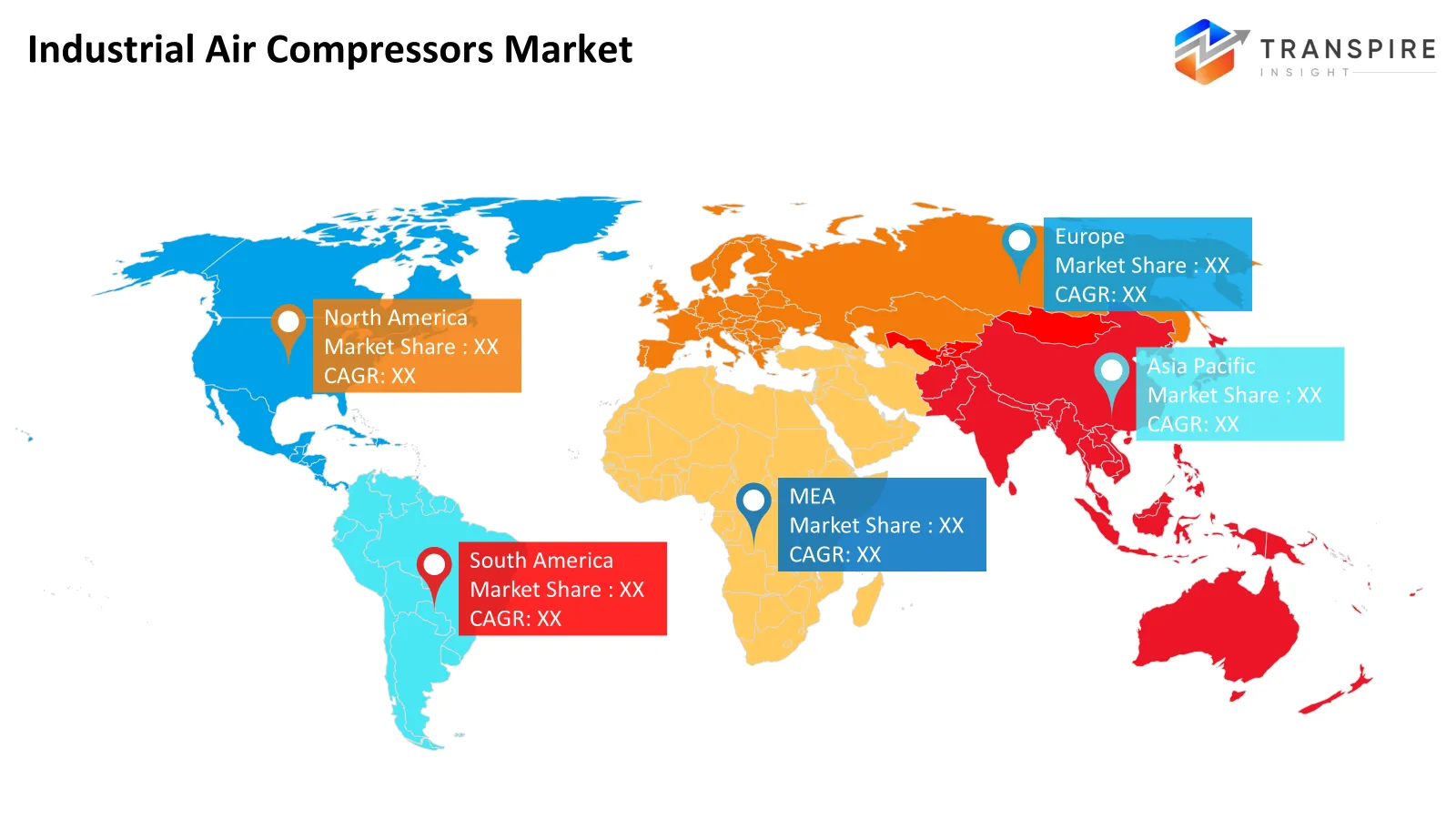
- North America (U.S., Canada, Mexico)
- Europe (Germany, France, U.K., Italy, Spain, Rest of Europe)
- Asia-Pacific (China, Japan, India, Rest of APAC)
- South America (Brazil and the Rest of South America)
- The Middle East and Africa (UAE, South Africa, Rest of MEA)
Asia Pacific is the fastest-growing region in the Industrial Air Compressors Market during the period, holding almost 42% share.
Asia Pacific is the fastest-growing region in the Industrial Air Compressors Market during the forecast period, holding almost 42% share during the forecast period. The Asia Pacific region is witnessing the highest growth rate owing to the increase in industrialization, manufacturing capability, and investments in infrastructure within China, India, Japan, and South-East Asia. Increased automation and efficiency along with the need for a stable compressed air system have driven the market towards air compressors.
North America is the fastest-growing region in the Industrial Air Compressors Market during the period, holding almost 23% share.
North America is expected to grow at a rapid CAGR in the Industrial Air Compressors Market holding almost 23% share during the forecast period. Industrial air compressors market growth in North America is driven by a highly developed manufacturing industry, growing automation in the industrial sector and growing need for energy efficient compressed air systems. Growth in oil & gas, automotive, food processing, pharmaceutical and electronic industries boosts the use of air compressors.
Europe is expected to grow at a rapid CAGR in theIndustrial Air Compressors Market, holding almost 20% of the share during the forecast period.
Europe is expected to grow at a rapid CAGR in the Industrial Air Compressors Market holding almost 20% share during the forecast period. The Europe market will grow quickly on account of strict regulations of energy efficiency, development of industry, and installation of more energy efficient compressed air systems. The expansion of various industries such as the automotive industry, food processing industry, chemical industry, pharmaceutical industry, and the manufacturing industry will fuel the demand for industrial air compressors.
Strategies for Market Growth in Non-Leading Regions:
Non-leading regions will get an advantage of development from the introduction of scalable and efficient industrial air compressors technologies. Local assembling and manufacturing of industrial air compressors, as well as creation of regional service centers for compressors, will cut down reliance on import of the equipment and lower costs. Strategic cooperation with regional distributors, industrial manufacturers, engineering firms, and equipment suppliers will assist in the expansion of the industrial air compressors providers markets. For gaining more knowledge on the topics of compressor operation, energy efficiency, preventive maintenance, quality control and system optimization, education and technical skills improvement is necessary. Besides, flexible financing methods, service and maintenance contracts will make industrial air compressors systems more affordable and attractive for industrial users. Creation of collaborative programs with government, industrial development, and manufacturing initiatives, as well as digital sales approach, will enhance availability of industrial air compressor technologies and foster sustainable market growth in developing countries.
Future Market Trends for the Industrial Air Compressors Market: -
- Move to Oil-Free Technology: In response to stringent purification standards such as ISO 8573-1 Class 0 in food, beverages, and pharmaceutical industries, oil-free compressors are showing the highest growth rate (approximately 4.63% CAGR) to prevent contamination.
- Energy Conservation and Variable Speed Systems: Electricity cost increases and climate change targets are prompting companies to adopt VSD and energy-efficient rotary screw air compressors in order to reduce energy consumption.
- Intelligent Telemetry and Predictive Maintenance: In terms of Industry 4.0, the use of digital twin technology, advanced pressure measurement techniques, and remote monitoring is reducing downtime and maintenance costs.
- Growth in Clean Energy and Heavy Industries: The growth in the liquefied natural gas (LNG), hydrogen filling stations, and CCUS projects is increasing the demand for high-pressure centrifugal compressors operating above 40 to 100 bars.
- Aspires to Asia-Pacific Dominance: As the largest contributor with more than 42% market share, the Asia-Pacific Industrial Air Compressors Market is expected to grow at the fastest pace due to local manufacturing, government retrofit incentives, and large-scale factories in India and China.
Recent Development
- In January 2026: Product innovations from Ingersoll Rand include the addition of Nirvana variable speed oil free rotary screw and LS-Series low pressure oil free compressors to its portfolio in India. On the other hand, Atlas Copco has made an acquisition of Compressor Works Inc., which will help it strengthen its U.S. based compressed air business operations.
- In June 2026: The Tezcatlipoca A800, an indigenous centrifugal air compressor designed to serve the industrial air compressors market in India, was launched by Kirloskar Pneumatic. The compressor, which is available in the range of 600 to 980 CFM, offers energy-saving and oil-free compressed air with intelligent flow control systems.
This study forecasts revenue at global, regional and country levels from 2020 to 2033. Transpire Insight has segmented the Industrial Air Compressors Market based on the below-mentioned segments:
Industrial Air Compressors Market, By Type
- Reciprocating
- Rotary Screw
- Rotary Vane
- Centrifugal
- Scroll
- Axial
- Diaphragm
- Others
Industrial Air Compressors Market, By Pressure
- Low Pressure
- Medium Pressure
- High Pressure
- Ultra-high Pressure
- Oil-free
- Oil-lubricated
- Variable Pressure
- Others
Industrial Air Compressors Market, By Application
- Manufacturing
- Oil & Gas
- Food & Beverage
- Healthcare
- Automotive
- Chemicals
- Mining
- Others
Industrial Air Compressors Market, By Lubrication
- Oil-filled
- Oil-free
- Water-lubricated
- Dry-running
- Synthetic-lubricated
- Mineral-oil
- Food-grade
- Others
Industrial Air Compressors Market, By Drive
- Electric
- Diesel
- Gas
- Hydraulic
- Pneumatic
- Hybrid
- Direct-drive
- Others
Industrial Air Compressors Market, By Capacity
- Below 50 HP
- 50-100 HP
- 100-250 HP
- 250-500 HP
- 500-1000 HP
- Above 1000 HP
- Variable Capacity
- Others
Industrial Air Compressors Market, By End User
- Industrial
- Commercial
- Manufacturing
- Energy
- Construction
- Transportation
- Healthcare
- Others
Window Coverings Market, By Regional Analysis
North America
- US
- Canada
- Mexico
Europe
- Germany
- UK
- France
- Italy
- Spain
- Russia
- Rest of Europe
Asia Pacific
- China
- Japan
- India
- South Korea
- Australia
- Rest of Asia Pacific
South America
- Brazil
- Argentina
- Rest of South America
Middle East & Africa
- UAE
- Saudi Arabia
- Qatar
- South Africa
- Rest of the Middle East & Africa
Frequently Asked Questions
Find quick answers to common questions.
The market is projected to reach USD 28.30 billion by 2033, expanding at a 4.43% CAGR during 2026-2033.
Asia Pacific is anticipated to lead the market, accounting for approximately 42% share during the forecast period.
Medium Pressure dominated in 2025, accounting for nearly 43% market share, supported by widespread industrial applications and reliable compressed-air requirements.
Oil & Gas dominated in 2025 with nearly 30% share, driven by compressed-air requirements across exploration, processing, refining, and operations.
VSD, oil-free compression, IIoT monitoring, predictive maintenance, and waste heat recovery are advancing compressor efficiency, reliability, sustainability, and operational performance.
- Atlas Copco
- Ingersoll Rand
- Siemens
- Hitachi
- Kaeser Compressors
- Gardner Denver
- Sullair
- Elgi Equipments
- Kobelco
- Quincy Compressor
- BOGE
- FS-Curtis
- Campbell Hausfeld
- Doosan Portable Power
- Chicago Pneumatic
About the Authors

Avinash Kumar
I’m Avinash Kumar, a Senior Research Analyst at Transpire Insight, with expertise in the Electronics and Semiconductor and Energy & Power industry. My work focuses on analyzing emerging technologies, market trends, industry developments, and innovation across these sectors. I specialize in transforming complex technical and market insights into clear, research-backed content that helps professionals, businesses, and decision-makers stay informed. Through continuous industry research and data-driven analysis, I strive to deliver accurate, reliable, and practical perspectives on the latest advancements shaping the semiconductor and energy landscape.

Chakradhar Khansole
Chakradhar serves as the Research Director at Transpire Insight, bringing over 8 years of experience in technology, innovation, and strategic market intelligence. He specializes in transforming complex market data into actionable business insights that enable organizations to make informed, growth-oriented decisions. Recognized for his strategic vision and analytical expertise, Chakradhar leads high-impact research initiatives, delivering comprehensive market assessments, competitive intelligence, and forward-looking industry analysis.
Recently Published Reports
-
Apr 2026
Active Power Filter Market
Active Power Filter Market Size, Share & Analysis Report By Type (Shunt Active Power Filters, Series Active Power Filter, Hybrid Active Power Filter), By Application (Harmonics Mitigation, Reactive Power Compensation, Voltage Regulation, Power Factor Correction), By Phase (Single Phase, Three Phase), By End-User Industry (Manufacturing, Healthcare, Commercial, Automotive, Oil and Gas, Others), and Geography (North America, Europe, Asia-Pacific, Middle East and Africa, South and Central America), 2021 - 2031
-
Apr 2026
Electrical Transformer Market
Electrical Transformer Market Size, Share & Analysis Report By Core (Closed, Shell, and Berry), By Insulation (Gas, Oil, Solid, Air, and Other), By Phase (Single, and Three), By Rating (100 MVA to 500 MVA, 501 MVA to 800 MVA, and 801 MVA to 1200 MVA), and Geography (North America, Europe, Asia-Pacific, Middle East and Africa, South and Central America), 2021 – 2031
-
Apr 2026
Hydraulic Piston Pumps Market
Hydraulic Piston Pumps Market Size, Share & Analysis Report By Type (Axial Piston Pumps, Radial Piston Pumps), By Operating Pressure (Low Pressure, Medium Pressure, High Pressure), By Application (Construction, Mining, Agriculture, Automotive, Oil & Gas, Industrial Machinery, Others), By End-User (OEMs, Aftermarket), and Geography (North America, Europe, Asia-Pacific, Middle East and Africa, South and Central America), 2021 – 2031
-
Apr 2026
Laboratory Gas Generators Market
Laboratory Gas Generators Market Size, Share & Analysis Report By Product (Nitrogen Gas Generator, Hydrogen Gas Generator, Zero Air Gas Generator, Purge Gas Generator, TOC Gas Generators, Others), By Application (Gas Chromatography, Liquid Chromatography-mass Spectrometry (LC-MS), Gas Analyzers, Others), By End-user (Life Science, Chemical & Petrochemical, Food & Beverage, Others), and Geography (North America, Europe, Asia-Pacific, Middle East and Africa, South and Central America), 2021 – 2031