
Global Sheet Face Mask Market Size & Forecast
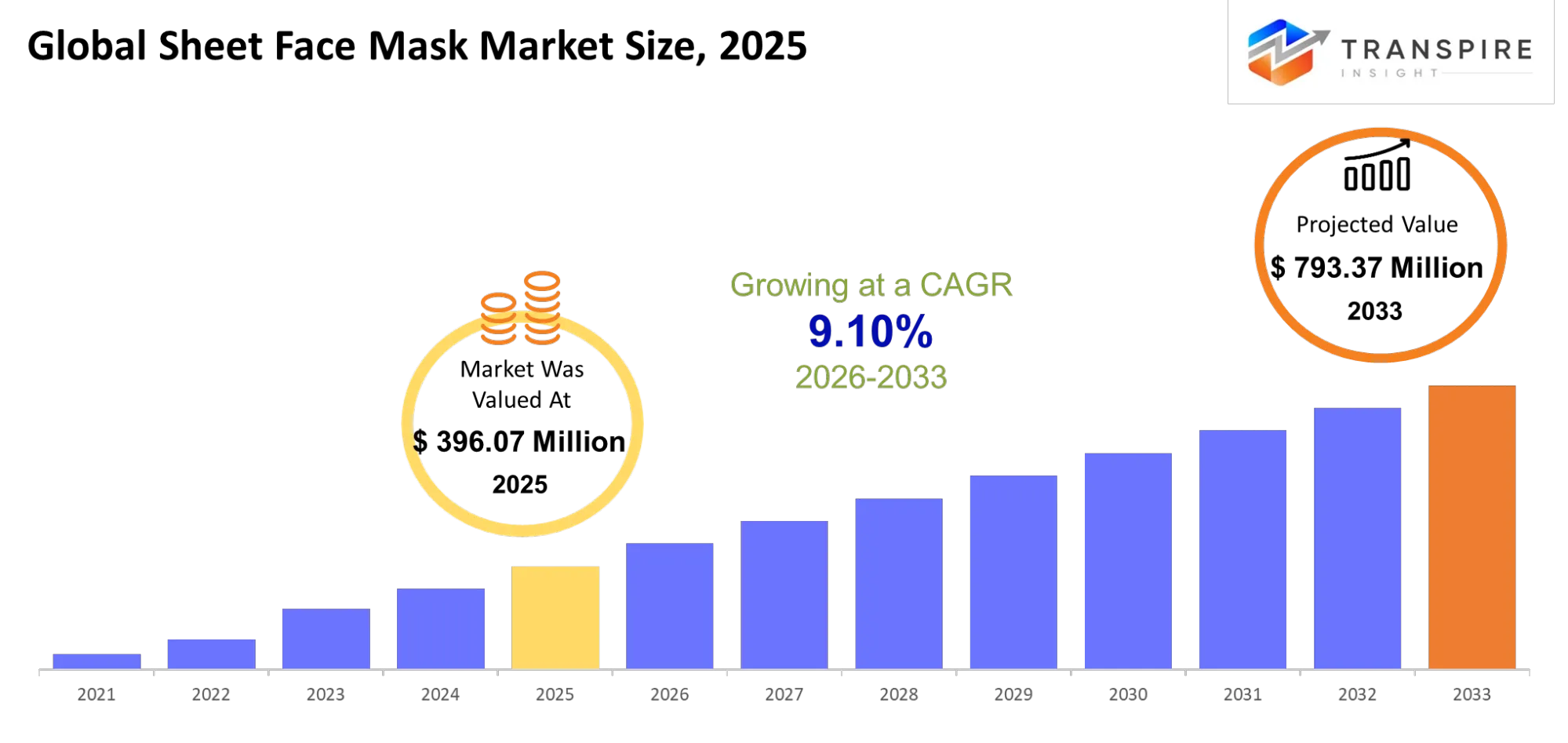
- Global Sheet Face Mask Market Size 2025: USD 396.07 Million
- Global Sheet Face Mask Market Size 2033: USD 793.37 Million
- Global Sheet Face Mask Market CAGR: 9.10%
- Global Sheet Face Mask Market Segments: By Material Type (Cotton Sheet Masks, Hydrogel Masks, Bio-Cellulose Masks), By Distribution Channel (Online Retail, Supermarkets & Hypermarkets, Specialty Stores), By End-User (Men, Women)
To learn more about this report,  Download Free Sample Report
Global Sheet Face Mask Market Summary
The global sheet face mask market was valued at USD 396.07 million in 2025. It is expected to reach USD 793.37 million by 2033, growing at a CAGR of 9.10%. Sheet face masks are one-time use skincare products where an active serum is already loaded into a fabric or gel material - cotton, hydrogel, or bio-cellulose - and worn against your skin for 15 to 30 minutes to provide hydration, lightening agents, or anti-aging actives. This format really addresses a certain consumer problem: it eliminates the need to measure, mix, and clean up at home when giving yourself a facial treatment - and still gives you a clinical experience that creams and serums applied manually can't match.
Over the last four years we've seen a significant shift away from in-salon skincare to our at-home skincare treatment rituals - a change in behavior that really got much sharper during those global pandemic restrictions and hasn't totally reversed itself yet. Consumers who replaced their professional facials with at-home sheet mask routines between 2020 and 2022 developed some serious habits that proved very durable long after salon access was back again. What really helped this along was social media - especially short-video platforms where applying sheet masks became its own kind of content, really compressing product discovery and purchase into a single scroll. The result was a huge increase in the size of the potential consumer market, pulling in groups that had never invested in a skincare routine before.
K-beauty's global export push has really been the biggest demand trigger for this category. South Korean companies built the sheet mask format right into their daily skincare routine instead of just using it every now and then, and that idea spread with the K-beauty trend into North America, Europe, Southeast Asia, and the Middle East. When Mediheal, Dr. Jart+, and TonyMoly started distributing internationally through Sephora and Amazon at the same time, they moved the category from a somewhat unique import to a really common item on the shelf.
Key Global Sheet Face Mask Market Insights
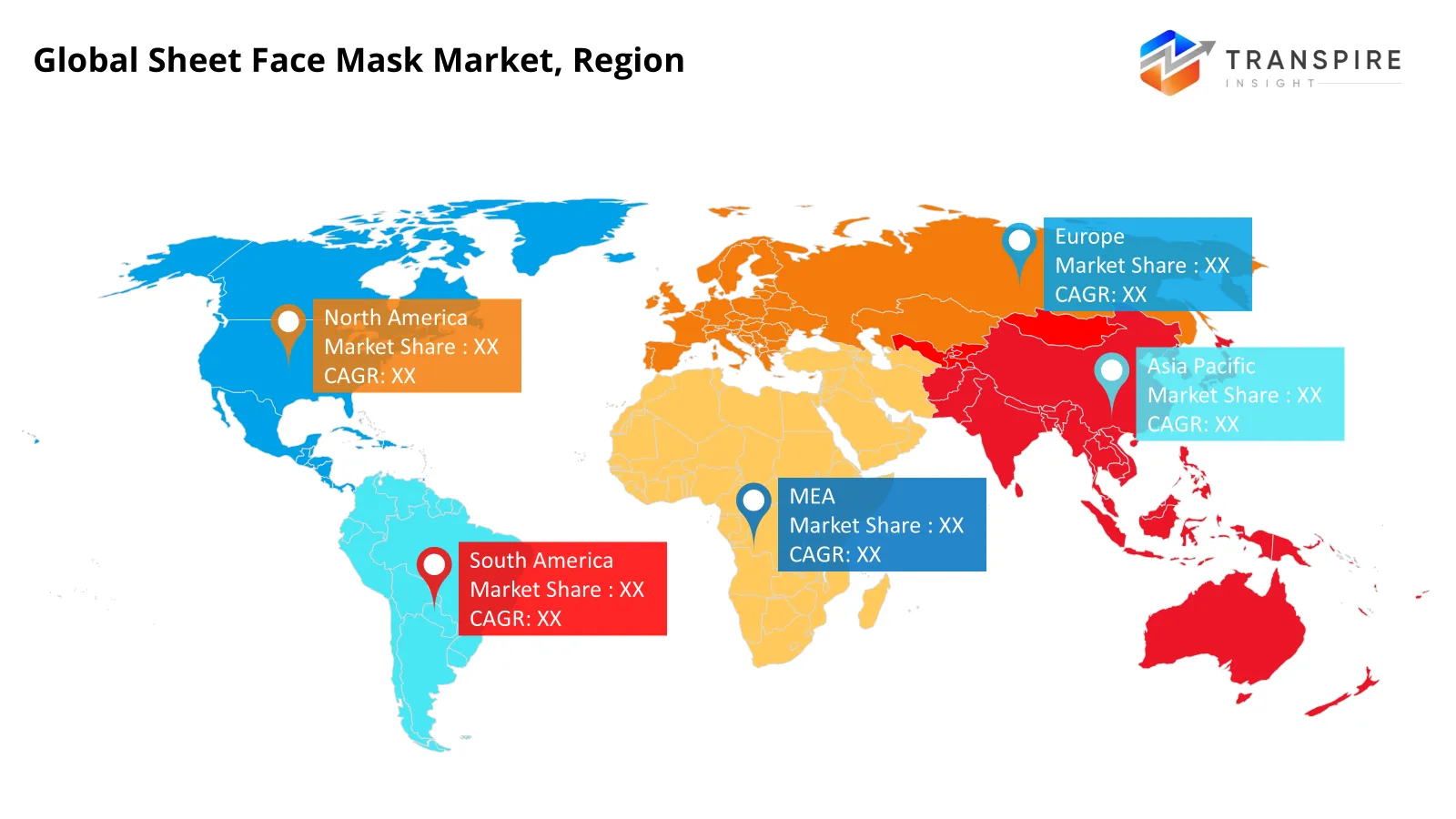
- Asia Pacific dominates the global sheet face mask market with the largest regional revenue share. Asia Pacific accounts for approximately 52% of total market revenue in 2024, led by South Korea, Japan, and China, where sheet masks are embedded in daily multi-step skincare routines rather than used as occasional treatments.
- North America holds roughly 20% of global market revenue in 2024, driven by accelerating K-beauty adoption, growing male grooming awareness, and the expansion of Korean brands through specialty retail and e-commerce channels.
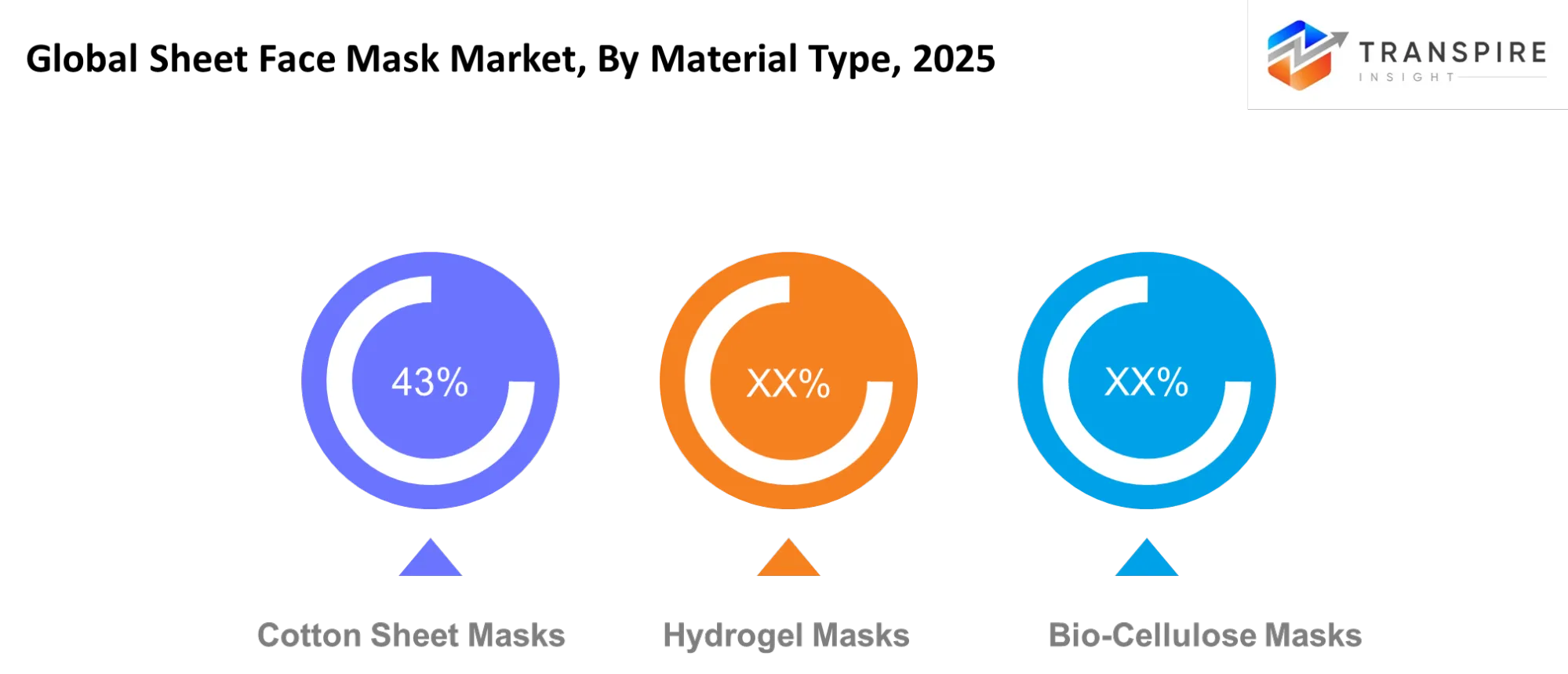
- Cotton sheet masks lead the material type segment with a 43% share in 2024, favored for their cost accessibility, broad skin compatibility, and established manufacturing infrastructure across South Korean and Chinese production networks.
- Hydrogel masks represent the second-largest material segment, valued for superior serum retention and a cooling sensory experience that drives repeat purchase among premium skincare consumers willing to pay a price premium.
- Bio-cellulose masks are the fastest-growing material type, gaining adoption in clinical and dermatologist-recommended skincare due to their second-skin adhesion and high active ingredient delivery efficiency compared to cotton alternatives.
- Online retail dominates the distribution channel landscape for the global sheet face mask market. E-commerce accounts for over 48% of total sheet face mask sales in 2024, driven by subscription box formats, influencer-led discovery, and platform-native bundling on Amazon, Tmall, and Naver Shopping.
- Specialty stores, including Sephora and dedicated Korean beauty retailers, remain a critical trial-conversion channel where consumers experience textures and formulations in person before committing to multi-pack online purchases.
- Women represent the dominant end-user segment accounting for approximately 82% of global sheet face mask consumption in 2024, though male adoption rates are rising, particularly in South Korea, China, and urban markets in the United States and United Kingdom.
- The men’s sheet face mask segment is the fastest-growing end-user category, expanding from a near-zero base in most Western markets as male grooming content on TikTok and YouTube normalizes facial skincare as part of daily hygiene.
- Amorepacific Corporation and L’Oréal S.A. hold the largest combined revenue share in the global market, leveraging multi-brand portfolios and distribution scale across both premium and mass market price tiers.
- Mediheal Inc. leads in unit volume in the Korean domestic market and has become one of the most recognized sheet mask brands internationally, with its N.M.F. Aquaring Ampoule Mask series achieving significant cross-border e-commerce sales volumes.
What are the Key Drivers, Restraints, and Opportunities in the Global Sheet Face Mask Market?
The main driver is the normalisation of multi-step skincare routines within consumer demographics who had never engaged with facial masks previously. K-beauty's global influence really changed how the sheet mask was seen - from a spa luxury item to a regular skincare essential, and this repositioning actually created habitual purchase behaviour that results in repeat revenue rather than a one-time trial. The mechanism is very direct indeed: when consumers start integrating sheet masks into their nightly routine right along with serums and moisturisers, purchase frequency really increases from occasional to weekly, shortening the repurchase cycle and boosting your annual spend per customer. Brands that got in early on subscription and multi-pack formats - particularly Mediheal and Leaders Cosmetics - caught onto this behavioural shift and turned it into a very predictable revenue stream long before the broader market noticed the pattern itself.
The biggest structural limit on market growth is single-use packaging waste, which is turning out to be both an operational and regulatory problem instead of just a matter of reputation. Sheet masks create an enormous amount of non-recyclable composite waste - a foil sachet, plastic tray, and used sheet - per unit of product compared to refillable skincare formats. In the European Union, Extended Producer Responsibility regulations will start taking effect between 2024 and 2027, creating financial penalties for brands for packaging waste collection and recycling. This is something that won't be resolved just by using more 'sustainable' marketing language; it really demands a significant investment in mono-material packaging, compostable sheets, or concentrated-serum refill systems - none of which are quite ready for a cost-effective launch into the mass market at our current technology level of maturity. Brands that don't move on this will really face barriers of access in regulated European retail channels itself.
The biggest opportunity is the clinical and dermatologist-recommended area. Bio-cellulose masks positioned as post-procedure recovery tools for patients after laser, chemical peel, or microneedling treatments represent a market that is still quite underpenetrated. Dr. Jart+ has built up distribution in dermatology clinics all over South Korea, and the model is actually exportable. As medical aesthetic procedures grow all over the globe - the medical spa market actually increased roughly 18% between 2021 and 2024 - the post-procedure skincare window represents a very captive, highly motivated consumer moment where a doctor's recommendation actually converts at rates that consumer advertising simply can't match.
What Has the Impact of Artificial Intelligence Been on the Global Sheet Face Mask Market?
Artificial intelligence (AI) is transforming the process by which sheet face mask brands formulate their products and target their consumers - although the applications are vastly different at every step along the value chain. On the product development end, machine learning tools are being used to analyze huge databases of ingredient compatibility and forecast how specific active combinations - niacinamide, hyaluronic acid, peptide sequences - will interact with diverse skin microbiome profiles. Amorepacific has openly discussed its use of AI-assisted formulation screening to lower the number of physical prototype iterations needed before clinical trials, shortening development timeframes from roughly 18 months to less than 12 on some product categories.
Consumer-facing AI applications are yielding significantly more immediate business results. Skin analysis tools embedded in brand apps and e-commerce platforms - including those set up by L'Oréal via its ModiFace acquisition - employ computer vision to determine skin tone, hydration levels, and specific issues from a selfie, then offer highly personalized product suggestions - with the sheet face mask matched to the recognized issue. This personalization layer noticeably enhances conversion rates on e-commerce platforms compared to general category browsing; L'Oréal has reported a 30-40% improvement in conversion rates on AI-recommended products compared to its regular catalog navigation. It also raises average order values when the recommendation engine pairs a sheet mask with complementary serums and moisturizers.
The real constraint here is data protection. Skin analysis applications gather biometric data that falls under sensitive personal data classifications in the EU under GDPR - and in a few US states under biometric data legislation. Brands that have developed skin AI functionalities using user-agreed data are facing increasing complexity in complying with ever-tighter regulations, and the cost of legal review, consent infrastructure, and data localisation is quite significant for smaller brands that cannot absorb it like L'Oréal or Estee Lauder can.
Key Market Trends
- K-beauty brands expanded international distribution through Sephora and Target in North America between 2021 and 2024, taking sheet face masks from niche import status to mainstream shelf placement.
- Male sheet face mask product launches increased roughly 40% between 2022 and 2024, with TonyMoly and Innisfree both introducing gender-specific SKUs targeting younger male consumers in Asian markets.
- Subscription box formats for sheet masks grew significantly after 2021, with platforms like Beauteque and Facetory building recurring revenue models that drive higher customer lifetime value than one-time retail purchases.
- Retailers including Sephora and ULTA began dedicating dedicated Korean beauty sections by 2023, giving sheet face mask brands permanent shelf real estate rather than seasonal promotional placement.
- Dr. Jart+ expanded its clinical-positioned Cicapair sheet mask range into dermatology offices and medical spas across the United States and South Korea between 2022 and 2024, establishing a professional recommendation channel outside conventional retail.
- Eco-packaging reformulations accelerated from 2023, with Nature Republic and Skinfood switching to biodegradable inner sheet materials on selected product lines in response to South Korean domestic environmental labeling requirements.
- Cross-border e-commerce volumes for sheet face masks on Tmall Global and Amazon grew above 30% annually between 2021 and 2023 as Chinese and Korean brands scaled English-language storefronts without requiring physical Western market entry.
- Premium hydrogel mask price points held above USD 6 per unit in specialty retail even as cotton mask prices fell below USD 2 per unit in mass market channels, confirming a durable bifurcation between premium experience and volume-driven purchasing behavior.
Global Sheet Face Mask Market Segmentation
By Material Type
Cotton sheet masks now make up 43% of the global market by 2024 - a status based more on accessibility than on superior performance. Cotton is basically the cheapest possible material for sheet mask production, and this cost advantage really shows itself at the retail price points - opening the category to the widest possible consumer base. A cotton mask can retail between $1 and $4 in mass market and mid-tier channels - a price point perfect for impulse buys, first-time buyers' trials, and buying multi-packs without too much financial commitment. The manufacturing facilities are very developed, mostly located in South Korea and China, and completely equipped to support the high-volume production needs of brands selling hundreds of millions of units every year. Cotton's wide skin compatibility also significantly reduces the risk of an allergic response when formulating products - much less so than with synthetic alternatives.
The growth strategy for cotton masks really focuses on volume rather than focusing on premiumizing. As sheet masks penetrate new consumer markets in Southeast Asia, the Middle East, and Latin America, cotton will essentially be the starting format because it really matches the price sensitivity of those markets. Brands like The Face Shop and Nature Republic, which already have major positions in mid-tier Asian markets using cotton mask volumes, are perfectly positioned to expand their advantage further into new geographies. By 2033, cotton will still have the largest share by volume - but its revenue share percentage will narrow slightly relatively to more premium materials.
To learn more about this report, Download Free Sample Report
By Distribution Channel
Online retail makes up more than 48% of our planet's sheet face mask sales in 2024 - and the channel's inherent advantages over physical retail aren't disappearing anytime soon. The economics of selling sheet masks online really favor brands compared to an in-store setup: no slotting fees, no competing for physical shelf space, and direct access to your customers' purchase data so you can improve your formula and marketing strategies in the future. Multi-pack formats - 10-unit and 20-unit boxes - are a great fit for online sales since the bigger basket size actually helps with shipping costs and results in higher revenue per transaction than when customers buy one unit at a time in-store. Social commerce on TikTok Shop, Instagram Shopping, and Naver in South Korea has even created a discover-to-buy experience that greatly speeds up the online channel's growth, really shortening the time from a consumer seeing a product in content to buying it down to less than two minutes in many cases.
By End-User
Women comprise roughly 82% of global sheet face mask consumption in 2024 - a figure showing both the historical roots of the category in women's skincare and also the present reality that female consumers really drive most of the new product trials and repeated usage right now. However the demand structure within the female segment is evolving somewhat. Younger female customers - Gen Z shoppers in their late teens and twenties - are buying at greater frequencies than any earlier demographic, driven by skincare content watching on TikTok and YouTube that's really given them accurate product knowledge and information about ingredients at an age group that didn't really engage with the category much before. Brands that've managed to be relevant to Gen Z through influencer collaborations and affordable multi-pack formats are seeing quite a lot more repeat purchases from this group than from older consumer segments.
What are the Key Use Cases Driving the Global Sheet Face Mask Market?
The biggest use case is daily and weekly hydration and skin barrier support at home - directly related to the very popular cotton sheet mask segment that makes up most of the market size. Consumers incorporate sheet masks into their evening skincare routines mostly to deliver concentrated hyaluronic acid, ceramide, or niacinamide formulations in a format that keeps skin contact for a specific time frame - without evaporation or absorption loss. The economic logic from the consumer's perspective really matters too: a cotton sheet mask at USD 1. 50 to USD 3 gives you a noticeable skin feel improvement that consumers link to professional treatments, creating a valuable experience ratio that leads to habitual purchase without a significant impact on your budget.
Adjacent use cases are expanding their commercial significance - post-sun recovery and pre-event skin preparation, attracting consumers outside of our daily routine group. Post-sun soothing masks - made with centella asiatica, aloe vera, or green tea extracts - have created a distinct sub-group that really sells well in seasonal patterns, particularly in Southeast Asian and Southern European markets with very high UV exposure. Pre-event preparation - sometimes referred to as the 'glow mask' occasion - targets consumers who apply sheet masks about one to two hours before a social event so they can get a hydrated, plump skin look. Both use cases increase the frequency of purchase occasions way beyond the daily routine, and specialty formulations for each occasion really command price premiums over standard hydrating SKUs.
The emerging use case with the clearest long-term potential is actually post-procedure recovery, where bio-cellulose masks are applied after laser resurfacing, chemical peels, or microneedling to give a sterile, high-adhesion recovery surface that really accelerates barrier repair. This use case isn't quite mainstream yet - it really requires clinical channel distribution and medical-grade manufacturing standards that most consumer brands can't easily reach - but the addressable consumer base is growing as medical aesthetics procedures become a lot more accessible. Dr. Jart+ and Mediheal are the furthest along in building the clinical credibility and practitioner relationships needed to truly own this use case commercially.
Report Overview Table
|
Report Metrics |
Details |
|
Market size value in 2025 |
USD 396.07 Million |
|
Market size value in 2026 |
USD 431.34 Million |
|
Revenue forecast in 2033 |
USD 793.37 Million |
|
Growth rate |
CAGR of 9.10% from 2026 to 2033 |
|
Base year |
2025 |
|
Historical data |
2021 – 2024 |
|
Forecast period |
2026 – 2033 |
|
Report coverage |
Revenue forecast, competitive landscape, growth factors, and trends |
|
Regional scope |
United States; Canada; Mexico; United Kingdom; Germany; France; Italy; Spain; Denmark; Sweden; Norway; China; Japan; India; Australia; South Korea; Thailand; Brazil; Argentina; South Africa; Saudi Arabia; United Arab Emirates |
|
Key companies profiled |
L’Oréal S.A., Estée Lauder Companies Inc., Unilever PLC, Procter & Gamble Company, Amorepacific Corporation, Shiseido Company Limited, Innisfree Corporation, The Face Shop (LG Household & Health Care), Sephora Inc., TonyMoly Co. Ltd., Dr. Jart+ (Estée Lauder), Mediheal Inc., Nature Republic Co. Ltd., Leaders Cosmetics Co. Ltd., Skinfood Co. Ltd. |
|
Customization scope |
Free report customization (country, regional & segment scope). Avail customized purchase options to meet your exact research needs. |
|
Report Segmentation |
By Material Type (Cotton Sheet Masks, Hydrogel Masks, Bio-Cellulose Masks), By Distribution Channel (Online Retail, Supermarkets & Hypermarkets, Specialty Stores), By End-User (Men, Women) |
Which Regions are Driving the Global Sheet Face Mask Market Growth?
Asia Pacific really leads the worldwide market by a huge amount - and the reasons are both cultural and structural all at once. Sheet masks started out in South Korea and Japan as part of many-step skincare regimens - the 10-step Korean skincare plan has actually been documented and commercialized to the point of becoming a global standard model - meaning the way consumers behave to generate repeat purchases isn't being built from the ground up in this region. It's already there on a pretty big scale.
North America is the second-biggest region, with growth patterns quite different from Asia Pacific in some key ways. The consumer base here is right at the start of adopting sheet masks, so the growth rate is actually much higher on a percentage basis even though the total amount remains smaller. What really changed between 2019 and 2024 was retail infrastructure: Korean beauty brands moved from some e-commerce sites and specialty stores into Target, CVS, and Walmart, giving sheet face masks a lot more mainstream availability than they had in the US before. The male skincare normalization trend is also quite commercially important in North America compared to many other non-Asian markets - since the male grooming category is big enough that even moderate sheet mask adoption rates within it really generate quite a bit of revenue. Brands that invest in North American distribution infrastructure through 2026 are setting themselves up for a market that's still very much in its growth phase.
For new market entrants and investors, the Middle East really presents a special opportunity: the consumer base is pretty aspirational and very responsive to brands, price sensitivity per unit is lower than in Southeast Asia, and the regulatory environment for cosmetic product registration, although very bureaucratic, is actually navigable. Brands that establish distribution in the Gulf area before 2027 will be set up well ahead of what is likely to be a very marked increase in category volume as skincare routines really become standardized in that consumer population.
To learn more about this report, Download Free Sample Report
Who are the Key Players in the Global Sheet Face Mask Market and How Do They Compete?
The sheet face mask market is much more fragmented than it might appear based on the top-selling brands. The top five revenue-generating players - L'Oréal, Estée Lauder (through Dr. Jart+), Amorepacific, Shiseido, and Unilever - together hold a surprisingly small percentage of global revenue - well under 40%, with the remaining distribution spread across many Korean, Chinese, and local brands competing very effectively at price levels the global corporations don't really focus on. The basis of competition is not mainly cost. Rather, it's brand authenticity in the K-beauty context, formula credibility, and the ability to move rapidly on ingredient trends - snail mucin, centella asiatica, propolis - before they become commodities. Smaller Korean brands such as Mediheal, Nature Republic, and Skinfood have consistently demonstrated a faster trend response than the bigger multinational companies.
Amorepacific occupies a really unique competitive position since it owns several brands at different price tiers all at once. Innisfree targets the relatively affordable mid-market using ingredients and a positioning around green tea and jeju island sourcing; Laneige operates at a premium with its Water Sleeping Mask line; and IOPE targets the clinical effectiveness segment. This multi-brand architecture enables Amorepacific to capture consumer spending across the entire price spectrum without making its brands compete directly against one another. L'Oréal's competitive strategy in this market really goes through acquisitions instead of internal development: the company bought Dr. Jart+ entirely in-house through the Estee Lauder purchase of Have&Be Co. Ltd., and it has used its ModiFace technology investment to add AI-powered personalization features to its skincare brand portfolio, including sheet mask recommendation tools.
Mediheal punches way above its revenue weight in terms of market visibility. The brand really dominates Korean airport duty-free sales, which serves as a huge sampling channel internationally - travelers seeing Mediheal in Incheon Airport get the product in a setting that signals both high quality and cultural authenticity at once. TonyMoly competes through product design and newness - animal-shaped masks, character collaborations, and quite whimsical packaging - that performs remarkably well on social media and encourages trial purchases from consumers who wouldn't normally try the standard sheet mask format. Leaders Cosmetics, less directly visible to consumers, holds a strong OEM manufacturing position and supplies private-label sheet mask products to retailers and brands that don't have their own manufacturing capability.
Recent Developments
In April 2026, L'Oréal S.A. announced the acquisition of South Korea-based sheet mask brand Mediheal’s parent company to strengthen its footprint in the Asian skincare segment and expand its sheet mask portfolio. https://www.loreal.com
In March 2026, Unilever PLC acquired a majority stake in Japanese skincare startup BioCell Mask Co. to enhance its bio-cellulose sheet mask technology capabilities and premium skincare offerings. https://www.unilever.com
What Strategic Insights Define the Future of the Global Sheet Face Mask Market?
The sheet face mask market over the next five to seven years will be driven less by category trial and more by frequency and premiumization within existing consumer bases. The demographic growth story — new consumers entering the category — still has runway in underserved markets like the Middle East, Latin America, and Eastern Europe, but the more commercially important dynamic in mature markets is moving consumers from occasional purchase to habitual use, and from cotton to hydrogel or bio-cellulose. That transition represents a revenue-per-consumer increase of 3x to 5x without requiring a single new buyer, which is why brands investing in subscription and routine-building marketing are positioning themselves for better long-term unit economics than brands still focused on trial conversion.
The risk that doesn't show up in headline growth projections is regulatory pressure on single-use plastic packaging. The EU's packaging and packaging waste regulation, phasing in between 2024 and 2030, will require brands selling into European markets to demonstrate recyclability or compostability of sheet mask packaging or face financial penalties through Extended Producer Responsibility schemes. Brands that haven't already started the transition to mono-material or paper-based packaging will face an accelerating compliance cost that hits their margins in their most premium consumer market. This isn't a distant risk; it's a current investment decision.
The opportunity that most competitive analyses miss is the men's segment outside Asia. In South Korea and China, male skincare is already normalized and commercially established. The same normalization process is now underway in the United States, United Kingdom, and Germany, but it is about five years behind the Asian curve. Brands that move now to build male-specific product lines, male-targeted content, and retail placements in the grooming rather than beauty aisles of US and European retailers are acquiring first-mover positioning in a segment that will really matter by 2029.
The concrete recommendation: brands should treat the clinical channel as a strategic priority rather than a premium marketing tactic. Dermatologist and aesthetician recommendations generate purchasing behavior that is qualitatively different from consumer advertising — the conversion rate is higher, the resulting purchase is much more likely to become habitual, and the consumer is far more resistant to switching on price. Building clinical distribution requires investment in medical-grade formulation, practitioner education programs, and smaller-format packaging suitable to clinical settings, but the brands that make that investment now will have a structurally differentiated channel that consumer-only competitors can't easily replicate.
Global Sheet Face Mask Market Companies
- L’Oréal S.A.
- Estée Lauder Companies Inc.
- Unilever PLC
- Procter & Gamble Company
- Amorepacific Corporation
- Shiseido Company Limited
- Innisfree Corporation
- The Face Shop (LG Household & Health Care)
- Sephora Inc.
- TonyMoly Co. Ltd.
- Dr. Jart+ (Estée Lauder)
- Mediheal Inc.
- Nature Republic Co. Ltd.
- Leaders Cosmetics Co. Ltd.
- Skinfood Co. Ltd.
Global Sheet Face Mask Market Report Segmentation
By Material Type
- Cotton Sheet Masks
- Hydrogel Masks
- Bio-Cellulose Masks
By Distribution Channel
- Online Retail
- Supermarkets & Hypermarkets
- Specialty Stores
By End-User
- Men
- Women
Frequently Asked Questions
Find quick answers to common questions.
The Global Sheet Face Mask Market size is expected to reach USD 793.37 Million by 2033.
The key segments of the Global Sheet Face Mask Market are By Material Type (Cotton Sheet Masks, Hydrogel Masks, Bio-Cellulose Masks), By Distribution Channel (Online Retail, Supermarkets & Hypermarkets, Specialty Stores), By End-User (Men, Women).
Major players in the Global Sheet Face Mask Market include L’Oréal S.A., Estée Lauder Companies Inc., Unilever PLC, Procter & Gamble Company, Amorepacific Corporation, Shiseido Company Limited, Innisfree Corporation, The Face Shop (LG Household & Health Care), Sephora Inc., TonyMoly Co. Ltd., Dr. Jart+ (Estée Lauder), Mediheal Inc., Nature Republic Co. Ltd., Leaders Cosmetics Co. Ltd., and Skinfood Co. Ltd.
The Global Sheet Face Mask Market size is USD 431.34 Million in 2026.
The Global Sheet Face Mask Market CAGR is 9.10% from 2026 to 2033.
- L’Oréal S.A.
- Estée Lauder Companies Inc.
- Unilever PLC
- Procter & Gamble Company
- Amorepacific Corporation
- Shiseido Company Limited
- Innisfree Corporation
- The Face Shop (LG Household & Health Care)
- Sephora Inc.
- TonyMoly Co. Ltd.
- Dr. Jart+ (Estée Lauder)
- Mediheal Inc.
- Nature Republic Co. Ltd.
- Leaders Cosmetics Co. Ltd.
- Skinfood Co. Ltd.
Recently Published Reports
-
Apr 2026
Bottled Water Market
Bottled Water Market Size, Share & Analysis Report By Product Type (Still Bottled Water, Carbonated Bottled Water, Functional Bottled Water, and Others), By Packaging (PET, Cans, and Others), By Sales Channel (Supermarkets/Hypermarkets, Convenience Stores/Drug Stores, Grocery Stores/Club Stores, Foodservice, and Others) and Geography (North America, Europe, Asia-Pacific, Middle East and Africa, South and Central America), 2021 - 2032
-
Apr 2026
Color Cosmetic Packaging Market
Color Cosmetic Packaging Market Size, Share & Analysis Report By Application (Mascara Packaging, Liquid Packaging, and Liquid Face), By Type (Tubes & Bottles, Pens & Markers, Compacts & Containers, and Droppers & Pumps), and Geography (North America, Europe, Asia-Pacific, Middle East and Africa, South and Central America), 2021 - 2031
-
Apr 2026
External Microphone For Camera Market
External Microphone For Camera Market Size, Share & Analysis Report By Type (Shotgun Microphone, Lavalier Microphone, and Others), By Application (Digital Camera, Professional Video Camera, and Others), and Geography (North America, Europe, Asia-Pacific, Middle East and Africa, South and Central America), 2021 - 2031
-
Apr 2026
Foot Orthotic Insoles Market
Foot Orthotic Insoles Market Size, Share & Analysis Report By Type (Pre-fabricated, and Custom-made), By Material (Thermoplastic, Composite Carbon Fiber, and Others), By Distribution Channel (Drug Stores, Hospitals & Clinics, and Others), and Geography (North America, Europe, Asia-Pacific, Middle East and Africa, South and Central America), 2021 - 2031