

Global Cosmetic Dentistry Market Size & Forecast:
- Global Cosmetic Dentistry Market Size 2025: USD 32.7 Billion
- Global Cosmetic Dentistry Market Size 2033: USD 77.1 Billion
- Global Cosmetic Dentistry Market CAGR: 11.32%
- Global Cosmetic Dentistry Market Segments: By Product (Dental Implants, Veneers, Crowns, Bridges, Whitening Products, Orthodontics, Bonding Materials, Others); By Procedure (Restorative, Aesthetic, Surgical, Implant Procedures, Orthodontic Procedures, Others); By Material (Ceramic, Composite, Metal, Porcelain, Zirconia, Others); By End User (Dental Clinics, Hospitals, DSOs, Specialty Centers, Others); By Age Group (18-30, 31-45, 46-60, Above 60 Years, Others).

Global Cosmetic Dentistry Market Summary
As per Transpire Insight Analysis, the Global Cosmetic Dentistry Market size is estimated at USD 32.7 Billion in 2025 and is anticipated to reach USD 77.1 Billion by 2033, growing at a CAGR of 11.32% from 2026 to 2033. These advanced dental ecosystems develop, manufacture, and implement aesthetic and restorative solutions—such as dental implants, clear aligners, and thin porcelain veneers to improve oral symmetry, structural function, and overall smile aesthetics. Over the last few years - the market has undergone a major structural shift driven by the complete digitalization of the clinical workflow. This transition was triggered by a real-world technological movement—the rapid integration of high-resolution intraoral scanners, artificial intelligence (AI)-powered smile design software, and chairside 3D printing systems that completely eliminate long laboratory wait times. Consequently - the market is expanding rapidly because modern dental practices can now provide highly precise, same-day aesthetic restorations and minimally invasive treatments. This drastic reduction in treatment duration and physical discomfort has transformed cosmetic procedures from exclusive luxury services into accessible, highly demanded lifestyle choices.
Key Market Insights
Dentistry is leaving behind the era of highly invasive, multi-week laboratory waiting loops in favor of immediate, digital-first clinical appointments. Driven by an intense consumer lifestyle focus on smile symmetry and real-time chairside design networks, modern dental practices are systematically replacing physical alginate molds with high-speed intraoral imaging ecosystems to give patients predictable, same-day cosmetic results.
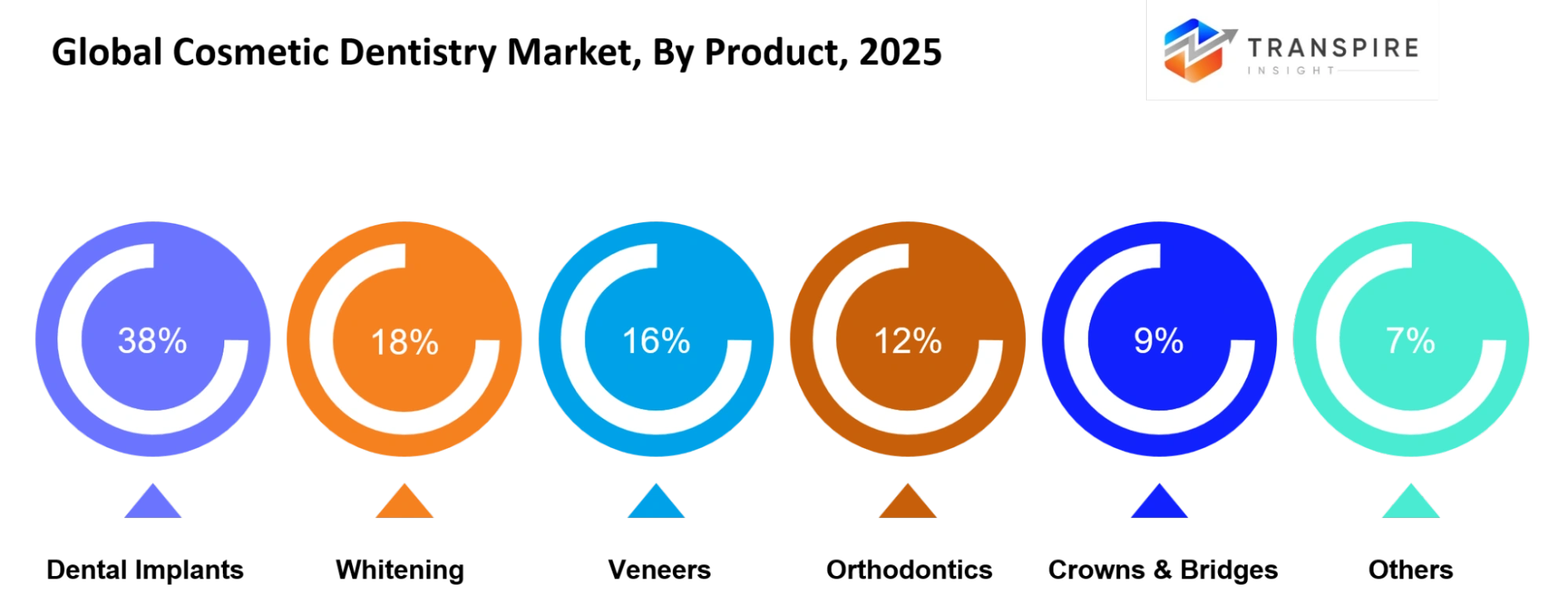
- Dental Implants command a dominant 38% share — Manufacturing leaders like Straumann and Zimmer Biomet are engineering advanced hydrophilic surface structures on titanium and zirconia screws, which drastically cuts down osseointegration (bone fusion) times for immediate loading.
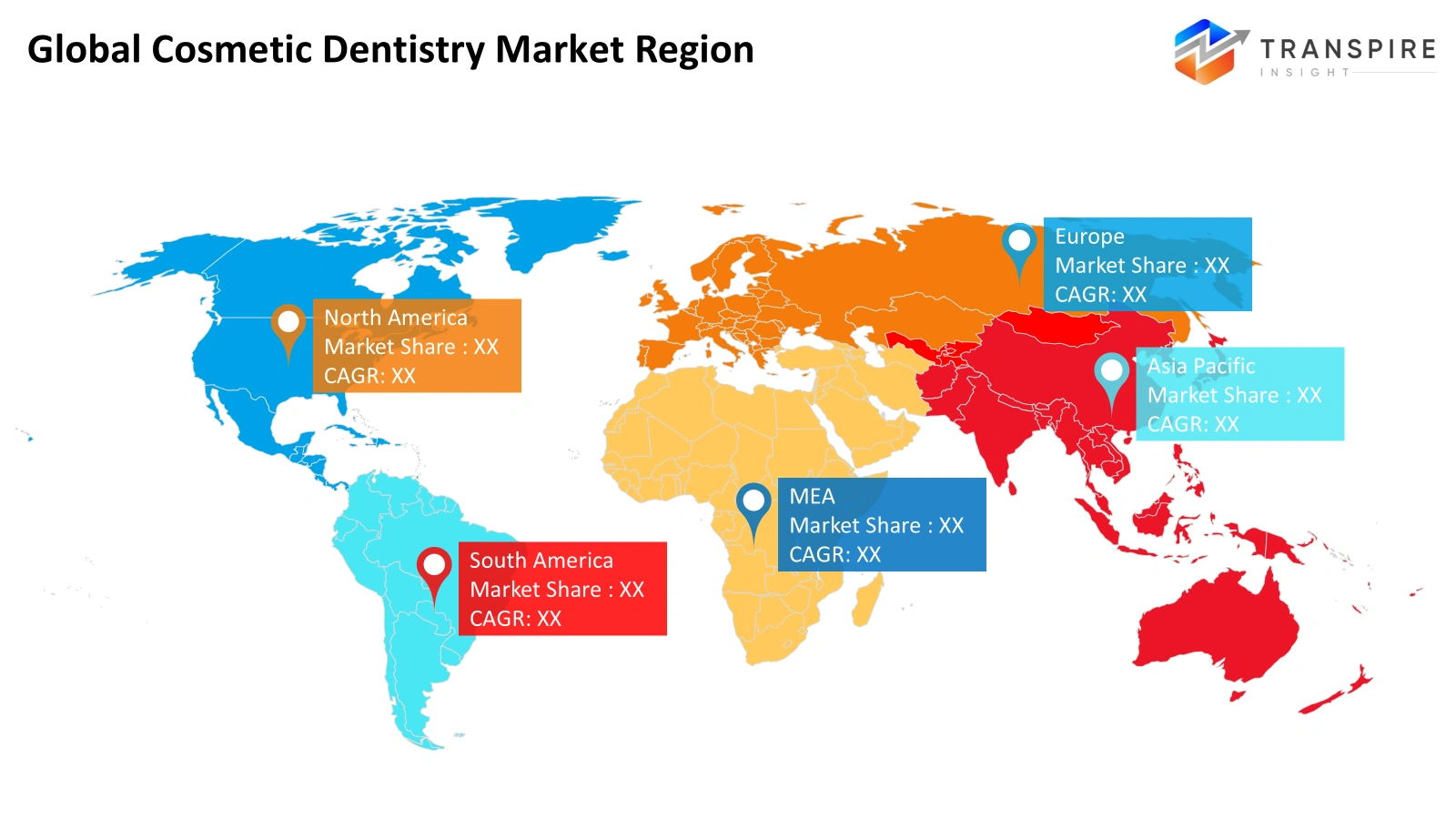
- North America holds the commanding geographic footprint with a 39% share — Large corporate Dental Service Organizations (DSOs) are purchasing bulk inventory, standardizing 3M resin adhesives alongside advanced chairside milling systems to manage soaring patient volumes.
- Europe locks down a substantial 30% secondary market share — Regional manufacturing lines remain highly stable as Ivoclar shifts volume toward high-translucency lithium disilicate glass ceramics that mimic natural enamel without using metal substrates.
- The Asia Pacific region stands as the fastest-growing territory with a 15.8% CAGR — Rapidly expanding dental chains across India and China are leveraging Vatech digital imaging systems and Osstem fixtures to make high-end smile makeovers financially accessible.
- Whitening Products secure a steady 18% market pocket — Consumer habits favor fast, non-surgical brightness upgrades, forcing clinics to invest in high-output blue LED light-curing setups that maximize chemical peroxide breakdown within a single hour.
- Veneers hold an essential 16% revenue slice — Prosthodontists are migrating toward ultra-thin porcelain shells designed via advanced computer CAD software, allowing patients to achieve dramatic smile overhauls without aggressive enamel shaving.
- Orthodontics and Clear Aligners represent the most disruptive segment with a 14.9% CAGR — Align Technology and Envista are aggressively scaling their clinical algorithms, using custom generative software to plan biomechanical movements without needing bulky metal brackets.
- Crowns & Bridges account for a stable 9% market allocation — Global dental laboratories are ditching physical wax sculpting to adopt automated milling blocks, ensuring flawless structural margins and precise contact points.
What Strategic Drivers, Restraints, and Opportunities Define the Future of the Global Cosmetic Dentistry Market?
Driver
The marketplace is accelerating rapidly due to a structural transition from historical subtractive dental procedures toward hyper-precise, digital-first workflows. Traditional manual workflows failed to deliver instant, predictable chairside results. This aesthetic shift was triggered by the widespread clinical integration of artificial intelligence diagnostic tools, high-speed intraoral scanning systems, and immediate 3D fabrication technologies. This transformation directly drives global procurement revenue as corporate practices upgrade their clinical suites with advanced CAD/CAM software and premium bio-compatible structural materials.
In May 2026, diversified manufacturing pioneer Dentsply Sirona expanded clinical diagnostic standards by officially launching Smart View-Detect, the world’s first FDA-cleared, AI-enabled software aid designed for automated teeth structure assessments in CBCT imaging. This cloud-connected software rollout empowers dental practitioners to instantly spot underlying structural flaws and optimize treatment tracking loops, significantly boosting clinic efficiency and driving systemic adoption of automated digital dentistry setups.
Restraint
Severe regional variations in procedural affordability alongside high structural laboratory installation costs persistently limit broad market scaling. Purchasing state-of-the-art milling blocks and premium restorative materials requires substantial upfront capital. This cost barrier keeps cosmetic treatments restricted to high-income urban populations, making it difficult for independent practitioners in developing areas to fully upgrade their legacy equipment.
Opportunity
The most lucrative growth window lies in embedding advanced artificial intelligence software and generative visual design platforms directly into direct-to-clinic delivery frameworks. Integrating real-time color shade-matching algorithms with active 3D printing nodes allows specialized dental networks to manufacture perfectly contoured, ultra-thin porcelain veneers during a single office visit. This technical progression unlocks entirely fresh commercial hardware procurement pipelines from rapidly expanding Dental Service Organizations looking to deliver accessible, same-day cosmetic restorations globally.
What Has the Impact of Artificial Intelligence Been on the Global Cosmetic Dentistry Market?
Artificial intelligence is fundamentally restructuring how modern dental practices plan and execute aesthetic smile makeovers. Instead of relying purely on a clinician's freehand eye or messy physical wax-ups to guess the final shape of an restoration—which frequently leads to manual adjustments and prolonged client revision rounds—clinics now integrate AI-powered computer vision platforms to instantly optimize facial harmony mapping.
The primary technological upgrade stems from predictive modeling capabilities embedded directly within digital smile design software. These intelligent neural networks instantly analyze thousands of facial landmarks and tooth shade variations from 2D intraoral scans, predicting exactly how a set of porcelain veneers or composite bindings will look under fluid real-world facial movements. This automated visualization gives patients immediate visual proof before any permanent enamel removal occurs, drastically boosting same-day treatment acceptance rates.
However, a major limitation persists in the integration accuracy gap across mixed legacy hardware infrastructure. Many older intraoral scanner architectures lack standardized data pipelines, requiring custom software translation steps to successfully sync physical scans into advanced cloud-based AI engines without losing fine surface margins.
In June 2026, global dental AI solution pioneer Pearl announced a massive enterprise partnership with leading dental support organization Smile Brands to deploy its real-time computer vision diagnostic software across hundreds of clinical workflows. This large-scale infrastructure rollout embeds instant, color-coded radiographic and structural annotations directly into daily practice software, enabling practitioners to standardize aesthetic evaluations, dramatically streamline early care diagnostics, and build undeniable clinical trust with patients.
Key Market Trends
Rather than approaching cosmetic tooth enhancements as highly invasive, painful reduction procedures, the dental sector is transitioning toward hyper-conservative, biomimetic restorations. This deep shift fundamentally transforms clinical operations, turning traditional multi-week laboratory ordering setups into predictive, risk-managed workflows that maximize natural tissue preservation.
- Moving past aggressive enamel shaving — Prosthodontists are actively deploying ultra-thin, no-prep ceramic veneers measuring less than 0.3 millimeters to preserve the patient's organic tooth structure and eliminate the need for temporary fittings.
- Hollywood-style bleaching is shifting toward structural whitening — Clinics are leaving high-peroxide compounds behind to adopt nano-hydroxyapatite formulations that naturally smooth out microscopic enamel flaws to reflect light more evenly without inducing localized nerve pain.
- Messy physical alginate molds are being replaced globally — Private practices are rapidly integrating high-speed, powder-free intraoral scanners to capture precise 3D oral geometries within seconds, completely removing patient gag reflexes.
- Traditional thermoformed plastic aligners are giving way to direct 3D printing — Orthodontic laboratories are ditching analog vacuum-forming sheets to print custom orthodontic aligners directly from advanced biocompatible photopolymer resins to achieve pinpoint mechanical accuracy.
- Generic dental templates are evolving into facial-dynamic smile designs — Practitioners are abandoning static tooth mockups in favor of generative AI architecture that actively evaluates lip movements and muscle symmetry to create customized smiles.
- Slow sub-surface structural checks are transitioning to high-definition CBCT imaging — Specialty hubs are pairing standard intraoral cameras with Cone Beam Computed Tomography systems to map dense jawbone contours and underlying nerve pathways with microscopic accuracy.
- Standard analog laboratory casting is turning entirely digital — Corporate clinics are adopting open-system chairside milling units and 3D printers to manufacture custom permanent crowns and bridges within an hour.
- Isolated cosmetic adjustments are giving way to laser-assisted gum contouring — Dental specialists are combining tooth restoration packages with precision soft-tissue diode lasers to safely reshape asymmetrical gum lines with minimal patient bleeding.
- Proprietary hardware ecosystems are opening to open-material integration — Equipment manufacturers are shifting away from closed-loop material locks to allow practices to run third-party, high-translucency ceramic blocks and flexible resins on existing desktop machinery.
Global Cosmetic Dentistry Market Segmentation
By Product
Dental Implants command the leading market position with an authoritative 38% market share, acting as the primary baseline hardware for structural tooth replacement. Whitening products follow as a high-volume consumer tier with an 18% revenue slice, while Veneers and Orthodontics/Clear Aligners lock down 16% and 12% shares, respectively, leaving Crowns & Bridges at 9% and other bonding materials at 7%. The unique growth logic behind this product distribution is tied directly to the structural permanence and shifting patient behavior regarding long-term oral health. Patients no longer view missing teeth purely as a functional issue, but rather as an aesthetic necessity. This forces clinical providers to aggressively transition toward advanced ceramic fixtures and implant procedures that restore full smile symmetry. Moving forward, the boundaries between custom prosthetic design and chairside production will vanish entirely. Infrastructure providers will be forced to engineer fully unified clinical workflows that blend high-speed intraoral scanning with immediate 3D-milling capabilities, ensuring every crown, veneer, or implant abutment is designed and placed within a single office visit.
By Procedure
Restorative and Implant Procedures anchor the market landscape as the dominant financial drivers of equipment procurement, while Orthodontic Procedures emerge as the fastest-accelerating growth pocket due to the continuous expansion of Clear Aligners at a 14.9% CAGR. Aesthetic surface alterations and minor surgical treatments maintain substantial, long-term procurement volumes across global clinics. The unique growth logic steering this procedural segmentation is rooted in the structural shift toward minimally invasive, preventative aesthetics. Modern consumers actively reject aggressive enamel reduction and extensive surgical wait times. They demand hyper-precise, digital-first tooth corrections that deliver visible, highly predictable structural outcomes without prolonged physical recovery or visible metal hardware. Looking ahead, equipment developers must prioritize automated diagnostic software and multi-functional laser arrays. The future market belongs to practitioners who can deliver combined restorative-orthodontic plans within a single software ecosystem, enabling corporate Dental Service Organizations to scale up treatment throughput while minimizing patient discomfort.
By Material
Ceramic and Zirconia materials hold the commanding position in market value, functioning as the vital operational standard for natural-looking, bio-compatible restorations. Composite resins serve as a critical secondary tier for quick, low-cost bonding procedures, while traditional metal-fused substrates maintain a shrinking baseline volume support due to poor cosmetic appeal. The unique growth logic behind this material selection is driven by rapid technological advancements in structural durability and light-translucency matching. Historic materials lacked the strength to withstand heavy biting forces without using unappealing metallic backings, which frequently caused dark shadows along the gum line. Today's high-performance zirconia blocks offer unmatched structural longevity alongside optical properties that perfectly mimic natural tooth enamel under fluid lighting conditions. Moving forward, material science development will focus on custom, hybrid photopolymer resins engineered specifically for high-resolution desktop 3D printing. Sustainable manufacturing success demands providing open-material architectures that allow clinics to seamlessly print ultra-durable, highly detailed crowns and bridges locally.
By End User
Private Dental Clinics maintain the dominant global volume share, whereas corporate Dental Service Organizations (DSOs) represent the fastest-growing institutional end-user segment due to aggressive multi-location equipment investments. General hospitals and specialty cosmetic centers make up the remaining operational procurement base. The unique growth logic defining this distribution is the high capital cost required to establish modern digital treatment rooms. Centralized corporate DSOs have the financial muscle to install high-end intraoral scanners, 3D printers, and chairside milling units across dozens of regional clinics simultaneously. This structural scale lets corporate dental groups drive down lab fees while offering predictable, same-day cosmetic services that independent, cash-strapped solo practices cannot easily match. Looking ahead, the market will push toward decentralized, hub-and-spoke clinical networks. Equipment manufacturers must design modular, cloud-integrated equipment portfolios, enabling multi-clinic DSOs to centralize their aesthetic design teams while fabricating aligners and porcelain crowns locally at individual points of care.
By Age Group
The mid-career adult demographic spanning the 31-45 and 46-60 year brackets commands the largest financial share of the market, driven by stable disposable incomes and a high demand for corrective, anti-aging restorations. Meanwhile, the younger 18-30 year segment is expanding rapidly as the fastest-growing volume driver for elective, non-invasive enhancements. The over-60 geriatric pool maintains a steady volume need centered mostly on complex implant reconstructions. The unique growth logic behind this age distribution is fueled by a profound behavioral shift toward social media presence and career longevity. Young professionals systematically seek preventive aligner treatments and whitening therapies to enhance their digital and professional image, while aging demographics utilize high-end implants and porcelain crowns to visually counter physical signs of aging. Moving forward, clinical platforms will shift away from rigid, one-size-fits-all treatments to deliver age-optimized clinical experiences. System providers will need to build custom software tracking models that address the distinct demands of each generation—ranging from high-speed, direct-to-consumer digital aligner trackings for Gen Z to automated bone-density diagnostic tools for elderly implant recipients.
Key Use Cases Driving the Global Cosmetic Dentistry Market
Structural oral rehabilitation and long-term tooth replacement represent the core use case driving high-value clinical adoption. Dental practitioners actively utilize high-strength titanium and translucent zirconia fixtures to restore both mechanical chewing capabilities and facial bone structural symmetry for patients suffering from extensive tooth loss.
Expanding applications focus heavily on non-invasive, daily lifestyle and professional image enhancements. Corporate dental chains and local clinics deploy specialized peroxide light-accelerated systems and ultra-thin ceramic shells to instantly eliminate deep enamel discoloration, minor structural chipping, and developmental tooth gaps during single office visits.
Emerging use cases leverage advanced machine learning software to execute full-face aesthetic planning and predictive preventative tooth alignment. Specialized orthodontists utilize real-time computer vision algorithms to simulate complex tissue structural changes and map long-term biomechanical force tracking before manufacturing direct-printed biocompatible clear aligner systems.
|
Report Metrics |
Details |
|
Market size value in 2025 |
USD 32.7 Billion |
|
Market size value in 2026 |
USD 36.4 Billion |
|
Revenue forecast in 2033 |
USD 77.1 Billion |
|
Growth rate |
CAGR of 11.32% from 2026 to 2033 |
|
Base year |
2025 |
|
Historical data |
2021 - 2024 |
|
Forecast period |
2026 - 2033 |
|
Report coverage |
Revenue forecast, competitive landscape, growth factors, and trends |
|
Regional scope |
United States; Canada; Mexico; United Kingdom; Germany; France; Italy; Spain; Denmark; Sweden; Norway; China; Japan; India; Australia; South Korea; Thailand; Brazil; Argentina; South Africa; Saudi Arabia; United Arab Emirates |
|
Key company profiled |
Dentsply Sirona, Align Technology, Straumann, Envista, Henry Schein, 3M, Ivoclar, GC Corp, Coltene, Planmeca, Vatech, Zimmer Biomet, Osstem, Septodont, Kulzer. |
|
Customization scope |
Free report customization (country, regional & segment scope). Avail customized purchase options to meet your exact research needs. |
|
Report Segmentation |
By Product (Dental Implants, Veneers, Crowns, Bridges, Whitening Products, Orthodontics, Bonding Materials, Others); By Procedure (Restorative, Aesthetic, Surgical, Implant Procedures, Orthodontic Procedures, Others); By Material (Ceramic, Composite, Metal, Porcelain, Zirconia, Others); By End User (Dental Clinics, Hospitals, DSOs, Specialty Centers, Others); By Age Group (18-30, 31-45, 46-60, Above 60 Years, Others). |
Which Regions are Driving the Global Cosmetic Dentistry Market Growth?
North America maintains a commanding grip on the global cosmetic dentistry market, capturing a dominant 39% of all worldwide industry revenue. This geographic hegemony is heavily driven by a massive consolidation of corporate Dental Service Organizations (DSOs) and skyrocketing consumer demand for elective smile restorations. The regional ecosystem is structurally supported by high disposable income brackets, extensive insurance coverage for restorative-cosmetic crossovers, and dense distribution networks for advanced chairside fabrication technologies. Consequently, integrating high-end intraoral scanning suites and immediate desktop milling systems has become an absolute operational mandate for North American clinics looking to capture premium patient volume. In May 2026, diversified manufacturing giant Dentsply Sirona explicitly accelerated this regional infrastructure footprint by officially expanding its U.S. distribution network through an enhanced commercial partnership with Nashville Dental Inc. This strategic supply chain expansion is specifically engineered to strengthen local clinical access to its digital dentistry solutions and advanced hardware portfolios across key regional hubs. This structural rollout directly scales up North America's localized equipment availability, enabling corporate dental networks to rapidly install seamless, same-day diagnostic and aesthetic workflows to meet booming consumer treatment demands.
Europe serves as a highly stable, predictable secondary pillar for the global market, locking down an essential 30% share of total industry demand. While the North American market concentrates heavily on mass DSO commercialization and direct-to-consumer clear aligner branding, European system adoption is driven entirely by premium biomimetic material engineering and specialized independent clinics. This regional market stability is structurally insulated by a long-standing clinical preference for highly aesthetic, metal-free porcelain restorations and ultra-thin ceramic veneers that maximize natural tooth preservation. To maintain supreme operational precision, European prosthodontists steadily invest in high-translucency glass ceramics and state-of-the-art laboratory automation networks that fulfill strict European medical device compliance metrics.
The Asia Pacific region has emerged as the fastest-growing territory globally, accelerating at a market-leading CAGR of 15.8% to capture a 23% slice of global sales. This sudden structural shift is driven by massive healthcare infrastructure modernization waves, exploding middle-class disposable wealth, and the rapid expansion of localized budget-implant manufacturing corridors. Historically, regional populations viewed advanced aesthetic dental alterations as a cost-prohibitive luxury, but the territory has now rapidly pivoted toward tech-enabled, highly affordable tooth alignment and surgical tooth replacement frameworks. Looking ahead, future procurement in this booming corridor relies entirely on establishing regional production facilities and local-for-local manufacturing hubs to drastically slash equipment importing tariffs.
In May 2026, global medical device leader Align Technology officially expanded its structural presence in the Asia Pacific region by announcing plans for a new multi-million dollar manufacturing facility in Hyderabad, India. This large-scale infrastructure investment is specifically engineered to scale up localized fabrication capabilities and drastically shorten shipping turnaround loops for custom clear aligner treatments across emerging regional dental networks. By bypassing fragile cross-border logistics pipelines, this strategic rollout directly empowers domestic dental operations to deliver accessible, high-velocity cosmetic treatments to an expanding regional patient population.
Who are the Key Players in the Global Cosmetic Dentistry Market and How Do They Compete?
The global cosmetic dentistry market is highly consolidated, with a select group of diversified medical device and dental engineering conglomerates defining the competitive baseline. Competition revolves around digital ecosystem integration capability, where vendors no longer battle simply on physical material longevity but rather on total intraoral workflow connectivity. Companies compete by embedding proprietary smart diagnostic artificial intelligence, CAD/CAM design blocks, and rapid 3D printing arrays directly into their clinic hardware portfolios, creating steep ecosystem switching costs for corporate Dental Service Organizations (DSOs) seeking predictable treatment throughput.
Dentsply Sirona aggressively commands a dominant footprint through a relentless technology innovation strategy, prioritizing multi-discipline digital workflow connectivity and chairside automation. The company differentiates itself via its widely deployed CEREC single-visit milling arrays and its newly launched Smart View-Detect software, the world's first FDA-cleared, AI-enabled diagnostic aid for advanced teeth assessments in CBCT imaging. Their expansion approach relies on leveraging massive existing institutional distribution networks, securing enhanced partnership agreements with domestic dental suppliers to scale equipment installation across regional hubs.
Align Technology competes through a hyper-focused niche specialization strategy centered entirely on digital clear aligners and intraoral visualization systems. The enterprise differentiates itself by engineering unified, end-to-end orthodontic platforms, pairing its iTero Lumina high-resolution scanners with exocad cloud software to eliminate manual bracket adjustments completely. Align actively drives growth by making massive multi-million dollar capital investments to establish localized, high-capacity manufacturing facilities in emerging markets like Hyderabad, India, drastically shortening shipping turnaround loops for local dental practices.
Company List
- Dentsply Sirona
- Align Technology
- Straumann
- Envista
- Henry Schein
- 3M
- Ivoclar
- GC Corp
- Coltene
- Planmeca
- Vatech
- Zimmer Biomet
- Osstem
- Septodont
- Kulzer
Recent Development News
In December 2025, global healthcare solution provider Henry Schein expanded its exclusive distribution agreement with Swiss biomimetic developer vVARDIS. This strategic commercial expansion grants Henry Schein the absolute exclusive U.S. distribution rights for the drill-free Curodont Repair Fluoride Plus system across all dental clinical segments starting January 1, 2026, allowing practitioners nationwide to treat early-stage enamel lesions without needles or invasive drilling.
Source: https://investor.henryschein.com
In February 2026, global dental engineering conglomerate Straumann Group announced the commercial launch of its next-generation intraoral scanner, SIRIOS X3, alongside the continued expansion of its connected cloud platform, Straumann AXS. This digital ecosystem rollout slashes treatment planning latency by enabling seamless, open-architecture file sharing between clinical chairsides and dental laboratories, significantly boosting practitioner cross-selling efficiency between implantology and clear aligner segments.
Source: https://www.straumann.com
In April 2026, premium corrective dentistry manufacturer Straumann Group finalized an advanced digital orthodontics integration partnership with remote clinical tracking pioneer DentalMonitoring. This software and service synchronization embeds real-time AI-powered monitoring features directly into the ClearCorrect aligner system workflow, allowing orthodontists to track shifting tooth positions remotely and optimize patient biological movement tracking loops with vastly fewer in-office checkups.
Source: https://www.straumann.com
What Strategic Insights Define the Future of the Global Cosmetic Dentistry Market?
The cosmetic dentistry sector is heading toward full full-face aesthetic planning where oral restorations are completely matched with natural aging and facial muscle movements. However, a major hidden risk stems from supply chain exposure to intensifying international trade tariffs on imported ceramic substrates and titanium fixtures, which could squeeze profit margins for high-volume corporate chains. Conversely - an emerging opportunity lies in the rapid development of custom, hybrid photopolymer resins engineered specifically for high-speed desktop 3D printers, enabling local clinics to manufacture ultra-durable restorations instantly.
To maintain market leadership, clinical providers should transition away from closed equipment ecosystems to adopt open-material digital architectures. This strategic shift allows practices to integrate third-party milling blocks and AI software seamlessly, maximizing treatment throughput while significantly reducing operational laboratory overhead fees.
Key Segmentations are:
By Product
- Dental Implants
- Veneers
- Crowns
- Bridges
- Whitening Products
- Orthodontics
- Bonding Materials
- Others
By Procedure
- Restorative
- Aesthetic
- Surgical
- Implant Procedures
- Orthodontic Procedures
- Others
By Material
- Ceramic
- Composite
- Metal
- Porcelain
- Zirconia
- Others
By End User
- Dental Clinics
- Hospitals
- DSOs (Dental Service Organizations)
- Specialty Centers
- Others
By Age Group
- 18-30
- 31-45
- 46-60
- Above 60 Years
- Others
Regional Outlook
North America
- United States
- Canada
- Mexico
Europe
- Germany
- United Kingdom
- France
- Spain
- Italy
- Rest of Europe
Asia Pacific
- Japan
- China
- Australia & New Zealand
- South Korea
- India
- Rest of Asia Pacific
South America
- Brazil
- Argentina
- Rest of South America
Middle East & Africa
- Saudi Arabia
- United Arab Emirates
- South Africa
- Rest of the Middle East & Africa
Frequently Asked Questions
Find quick answers to common questions.
The global cosmetic dentistry market size was valued at USD 32.7 Billion in 2025 and is poised to reach USD 77.1 Billion by 2033, expanding at a 11.32% CAGR.
Key segments for the global cosmetic dentistry market are By Product (Dental Implants, Veneers, Crowns, Bridges, Whitening Products, Orthodontics, Bonding Materials, Others); By Procedure (Restorative, Aesthetic, Surgical, Implant Procedures, Orthodontic Procedures, Others); By Material (Ceramic, Composite, Metal, Porcelain, Zirconia, Others); By End User (Dental Clinics, Hospitals, DSOs, Specialty Centers, Others); By Age Group (18-30, 31-45, 46-60, Above 60 Years, Others).
Growth is primarily driven by a structural transition toward digital-first chairside workflows and a surging consumer preference for minimally invasive, same-day dental alterations. It is further accelerated by the rapid clinical integration of high-resolution intraoral imaging, AI-assisted smile simulation tools, and next-generation biocompatible materials like translucent zirconia.
The global market is led by major manufacturers including Dentsply Sirona, Align Technology, Straumann, Envista, Henry Schein, 3M, Ivoclar, GC Corp, Coltene, Planmeca, Vatech, Zimmer Biomet, Osstem, Septodont, and Kulzer.
North America holds a dominant 39% share of the worldwide revenue, heavily influencing dynamics through a massive concentration of consolidated corporate Dental Service Organizations (DSOs) and high patient disposable income brackets. The region acts as the primary baseline for bulk procurement and early clinical deployment of cutting-edge CAD/CAM automated hardware systems.
Highly lucrative opportunities lie in embedding advanced artificial intelligence software and generative visual design platforms directly into direct-to-clinic delivery frameworks. Additionally, significant growth can be unlocked by transitioning practicing clinics toward open-material desktop 3D printing architectures to manufacture customized, ultra-thin porcelain veneers and permanent restorations in a single office visit.
- Dentsply Sirona
- Align Technology
- Straumann
- Envista
- Henry Schein
- 3M
- Ivoclar
- GC Corp
- Coltene
- Planmeca
- Vatech
- Zimmer Biomet
- Osstem
- Septodont
- Kulzer
About the Authors

Pankaj Ghogare Patil
I am Pankaj Ghogare Patil, a Senior Research Analyst at Transpire Insight, specializing in the Pharmaceutical, Chemicals & Materials, Healthcare IT, and Biotechnology industry. My expertise lies in conducting comprehensive market research, analyzing industry trends, evaluating competitive landscapes, and translating complex data into actionable insights. At Transpire Insight, I closely follow emerging technologies, regulatory developments, and market innovations to create accurate, well-researched, and informative content that helps businesses and professionals make informed decisions. I am committed to producing credible, evidence-based articles that reflect industry best practices while making technical topics accessible and valuable for a broad audience.

Chakradhar Khansole
Chakradhar serves as the Research Director at Transpire Insight, bringing over 8 years of experience in technology, innovation, and strategic market intelligence. He specializes in transforming complex market data into actionable business insights that enable organizations to make informed, growth-oriented decisions. Recognized for his strategic vision and analytical expertise, Chakradhar leads high-impact research initiatives, delivering comprehensive market assessments, competitive intelligence, and forward-looking industry analysis.
Recently Published Reports
-
Apr 2026
AI in Diabetic Retinopathy Market
AI in Diabetic Retinopathy Market Size, Share & Analysis Report By Type (Screening AI Systems, Diagnostic AI Systems, and Predictive AI Models), By Application Segment (Hospitals, Ophthalmology Clinics, Diagnostic Centers, and Research and Development), and Geography (North America, Europe, Asia-Pacific, Middle East and Africa, South and Central America), 2021 - 2031
-
Apr 2026
Psychometric Tests Market
Psychometric Tests Market Size, Share & Analysis Report By Type (Personality Tests, Ability/Aptitude Tests, Skill/Knowledge Tests, and Others), By Application (Talent Acquisition and Talent Management), and Geography (North America, Europe, Asia-Pacific, Middle East and Africa, South and Central America), 2021 – 2031
-
Apr 2026
Rare Biological Sample Collection Market
Rare Biological Sample Collection Market Size, Share & Analysis Report By Type (Isolation Kits & Reagent, Blood Collection Tubes, and Others), By Application (Oncology, Transcriptomics, Pharmacogenomics, and Others), and Geography (North America, Europe, Asia-Pacific, Middle East and Africa, South and Central America), 2021 – 2031
-
Jul 2026
Diabetic Retinopathy Market
Diabetic Retinopathy Market Size, Share & Analysis Report By Type (Proliferative Diabetic Retinopathy, and Diabetic Macular Edema (DME)), By Treatment Type (Anti VEGF Drug, Steroid Implants, Laser Surgeries, and Vitrectomy), and Geography (North America, Europe, Asia-Pacific, Middle East and Africa, South and Central America), 2021 – 2031
Our Clients







