

Global Bird Feeding and Water Suppliers Market Summary:
As per Transpire Insight Analysis, the Bird Feeding and Water Suppliers Market size is estimated at USD 5.58 billion in 2025 and is anticipated to reach USD 7.42 billion by 2033, growing at a CAGR of 3.63% from 2026 to 2033.
The global bird feeding and water suppliers are a market serving backyard wildlife, bird conservation, pet care, and public green spaces by offering bird feeders, water stations, nectar feeders, and related accessories. The sector has moved away from simple to more premium- priced products such as robust and app-controlled solutions for people who are more readily spending on backyard and wildlife solutions as an element of their lives outside and commitment to nature. Rising participation in birdwatching, increasing environmental awareness, urbanization, and habitat loss have encouraged consumers to supplement natural food and water sources, driving demand for innovative, eco-friendly, and value-added bird feeding products.
Global Bird Feeding and Water Suppliers Market Size & Forecast:
- Global Bird Feeding and Water Suppliers Market Size 2025: USD 5.58 Billion
- Global Bird Feeding and Water Suppliers Market Size 2033: USD 7.42 Billion
- Global Bird Feeding and Water Suppliers Market CAGR: 3.63%
- Global Bird Feeding and Water Suppliers Market Segments: By Product Type (Bird Feeders, Bird Waterers, Bird Food, Bird Baths, Feeding Stations, Smart Bird Feeders, Feeding Accessories, Others); By Material (Plastic, Metal, Wood, Glass, Recycled Materials, Ceramic, Stainless Steel, Others); By Bird Type (Wild Birds, Pet Birds, Songbirds, Hummingbirds, Poultry Birds, Water Birds, Exotic Birds, Others); By Distribution Channel (Pet Stores, Specialty Stores, Online Retail, Supermarkets, Garden Centers, Farm Supply Stores, Direct Sales, Others); By End User (Residential Consumers, Bird Parks, Wildlife Conservation Organizations, Zoos, Commercial Farms, Educational Institutes, Government Parks, Others)

Key Global Bird Feeding and Water Suppliers Market Insights:
The market is evolving from use-specific, seasonal bird-feeding solutions into connected wildlife-care ecosystems providing repeat consumer participation and premium product value. Innovative feed accessories are more closely related to smart monitoring, environmentally friendly materials, and habitat-oriented solutions.
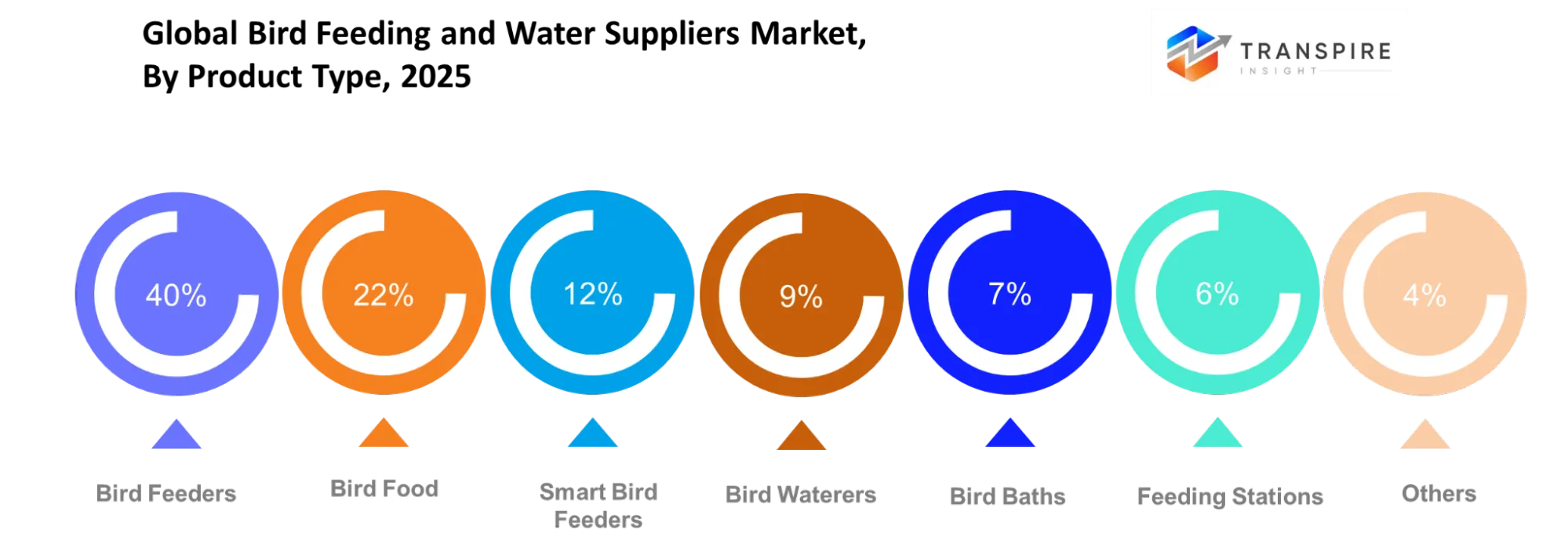
- Bird Feeders account for 40% of the market, and Bird Buddy is an AI-powered camera feeder that recognises species, speeding up connected wildlife watching.
- Kaytee's share of Bird Food is 22%, as consumers seek species-specific feeding solutions and expand premium nutrition portfolios.
- Smart Bird Feeders represent 12% and are growing at an 18.4% CAGR, with the addition of app-based monitoring and automated user engagement by Nature Anywhere.
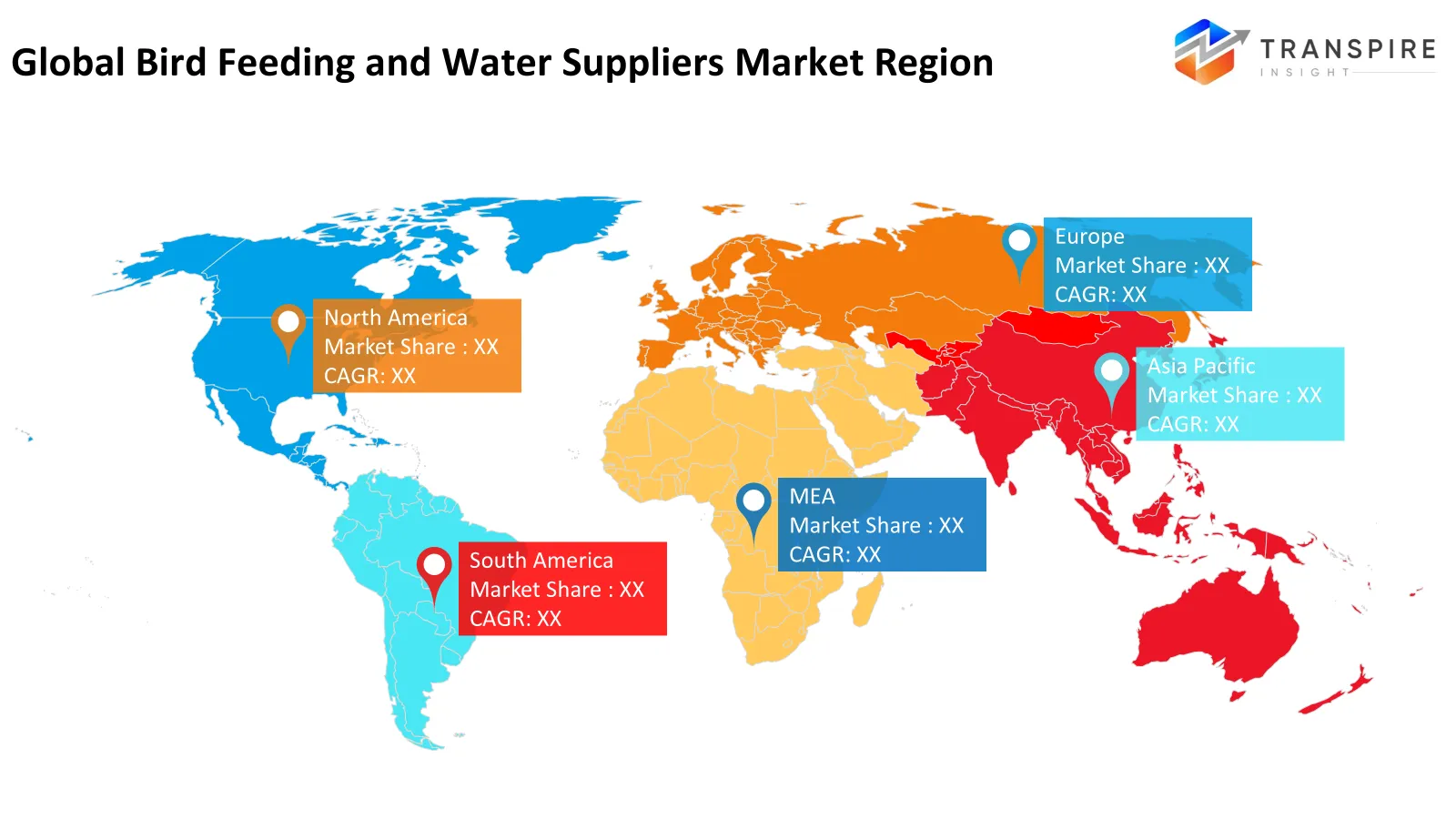
- North America accounts for 46%, with Wild Birds Unlimited helping to educate speciality retailers to repeat purchases and habitat management.
- Europe accounts for 27%, and Gardman is growing its eco-friendly product lines as recycled materials become commonplace in purchasing.
- Asia Pacific accounts for 18%, while Perky-Pet is expanding digital distribution, aided by the rapid urban gardening and biodiversity awareness.
- Bird Waterers account for 9%, and Heath Outdoor Products has launched weather-resistant hydration systems for year-round outdoor use.
- Feeding Stations represent 6%, with Woodlink's designs becoming modular to accommodate customizable backyard ecosystems and future accessory additions.
What are the Key Drivers, Restraints, and Opportunities in the Global Bird Feeding and Water Suppliers Market?
Driver:
Demand is increasing, supported by lifestyle integration of wildlife conservation in our daily lives as opposed to merely disposable spending on a hobby. Government biodiversity initiatives, citizen-science bird monitoring systems, and increasing use of backyard habitat certification programs have contributed to a customer desire for a better overall feeding experience. This has increased purchase frequency and a preference for repeat business with high-end feeding devices, targeted blends, and seasonal items, leading to ongoing, consumable revenue streams. In January 2026, Birdfy debuted its Hum Bloom smart hummingbird feeder alongside its OrniSense LLM AI platform at CES 2026. The hardware introduces an 8MP camera capable of 4K resolution and 120fps slow-motion recording to cleanly track rapid avian wingbeats.
Restraint:
Despite innovations made by several bird feeder manufacturers, poor customer maintenance remains the chief deterrent to sales for bird feeders. Bird feeders in the open, exposed to sun, rain, mold, mice, squirrels, and other creatures, often prove less hygienic, lasting, useful,l and appealing than they should. Variable customer demand can dissuade new purchasers.
Opportunity:
The next growth phase lies in intelligent bird care management solutions supported by digital technologies and sustainability investments. Premium smart feeding stations equipped with AI-enabled cameras, automated refill alerts, and species identification capabilities are creating premium revenue streams. Investments in recycled materials, solar-powered water systems, and subscription-based bird food delivery services further strengthen long-term customer engagement. Expanding adoption across Asia-Pacific's urban residential developments and eco-tourism destinations also offers suppliers new commercial opportunities beyond traditional backyard bird feeding markets. In April 2026, Birdfy launched the premium Metal 2 4K smart bird feeder specifically targeting the European and Asia-Pacific market networks. This new hardware deployment introduced immersive ultra-high-definition 4K resolution clarity alongside proprietary technology.
What Has the Impact of Artificial Intelligence Been on the Bird Feeding and Water Suppliers Market?
AI is enhancing the global bird feeding and water suppliers market by creating more intelligent, efficient, and data-driven feeding systems for wildlife. Smart feeders with AI cameras automatically classify bird species, track feeding habits, and share data via mobile apps, offering a more engaging customer experience. Machine learning algorithms use weather data, migration timing, and historical visitation data to optimize feeding schedules, minimizing wasted feed and maximizing bird activity. AI is also being used in the manufacturing sector to predict seasonal demand, manage inventory levels, and plan production, thereby minimizing stockouts during high birdwatching seasons. Retailers can leverage predictive analytics to tailor product recommendations and subscription renewal offerings to individual shoppers, based on their buying patterns. But the cost of the hardware, software integration, and inconsistent image recognition accuracy in poor lighting and crowded feeding conditions are limiting its widespread adoption. However, with ongoing developments in edge computing, sensor technology, and computer vision, the future of connected feeding ecosystems for wildlife looks bright.
Key Global Bird Feeding and Water Suppliers Market Trends:
The market is moving away from traditional bird-feeding products and into connected, sustainable wildlife solutions that create ongoing consumer engagement and not just a single sale.
- Backyard bird feeding has become an all-season habitat management, and consumers are now willing to spend on a full feeding ecosystem rather than just on the product.
- Manufacturers are switching to recycled, biodegradable and responsibly sourced materials to meet sustainability purchasing preferences.
- Smart feeders have evolved from gimmicks to high-end products with mobile connectivity, bird identification and automated feeding management.
- Consumers have become more inclined to buy bird food by subscription and seasonal maintenance accessories for convenience.
- Product innovation is increasingly focused on designs that are squirrel-proof, weather-proof, and hygienic to enhance usability and maintenance over time.
- Product discovery is now dominated by online retail, with educational content, expert reviews, and involvement of the wildlife community.
- Wildlife conservation groups are working with manufacturers to encourage responsible feeding and awareness of biodiversity through certified products.
- Companies are integrating solar-powered water circulation, modular feeding stations and interchangeable accessories to prolong the life of the product and promote upgrade sales.
Global Bird Feeding and Water Suppliers Market Segmentation
By Product Type:
Bird Feeders account for the largest market share at 40% and are the core offering to attract garden birds and encourage repeat sales of accessories; Bird Food follows at 22%, with its sustained reorder of consumables, Smart Bird Feeders at 12% yet growing fastest at an 18.4% CAGR thanks to AI features and smartphone capabilities; Bird Waterers, Bird Baths, Feeding Stations and Others follow at 9%, 7%, 6%, 4% and continue to increase their share of sales through luxury landscaping and wildlife housing construction projects.
By Material:
Plastic has retained its largest role due to low cost and light weight. While there is greater demand for both metal and stainless steel for robustness. Wood has its appeal through its natural beauty; however, recycled material adoption is picking up as it is an increasingly crucial purchasing differentiator, whereas both glass and ceramic continue to be used in the form of garden features.
By Bird Type:
Wild birds lead in consumption through popular feeding at home. For songbirds, speciality feeding has grown in backyards, as has the development of equipment to keep these feeders functional. These specialised products feed hummingbirds and songbirds. Other areas of feeding that capitalise on custom diets and equipment have emerged through the increase of speciality birds, water birds, as well as poultry birds.
By Distribution Channel:
Online retail continues to solidify its competitive position through a deeper variety of products, recurring revenue models, and in-depth purchasing guidance for customers. Speciality retail retains its higher positioning while pet supplies, grocery, garden centres, farm supply, direct selling, and other channels play to localised preferences and cyclical shopping opportunities.
By End User:
Residential consumers continue to be the leading segment of buyers, with a steady rise in outdoor wildlife participation and home garden investments. Durable feeding solutions for wildlife protection, ecological education,n and enhancing natural habitats in Wildlife protection charities, bird parks, zoo facilities, educational organisations, public parks, and commercial plantations generate substantial opportunities for sustained corporate spending.
What are the Key Use Cases Driving the Global Bird Feeding and Water Suppliers Market?
The primary market application is dominated by bird feeding, and more homeowners are creating their own nature havens by introducing combined feeding, drinking, and dietary systems, which increase visiting bird numbers whilst promoting better outdoor spaces.
Growth areas include those found in bird gardens, zoos, nature reserve conservation areas, and learning institutions where established feeding solutions maintain and supplement animal populations for nature management, scientific study, visitor experience, and eco education using tough, large-volume equipment.
New growth is expected in and around AI-powered bird feeders, Urban Biodiversity Projects (BUNS), Eco- Tourism and nature conservation at council levels and within city spaces using networking, data analysis, and monitoring solutions.
|
Report Metrics |
Details |
|
Market size value in 2025 |
USD 5.58 Billion |
|
Market size value in 2026 |
USD 5.78 Billion |
|
Revenue forecast in 2033 |
USD 7.42 Billion |
|
Growth rate |
CAGR of 3.63% from 2026 to 2033 |
|
Base year |
2025 |
|
Historical data |
2021 - 2024 |
|
Forecast period |
2026 - 2033 |
|
Report coverage |
Revenue forecast, competitive landscape, growth factors, and trends |
|
Regional scope |
United States; Canada; Mexico; United Kingdom; Germany; France; Italy; Spain; Denmark; Sweden; Norway; China; Japan; India; Australia; South Korea; Thailand; Brazil; Argentina; South Africa; Saudi Arabia; United Arab Emirates |
|
Key company profiled |
Droll Yankees, Perky-Pet, Wild Birds Unlimited, Bird Buddy, Gardman, Woodlink, Aspects Inc., Audubon, Heath Outdoor Products, Kaytee, Pennington, Cole's Wild Bird Products, Nature Anywhere, Erva Tool & Die, First Nature |
|
Customization scope |
Free report customization (country, regional & segment scope). Avail customized purchase options to meet your exact research needs. |
|
Report Segmentation |
By Product Type (Bird Feeders, Bird Waterers, Bird Food, Bird Baths, Feeding Stations, Smart Bird Feeders, Feeding Accessories, Others); By Material (Plastic, Metal, Wood, Glass, Recycled Materials, Ceramic, Stainless Steel, Others); By Bird Type (Wild Birds, Pet Birds, Songbirds, Hummingbirds, Poultry Birds, Water Birds, Exotic Birds, Others); By Distribution Channel (Pet Stores, Specialty Stores, Online Retail, Supermarkets, Garden Centers, Farm Supply Stores, Direct Sales, Others); By End User (Residential Consumers, Bird Parks, Wildlife Conservation Organizations, Zoos, Commercial Farms, Educational Institutes, Government Parks, Others) |
Which Regions are Driving the Global Bird Feeding and Water Suppliers Market?
North America has 46% of the global market and is the industry leader because of the well-established involvement of consumers in backyard bird feeding and wildlife conservation. Premium feeder adoption is driven by high disposable income, and speciality retail networks make products more accessible. Long-term consumer engagement is strengthened by government-supported biodiversity programs and citizen-science bird monitoring programs. The region continues to lead the way in innovation of AI-powered feeders and subscription bird food services. In May 2026, the Wild Bird Feeding Institute (WBFI) convened its Spring Board Meeting in California to formalise new international expansion initiatives and sustainability criteria.
Asia Pacific accounts for 18% of the market and is growing as a result of fast-paced urbanisation, not traditional hobbies. Growth is fueled by the growing residential landscaping market, smart city projects, and the growing middle class spending in North America. E-commerce platforms are growing and providing greater access to products in developing economies. Environmental education, urban green-space investments, and growing involvement in recreational birdwatching are helping to ensure stable demand.
Europe is expected to see the highest growth at 14.7% due to the increasing sustainability regulations and eco-conscious buying habits. Consumers are more and more choosing recyclable materials, responsibly sourced products,s and habitat-friendly garden solutions. Manufacturers are still investing in high-quality sustainable designs and conservation partnerships that further enhance market acceptance. Biodiversity restoration projects, smart feeders that are connected, ed and growing residential developments with wildlife are anticipated to provide future opportunities.
Who are the Key Players in the Global Bird Feeding and Water Suppliers Market and how do they compete?
Product innovation, sustainability, digital integration and high-end wildlife experiences are having a bigger influence on competition than pricing, as brands differentiate on areas such as advanced AI-included features, green materials, high-grade nutrition and direct-to-consumer engagement, while growing distribution in specialty retail and online.
Droll Yankees highlights long-lasting, superior-quality feed stations. Perky-Pet prioritises novel design and wide-scope selling channels. Wild Birds Unlimited promotes affordably sustaining the birding community. Bird Buddy facilitates connected wilderness viewing using AI-enabled camera stations. Gardman concentrates on enhanced garden ecology. Woodlink offers highly modular patio feeding stations. Aspects Inc. competes with superior hummingbird products, while Audubon uses its conservation branding to market. Heath Outdoor Products offers an improvement on weather-resistant outdoor equipment, while Kaytee builds on species-specific nutrition lines. Pennington provides a combination of lawn and wildlife ecosystem products, with Cole's Wild Bird Products focusing on high-end bird seed production.
Nature Anywhere is a high-technology user target group company, while Erva Tool & Die builds on heavy-duty metal products, and First Nature gains ground against other competitors with innovative, easy-to-maintain hummingbird feeders with increased internet sales.
Key Players are:
- Droll Yankees
- Perky-Pet
- Wild Birds Unlimited
- Bird Buddy
- Gardman
- Woodlink
- Aspects Inc.
- Audubon
- Heath Outdoor Products
- Kaytee
- Pennington
- Cole's Wild Bird Products
- Nature Anywhere
- Erva Tool & Die
- First Nature
Recent Development News
- In January 2026, Birdbuddy launched the Birdbuddy 2 smart bird feeder. This next-generation device features 2K HDR video, dual integrated solar panels, and a wider field of view to improve backyard wildlife observation.
- In January 2026, Birdbuddy launched the Birdbuddy 2 Mini smart bird feeder. This more accessible, compact version features the same core camera and AI bird identification technology but in a smaller enclosure designed for first-time users and small outdoor balconies.
What Strategic Insights Define the Future of the Bird Feeding and Water Suppliers Market?
The future market will evolve toward integrated wildlife-management ecosystems in which connected feeders, premium nutrition, subscription services and dedicated conservation programs deliver recurring consumer value, rather than a one-time sale of equipment. Future competition will increasingly be defined by the integration of digital customer engagement with sustainable product design and data-enabled consumer experiences. A hidden threat is the growing reliance on connected living systems, where cybersecurity concerns, hardware costs, and AI acceptance inconsistencies will limit broad adoption even amidst rising consumer interest. The most promising emerging opportunity lies at the intersection of biodiversity programs, urban residential landscaping, and AI-enabled habitat sensors to deliver premium recurring revenue streams. To establish themselves as the desirable long-term brand leader, companies should focus on building interconnected smart ecosystems, refillable materials, prescriptive replenishment services, and partnership alliances with conservation entities.
Key Segmentations are:
By Product Type
- Bird Feeders
- Bird Waterers
- Bird Food
- Bird Baths
- Feeding Stations
- Smart Bird Feeders
- Feeding Accessories
- Others
By Material
- Plastic
- Metal
- Wood
- Glass
- Recycled Materials
- Ceramic
- Stainless Steel
- Others
By Bird Type
- Wild Birds
- Pet Birds
- Songbirds
- Hummingbirds
- Poultry Birds
- Water Birds
- Exotic Birds
- Others
By Distribution Channel
- Pet Stores
- Specialty Stores
- Online Retail
- Supermarkets
- Garden Centers
- Farm Supply Stores
- Direct Sales
- Others
By End User
- Residential Consumers
- Bird Parks
- Wildlife Conservation Organizations
- Zoos
- Commercial Farms
- Educational Institutes
- Government Parks
- Others
Regional Analysis
North America
- United States
- Canada
- Mexico
Europe
- Germany
- United Kingdom
- France
- Italy
- Spain
- Russia
- Rest of Europe
Asia Pacific
- China
- Japan
- India
- South Korea
- Australia
- Rest of Asia Pacific
South America
- Brazil
- Argentina
- Rest of South America
Middle East & Africa
- Saudi Arabia
- United Arab Emirates
- Qatar
- South Africa
- Rest of the Middle East & Africa
Frequently Asked Questions
Find quick answers to common questions.
The global bird feeding and water suppliers market size was valued at USD 5.58 billion in 2025 and is poised to reach USD 7.42 billion by 2033, expanding at a 3.63% CAGR.
Key segments for the global bird feeding and water suppliers market are By Product Type (Bird Feeders, Bird Waterers, Bird Food, Bird Baths, Feeding Stations, Smart Bird Feeders, Feeding Accessories, Others); By Material (Plastic, Metal, Wood, Glass, Recycled Materials, Ceramic, Stainless Steel, Others); By Bird Type (Wild Birds, Pet Birds, Songbirds, Hummingbirds, Poultry Birds, Water Birds, Exotic Birds, Others); By Distribution Channel (Pet Stores, Specialty Stores, Online Retail, Supermarkets, Garden Centers, Farm Supply Stores, Direct Sales, Others); By End User (Residential Consumers, Bird Parks, Wildlife Conservation Organizations, Zoos, Commercial Farms, Educational Institutes, Government Parks, Others).
Growth is primarily driven by rising backyard birdwatching, biodiversity conservation initiatives, premium wildlife-care products, smart feeding technologies, and increasing demand for sustainable outdoor living solutions.
The global bird feeding and water suppliers market is led by major manufacturers, including Droll Yankees, Perky-Pet, Wild Birds Unlimited, Bird Buddy, Gardman, Woodlink, Aspects Inc., Audubon, Heath Outdoor Products, Kaytee, Pennington, Cole's Wild Bird Products, Nature Anywhere, Erva Tool & Die, and First Nature.
North America holds 46% of the global market, supported by strong consumer participation in backyard bird feeding, established specialty retail networks, conservation programs, and rapid adoption of premium smart feeders.
Commercial opportunities include AI-enabled smart feeding systems, subscription-based bird food delivery, eco-friendly product innovation, solar-powered water solutions, urban biodiversity projects, and expansion across Asia-Pacific's residential and eco-tourism sectors.
- Droll Yankees
- Perky-Pet
- Wild Birds Unlimited
- Bird Buddy
- Gardman
- Woodlink
- Aspects Inc.
- Audubon
- Heath Outdoor Products
- Kaytee
- Pennington
- Cole's Wild Bird Products
- Nature Anywhere
- Erva Tool & Die
- First Nature
About the Authors

Chetan Dhatrak
I’m Chetan Dhatrak, a Senior Research Analyst at Transpire Insight, specializing in the Consumer Goods, Foods and Beverages industry. I focus on analyzing market trends, consumer behavior, competitive landscapes, and industry developments to deliver accurate, data-driven insights. My research at Transpire Insight is built on credible sources and in-depth analysis, helping businesses and readers better understand market dynamics, emerging opportunities, and evolving consumer preferences. I’m committed to creating reliable, well-researched content that supports informed decision-making and reflects the latest developments in the consumer goods and food & beverage sectors.

Chakradhar Khansole
Chakradhar serves as the Research Director at Transpire Insight, bringing over 8 years of experience in technology, innovation, and strategic market intelligence. He specializes in transforming complex market data into actionable business insights that enable organizations to make informed, growth-oriented decisions. Recognized for his strategic vision and analytical expertise, Chakradhar leads high-impact research initiatives, delivering comprehensive market assessments, competitive intelligence, and forward-looking industry analysis.
Recently Published Reports
-
Apr 2026
Bottled Water Market
Bottled Water Market Size, Share & Analysis Report By Product Type (Still Bottled Water, Carbonated Bottled Water, Functional Bottled Water, and Others), By Packaging (PET, Cans, and Others), By Sales Channel (Supermarkets/Hypermarkets, Convenience Stores/Drug Stores, Grocery Stores/Club Stores, Foodservice, and Others) and Geography (North America, Europe, Asia-Pacific, Middle East and Africa, South and Central America), 2021 - 2032
-
Apr 2026
Color Cosmetic Packaging Market
Color Cosmetic Packaging Market Size, Share & Analysis Report By Application (Mascara Packaging, Liquid Packaging, and Liquid Face), By Type (Tubes & Bottles, Pens & Markers, Compacts & Containers, and Droppers & Pumps), and Geography (North America, Europe, Asia-Pacific, Middle East and Africa, South and Central America), 2021 - 2031
-
Apr 2026
External Microphone For Camera Market
External Microphone For Camera Market Size, Share & Analysis Report By Type (Shotgun Microphone, Lavalier Microphone, and Others), By Application (Digital Camera, Professional Video Camera, and Others), and Geography (North America, Europe, Asia-Pacific, Middle East and Africa, South and Central America), 2021 - 2031
-
Apr 2026
Foot Orthotic Insoles Market
Foot Orthotic Insoles Market Size, Share & Analysis Report By Type (Pre-fabricated, and Custom-made), By Material (Thermoplastic, Composite Carbon Fiber, and Others), By Distribution Channel (Drug Stores, Hospitals & Clinics, and Others), and Geography (North America, Europe, Asia-Pacific, Middle East and Africa, South and Central America), 2021 - 2031