
Global Air Purification Activated Carbon Market Size & Forecast:
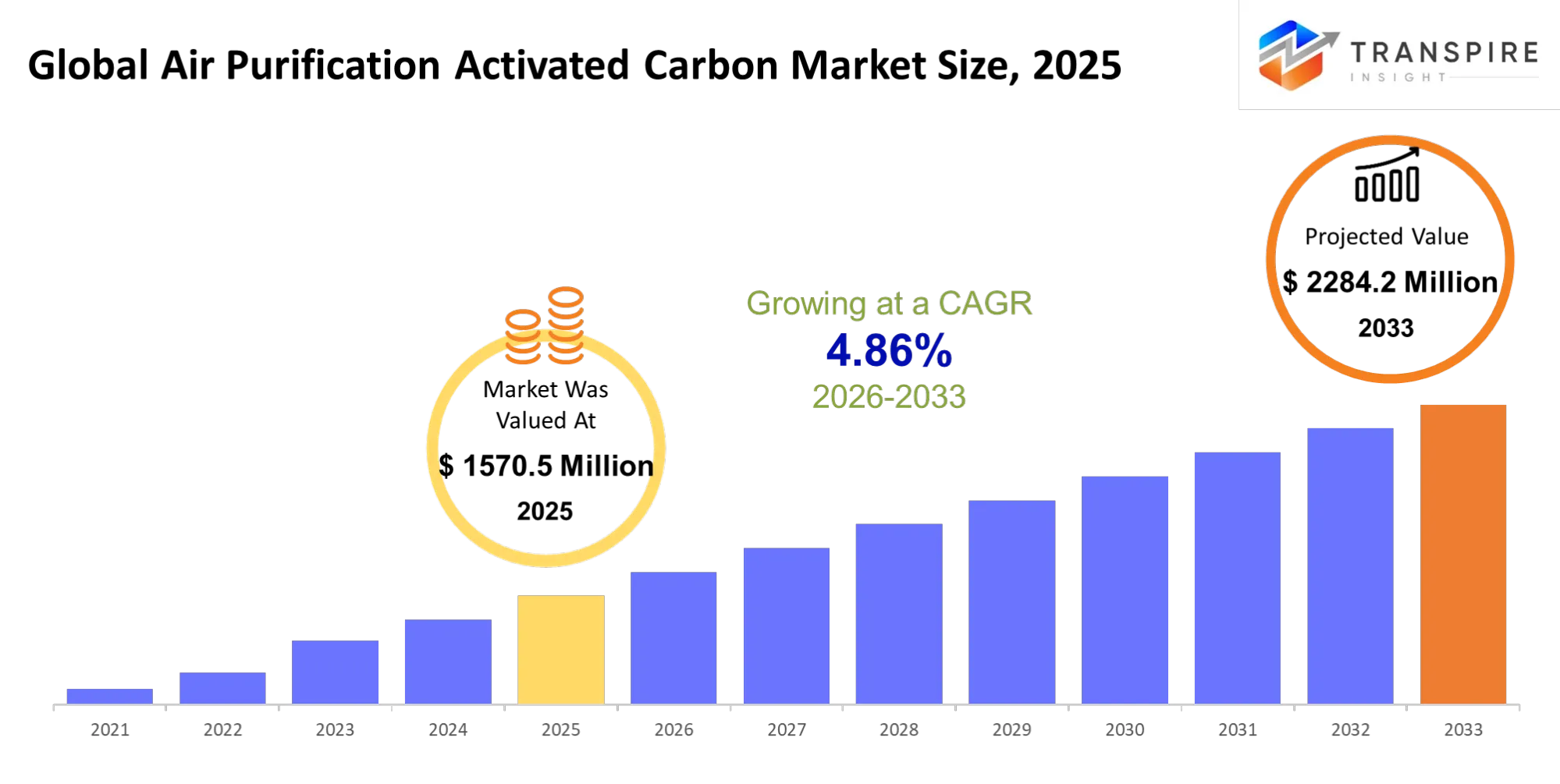
- Global Air Purification Activated Carbon Market Size 2025: USD 1570.5 Million
- Global Air Purification Activated Carbon Market Size 2033: USD 2284.2 Million
- Global Air Purification Activated Carbon Market CAGR: 4.86%
- Global Air Purification Activated Carbon Market Segments: By Type (Granular Activated Carbon, Powdered Activated Carbon, Extruded Activated Carbon, Impregnated Activated Carbon, Coconut Shell Activated Carbon, Coal-based Activated Carbon, Others); By Application (Industrial Air Purification, Residential Air Filters, Automotive Air Filtration, Water & Wastewater Treatment, Gas Purification, Others); By End-User (Industrial Plants, HVAC Companies, Automotive OEMs, Water Treatment Facilities, Others); By Source (Coconut Shell-based Carbon, Coal-based Carbon, Wood-based Carbon, Others)
Global Air Purification Activated Carbon Market Summary:
The Global Air Purification Activated Carbon Market size is estimated at USD 1570.5 Million in 2025 and is anticipated to reach USD 2284.2 Million by 2033, growing at a CAGR of 4.86% from 2026 to 2033. This market supplies the porous material that physically traps toxic gases and chemical fumes before they hit human lungs. Standard HEPA filters just catch dust, but activated carbon actually scrubs the air.
The landscape shifted hard recently. Governments stopped treating industrial emissions as a suggestion and started strictly enforcing VOC limits right at the factory smokestack. This policy shift acts as the core structural driver.
Simultaneously, severe urban smog and seasonal wildfire smoke acted as a massive real-world trigger, forcing commercial property managers to completely overhaul their HVAC grids. Because basic filters completely fail against smoke and chemical pollutants, heavy industries and facility managers now buy activated carbon in bulk just to keep their air legally compliant and safe.
Key Market Insights
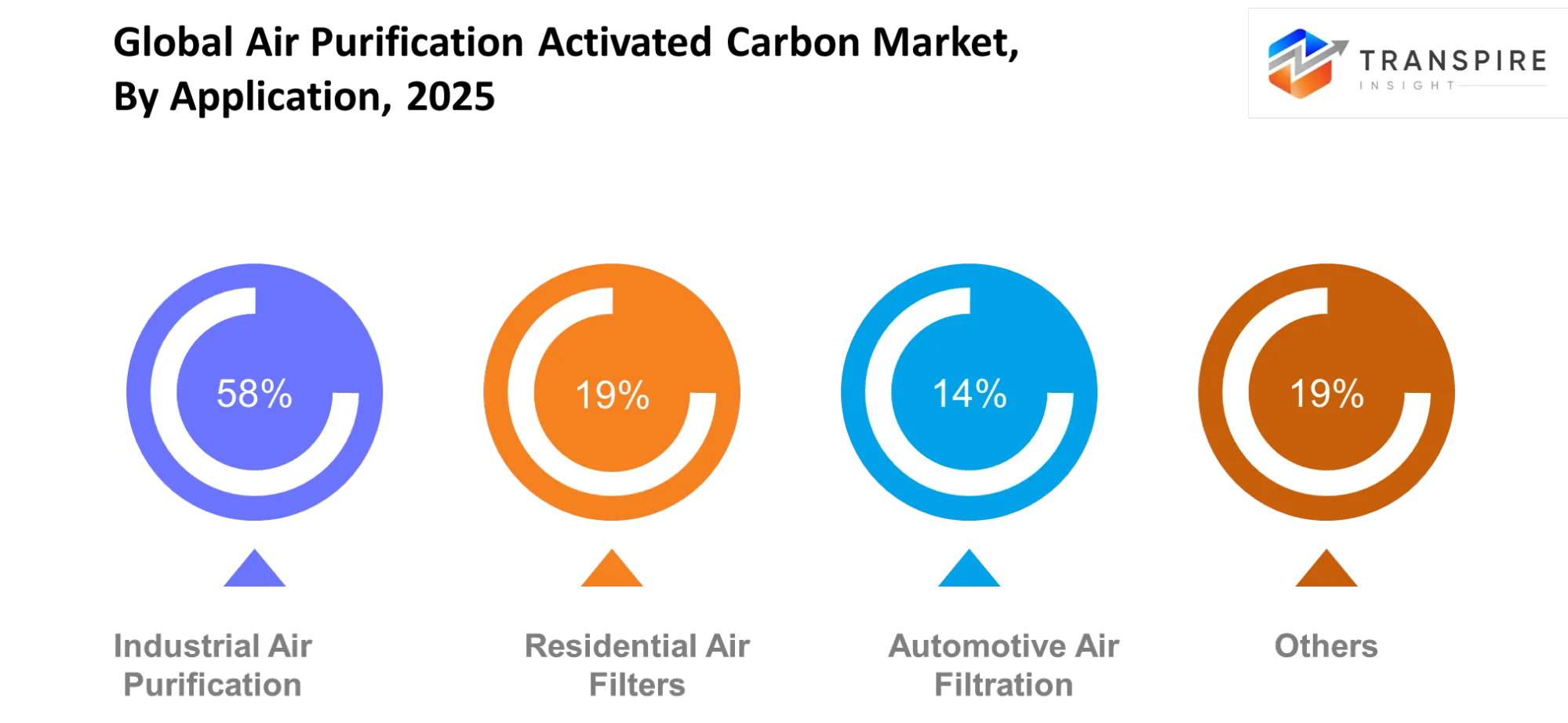
- Industrial Air Purification holds the biggest chunk of the market at 58%. Because new environmental fines are so strict, factories have to scrub toxic VOCs right at the smokestack. This reality pushes major players like Calgon Carbon to build massive, custom carbon beds specifically for heavy industrial exhaust.
- Coconut Shell Activated Carbon is growing the fastest, hitting an 11.4% CAGR. Its super-tight micropore structure makes it perfect for trapping tiny gas molecules. Eco-friendly suppliers like Haycarb are ramping up production lines just to keep up with corporate green purchasing targets.
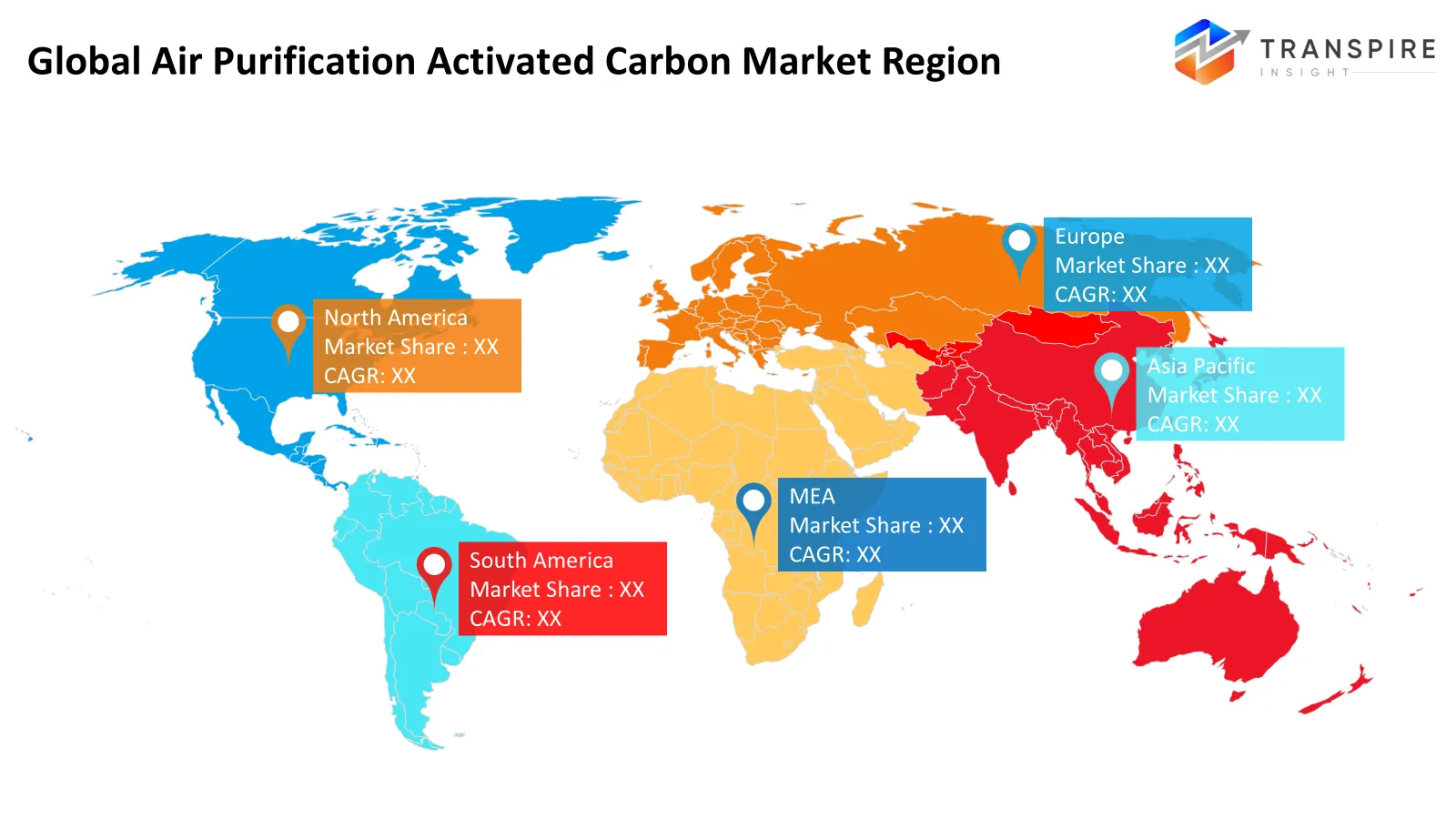
- Asia Pacific dominates the map with a 42% global share. A mix of rapid factory growth and intense urban smog crises is driving this massive demand. Regional heavyweights like Osaka Gas Chemicals are constantly pushing high-capacity filter media into both industrial and residential supply chains to handle the poor air quality.
- North America is expanding quickly with a 10.7% CAGR and claims 27% of the market. Seasonal wildfire smoke is forcing commercial building managers to completely upgrade their air systems. Companies like Ingevity are jumping on this by selling advanced honeycomb carbon filters designed specifically for high-end HVAC retrofits.
- Europe maintains a steady 23% slice of the market. Strict local chemical laws require municipalities to constantly upgrade their waste-to-energy facilities. Specialists like Donau Carbon are stepping in to provide mobile carbon vessels built specifically to handle intense biogas purification.
- Residential Air Filters make up 19% of total demand. Normal homeowners are finally figuring out that standard HEPA filters do absolutely nothing against chemical smells. This shift in awareness encourages manufacturers like Jacobi Carbons to supply fine-mesh carbon tailored directly for compact, smart-home air purifiers.
- Automotive Air Filtration sits at 14%. Drivers stuck in daily gridlock want cabin filters that actually block exhaust fumes from entering the car. Suppliers like Carbon Activated Corporation are responding by formulating specific impregnated carbons that instantly neutralize harmful tailpipe gases.
- The "Others" category accounts for 9% of the volume. Highly technical jobs like solvent recovery require extremely tough materials. This pushes niche builders like Silcarbon Aktivkohle to manufacture rugged, extruded carbon pellets that won't break apart under intense physical air pressure.
What are the Key Drivers, Restraints, and Opportunities in the Global Air Purification Activated Carbon Market?
Driver
Right now, the biggest push for growth comes straight from aggressive government fines over factory emissions. Regulators aren't just sending warning letters anymore—they are actually shutting down plants that fail routine air checks. To keep the doors open and avoid massive penalties, heavy industries basically have no choice but to install huge activated carbon beds right into their exhaust stacks. This panic buying instantly drives up bulk sales for material suppliers.
In March 2026, Pittsburgh-based Calgon Carbon rolled out newly patented carbon sorbents built specifically for heavy industrial air scrubbers. This product drop was a direct play to help nervous factory owners hit those tighter environmental rules without failing surprise inspections.
Restraint
The biggest headache for this market is how wildly the cost of raw materials swings. Making high-grade carbon requires very specific base materials, mainly coconut shells and specialty coal. The second a supply chain hiccup hits either of those commodities, production costs shoot through the roof. Smaller commercial buyers simply cannot absorb these random, steep price spikes, so they end up holding off on upgrading their building's HVAC filters altogether.
Opportunity
The real money-maker down the road is thermal reactivation. Right now, factories usually just dump saturated carbon filters into landfills as hazardous waste. But the market is shifting toward a model where facility managers send that spent material right back to the manufacturer to be baked, cleaned, and reused. This recycling loop completely cuts the industry's dependence on raw coal. More importantly, it hands suppliers a highly profitable, recurring service contract they can easily pitch to eco-conscious factories across Europe and North America.
What Has the Impact of Artificial Intelligence Been on the Global Air Purification Activated Carbon Market?
AI is completely changing how industries manage activated carbon, moving the market away from blind replacement schedules. Instead of throwing out massive carbon beds just because a calendar says so, machine learning models now track actual chemical saturation in real-time. By analyzing live data from embedded IoT sensors—like gas flow, humidity, and VOC concentration—the AI calculates the exact day a carbon filter will reach its physical limit.
This brings incredible predictive capabilities right to the factory floor. This automated optimization stops companies from wasting money on premature filter changes, while also guaranteeing they never accidentally violate air emission laws by running a dead filter. However, there is a serious limitation: physical sensor degradation. When a factory pumps highly corrosive or wet chemical fumes through the exhaust, the internal IoT sensors degrade rapidly. This feeds garbage data to the AI, completely ruining the accuracy of the prediction models.
Key Market Trends
- Heavy industries are actively ditching old-school coal-based carbon and moving to coconut shell media. Corporate green targets are driving this change, plus the tight micropores in coconut shells are just much better at trapping tiny chemical gases.
- Building managers are finally stopping the practice of dumping saturated carbon straight into landfills as hazardous waste. Now, they sign thermal reactivation contracts where the used material gets shipped back, baked at high heat, and reused in the system.
- Rather than relying on plain carbon to catch general bad smells, chemical plants are switching over to impregnated carbons. Manufacturers treat these specialized filters with sulfur or silver to instantly neutralize highly toxic, specific gases the second they touch the filter.
- Everyday buyers are totally over basic HEPA filters when dealing with bad city air. Homeowners now look for thick, heavy activated carbon honeycombs packed into smart purifiers to actually scrub lingering wildfire smoke out of their living rooms.
- Automakers are rapidly throwing out the cheap paper cabin filters they used to install. Because commuters complain so much about sitting in gridlock, car companies now weave active carbon directly into the AC vents to physically block exhaust fumes from getting inside the cabin.
- Factory operators are dropping the old habit of changing out massive carbon beds just because the calendar says it is time. Instead, they are wiring up IoT sensors that track the actual chemical saturation in real-time to avoid throwing away perfectly good material.
- Commercial HVAC installers are moving away from loose powdered carbon in high-speed air ducts. They prefer extruded carbon pellets now, which hold their shape under intense air pressure and keep the massive ventilation systems from clogging up.
- Municipalities and waste-to-energy plants are shifting out of permanent, built-in filter silos. The new trend relies on mobile, truck-mounted carbon vessels that crews can just swap out entirely in a few hours, basically eliminating expensive facility downtime.
Global Air Purification Activated Carbon Market Segmentation
By Type
Coconut Shell Activated Carbon is the breakout star here, tearing ahead at an 11.4% CAGR. While traditional coal-based and basic granular types still push massive volume, coconut shell is aggressively stealing market share. The growth logic comes down to natural physics and corporate optics. Coconut shells naturally form ultra-tight micropores when baked, making them incredibly effective at trapping tiny gas molecules that coal simply lets slip through. Plus, corporate sustainability teams love buying a renewable resource instead of a mined fossil fuel. Looking ahead, cheap, unspecialized coal carbon will likely become obsolete for premium air scrubbing. This will force major suppliers to scramble and lock down long-term agricultural contracts in tropical regions just to secure enough raw coconut shells to survive.
By Application
Industrial Air Purification absolutely anchors this segment, commanding a massive 58% share of the overall volume. Residential Air Filters take up 19%, while Automotive Air Filtration grabs 14%. The massive industrial footprint is purely reactive: factory owners are buying bulk carbon simply to avoid aggressive government fines over toxic smokestack emissions. But the residential and automotive numbers reveal a totally different, consumer-driven panic. Everyday people are buying heavy-duty carbon to survive seasonal wildfire smoke and gridlock exhaust. Moving forward, this landscape will split sharply. The industrial side will evolve into a massive recycling loop based on thermal reactivation. Meanwhile, the consumer side will force manufacturers to invent ultra-thin, highly specialized carbon weaves that fit easily inside smart home purifiers and car dashboards.
By End-User
Industrial Plants and commercial HVAC Companies act as the undisputed heavyweight buyers, completely dictating supply chain terms. Automotive OEMs represent the fast-moving, high-margin wildcard. Factory managers treat carbon as a mandatory compliance tax to keep the regulators away. On the other hand, commercial HVAC installers are actively upselling carbon retrofits to property owners because office tenants now demand hospital-grade indoor air. This shift completely changes how carbon suppliers operate. Instead of just shipping out super sacks of raw black powder to factory procurement officers, carbon manufacturers will have to partner directly with HVAC engineers and automakers. They will need to weave their materials straight into the original blueprints of commercial buildings and new vehicles, turning a basic commodity into an integrated hardware component.
By Source
Coal-based carbon holds the massive historical footprint, but Coconut Shell-based carbon is the aggressive growth engine, while Wood-based carbon handles highly specific, niche filtration jobs. The rapid shift away from coal is driven heavily by ESG (Environmental, Social, and Governance) pressures. Major corporations want to brag about their green supply chains. Buying air filters made from burned fossil fuels looks terrible on an annual sustainability report, but buying filters made from upcycled agricultural waste looks brilliant. The future implication is brutal for traditional miners. Coal-based sources will eventually get heavily taxed or entirely priced out of premium markets. Manufacturers who fail to pivot their raw material sourcing toward renewable agriculture will simply get locked out of lucrative contracts with eco-conscious industrial buyers.
What are the Key Use Cases Driving the Global Air Purification Activated Carbon Market?
The absolute core use case right now is regulatory survival for heavy industry. Factory operators deploy massive carbon beds directly inside their exhaust stacks strictly to scrub volatile organic compounds and dodge crippling environmental fines.
Beyond the factory floor, property managers are rapidly retrofitting commercial HVAC grids. Severe urban smog and seasonal wildfire smoke force them to install heavy-duty carbon honeycombs to keep office air breathable, while homeowners slide fine-mesh carbon into smart purifiers for the exact same reason.
The most interesting emerging application hits the daily commute. Automakers are weaving impregnated carbon into cabin filters to instantly neutralize toxic tailpipe exhaust during heavy gridlock. Tech sectors also rely on highly treated carbon to capture corrosive gases before they can destroy sensitive server equipment.
|
Report Metrics |
Details |
|
Market size value in 2025 |
USD 1,570.5 Million |
|
Market size value in 2026 |
USD 1,638.5 Million |
|
Revenue forecast in 2033 |
USD 2,284.2 Million |
|
Growth rate |
CAGR of 4.86% from 2026 to 2033 |
|
Base year |
2025 |
|
Historical data |
2021 - 2024 |
|
Forecast period |
2026 - 2033 |
|
Report coverage |
Revenue forecast, competitive landscape, growth factors, and trends |
|
Regional scope |
United States; Canada; Mexico; United Kingdom; Germany; France; Italy; Spain; Denmark; Sweden; Norway; China; Japan; India; Australia; South Korea; Thailand; Brazil; Argentina; South Africa; Saudi Arabia; United Arab Emirates |
|
Key company profiled |
Calgon Carbon, Kuraray, Jacobi Carbons, Cabot Corporation, Haycarb, Ingevity, Donau Carbon, Carbon Activated Corporation, Evoqua Water Technologies, Osaka Gas Chemicals, Silcarbon Aktivkohle, CPL Activated Carbons, Datong Coal Jinding, Boyce Carbon, Universal Carbons. |
|
Customization scope |
Free report customization (country, regional & segment scope). Avail customized purchase options to meet your exact research needs. |
|
Report Segmentation |
By Type (Granular Activated Carbon, Powdered Activated Carbon, Extruded Activated Carbon, Impregnated Activated Carbon, Coconut Shell Activated Carbon, Coal-based Activated Carbon, Others), By Application (Industrial Air Purification, Residential Air Filters, Automotive Air Filtration, Water & Wastewater Treatment, Gas Purification, Others), By End-User (Industrial Plants, HVAC Companies, Automotive OEMs, Water Treatment Facilities, Others), By Source (Coconut Shell-based Carbon, Coal-based Carbon, Wood-based Carbon, Others) |
Which Regions are Driving the Global Air Purification Activated Carbon Market Growth?
Asia Pacific completely dominates the global landscape, holding a massive 42% share of the market. The core reason for this heavy demand is the sheer density of industrial manufacturing mixed with severe, ongoing urban smog crises. Local governments are finally cracking down on toxic factory emissions, forcing heavy industries to install massive carbon scrubbing systems just to keep their operating licenses. This creates a massive, localized ecosystem where regional carbon manufacturers rapidly supply both industrial smokestacks and desperate homeowners trying to filter the outside air.
Europe maintains a highly stable secondary position, capturing 23% of the overall market volume. Unlike the heavy manufacturing smog driving the Asian market, European demand is tightly regulated by some of the strictest environmental and chemical safety laws in the world. The market here is stabilized by a massive network of municipal waste-to-energy plants and biogas facilities that legally require specialized carbon beds to strip out harmful sulfur and VOCs. Because European policies heavily penalize any toxic emissions, facility managers prioritize premium, long-lasting impregnated carbons over cheaper bulk alternatives. In May 2026, Donau Carbon rolled out a specialized fleet of mobile carbon vessels tailored explicitly for European municipalities. This plug-and-play hardware allows local biogas and waste-to-energy plants to instantly upgrade their air scrubbing capabilities without building entirely new permanent silos.
North America is the fastest-growing region on the board, accelerating rapidly at a 10.7% CAGR while holding a 27% market share. What changed recently is the sheer frequency and severity of seasonal wildfire smoke, which is completely overwhelming traditional air systems across major cities. This environmental shift forces commercial real estate managers to aggressively retrofit their existing HVAC grids with heavy-duty carbon honeycombs just to keep office buildings safe for tenants. The massive future opportunity here lies in residential smart-home integration, where companies can lock everyday consumers into recurring subscription models for premium carbon replacement filters.In January 2026, Ingevity launched its advanced Nuchar honeycomb carbon filters designed specifically to tackle the extreme demands of North American commercial real estate. By partnering directly with major HVAC installers, they are pushing these specialized carbon blocks straight into skyscrapers battling unpredictable seasonal air quality drops.
Who are the Key Players in the Global Air Purification Activated Carbon Market and how do they Compete?
Competition in the air purification carbon space is brutal and highly technical. It is no longer just about mining raw coal and shipping out black dust. Today, the real battleground is closed-loop recycling and raw material control. If a supplier cannot offer a thermal reactivation contract to take back saturated carbon, they immediately lose corporate bids to the players who can.
Calgon Carbon (backed by Kuraray) plays a heavy innovation and scale strategy. They never try to be the cheapest option. Instead, they differentiate by engineering custom, chemically impregnated carbon beds that physically guarantee factory emission compliance. Their expansion approach is incredibly direct. They target massive, long-term municipal and industrial retrofits, essentially locking entire waste-to-energy plants into decades-long hardware and media replacement contracts.
Haycarb takes a completely different, niche sustainability route. They completely avoid the dirty coal supply chain, competing strictly on coconut shell-based carbon. They differentiate by offering corporations a way to hit aggressive ESG targets with a fully renewable product. To expand, Haycarb actively secures agricultural waste supply chains across tropical regions, ensuring they always have the raw material needed to dominate the premium eco-friendly segment.
Company List
- Calgon Carbon
- Kuraray
- Jacobi Carbons
- Cabot Corporation
- Haycarb
- Ingevity
- Donau Carbon
- Carbon Activated Corporation
- Evoqua Water Technologies
- Osaka Gas Chemicals
- Silcarbon Aktivkohle
- CPL Activated Carbons
- Datong Coal Jinding
- Boyce Carbon
- Universal Carbons
Recent Development News
In October 2025, Calgon Carbon signed a major supply deal with American Water to roll out PFAS treatment systems across 10 states. Locking in a municipal contract of this size practically guarantees steady, recurring sales for their granular activated carbon. It also puts the company right at the center of the push to help local water facilities actually meet those strict new EPA regulations. [https://www.calgoncarbon.com]
In February 2026, Cabot Corporation launched new production lines over in the Asia Pacific region for their EVOLVE sustainable carbon products. By actually manufacturing these circular carbons locally, Cabot completely bypasses the nightmare of high trans-Pacific shipping costs. It also lets them quickly grab market share from regional industrial buyers who want greener supply chains but refuse to deal with import delays. [https://www.cabotcorp.com]
In November 2025, Haycarb expanded its operations by opening a brand new activated carbon factory in the Philippines. Building a high-capacity plant right in the middle of a massive coconut-producing region is a smart move to slash raw material costs. This setup makes it much easier for them to keep up with the global demand for premium, eco-friendly carbon without constantly worrying about supply chain bottlenecks. [https://www.haycarb.com/media/]
What Strategic Insights Define the Future of the Global Air Purification Activated Carbon Market?
The future of the Global Air Purification Activated Carbon Market lies in closed-loop recycling, not disposable commodities. Buyers no longer want to deal with managing hazardous waste; they want end-to-end reactivation services.
However, a major hidden risk threatens this transition: extreme weather. With the industry pivoting heavily toward coconut shell carbon to hit corporate green targets, unexpected droughts or storms in Southeast Asia could instantly cripple the global supply chain, causing severe raw material price spikes.
The biggest emerging opportunity sits inside commercial real estate. By integrating carbon honeycombs directly with smart IoT building sensors, manufacturers can track actual chemical saturation in real time.
To win the next decade, suppliers must stop selling bulk material by the ton. Instead, they should partner with commercial HVAC developers to pitch "clean air as a service," locking property managers into long-term, predictive replacement contracts before competitors do.
Global Air Purification Activated Carbon Market Segmentation:
By Type
- Granular Activated Carbon
- Powdered Activated Carbon
- Extruded Activated Carbon
- Impregnated Activated Carbon
- Coconut Shell Activated Carbon
- Coal-based Activated Carbon
- Others
By Application
- Industrial Air Purification
- Residential Air Filters
- Automotive Air Filtration
- Water & Wastewater Treatment
- Gas Purification
- Others
By End-User
- Industrial Plants
- HVAC Companies
- Automotive OEMs
- Water Treatment Facilities
- Others
By Source
- Coconut Shell-based Carbon
- Coal-based Carbon
- Wood-based Carbon
- Others
Regional Outlook
North America
- United States
- Canada
- Mexico
Europe
- Germany
- United Kingdom
- France
- Spain
- Italy
- Rest of Europe
Asia Pacific
- Japan
- China
- Australia & New Zealand
- South Korea
- India
- Rest of Asia Pacific
South America
- Brazil
- Argentina
- Rest of South America
Middle East & Africa
- Saudi Arabia
- United Arab Emirates
- South Africa
- Rest of the Middle East & Africa
Frequently Asked Questions
Find quick answers to common questions.
The Global Air Purification Activated Carbon Market size was valued at USD 1,570.5 Million in 2025 and is poised to reach USD 2,284.2 Million by 2033, expanding at a 4.86% CAGR.
Key segments for the Global Air Purification Activated Carbon Market are Type (Granular Activated Carbon, Powdered Activated Carbon, Extruded Activated Carbon, Impregnated Activated Carbon, Coconut Shell Activated Carbon, Coal-based Activated Carbon, Others), Application (Industrial Air Purification, Residential Air Filters, Automotive Air Filtration, Water & Wastewater Treatment, Gas Purification, Others), End-User (Industrial Plants, HVAC Companies, Automotive OEMs, Water Treatment Facilities, Others), and Source (Coconut Shell-based Carbon, Coal-based Carbon, Wood-based Carbon, Others).
Growth is primarily driven by aggressive government fines over factory emissions and strict new VOC limits, which force heavy industries to install massive activated carbon beds directly into their exhaust systems to stay compliant and avoid facility shutdowns.
The global market is led by major manufacturers including Calgon Carbon, Kuraray, Jacobi Carbons, Cabot Corporation, Haycarb, Ingevity, Donau Carbon, Carbon Activated Corporation, Evoqua Water Technologies, Osaka Gas Chemicals, Silcarbon Aktivkohle, CPL Activated Carbons, Datong Coal Jinding, Boyce Carbon, and Universal Carbons.
Asia Pacific holds a massive 42% share of the global market. This dominance is heavily influenced by the sheer density of industrial manufacturing combined with severe, ongoing urban smog crises. As local governments crack down on toxic factory emissions, heavy industries are forced to rapidly adopt and maintain large-scale carbon scrubbing systems just to keep their operating licenses.
Major commercial opportunities exist in thermal reactivation, where facility managers send spent carbon back to manufacturers to be baked, cleaned, and reused, creating a highly profitable, recurring closed-loop service. There is also a massive opportunity in commercial real estate by integrating carbon filters directly with smart IoT building sensors to track real-time saturation, allowing suppliers to pitch predictive "clean air as a service" replacement contracts.
- Calgon Carbon
- Kuraray
- Jacobi Carbons
- Cabot Corporation
- Haycarb
- Ingevity
- Donau Carbon
- Carbon Activated Corporation
- Evoqua Water Technologies
- Osaka Gas Chemicals
- Silcarbon Aktivkohle
- CPL Activated Carbons
- Datong Coal Jinding
- Boyce Carbon
- Universal Carbons
About the Authors

Pankaj Ghogare Patil
I am Pankaj Ghogare Patil, a Senior Research Analyst at Transpire Insight, specializing in the Pharmaceutical, Chemicals & Materials, Healthcare IT, and Biotechnology industry. My expertise lies in conducting comprehensive market research, analyzing industry trends, evaluating competitive landscapes, and translating complex data into actionable insights. At Transpire Insight, I closely follow emerging technologies, regulatory developments, and market innovations to create accurate, well-researched, and informative content that helps businesses and professionals make informed decisions. I am committed to producing credible, evidence-based articles that reflect industry best practices while making technical topics accessible and valuable for a broad audience.

Chakradhar Khansole
Chakradhar serves as the Research Director at Transpire Insight, bringing over 8 years of experience in technology, innovation, and strategic market intelligence. He specializes in transforming complex market data into actionable business insights that enable organizations to make informed, growth-oriented decisions. Recognized for his strategic vision and analytical expertise, Chakradhar leads high-impact research initiatives, delivering comprehensive market assessments, competitive intelligence, and forward-looking industry analysis.
Recently Published Reports
-
May 2026
Healthcare Polymer Packaging Market
Healthcare Polymer Packaging Market Size, Share & Analysis Report By Packaging Type (Syringes, IV Bottles and Pouches, Clamshells, Blisters, Bottles & Jars, Containers, Tubes, IV Parental Packaging, Others), By Type (Regulated, Non-regulated), By Polymer Type (LDPE (Low-Density Polyethylene), HDPE (High-Density Polyethylene), Homo-polymer (Homo), Random Copolymer (Random), Block Copolymer (Block), PET, Polystyrene, Polyvinyl Chloride, Polyamide/EVOH, Others), and Geography (North America, Europe, Asia-Pacific, Middle East and Africa, South and Central America), 2021 - 2031
-
Apr 2026
Hydrophilic Tape (Waterstop) Market
Hydrophilic Tape (Waterstop) Market Size, Share & Analysis Report By Type (Bentonite-Based Hydrophilic Tape, Rubber-Based Hydrophilic Tape), By Application (Residential Buildings, Commercial Buildings, Infrastructure Projects), and Geography (North America, Europe, Asia-Pacific, Middle East and Africa, South and Central America), 2021 - 2031
-
Apr 2026
Metalens Market
Metalens Market Size, Share & Analysis Report By Type (Visible Light Metalens, and Infrared Metalens), By Application (Consumer Electronics, Automotive Electronics, Industrial, Medical, and Others), and Geography (North America, Europe, Asia-Pacific, Middle East and Africa, South and Central America), 2021 - 2031
-
Apr 2026
PBT Resin Market
PBT Resin Market Size, Share & Analysis Report By Type (Reinforced PBT Resin, Unreinforced PBT Resin), By Processing Method (Injection Molding, Extrusion, Blow Molding, Others), By End-User (Automotive, Electrical & Electronics, Consumer Appliances, Industrial Machinery, Medical Devices, Packaging, Others), and Geography (North America, Europe, Asia-Pacific, Middle East and Africa, South and Central America), 2021 - 2031