

Germany Scheduling Apps Market Size & Forecast:
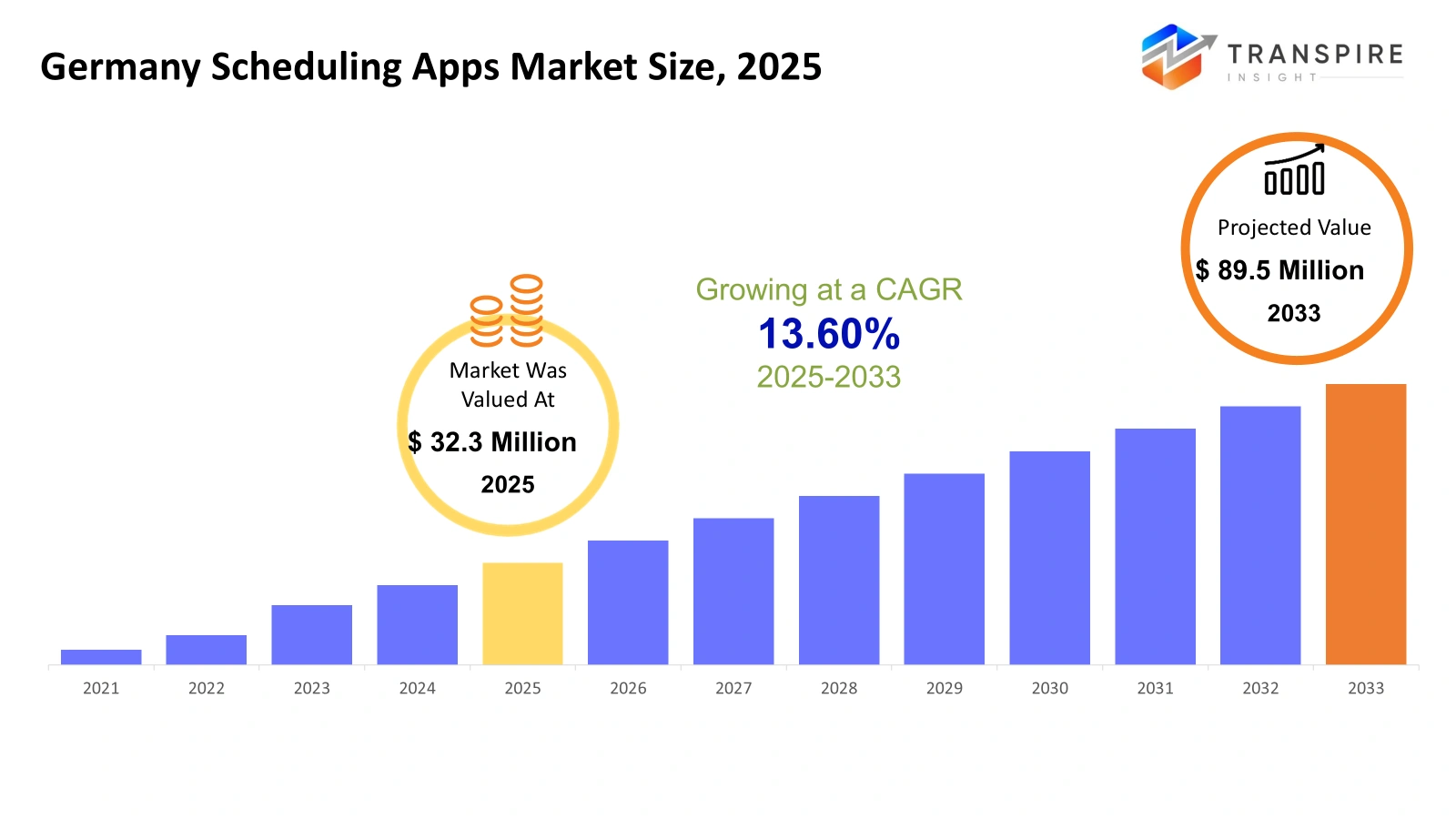
- Germany Scheduling Apps Market Size 2025: USD 32.3 Million
- Germany Scheduling Apps Market Size 2033: USD 89.5 Million
- Germany Scheduling Apps Market CAGR: 13.60%
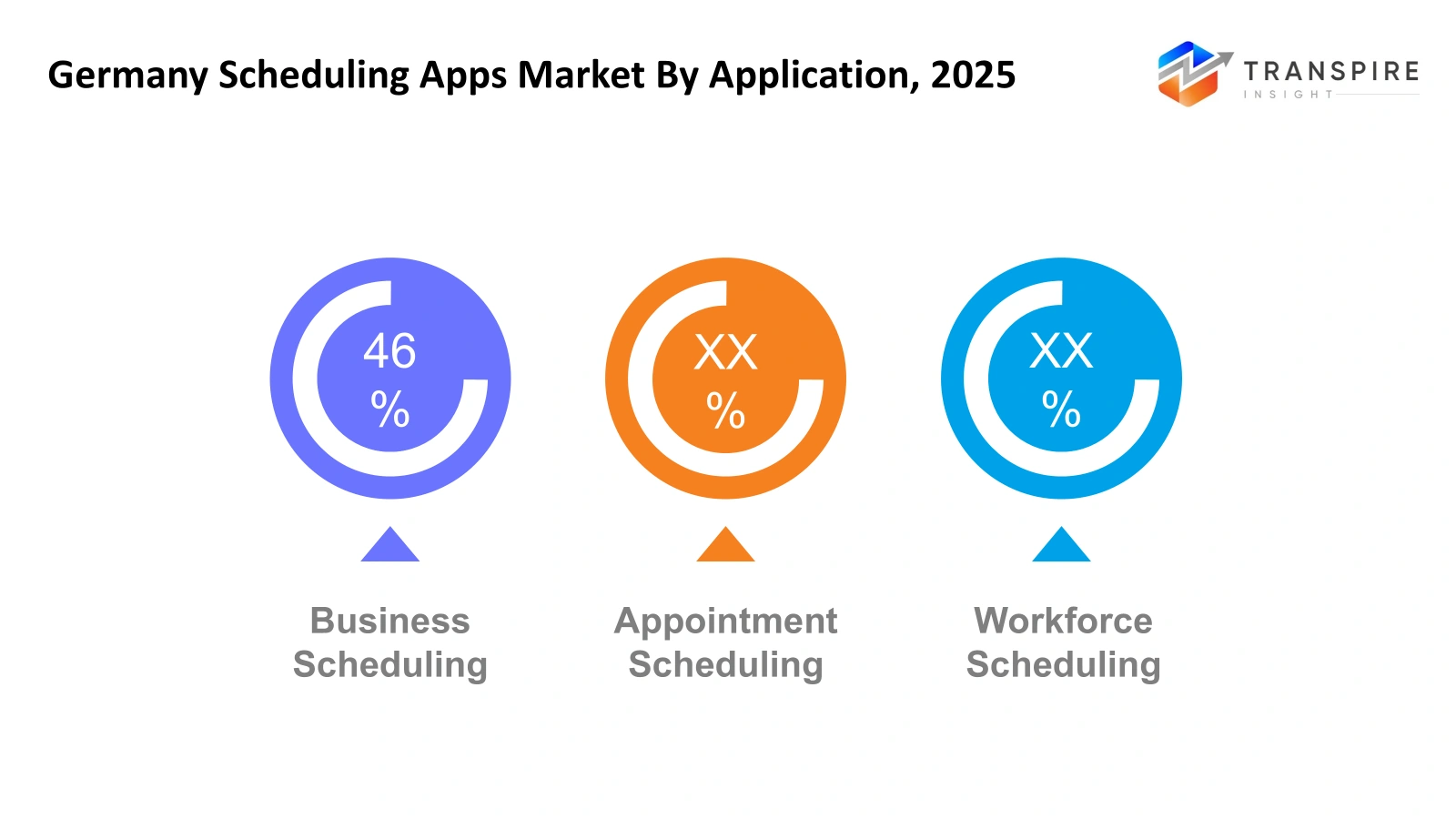
- Germany Scheduling Apps Market Segments:by Platform (Mobile Apps, Web-Based Apps), by Application (Business Scheduling, Appointment Scheduling, Workforce Scheduling), by End User (Enterprises, SMEs, Individuals).
To learn more about this report,  Download Free Sample Report
Germany Scheduling Apps Market Summary:
The Germany Scheduling Apps Market size was estimated at USD 32.3 Millionin 2025 and is anticipated to reach USD 89.5 Million by 2033, growing at a CAGR of 13.60% from 2026 to 2033.
Companies and people in Germany will start using scheduled time management systems which help them organize their meetings and appointments and joint work activities. All digital scheduling software development in Germany will follow the existing German cultural tradition which values both punctuality and organizational skills. In the coming years, companies operating in sectors such as consulting, healthcare, education, and technology will rely on automated booking platforms that allow clients and colleagues to reserve time slots without lengthy email exchanges. German consumers will expect clear interfaces, multilingual support, and reliable calendar synchronization with commonly used workplace tools. The market will also reflect the country’s strict data protection standards, especially those aligned with the policies enforced by the European Union. Software providers will therefore prioritize transparent data handling practices and secure hosting environments, which often use European data centers, to build user trust. The three major business centers of Germany which include Berlin, Munich, and Frankfurt face central challenges with scheduling software because of their need to coordinate remote work for teams and virtual meetings and international partner work across Europe.
The market direction will keep being shaped by technological advancements because digital planning platforms now include artificial intelligence and predictive availability systems and automated meeting coordination as standard elements. The developers will implement intelligent algorithms that will examine user behavior together with their preferred meeting times and calendar patterns to determine the best times for booking appointments. The scheduling applications will increase their functionality by connecting with video conferencing services and payment systems and customer relationship management platforms to provide more than just calendar management. German small businesses and freelancers and service providers will adopt these tools to handle customer appointments especially in wellness services and professional coaching and medical practice because digital booking reduces their administrative workload. The regulatory frameworks in Germany and the European Union will keep shaping product design because developers must create products that meet their strict privacy and consent requirements. Scheduling software providers will develop transparent permissions and user control functions because consumers want to know how their personal data gets stored and shared. The combination of technological innovation and workplace transformation and regulatory awareness will define how digital scheduling platforms function in Germany's professional environment.
Key Market Trends & Insights:
- The Germany Scheduling Apps Market will continue to see strong interest because businesses and freelancers and service providers use mobile software and cloud-based tools to manage their daily scheduling needs. Businesses will adopt digital calendars and appointment tracking systems and automated reminders to minimize both manual scheduling work and appointment errors. The new system allows organizations to manage their time better while their operations become more efficient.
- Small and medium enterprises across Germany will increasingly adopt scheduling apps to organize staff availability, manage customer appointments, and handle service timelines. The Germany Scheduling Apps Market will experience growth because smaller companies choose economical software that simplifies scheduling and decreases administrative tasks while helping their teams operate more efficient daily activities.
- The majority of scheduling solutions will establish connections with accounting systems and customer management tools and payment platforms. The growth of Germany Scheduling Apps Market will occur because organizations prefer applications that integrate seamlessly with their current business software. The process of integration enables companies to handle appointments and invoices and client records through a unified digital platform which creates organized business processes.
- The main trend of mobile access will continue because professionals use smartphones to manage their work activities throughout the day. Developers will create new mobile applications which will allow users to check their appointments and update their availability and contact clients while they work outside of office spaces. People choose to adopt new technologies because they want both convenience and flexible options.
- Germany needs to maintain its focus on data protection because users understand the importance of data security and the country has strict laws governing data protection. The Germany Scheduling Apps Market will develop through its provision of secure data storage and encrypted communication and adherence to privacy regulations. Businesses and individuals prefer platforms that safeguard appointment data and customer details while maintaining reliable scheduling services.
Germany Scheduling Apps Market Segmentation
By Platform :
- Mobile Apps: Germany Scheduling Apps Market shows strong activity in mobile apps due to widespread smartphone usage and flexible work culture. Mobile-based scheduling tools will allow quick meeting planning, task coordination, and reminder alerts from any location. Businesses, freelancers, and service providers will prefer mobile solutions because simple interfaces and real-time updates help maintain organized daily schedules.
- Web-Based Apps: Germany Scheduling Apps Market also includes web-based apps that operate through browsers and desktop systems. Organizations will rely on these platforms for centralized calendar control and team coordination. Web access will support detailed scheduling dashboards, integration with office tools, and better oversight for managers who monitor multiple employees, departments, and ongoing work timelines.
By Application :
- Business Scheduling: Germany Scheduling Apps Market supports business scheduling needs where companies plan meetings, project timelines, and team availability. Digital scheduling tools will reduce confusion caused by manual planning methods. Companies across technology, consulting, and service industries will use scheduling platforms to coordinate internal discussions, allocate time for tasks, and maintain smooth daily operations.
- Appointment Scheduling: Germany Scheduling Apps Market includes appointment scheduling tools widely used by healthcare clinics, beauty services, consulting offices, and training providers. These applications will allow customers to book available time slots online without manual calls. Automated confirmations, reminders, and calendar synchronization will help service providers manage client flow and reduce missed appointments.
- Workforce Scheduling: Germany Scheduling Apps Market also addresses workforce scheduling where managers assign shifts, track availability, and plan staff rotations. Retail stores, hospitality businesses, logistics firms, and healthcare facilities will depend on such software to organize employee working hours. Digital scheduling systems will help maintain fair shift distribution and improve operational efficiency.
To learn more about this report, Download Free Sample Report
By End User :
- Enterprises: Germany Scheduling Apps Market will see strong adoption among large enterprises that handle complex meeting structures and large employee teams. Corporate organizations will implement scheduling platforms to align departmental calendars, coordinate project meetings, and monitor time allocation. Centralized systems will support productivity management while helping leadership teams track operational timelines.
- SMEs: Germany Scheduling Apps Market will attract small and medium businesses seeking affordable scheduling solutions. SMEs will adopt scheduling applications to manage meetings, service bookings, and staff availability without heavy administrative effort. Cloud-based platforms will help smaller organizations maintain professional coordination while reducing dependence on manual calendars and spreadsheets.
- Individuals: Germany Scheduling Apps Market also includes individual users such as freelancers, consultants, tutors, and independent professionals. Personal scheduling apps will help organize client meetings, reminders, and daily work plans. Simple calendar integration and automated notifications will support better time management for independent workers who handle multiple appointments throughout the week.
Country Insights
The Germany Scheduling Apps Market will experience continuous development because digital planning tools are becoming more popular in office environments and service industries and independent work settings. The demand for organized time management combined with automated booking systems and calendar coordination tools will drive market growth across multiple sectors including healthcare and consulting and education and small business services. The solid digital infrastructure in Germany together with its high workplace efficiency standards will create ongoing demand for scheduling software that streamlines manual coordination tasks. Digital platforms have become essential for businesses to manage their appointment systems and schedule staff shifts and coordinate meetings with employees. Scheduling tools enable German organizations to maintain hybrid work models while their employees work remotely.
The Germany Scheduling Apps Market will develop because mobile technology continues to expand its presence in the market. Employees and clients now have the ability to schedule appointments through smartphones and cloud systems which enables them to do so at any time without needing to contact office personnel. Small companies and freelancers and service providers experience advantages from user-friendly booking systems which enable them to control customer interactions while minimizing appointment no-shows. The various industries use scheduling applications because these features enhance practical usefulness throughout their entire operational scope.
Recent Development News
Google Calendar adds quick event duplication shortcut: Google introduced a shortcut allowing users to duplicate calendar events instantly using a drag-and-copy function. The update simplifies scheduling repeated meetings and reduces manual steps in event creation.
AI email assistant launched to schedule meetings automatically: Perplexity introduced an AI email assistant capable of organizing emails and scheduling meetings by checking users’ Outlook or Gmail calendars and sending invitations automatically.
|
Report Metrics |
Details |
|
Market size value in 2025 |
USD 32.3 Million |
|
Market size value in 2026 |
USD 36.66 Million |
|
Revenue forecast in 2033 |
USD 89.5 Million |
|
Growth rate |
CAGR of 13.60% from 2026 to 2033 |
|
Base year |
2025 |
|
Historical data |
2021 - 2024 |
|
Forecast period |
2026 - 2033 |
|
Report coverage |
Revenue forecast, competitive landscape, growth factors, and trends |
|
Country scope |
Germany |
|
Key company profiled |
Calendly, Microsoft Bookings, Google Calendar, Acuity Scheduling, Setmore, Doodle AG, HubSpot Meetings, SimplyBook.me, Zoho Bookings, Appointy, Square Appointments, TimeTrade, 10to8 Scheduling, Skedda, Chili Piper. |
|
Customization scope |
Free report customization (country, regional & segment scope). Avail customized purchase options to meet your exact research needs. |
|
Report Segmentation |
by Platform (Mobile Apps, Web-Based Apps), by Application (Business Scheduling, Appointment Scheduling, Workforce Scheduling), by End User (Enterprises, SMEs, Individuals) |
Key Germany Scheduling Apps Company Insights
The Germany Scheduling Apps Market experiences competitive development through enterprise software companies and dedicated calendar management software developers who enter the market. German vendors concentrate their efforts on three primary areas which include workplace coordination solutions and appointment automation tools and systems that link to business collaboration tools. Companies emphasize secure data storage, regulatory compliance, and compatibility with enterprise systems used in sectors such as healthcare, consulting, education, and professional services.
The product development team uses artificial intelligence to create systems for resource management which include automatic reminder functions and the ability to synchronize across different platforms. Market participants also invest in partnerships with cloud service providers and productivity software firms to strengthen distribution networks. The company strategies of business organizations operating in the Germany Scheduling Apps Market focus on three key areas which include user-friendly design and mobile accessibility and system features that enable German language use and local business customs..
Germany Scheduling Apps Market Companies:
- Calendly
- Microsoft Bookings
- Google Calendar
- Acuity Scheduling
- Setmore
- Doodle AG
- HubSpot Meetings
- SimplyBooKme
- Zoho Bookings
- Appointy
- Square Appointments
- TimeTrade
- 10to8 Scheduling
- Skedda
- Chili Piper.
Germany Scheduling Apps Market Segmentation
By Platform
- Mobile Apps
- Web-Based Apps
By Application
- Business Scheduling
- Appointment Scheduling
- Workforce Scheduling
By End User
- Enterprises
- SMEs
- Individuals
Frequently Asked Questions
Find quick answers to common questions.
The Approximate Germany Scheduling Apps Market size for the Market will be USD 89.5 Million in 2033.
Key Segments for the Germany Scheduling Apps Market are by Platform (Mobile Apps, Web-Based Apps), by Application (Business Scheduling, Appointment Scheduling, Workforce Scheduling), by End User (Enterprises, SMEs, Individuals).
Major Germany Scheduling Apps Market Players are Calendly, Microsoft Bookings, Google Calendar, Acuity Scheduling, Setmore, Doodle AG, HubSpot Meetings, SimplyBook.me, Zoho Bookings, Appointy, Square Appointments, TimeTrade, 10to8 Scheduling, Skedda, Chili Piper.
The current Germany Scheduling Apps Market size is USD 32.3 Million in 2025.
The Germany Scheduling Apps Market CAGR is 13.60%.
- Calendly
- Microsoft Bookings
- Google Calendar
- Acuity Scheduling
- Setmore
- Doodle AG
- HubSpot Meetings
- SimplyBooKme
- Zoho Bookings
- Appointy
- Square Appointments
- TimeTrade
- 10to8 Scheduling
- Skedda
- Chili Piper.
Recently Published Reports
-
Apr 2026
3D Optical Profiler Market
3D Optical Profiler Market Size, Share & Analysis Report By Type (Desktop 3D Optical Profiler, and Portable 3D Optical Profiler), By Technology (Confocal Technology, and White Light Interference), By End-Use Industry (Manufacturing, Research Institutions, Automotive, Aerospace and Defense, Medical Devices, and Other), and Geography (North America, Europe, Asia-Pacific, Middle East and Africa, South and Central America), 2021 - 2031
-
Apr 2026
Depth Sensor Market
Depth Sensor Market Size, Share & Analysis Report By Type (Infrared Depth Sensors, Time-of-Flight (ToF) Sensors, Stereo Vision Sensors, Structured Light Sensors, Ultrasonic Depth Sensors), By Application (Automotive, Robotics, Gaming, Consumer Electronics, Industrial Automation, Healthcare, Security & Surveillance, Others), By End Users (Automotive Manufacturers, Consumer Electronics Companies, Healthcare Providers, Industrial Companies, Security Agencies, Gaming Companies, Robotics Companies, Others), and Geography (North America, Europe, Asia-Pacific, Middle East and Africa, South and Central America), 2021 – 2031
-
Apr 2026
Digital Manufacturing Market
Digital Manufacturing Market Size, Share & Analysis Report By Component (Hardware, Software, and Services), By Technology (Robotics, 3D Printing, Internet of Things (IoT), and Others), By Application (Automotive and Transportation, Aerospace and Defense, Consumer Electronics, Industrial Machinery, and Others), By Process Type (Computer-Based Designing, Computer-Based Simulation, Computer 3D Visualization, Analytics, and Others), and Geography (North America, Europe, Asia-Pacific, Middle East and Africa, South and Central America), 2021 – 2031
-
Apr 2026
Digital Visa Services Market
Digital Visa Services Market Size, Share & Analysis Report By Type (Individual Travelers, Group Travelers), By Application (Tourism, Business Travel, Others), and Geography (North America, Europe, Asia-Pacific, Middle East and Africa, South and Central America), 2021 – 2031