
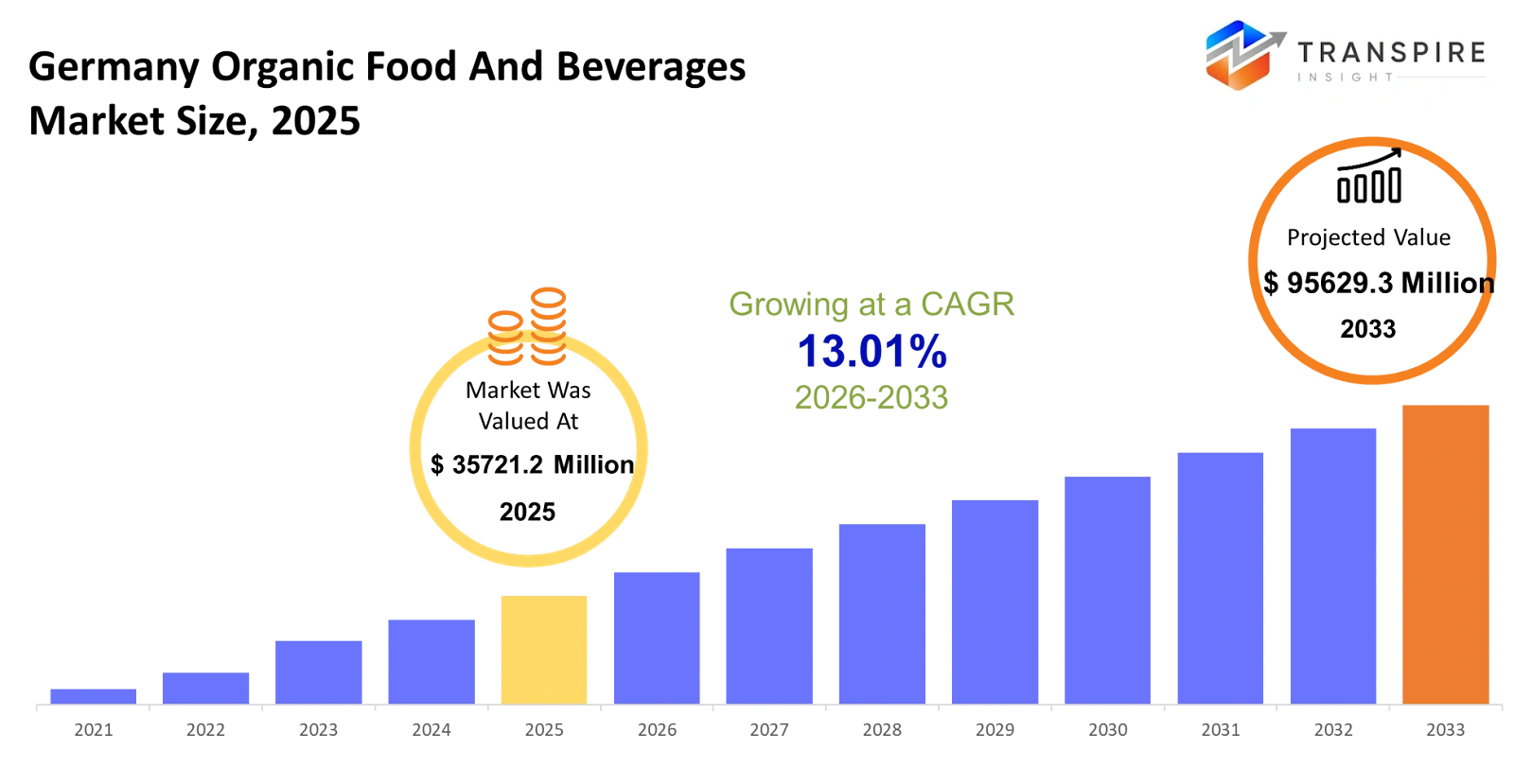
Germany Organic Food And Beverages Market Size & Forecast:
- Germany Organic Food And Beverages Market Size 2025: USD 35721.2 Million
- Germany Organic Food And Beverages Market Size 2033: USD 95629.3 Million
- Germany Organic Food And Beverages Market CAGR: 13.01%
- Germany Organic Food And Beverages Market Segments: By Product Type (Organic Food, Organic Beverages), By Distribution Channel (Supermarkets & Hypermarkets, Specialty Stores, Online Retail, Others), By End User (Household, Foodservice).
To learn more about this report,  Download Free Sample Report
Germany Organic Food And Beverages Market Summary:
The Germany Organic Food And Beverages Market size was estimated at 40619.5 USD Millionin 2026 and is anticipated to reach 95629.3 USD Million by 2033, growing at a CAGR of 13.01% from 2026 to 2033.
The Germany organic food and beverage market which exists within the country's packaged food sector demonstrates a transformation in how families choose their everyday meals. Over the past decade, shoppers have moved toward traceable farming, seasonal sourcing, and cleaner labels, while retailers will expand shelf space for certified produce, dairy alternatives, and minimally processed drinks.
The combination of digital traceability tools and soil monitoring sensors and blockchain-based certification records will improve consumer trust. The European Union and Berlin will establish new policies which require stricter pesticide control measures and enhanced labeling standards, thus forcing manufacturers to change their product formulas and companies to adopt recyclable materials and create more efficient supply chains through their retail operations.
Key Market Trends & Insights:
- The rising health awareness in Germany creates persistent demand for organic certified products which include grocery items and dairy products and plant-based beverages. Supermarkets increase their organic product selection because they implement private label products and they obtain goods from local suppliers. The Germany Organic Food And Beverages Market experiences steady growth because of its clear product labeling and its strict quality requirements and its organic certification system which consumers trust. Urban households exhibit strong preferences for products that contain no chemicals and products that use sustainable agricultural practices.
- The retail industry expansion of organic product selections enables retailers to connect more effectively with their customers. Supermarkets and discount chains and specialty organic stores expand their product range to include organic snacks and beverages and grains and ready-to-cook food items. The product development process concentrates on using clean ingredients which undergo minimal processing yet maintain their natural preservation qualities to reach health-conscious customers and environmentally friendly shoppers who live in major cities throughout Germany.
- The combination of strict organic certification processes and strong regulatory backing creates higher trust levels for organic products which people use throughout Germany. The national and European organic standards require farmers to maintain transparent operations while protecting animal welfare and limiting natural fertilizer application. The Germany Organic Food And Beverages Market uses clear labeling systems and certification marks to assist customers in recognizing genuine organic food and beverage products.
- The expansion of e-commerce grocery platforms together with direct farm-to-consumer channels enables customers to access organic products more easily. The online organic stores together with subscription vegetable boxes and local farm cooperatives enable customers to access fresh produce and dairy products and beverages. Digital retail platforms enable small organic farmers to reach urban consumers by linking their products with regional farming operations.
- The purchasing habits of German households show changes because of rising sustainability awareness. Organic farming practices which protect soil health and support biodiversity and use fewer chemicals create a stronger market demand. Food manufacturers implement recyclable packaging together with climate-friendly supply chains and responsible ingredient sourcing to improve their long-term growth potential for organic food and beverage sales in Germany.
Germany Organic Food And Beverages Market Segmentation
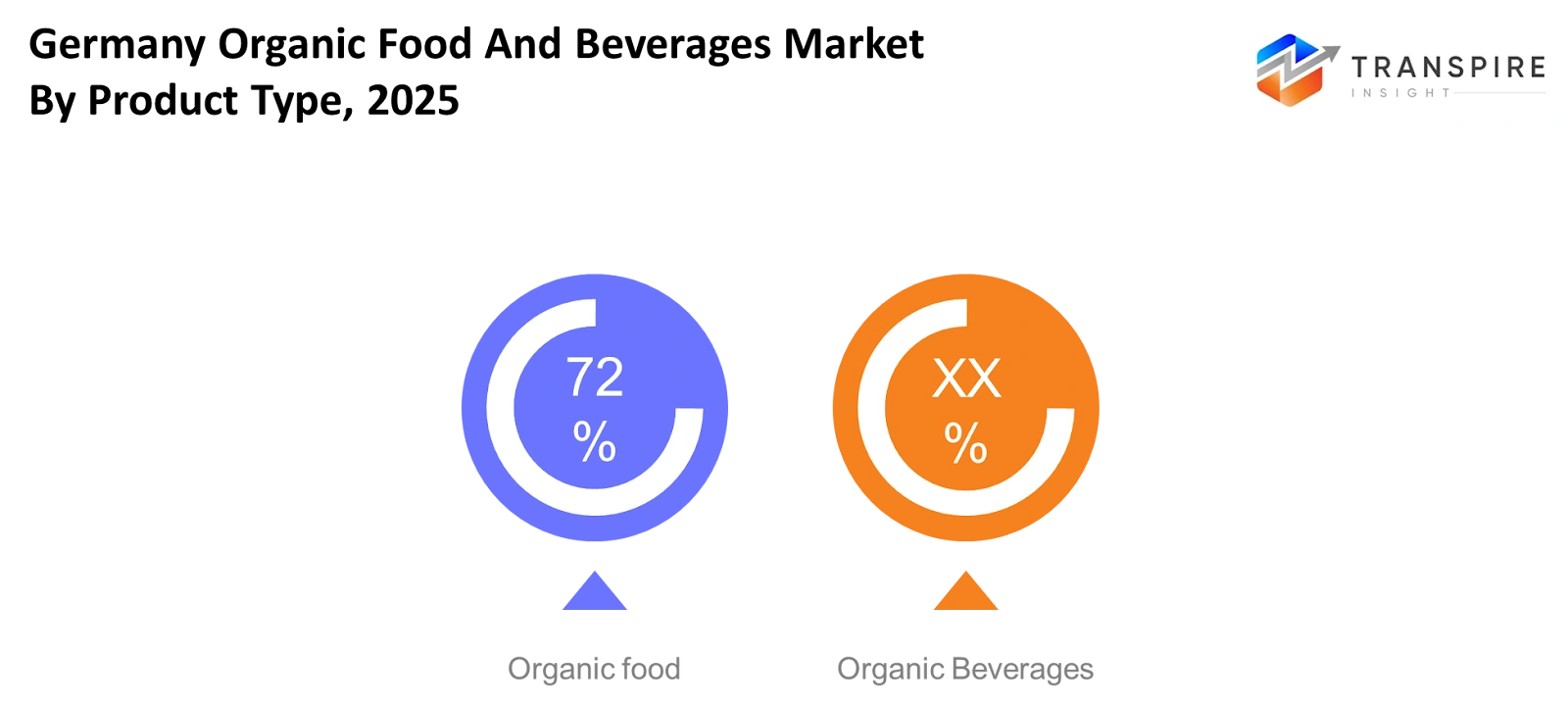
By Product Type:
- Organic Food: Organic food category includes fruits, vegetables, grains, dairy products, and processed items produced through natural farming practices without synthetic chemicals or artificial additives. Growing health awareness and interest in clean eating increase demand. Consumers often choose organic food for better perceived quality, safer production methods, and stronger connection with natural agriculture.
- Organic Beverages: Organic beverages include juices, plant-based drinks, tea, coffee, and other refreshments prepared using ingredients grown under certified organic farming systems. Absence of chemical residues attracts health-focused buyers. Rising urban wellness culture and interest in natural nutrition encourage steady market growth for organic beverages across retail shelves and hospitality outlets.
To learn more about this report, Download Free Sample Report
By Distribution Channel Type:
- Supermarkets & Hypermarkets: Supermarkets & hypermarkets serve as major retail spaces offering wide product selection under one roof. Large shelf space allows organized display of organic products with clear labeling and certification marks. Regular promotional offers, strong supply chains, and convenient urban locations support steady consumer purchase of organic food and organic beverages.
- Specialty Stores: Specialty stores focus mainly on natural, organic, and health-focused goods. Product assortment often includes certified organic food, organic beverages, and eco-friendly grocery items. Knowledgeable store staff, clear product origin information, and premium positioning attract consumers seeking trusted organic quality and carefully sourced agricultural products.
- Online Retail: Online retail platforms provide digital access to organic food and organic beverages through e-commerce websites and mobile shopping applications. Home delivery convenience, product comparison options, subscription grocery services, and growing digital payment use support rising online sales. Busy urban lifestyles encourage adoption of online retail channels for organic grocery purchasing.
By End Users Type:
- Household: Household consumption forms a major part of organic product demand. Family grocery baskets increasingly include organic food such as fruits, vegetables, grains, and dairy items along with organic beverages. Health awareness, concern about chemical exposure, and interest in balanced diets encourage regular household purchase of certified organic products.
- Foodservice: Foodservice sector includes restaurants, cafés, hotels, and catering services incorporating organic food ingredients and organic beverages into menu offerings. Premium dining trends, farm-to-table concepts, and customer demand for natural ingredients support organic product use in professional kitchens. Hospitality businesses often highlight organic sourcing to strengthen brand value and customer trust.
Country Insights
- Germany maintains consistent demand for organic food and beverage products because people value health and retailers support organic options and the country enforces strict quality standards. The German organic food and beverage market shows increased demand for chemical-free agricultural methods which produce products with transparent ingredient lists and natural components. certified organic products receive regular purchases through the combined efforts of urban consumers and specialty shops and supermarket chains.
- Organic agriculture development in Germany benefits from government backing and standardized certification processes and consumer confidence which together create market expansion. Farmers markets and discount chains and premium grocery outlets provide more display space to showcase organic dairy products and bakery items and beverages and packaged foods. People develop environmental consciousness which influences their purchasing decisions toward products that use sustainable farming methods and responsible production practices.
- Organic supermarkets and weekly farmers markets and health-oriented retail stores create a retail environment which helps major cities like Berlin and Munich and Hamburg generate sales. People with higher disposable income and knowledge about food safety and interest in plant-based diets create continuous product demand. Local organic brands and regional farms strengthen supply and consumer confidence.
Recent Development News
Plant-based and organic food innovation continues to grow in Germany. Brands such as Better Nature launched organic tempeh products across hundreds of REWE stores, expanding the availability of organic plant-based foods and reflecting rising consumer interest in sustainable diets.
Organic food demand remains resilient globally with Germany as a leading market
Recent global statistics show organic food and beverage retail sales reaching €145 billion worldwide, with Germany remaining one of the largest markets. The country ranked among the top global consumers of organic products, highlighting strong and consistent demand for environmentally friendly food choices.
|
Report Metrics |
Details |
|
Market size value in 2025 |
USD 35721.2 Million |
|
Market size value in 2026 |
USD 40619.5 Million |
|
Revenue forecast in 2033 |
USD 95629.3 Million |
|
Growth rate |
CAGR of 13.01% from 2026 to 2033 |
|
Base year |
2025 |
|
Historical data |
2021 - 2024 |
|
Forecast period |
2026 - 2033 |
|
Report coverage |
Revenue forecast, competitive landscape, growth factors, and trends |
|
Country scope |
Germany |
|
Key company profiled |
Nestlé SA, Danone SA, Unilever PLC, General Mills Inc., Hain Celestial Group, Whole Earth Brands, Amy’s Kitchen, Arla Foods, Hipp GmbH & Co., Alnatura Produktions- und Handels GmbH, DMK Group, Nature’s Path Foods, Eden Foods, Organic Valley, Bionade GmbH. |
|
Customization scope |
Free report customization (country, regional & segment scope). Avail customized purchase options to meet your exact research needs. |
|
Report Segmentation |
By Product Type (Organic Food, Organic Beverages),By Distribution Channel (Supermarkets & Hypermarkets, Specialty Stores, Online Retail, Others), By End User (Household, Foodservice). |
Key Germany Organic Food And Beverages Company Insights
- The competition between organic food producers and retail chains in the industry shows a pattern of growth that established food companies and their competitors bring into the organic market. Supermarket chains and organic specialty companies and local food producers work together to create products that contain certified ingredients and use transparent sourcing methods and establish sustainable farming partnerships. The continuous development of dairy alternatives and packaged food products and beverage items and fresh produce products builds consumer confidence while maintaining consistent market presence for the Germany Organic Food And Beverages Market.
- The main companies in the industry use three advantages to sustain their market leadership position. Companies achieve greater brand recognition through their investments in sustainable packaging and their development of clean product labeling and their distribution channels which include supermarkets and organic specialty stores and online platforms. The leading brands use strategic partnerships and product development and their plant-based beverage and minimally processed food portfolio expansion to maintain their power and market share for the German organic food sector.
Germany Organic Food And Beverages Market Companies:
- Nestlé SA
- Danone SA
- Unilever PLC
- General Mills Inc.
- Hain Celestial Group
- Whole Earth Brands
- Amy’s Kitchen
- Arla Foods
- Hipp GmbH & Co.
- Alnatura Produktions- und Handels GmbH
- DMK Group
- Nature’s Path Foods
- Eden Foods
- Organic Valley
- Bionade GmbH.
Germany Organic Food And Beverages Market Segmentation
By Product Type
- Organic Food
- Organic Beverages
By Distribution Channel
- Supermarkets & Hypermarkets
- Specialty Stores
- Online Retail
By End User
- Household
- Foodservice
Frequently Asked Questions
Find quick answers to common questions.
The approximate Germany Organic Food And Beverages Market size for the market will be USD 95629.3 Million in 2033.
Key segments for the Germany Organic Food And Beverages Market are By Product Type (Organic Food, Organic Beverages),By Distribution Channel (Supermarkets & Hypermarkets, Specialty Stores, Online Retail, Others), By End User (Household, Foodservice).
Major Germany Organic Food And Beverages Market players are Nestlé SA, Danone SA, Unilever PLC, General Mills Inc., Hain Celestial Group, Whole Earth Brands, Amy’s Kitchen, Arla Foods, Hipp GmbH & Co., Alnatura Produktions- und Handels GmbH, DMK Group, Nature’s Path Foods, Eden Foods, Organic Valley, Bionade GmbH.
The Germany Organic Food And Beverages Market size is USD 35721.2 Million in 2025.
The Germany Organic Food And Beverages Market CAGR is 13.01%.
- Nestlé SA
- Danone SA
- Unilever PLC
- General Mills Inc.
- Hain Celestial Group
- Whole Earth Brands
- Amy’s Kitchen
- Arla Foods
- Hipp GmbH & Co.
- Alnatura Produktions- und Handels GmbH
- DMK Group
- Nature’s Path Foods
- Eden Foods
- Organic Valley
- Bionade GmbH.
Recently Published Reports
-
Dec 2024
Baby Infant Formula Market
Baby Infant Formula Market Size, Share & Analysis Report By ype (Infant Milk, Follow On Milk, Specialty Baby Milk, Growing-Up Milk), By Ingredient (Carbohydrate, Fat, Protein, Minerals, Vitamins, and Others), By Product Form (Powder, Liquid, and Ready-to-feed), By Distribution Channels (Supermarket/Hypermarket, Specialty Store, Pharmacies, Online Retail, and Others), and Geography (North America, Europe, Asia-Pacific, Middle East and Africa, South and Central America), 2021 - 2031
-
Jan 2025
Edible Insects for Animal Feed Market
Edible Insects for Animal Feed Market Size, Share & Analysis Report By Type (Insect Powder, Insect Meal, Insect Bar, Insect Paste, Insect Oil, and Others), By Insect Type (Beetles, Cricket, Caterpillar, Hymenoptera, Orthoptera, Tree Bugs, and Others), By Application (Livestock, Pet Food, and Aquaculture), By Livestock Type (Poultry, Swine, and Others), and Geography (North America, Europe, Asia-Pacific, Middle East and Africa, South and Central America), 2021 - 2031
-
Jan 2025
Food Industry Disinfection and Bacterial Control Market
Food Industry Disinfection and Bacterial Control Market Size, Share & Analysis Report By Type (Chemical Disinfectants, Physical Disinfectants, and Biocides and Antimicrobials), By Application (Food Processing Equipment Surface Disinfection, Food Preparation Areas Surface Disinfection, Storage Areas Surface Disinfection, Anti-microbial Coatings Food Preservation, and Preservative Solutions Food Preservation), By End User (Meat and Poultry Processing, Dairy Processing, Seafood Processing, Bakery and Confectionery, Restaurants and Commercial Kitchens, and Food Service Providers), By Sales Channel (Online, Offline), and Geography (North America, Europe, Asia-Pacific, Middle East and Africa, South and Central America), 2021 - 2031
-
Jan 2025
Freeze Dried Food Market
Freeze Dried Food Market Size, Share & Analysis Report By Product Type (Fruits, Vegetables, Freeze-Dried Dairy Products, Freeze-Dried Meat and Seafood, Freeze-Dried Pet Food, and Prepared Meal), By Nature (Organic, and Conventional), By Form (Powdered, Granules, and Diced), By End Use (Breakfast Cereals, Dairy Products, Bakery & Confectionery, Nutritional Bars & Supplements, Powdered Beverages, Snacks, and Retail (Household)), and Geography (North America, Europe, Asia-Pacific, Middle East and Africa, South and Central America), 2021 - 2031