
Germany Hydrolyzed Vegetable Proteins Market Size & Forecast:
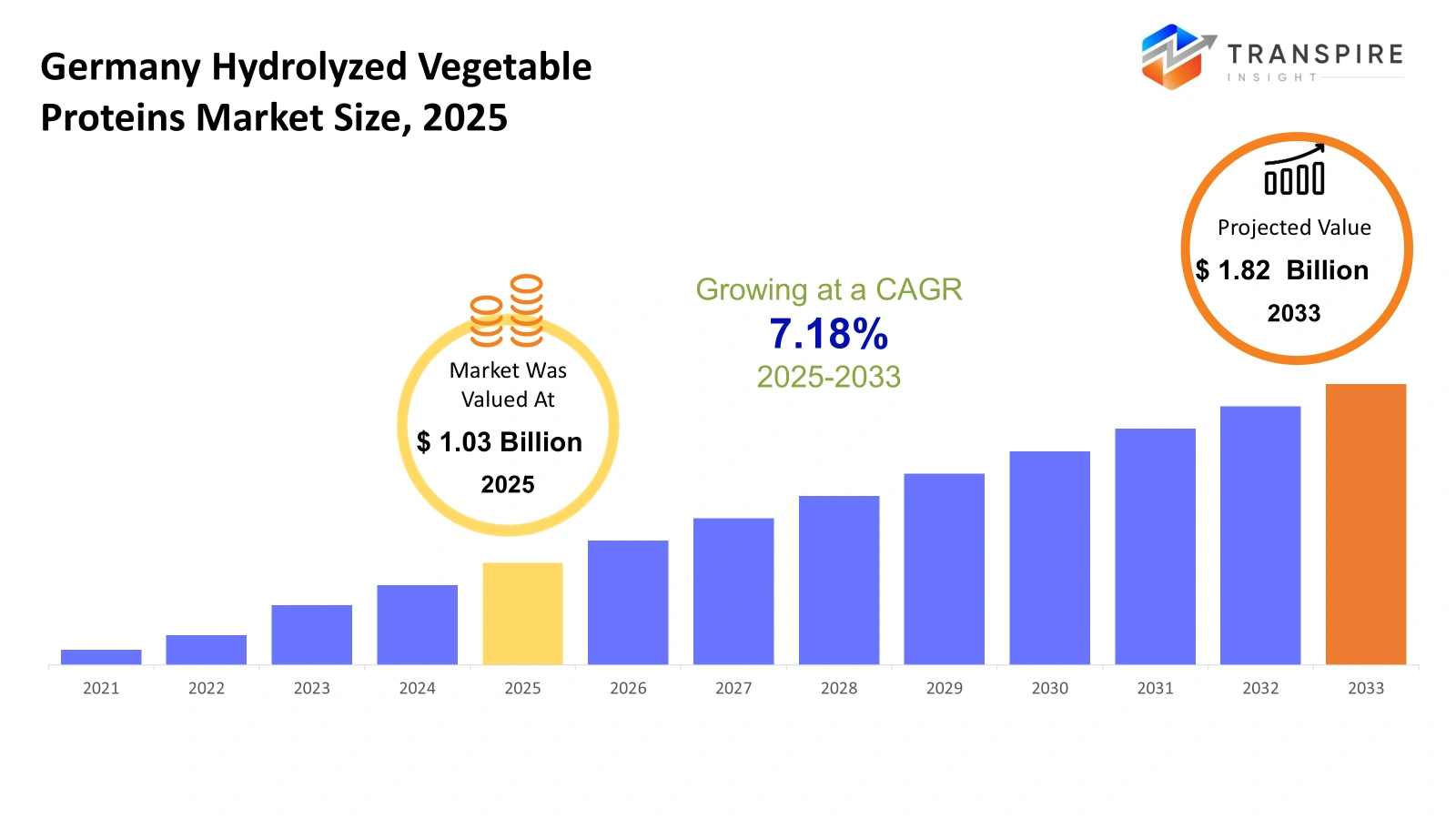
- Germany Hydrolyzed Vegetable Proteins Market Size 2025 USD 1.03 Billion
- Germany Hydrolyzed Vegetable Proteins Market Size 2033: USD 1.82 Billion
- Germany Hydrolyzed Vegetable Proteins Market CAGR: 7.18%
- Germany Hydrolyzed Vegetable Proteins MarketSegments: By Source (Soy, Wheat, Corn, Others),By Form (Liquid, Powder, Paste), By Application (Food Processing, Soups & Sauces, Snacks, Meat Alternatives, Seasonings), By Distribution Channel (B2B, Retail)
To learn more about this report,  Download Free Sample Report
Germany Hydrolyzed Vegetable Proteins Market Summary:
The Germany Hydrolyzed Vegetable Proteins Market size was estimated at USD 1.03 USD Billion in 2025 and is anticipated to reach USD 1.82 Billionby 2033, growing at a CAGR of7.18 % from 2026 to 2033. The food ingredient market in Germany will contain a specialized segment which uses hydrolysed vegetable protein for two purposes: to create flavors and to process plant proteins. German food manufacturers will use hydrolysed vegetable proteins to create savory flavors which they will use in their packaged meals and instant soups and sauces and snack seasonings. The processing facilities will use controlled enzymatic and thermal methods to convert plant proteins into smaller parts which will enhance taste balance and blending capabilities. The consumer preference will evolve toward plant-based ingredients which come from known sources and this trend will determine how packaged foods are developed.
Advancements in food technology will create products which have better texture stability and more reliable flavor distribution throughout their entire product life. Ingredient processing will use digital monitoring systems to help producers achieve consistent product quality across their entire production process. The European food sector will face increased regulatory focus on labeling transparency which will create new requirements for ingredient declarations and sourcing standards. Retail brands and private label producers will continue adjusting recipes to meet dietary expectations, while ingredient suppliers will refine production methods to align with changing food manufacturing practices across Germany.
Key Market Trends & Insights:
- The German market for hydrolysed vegetable proteins continues to grow because more people want plant-based diets. The food industry uses hydrolysed vegetable proteins more frequently to create soups and sauces and snacks and ready-to-eat meals. Manufacturers select protein sources which create mild taste and maintain their original functions because customers prefer clean label products.
- The demand for protein hydrolysates rises because sports nutrition and clinical nutrition and vegan packaged foods become more popular. German food industry values fast absorption and balanced amino acid profile. Product developers work on texture improvement and flavor masking and stable solubility solutions which will create new products for beverages and protein bars and fortified bakery items across the country.
- The clean label movement drives German retail food companies to shift their operations toward using plant-derived protein ingredients. Hydrolysed vegetable proteins deliver savory taste boosts and essential functional characteristics for usage in seasoning blends and convenience food products. Food brands use plant origin and processing details and nutritional information to promote their products at supermarkets and health stores and online platforms.
- Ingredient producers increase research funding to develop better hydrolysis processes and methods for controlling flavor. German manufacturers want to achieve three goals which include lowering bitterness and enhancing protein digestibility and achieving higher protein content in their products. Food technology institutes partner with processing companies to develop advanced methods for plant protein extraction and enzymatic treatment and industrial application testing.
- Sustainable sourcing practices for soy wheat and pea protein through supply chain operations create permanent market stability. German consumers demonstrate environmental awareness which leads companies to practice responsible raw material procurement and implement efficient production methods. Packaging communication today shows plant protein advantages and nutritional value and its suitability for vegetarian and vegan dietary patterns.
Germany Hydrolyzed Vegetable Proteins Market Segmentation
By Source
Soy: The German market for hydrolyzed vegetable proteins shows high demand for soy-based products because soy protein delivers consistent taste and exceptional amino acid content. Food manufacturers incorporate soy-based hydrolyzed proteins into their products by using them in sauces, seasonings and processed foods. The German market maintains its constant presence because soybeans provide reliable raw material supply and effective flavor improvement capabilities.
Wheat: Wheat based hydrolyzed vegetable proteins play a crucial role in the German hydrolyzed vegetable proteins market because they deliver a gentle taste and maintain equal protein content. Food processing companies use wheat source ingredients to strengthen savory flavor in soups, gravies, and ready meals. Wheat protein enables manufacturers to create products that combine smoothly while maintaining their original taste throughout the shelf life of packaged foods.
Corn: The German hydrolyzed vegetable proteins market receives corn-based products as they deliver a mild taste which works well with various types of processed food. The applications of corn-based hydrolyzed proteins enable users to achieve light taste profiles. Food companies use corn protein derivatives in snacks, seasoning powders, and instant meal formulations where balanced flavor development becomes necessary.
Others: The Others segment of the German hydrolyzed vegetable proteins market includes pea and rice and other vegetable protein sources. The increasing popularity of plant-based foods leads to higher demand for new protein sources. Food manufacturers adopt such ingredients for innovative products, particularly in vegan foods and plant-based protein formulations.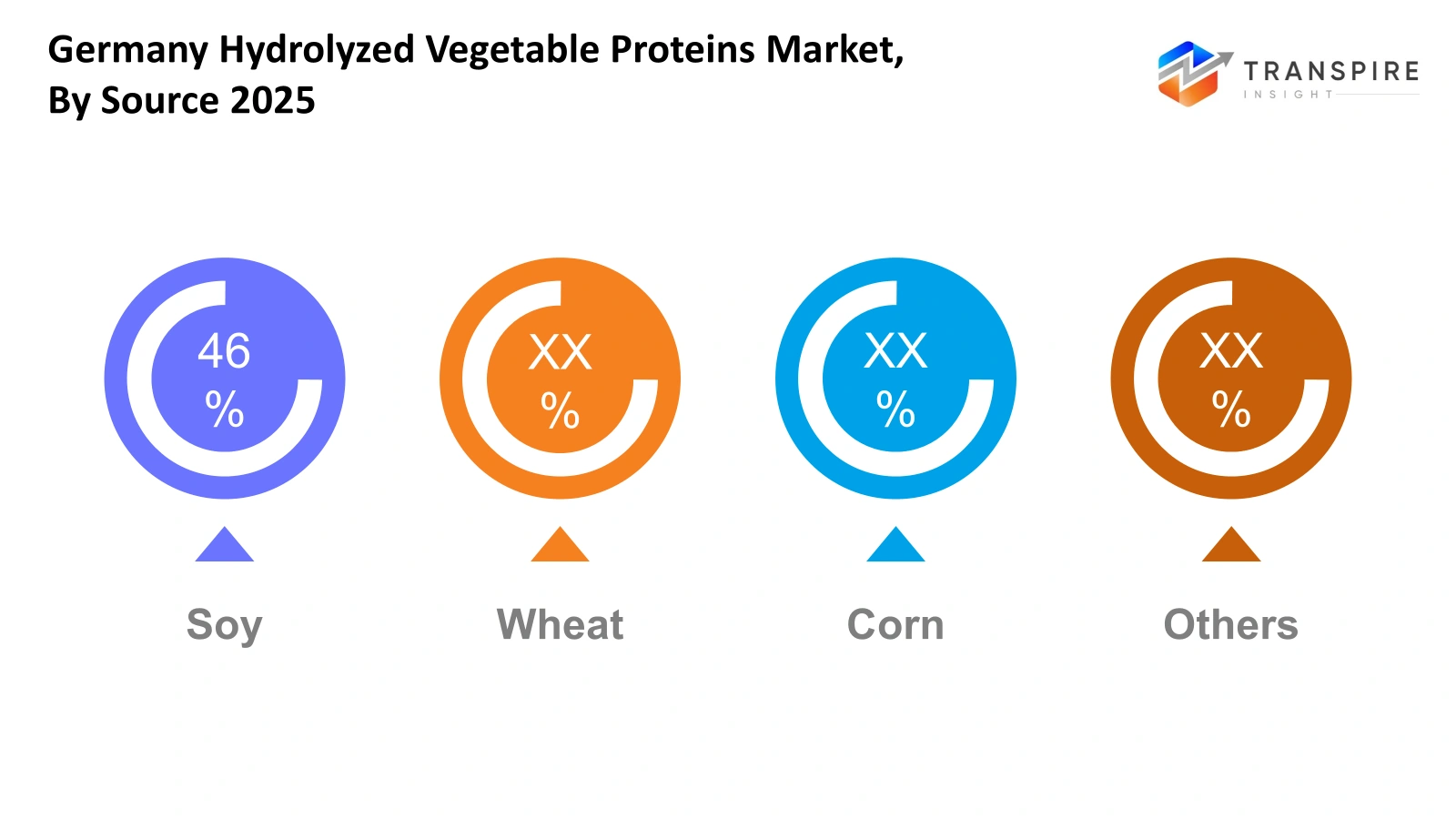
To learn more about this report, Download Free Sample Report
By Form
Liquid: The German hydrolysed vegetable proteins market benefits from liquid form which enables food manufacturers to use liquid solutions for their production needs. Food manufacturers prefer liquid hydrolysed proteins for sauce production, soup bases, and industrial cooking operations. The liquid formulations provide processing staff with fast blending capability which enables them to work efficiently and handle their tasks.
Powder: The German hydrolysed vegetable proteins market depends on powder form because of its extended shelf life and its convenient transportation. Food companies store powder ingredients for extended periods without major quality changes. Powder hydrolysed proteins serve as essential components for food manufacturers who use them in producing seasonings and snack coatings and dry food mixes that go into packaged meals.
Paste: The German hydrohydrolysed vegetable proteins market uses paste form to enable food manufacturers to create concentrated flavor applications. Food processors apply paste formulations when strong savory taste becomes necessary. Food processors use paste ingredients to create seasoning bases and processed meat alternatives and industrial food products. The thick texture of the material enables users to control its application during mixing processes that occur in large food production facilities.
By Application
Food processing: The food processing segment of the market drives the primary need for hydrolysed vegetable proteins because these proteins enhance both taste and flavor strength of food products. Processed foods such as ready meals, instant dishes, and packaged items rely on flavor enhancement ingredients. Hydrolysed vegetable proteins help maintain product flavor throughout production while protecting taste balance in every production batch.
Soups and sauces: The hydrolysed vegetable proteins market in Germany uses soups and sauces as its main application area. Hydrolysed proteins support savory taste development and deeper flavor in liquid food products. Food companies use these ingredients in their soup bases and cooking sauces and gravy preparations to create stronger flavor profiles which stay consistent throughout their packaged products.
Snacks: Snack manufacturing contributes to Germany hydrolysed vegetable proteins Market through flavor coating and seasoning blends. Manufacturers of chips and savory crackers and extruded snacks use hydrolysed vegetable proteins to improve their product flavors. The ingredients enable manufacturers to create attractive snack options which meet retail customer preferences through their delivery of balanced flavors.
Meatalternatives: Plant-based food consumption drives the demand for hydrolysed vegetable proteins in Germany through the meat alternatives market. Hydrolysed proteins help improve taste and texture of plant-based meat products. Food companies use these ingredients to create stronger savory flavor which makes plant-based burgers and sausages and protein foods more attractive to their customers.
Seasonings: The hydrolysed vegetable proteins market in Germany functions as an active market segment because seasonings through their hydrolysed protein content create umami flavors which enhance spice blends. Food companies include such ingredients in powdered seasoning mixes, instant flavor packets and cooking additives. The strong taste enhancement capability enables people to use the product for both packaged food and household cooking purposes.
By Distribution
B2B: The B2B distribution channel leads the Germany hydrolysed vegetable proteins market because food manufacturers obtain their ingredient needs through direct purchases from suppliers. Industrial food processing companies require steady supply for large production volumes. Ingredient distributors and manufacturing partnerships support stable trade relationships between suppliers and food production companies across Germany.
Retail: The retail channel develops the Germany hydrolysed vegetable proteins market through supermarket and online store sales of packaged cooking ingredients and seasoning products. Small food businesses and home cooking operations benefit from the retail distribution of products. The rising demand for specialty cooking ingredients leads to greater public awareness of hydrolysed vegetable protein products within consumer markets.
Country Insights
The hydrolysed vegetable protein market in Germany shows continuous development because food processing operations increase and demand for plant-based products grows. German manufacturers focus on soy, wheat, and pea protein hydrolysates used in soups, sauces, meat alternatives, and nutrition products. The advanced food technology infrastructure together with strict quality standards and extensive food production capacity maintains steady development throughout the German hydrolysed vegetable proteins market.
The hydrolysed vegetable protein market in Germany gains from increased consumer demand for plant-based dietary options in both retail and food service environments. German consumers show growing preference for sustainable protein sources, which leads food producers to select hydrolysed vegetable protein formulations as their method for improving flavor and increasing protein content. Research institutions, ingredient suppliers, and food companies strengthen development activity that supports market expansion for hydrolysed vegetable proteins in Germany.
Recent Development News
Rising demand for clean-label and sustainable ingredients: Germany hydrolysed vegetable protein Market experiences growing adoption due to consumer preference for clean-label and sustainable food products. Food producers are increasing investment in non-GMO and organic vegetable protein ingredients to meet demand for natural food additives, particularly in soups, sauces, ready meals, and packaged savory products.
Growth supported by plant-based food industry expansion: Germany hydrolysed vegetable protein Market shows steady expansion due to strong demand for plant-based food ingredients across packaged meals, sauces, and meat substitutes. Food manufacturers continue to increase usage of vegetable protein flavor enhancers to improve taste and protein content in processed foods, supporting industry demand growth in Germany.
|
Report Metrics |
Details |
|
Market size value in 2025 |
USD 1.03 Billion |
|
Market size value in 2026 |
USD 1.12 Billion |
|
Revenue forecast in 2033 |
USD 1.82 Billion |
|
Growth rate |
CAGR of 7.18% from 2026 to 2033 |
|
Base year |
2025 |
|
Historical data |
2021 – 2024 |
|
Forecast period |
2026 – 2033 |
|
Report coverage |
Revenue forecast, competitive landscape, growth factors, and trends |
|
Country scope |
Germany |
|
Key company profiled |
Ajinomoto Co. Inc., Archer Daniels Midland Company, Cargill Inc., Tate & Lyle PLC, Kerry Group, Ingredion Incorporated, Sensient Technologies, DSM-Firmenich, Roquette Frères, Kikkoman Corporation, Givaudan SA, BASF SE, International Flavors & Fragrances, Corbion NV, Bunge Limited. |
|
Customization scope |
Free report customization (country, regional & segment scope). Avail customized purchase options to meet your exact research needs. |
|
Report Segmentation |
Source (Soy, Wheat, Corn, Others), Form (Liquid, Powder, Paste), Application (Food Processing, Soups & Sauces, Snacks, Meat Alternatives, Seasonings), Distribution Channel (B2B, Retail) |
Key Germany Hydrolyzed Vegetable Proteins Market Insights
Germans need plant-based ingredients because they drive the market growth of hydrolysed vegetable proteins. Food processing companies seek clean label protein sources for soups, sauces, snacks and meat alternatives. Food manufacturers and foodservice operators use hydrolysed vegetable proteins because the ingredient provides both taste improvement and additional protein content.
The market for plant protein processing plants will grow because more companies invest in this sector. German food brands use hydrolysed vegetable proteins as seasoning components in their ready meals and savory snacks. The domestic food ingredient trade networks will experience market growth because companies prioritize cost savings and flavor consistency.
Company List
- Ajinomoto Co. Inc.
- Archer Daniels Midland Company
- Cargill Inc.
- Tate & Lyle PLC
- Kerry Group
- Ingredion Incorporated
- Sensient Technologies
- DSM-Firmenich
- Roquette Frères
- Kikkoman Corporation
- Givaudan SA
- BASF SE
- International Flavors & Fragrances
- Corbion NV
- Bunge Limited
Germany Hydrolyzed Vegetable Proteins Market Report Segmentation
By Source
- Soy
- Wheat
- Corn
- Others
By Form
- Liquid
- Powder
- Paste
By Application
- Food Processing
- Soups & Sauces
- Snacks
- Meat Alternatives
- Seasonings
By Distribution Channel
- B2B
- Retail
Frequently Asked Questions
Find quick answers to common questions.
The Approximate Germany Hydrolyzed Vegetable Proteins Market size for the Market will be USD 1.82 Billion in 2033.
The key segments of the Germany Hydrolyzed Vegetable Proteins Market are By Source (Soy, Wheat, Corn, Others),By Form (Liquid, Powder, Paste), By Application (Food Processing, Soups & Sauces, Snacks, Meat Alternatives, Seasonings), By Distribution Channel (B2B, Retail).
Major Players in the Germany Hydrolyzed Vegetable Proteins Market are Ajinomoto Co. Inc., Archer Daniels Midland Company, Cargill Inc.,Tate & Lyle PLC, Kerry Group, Ingredion Incorporated, Sensient Technologies, DSM-Firmenich, Roquette Frères, Kikkoman Corporation, Givaudan SA, BASF SE, International Flavors & Fragrances, Corbion NV, Bunge Limited.
The Current Market size of the Germany Hydrolyzed Vegetable Proteins Market is USD 1.03 Billion by 2025.
The Germany Hydrolyzed Vegetable Proteins market CAGR is 7.18%.
- Ajinomoto Co. Inc.
- Archer Daniels Midland Company
- Cargill Inc.
- Tate & Lyle PLC
- Kerry Group
- Ingredion Incorporated
- Sensient Technologies
- DSM-Firmenich
- Roquette Frères
- Kikkoman Corporation
- Givaudan SA
- BASF SE
- International Flavors & Fragrances
- Corbion NV
- Bunge Limited
Recently Published Reports
-
Dec 2024
Baby Infant Formula Market
Baby Infant Formula Market Size, Share & Analysis Report By ype (Infant Milk, Follow On Milk, Specialty Baby Milk, Growing-Up Milk), By Ingredient (Carbohydrate, Fat, Protein, Minerals, Vitamins, and Others), By Product Form (Powder, Liquid, and Ready-to-feed), By Distribution Channels (Supermarket/Hypermarket, Specialty Store, Pharmacies, Online Retail, and Others), and Geography (North America, Europe, Asia-Pacific, Middle East and Africa, South and Central America), 2021 - 2031
-
Jan 2025
Edible Insects for Animal Feed Market
Edible Insects for Animal Feed Market Size, Share & Analysis Report By Type (Insect Powder, Insect Meal, Insect Bar, Insect Paste, Insect Oil, and Others), By Insect Type (Beetles, Cricket, Caterpillar, Hymenoptera, Orthoptera, Tree Bugs, and Others), By Application (Livestock, Pet Food, and Aquaculture), By Livestock Type (Poultry, Swine, and Others), and Geography (North America, Europe, Asia-Pacific, Middle East and Africa, South and Central America), 2021 - 2031
-
Jan 2025
Food Industry Disinfection and Bacterial Control Market
Food Industry Disinfection and Bacterial Control Market Size, Share & Analysis Report By Type (Chemical Disinfectants, Physical Disinfectants, and Biocides and Antimicrobials), By Application (Food Processing Equipment Surface Disinfection, Food Preparation Areas Surface Disinfection, Storage Areas Surface Disinfection, Anti-microbial Coatings Food Preservation, and Preservative Solutions Food Preservation), By End User (Meat and Poultry Processing, Dairy Processing, Seafood Processing, Bakery and Confectionery, Restaurants and Commercial Kitchens, and Food Service Providers), By Sales Channel (Online, Offline), and Geography (North America, Europe, Asia-Pacific, Middle East and Africa, South and Central America), 2021 - 2031
-
Jan 2025
Freeze Dried Food Market
Freeze Dried Food Market Size, Share & Analysis Report By Product Type (Fruits, Vegetables, Freeze-Dried Dairy Products, Freeze-Dried Meat and Seafood, Freeze-Dried Pet Food, and Prepared Meal), By Nature (Organic, and Conventional), By Form (Powdered, Granules, and Diced), By End Use (Breakfast Cereals, Dairy Products, Bakery & Confectionery, Nutritional Bars & Supplements, Powdered Beverages, Snacks, and Retail (Household)), and Geography (North America, Europe, Asia-Pacific, Middle East and Africa, South and Central America), 2021 - 2031