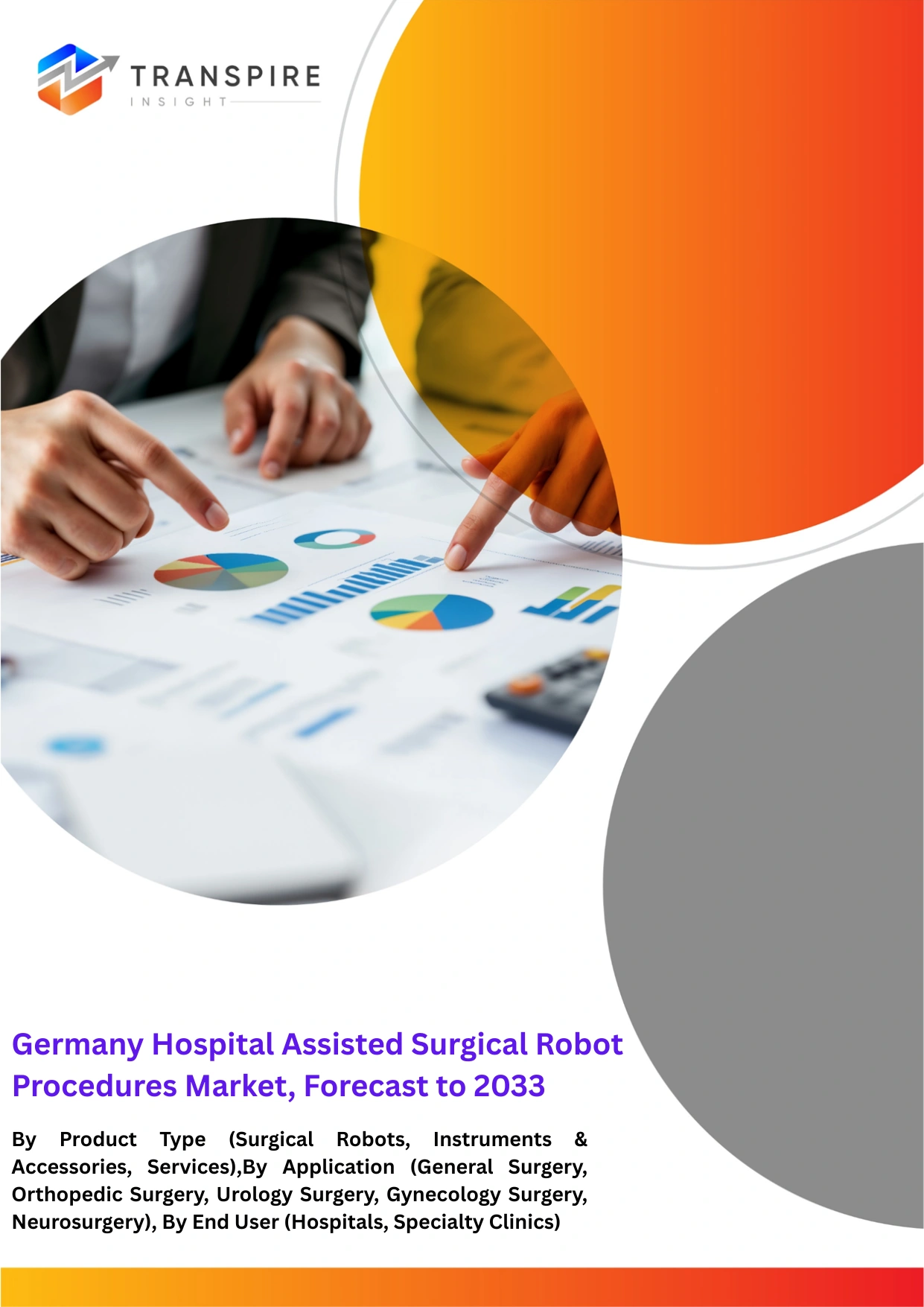
Germany Hospital Assisted Surgical Robot Procedures Market Size & Forecast:
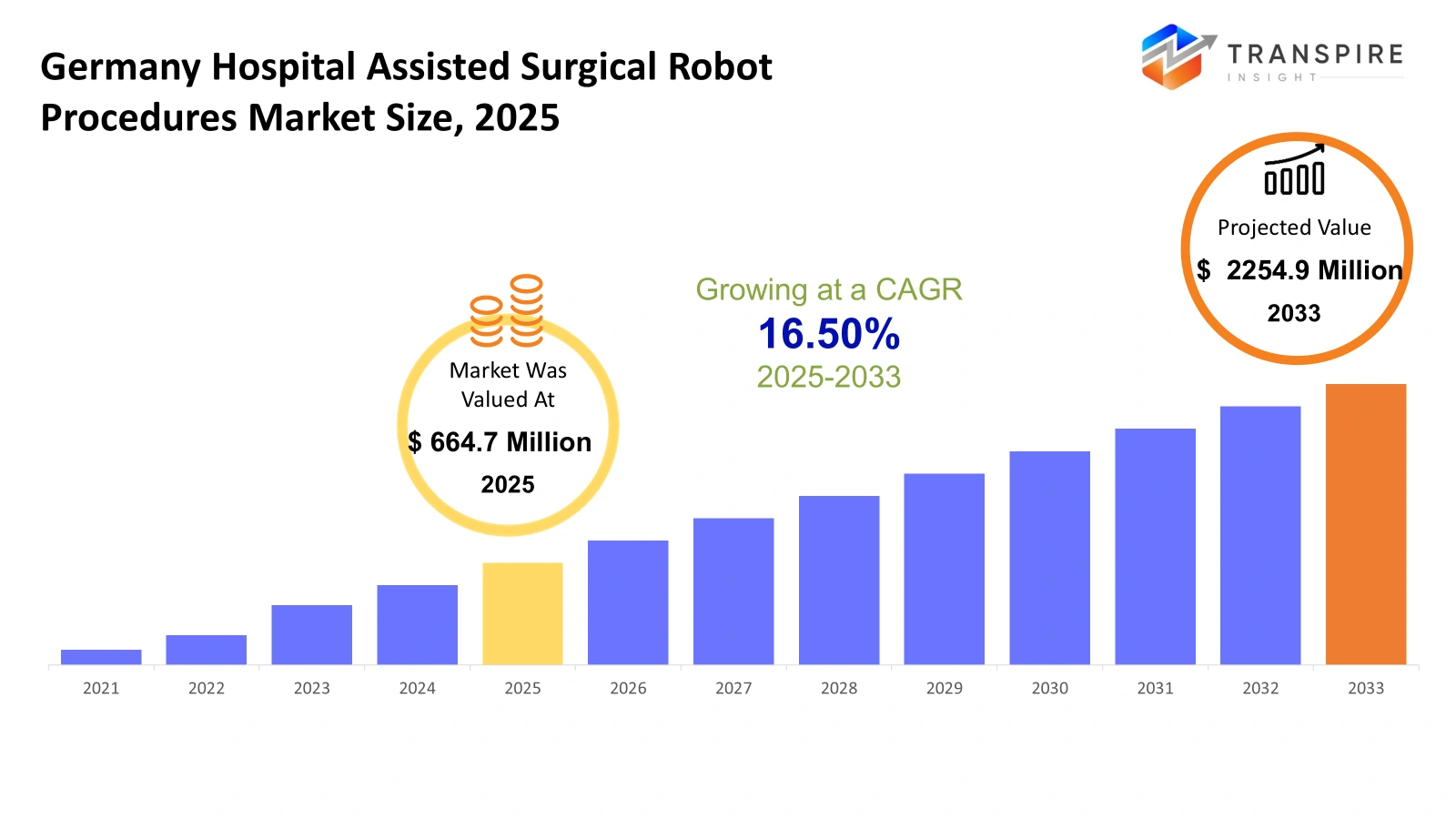
- Germany Hospital Assisted Surgical Robot Procedures Market Size 2025: USD 664.7 Million
- Germany Hospital Assisted Surgical Robot Procedures Market Size 2033: USD 2254.9 Million
- Germany Hospital Assisted Surgical Robot Procedures Market CAGR : 16.50%
- Germany Hospital Assisted Surgical Robot Procedures Market Segments: By Product Type (Surgical Robots, Instruments & Accessories, Services),By Application (General Surgery, Orthopedic Surgery, Urology Surgery, Gynecology Surgery, Neurosurgery), By End User (Hospitals, Specialty Clinics).
To learn more about this report,  Download Free Sample Report
Germany Hospital Assisted Surgical Robot Procedures Market Summary:
The Germany Hospital Assisted Surgical Robot Procedures Market size was estimated at USD 664.7 Million in 2025 and is anticipated to reach USD 2254.9 Million by 2033, growing at a CAGR of 16.50% from 2026 to 2033. The Germany hospital surgical robot market operates within the medical technology sector which provides advanced robotic surgical systems for use in complex surgical procedures. The healthcare facilities throughout Germany will adopt robotic systems that provide accurate movement control and maintain stable visual systems and enhance operational performance during medical treatments. Medical institutions increasingly expect surgical tools that will shorten recovery time and support minimally invasive treatment methods. Patient expectations will also influence demand because many individuals now prefer procedures that involve smaller incisions and deliver faster healing results. Progress in robotic arms and imaging software and data guidance systems will enhance clinical confidence in these technologies. The development of robotic surgical programs across German medical centers will depend on two factors which include healthcare regulations and hospital investment strategies.
Key Market Trends & Insights:
- The market for surgical robots used by German hospitals showed substantial growth as hospitals began using advanced surgical technology with their robotic systems. The German Hospital-assisted surgical robot procedures Market will experience procedural volume growth because minimally invasive procedures become more common and hospitals need accurate surgical results and their robotic training programs expand.
- The German hospital-assisted surgical robot procedures market shows that hospitals across Germany are increasingly adopting medical robotics technology, driven by increased funding. The combination of advanced imaging systems, improved robotic arm manipulation and digital surgical planning tools will provide better accuracy during difficult medical procedures. The German Hospital-assisted surgical robot procedures Market will grow because hospitals modernize their systems and enter into technology partnerships with other companies.
- The Germany hospital assisted surgical robot procedures market shows that hospitals across Germany adopt robotic surgical systems because they want to provide their patients with less invasive surgical procedures. Hospitals use robotic systems to achieve better surgical results and shorter recovery periods and to perform complicated medical procedures. The Germany Hospital assisted surgical robot procedures Market will grow because surgical robotics training and research programs expand their offerings.
- The surgical robot procedures market in Germany operates through three essential components which include the development of surgical robots and their associated operating frameworks and their implementation within the hospital system. The Germany Hospital assisted surgical robot procedures Market will achieve operational improvements through advancements in surgical navigation systems and robotic control software and procedure monitoring platforms.
Germany Hospital Assisted Surgical Robot Procedures Market Segmentation
By Product Type
Surgical Robots: The German healthcare sector demonstrates continuous adoption of robotic surgical technologies due to its ongoing technological advancements in surgical robot equipment. Surgeons achieve better surgical results through advanced robotic systems that enable them to conduct exact operations while minimising patient recovery periods. The German hospital market for robotic surgical systems will experience gradual growth because hospitals adopt modern facilities and doctors prefer less invasive surgical methods. Germany operating rooms use robotic surgical systems as their primary equipment for advanced medical procedures. Hospitals acquire robotic systems because these technologies enable surgeons to perform complex operations which need precise movements and continuous visual feedback. The implementation of robotic systems in surgical departments will boost efficiency and become standard practice throughout leading hospitals.
Instruments and Accessories: Surgical robotic systems need specific instruments and control equipment and their associated accessories to achieve exact performance during surgical operations. The demand for modern surgical instruments is rising because hospitals are developing their robotic surgery capabilities. The medical equipment supply chain will experience consistent demand because of ongoing accessory replacements and the launch of new surgical products.
Services: The operational success of robotic surgery systems depends on three essential components which include maintenance services and training programs and system support. Surgical teams need hospitals to provide technical inspections and hands-on training to achieve precise operational performance. The service providers will enhance equipment functionality through software updates and repair assistance and operational training for robotic surgical systems.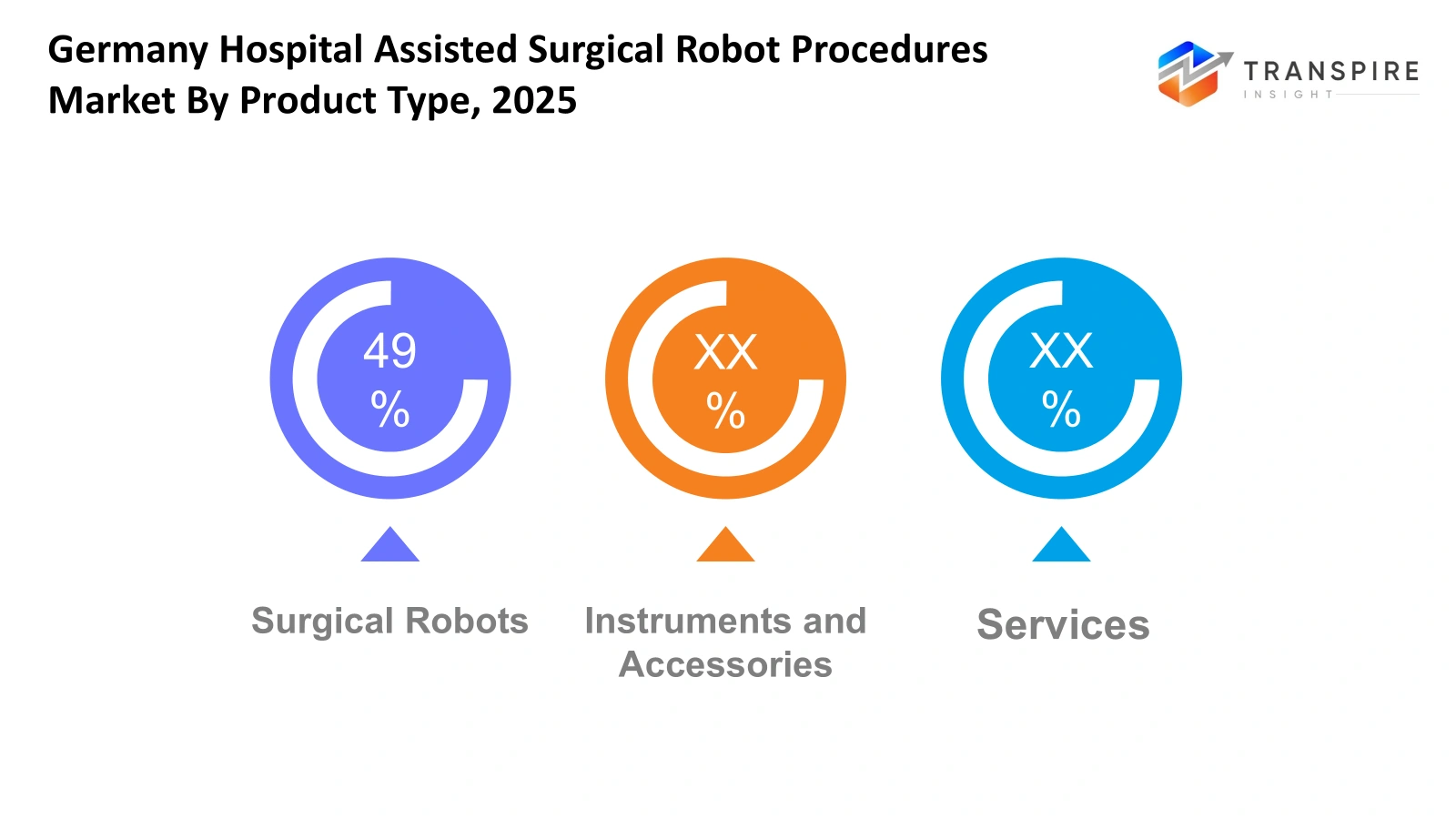
To learn more about this report, Download Free Sample Report
By Application
General surgery: The application of robotic-assisted surgical procedures has grown into multiple surgical specialties across Germany because these systems deliver better surgical results together with faster patient recovery times. Medical institutions introduce robotic technology into different treatment areas to support complex procedures and reduce surgical complications. The increased use of clinical applications will drive healthcare facilities to adopt medical solutions throughout their entire operations.The existing surgical methods in general surgery can benefit from robotic assistance which enables doctors to conduct abdominal and gastrointestinal surgeries. Robotic systems enable hospitals to achieve better surgical results through enhanced visibility and precision during their most difficult medical operations. The medical field continues to extend its use of robotic systems inside general surgical departments because these technologies provide better clinical results with shorter patient recovery times.
Orthopaedic surgeons: It depends on robotic guidance systems to perform joint replacement and bone alignment surgeries. Hospitals spend money on robotic orthopedic systems because these systems enable precise implant placement and safe surgical actions. The growing need for advanced orthopaedic treatments among elderly patients will drive orthopedic departments to adopt robotic surgical technology at higher rates.
Urology surgery: Robotic surgical systems support several urological procedures including prostate surgery and kidney treatment. The combination of precise movement control with steady visual tracking yields better surgical outcomes in complex medical operations. The increasing understanding of robotic advantages in urology departments leads to more hospitals adopting these systems throughout their surgical facilities.
Gynaecology Surgery: Robotic systems aid doctors to perform less invasive procedures which treat reproductive health conditions and gynaecological disorders. Hospitals employ robotic systems to conduct operations that need precise control of delicate bodily tissues. The growing adoption of robotic technologies in women's health services will enable medical facilities to extend their surgical capabilities.
Neurosurgery: Neurosurgical procedures require exact instrument control which must maintain constant operational stability for all brain and neurological system procedures. The robotic systems enable surgeons to access patients through controlled pathways while they obtain better visual representation during their complex neurosurgical operations. Medical research institutions and specialized hospitals currently conduct studies to evaluate robotic systems which assist in performing complex neurosurgical operations.
By End User
Hospitals: Healthcare institutions across Germany continue adopting robotic surgical systems to improve treatment efficiency and surgical precision. Patients who want advanced treatments that modern hospitals provide need robotic systems which hospitals and special clinics acquire to support their medical procedures. The growth of healthcare facilities throughout the country will create opportunities for medical robotics research to expand its market presence.The main facilities that use robotic surgical technology are large hospitals which possess both advanced operating systems and qualified surgical staff to handle demanding surgical tasks. The healthcare industry spends on robotic systems because hospitals believe these technologies will enhance their patient treatment results and operational efficiency through their advanced surgical capabilities.
Specialty Clinics: Speciality clinics that operate in urology, orthopaedics, and gynaecology fields, now use robotic surgical systems to perform their specific surgical operations. The specialized treatment centers gain from robotic systems because they enable better patient outcomes through precise surgical execution. The development of specialized medical facilities will enable Germany to establish robotic surgical systems at its particular clinical treatment centers.
Country Insights
Germany demonstrates strong use of modern medical technology which hospitals and surgical centers implement throughout their facilities. The healthcare sector continues to invest in robotic surgery systems which help doctors complete difficult medical procedures with greater precision. Cities like Berlin Munich and Hamburg witness healthcare facilities adopting robotic systems that support surgeons during their minimally invasive medical procedures. The Germany Hospital assisted surgical robot procedures Market expands because more patients require exact surgical techniques which enable them to recover from procedures faster. The research programs in medical technology together with the advanced hospital facilities create an environment which supports robotic surgery technology adoption across various medical fields including urology and orthopedics and general surgery.
The German healthcare system maintains its surgical innovation development through healthcare modernisation programs and technological partnerships. Medical equipment manufacturers together with hospital groups and research institutions collaborate to enhance robotic platforms and surgical training solutions. Hospitals recognize that the increasing emphasis on patient safety and treatment efficiency requires them to invest in robotic systems which enhance surgical visibility and enable precise instrument control. Surgeons acquire robotic platform expertise at training centers before they conduct clinical procedures. The Germany Hospital assisted surgical robot procedures Market will experience consistent growth because healthcare policies support technology adoption and the country possesses strong medical engineering capabilities.
Recent Development News
Research and innovation programs across Germany support medical robotics development and surgical automation. Hospital collaboration with technology research institutions strengthens progress in robotic-assisted procedures and clinical efficiency improvements.
Healthcare modernization initiatives across Germany encourage digital medical technology adoption in hospitals. Robotic surgery systems continue gaining attention because advanced imaging, AI-supported surgical planning, and robotic precision assist surgeons during complex procedures.
Growing installation of robotic surgical platforms continues across German hospitals and specialized treatment centers. Expansion of minimally invasive procedures through robotic assistance supports improved surgical precision and shorter recovery periods. Continuous investment in medical robotics and hospital technology infrastructure will support steady development within the Germany Hospital assisted surgical robot procedures Market.
|
Report Metrics |
Details |
|
Market size value in 2025 |
USD 664.7 Million |
|
Market size value in 2026 |
USD 774.4 Million |
|
Revenue forecast in 2033 |
USD 2254.9 Million |
|
Growth rate |
CAGR of 16.50% from 2025 to 2033 |
|
Base year |
2025 |
|
Historical data |
2021 – 2024 |
|
Forecast period |
2025 – 2033 |
|
Report coverage |
Revenue forecast, competitive landscape, growth factors, and trends |
|
Country scope |
Germany |
|
Key company profiled |
Intuitive Surgical, Medtronic PLC, Stryker Corporation, Zimmer Biomet, Johnson & Johnson (Ethicon), Smith & Nephew, CMR Surgical, Asensus Surgical, Renishaw PLC, Corindus (Siemens Healthineers), Accuray Inc., TransEnterix, Titan Medical, Brainlab AG, Karl Storz SE. |
|
Customization scope |
Free report customization (country, regional & segment scope). Avail customized purchase options to meet your exact research needs. |
|
Report Segmentation |
By Product Type (Surgical Robots, Instruments & Accessories, Services),By Application (General Surgery, Orthopedic Surgery, Urology Surgery, Gynecology Surgery, Neurosurgery), By End User (Hospitals, Specialty Clinics). |
Key Germany Hospital Assisted Surgical Robot Procedures Market Company Insights
The German hospital system continues to develop better robotic surgery systems through its ongoing research programs. Surgical automation technology companies use robotic systems from Intuitive Surgical to enhance the accuracy of their minimally invasive surgical methods. The Germany Hospital assisted surgical robot procedures Market will experience continuous growth because hospitals will allocate funds to develop modern surgical systems and robotic technologies.
The European healthcare system sees medical technology companies develop new robotic surgical systems for various hospitals. Medtronic and Stryker Corporation together design surgical robotic systems which enable surgeons to perform orthopedic and neurological and minimally invasive medical procedures. The Germany Hospital assisted surgical robot procedures Market will experience growth because technology innovation and hospital modernization programs will improve market operations.
Company List
- Intuitive Surgical
- Medtronic PLC
- Stryker Corporation
- Zimmer Biomet
- Johnson & Johnson (Ethicon) Smith & Nephew
- CMR Surgical
- Asensus Surgical
- Renishaw PLC
- Corindus (Siemens Healthineers)
- Accuray Inc.
- TransEnterix
- Titan Medical
- Brainlab AG
- Karl Storz SE.
Germany Hospital Assisted Surgical Robot Procedures Market Report Segmentation
By Product Type
- Surgical Robots
- Instruments & Accessories
- Services
By Application
- General Surgery
- Orthopedic Surgery
- Urology Surgery
- Gynecology Surgery
- Neurosurgery
By End User
- Hospitals
- Specialty Clinics
Frequently Asked Questions
Find quick answers to common questions.
The Approximate Germany Hospital Assisted Surgical Robot Procedures Market size for the Market will be USD 2254.9 Million in 2033.
The key segments of the Germany Hospital Assisted Surgical Robot Procedures Market are By Product Type (Surgical Robots, Instruments & Accessories, Services),By Application (General Surgery, Orthopedic Surgery, Urology Surgery, Gynecology Surgery, Neurosurgery), By End User (Hospitals, Specialty Clinics).
Major players in the Germany Hospital Assisted Surgical Robot Procedures Market are Intuitive Surgical, Medtronic PLC, Stryker Corporation, Zimmer Biomet, Johnson & Johnson (Ethicon), Smith & Nephew, CMR Surgical, Asensus Surgical, Renishaw PLC, Corindus (Siemens Healthineers), Accuray Inc., TransEnterix, Titan Medical, Brainlab AG, Karl Storz SE.
The current Market size of the Germany Hospital Assisted Surgical Robot Procedures Market is USD 664.7 Million by 2025.
The Germany Hospital Assisted Surgical Robot Procedures Market CAGR is 16.50%.
- Intuitive Surgical
- Medtronic PLC
- Stryker Corporation
- Zimmer Biomet
- Johnson & Johnson (Ethicon) Smith & Nephew
- CMR Surgical
- Asensus Surgical
- Renishaw PLC
- Corindus (Siemens Healthineers)
- Accuray Inc.
- TransEnterix
- Titan Medical
- Brainlab AG
- Karl Storz SE.
Recently Published Reports
-
Apr 2026
AI in Diabetic Retinopathy Market
AI in Diabetic Retinopathy Market Size, Share & Analysis Report By Type (Screening AI Systems, Diagnostic AI Systems, and Predictive AI Models), By Application Segment (Hospitals, Ophthalmology Clinics, Diagnostic Centers, and Research and Development), and Geography (North America, Europe, Asia-Pacific, Middle East and Africa, South and Central America), 2021 - 2031
-
Apr 2026
Psychometric Tests Market
Psychometric Tests Market Size, Share & Analysis Report By Type (Personality Tests, Ability/Aptitude Tests, Skill/Knowledge Tests, and Others), By Application (Talent Acquisition and Talent Management), and Geography (North America, Europe, Asia-Pacific, Middle East and Africa, South and Central America), 2021 – 2031
-
Apr 2026
Rare Biological Sample Collection Market
Rare Biological Sample Collection Market Size, Share & Analysis Report By Type (Isolation Kits & Reagent, Blood Collection Tubes, and Others), By Application (Oncology, Transcriptomics, Pharmacogenomics, and Others), and Geography (North America, Europe, Asia-Pacific, Middle East and Africa, South and Central America), 2021 – 2031
-
Apr 2026
Patient Lift Pendant Market
Patient Lift Pendant Market By Product Type (Wired Pendants, Wireless, Programmable), By Operation Type(Manual, Electric), By End-Users (Healthcare Professionals, Patients), By Application (Hospitals, Homecare, Rehabilitation Centers, Others), By Industry Analysis, Size, Share, Growth, Trends, and Forecasts 2021-2033
Our Clients
.jpg)