
Germany Cellulose Fiber Market Size & Forecast:
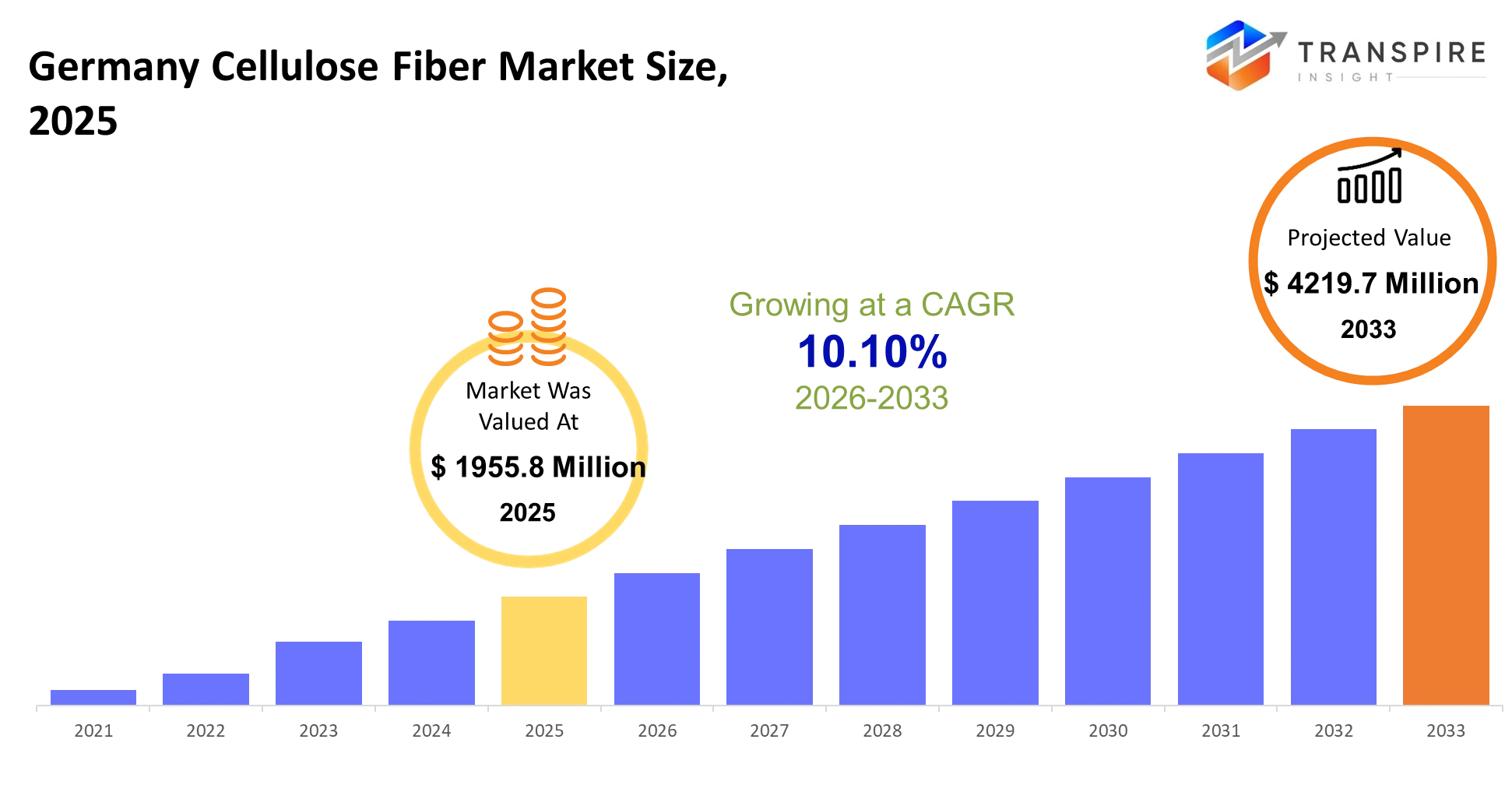
- Germany Cellulose Fiber Market Size 2025: USD 1955.8 Million
- Germany Cellulose Fiber Market Size 2033: USD 4219.7 Million
- Germany Cellulose Fiber Market CAGR: 10.10%
- Germany Cellulose Fiber Market Segments: by Product Type (Natural Cellulose Fiber, Regenerated Cellulose Fiber),by Application (Textiles & Apparel, Paper & Pulp, Hygiene Products, Industrial Applications), by Distribution Channel (Direct Sales, Distributors).
To learn more about this report,  Download Free Sample Report
Germany Cellulose Fiber Market Summary:
The Germany Cellulose Fiber Market size was estimated at USD 2152.3 Millionin 2026 and is anticipated to reach USD 4219.7 Million by 2033, growing at a CAGR of 10.10% from 2026 to 2033. The cellulose fiber market in Germany will serve as a major driver that helps Germany achieve its goal of sustainable production methods and responsible resource management. Cellulose fibers, which come mainly from wood pulp and other plant-based materials, will remain popular because they provide a biodegradable substitute for common synthetic materials found in clothing and packaging and industrial uses. The established German industry in engineering and chemical processing and forest resources will ensure that businesses maintain their operations in cellulose fiber production and processing throughout the nation. Textile manufacturers will increasingly integrate regenerated fibers such as viscose, modal, and lyocell into fabric production as brands search for materials that balance performance with environmental responsibility. Consumer knowledge about material sources and disposal methods has increased in recent years, which will influence purchasing patterns to drive fashion brands and packaging companies and hygiene product makers to choose fibers that meet sustainability requirements.
The development of new technologies will determine how the Germany cellulose fiber market will evolve during the upcoming years. The implementation of new solvent-based fiber production techniques together with closed-loop manufacturing systems will enable factories to reduce their chemical waste and water usage while meeting the environmental requirements established by European Union authorities. German regulations will maintain their focus on responsible forestry practices and carbon reduction efforts and supply chain transparency which will force manufacturers to obtain certified wood pulp and enhance their production methods. Research institutions together with industrial laboratories will develop new and innovative applications for cellulose fibers which extend beyond their current use in clothing to include filtration products and medical textiles and advanced composite materials. The progress of fiber manufacturing in Germany will be determined by consumer preferences and scientific advancements and environmental regulations while sustainable materials gain increased importance in the country's industrial sector.
Key Market Trends & Insights:
- Growing environmental awareness across Germany continues to encourage the use of plant-based fibers in multiple manufacturing activities. The textile industry and packaging industry and hygiene goods industry will begin using cellulose-based materials as their primary material for production because they prefer cellulose-based materials over synthetic materials. The Germany Cellulose Fiber Market will experience strong growth because sustainable sourcing and circular production methods drive demand for its products in the upcoming years.
- German textile manufacturers increasingly use cellulose fibers to produce their fabrics because these fibers provide comfortable and breathable materials which are easy to process. To satisfy customer demand for natural fabrics clothing manufacturers will increase their usage of plant-based materials which include viscose and modal. The Germany Cellulose Fiber Market will experience sustained growth because this trend will continue to develop.
- Hygiene products which include wipes and sanitary materials and absorbent products will need cellulose fibers because these fibers provide softness and liquid absorption capacity. Healthcare suppliers and consumer goods manufacturers in Germany will increase adoption of such fibers to maintain quality and safety standards. The pattern will create consistent market activity for Germany Cellulose Fiber Market.
- Manufacturers operating in Germany are investing in production techniques which will boost efficiency and decrease fiber processing waste. The development of advanced spinning and treatment methods will enable producers to create more durable and high-performance fibers. The innovation will increase production capacity for the Germany Cellulose Fiber Market.
- Packaging producers in Germany are adopting biodegradable materials because of increasing environmental regulations. Cellulose fibers will support packaging solutions used in food service, retail shipping, and protective wrapping. The Germany Cellulose Fiber Market will experience rising demand because more people are adopting compostable and recyclable materials.
Germany Cellulose Fiber Market Segmentation
By Product Type :
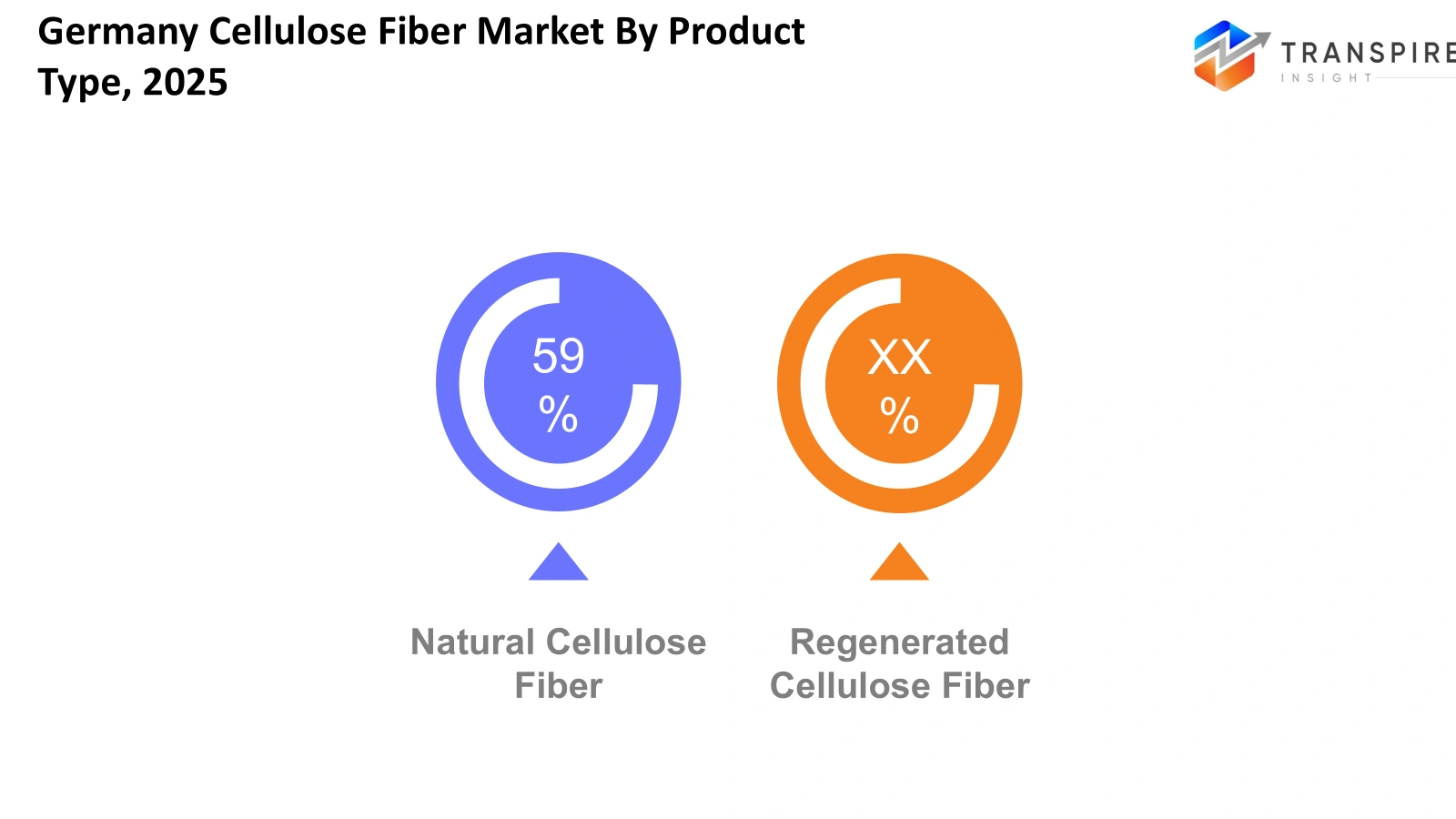
- Natural Cellulose Fiber: Natural cellulose fiber plays an important role in the Germany Cellulose Fiber Market because of strong demand for plant-based materials. Cotton, wood pulp fiber, and other natural sources remain widely used in textile production and paper making. Manufacturers will continue focusing on sustainable raw materials, as environmental standards and consumer awareness will support steady use of natural cellulose fiber in several industries.
- Regenerated Cellulose Fiber: Regenerated cellulose fiber has gained strong attention in the Germany Cellulose Fiber Market as industries search for materials that combine natural origin with controlled manufacturing. Fibers such as viscose and lyocell will be produced through processing of natural cellulose. These fibers will offer smooth texture, high absorbency, and consistent quality, making regenerated cellulose fiber suitable for clothing, hygiene goods, and technical fabrics.
To learn more about this report, Download Free Sample Report
By Application :
- Textiles & Apparel: Textile and clothing production represents a major use area in the Germany Cellulose Fiber Market. Cellulose-based fibers will support production of breathable and comfortable fabrics used in shirts, dresses, and home textiles. German fashion manufacturers will increasingly adopt these fibers because plant-based materials align with sustainability goals and consumer demand for environmentally responsible fabric choices.
- Paper & Pulp: Paper and pulp production continues to hold a strong position in the Germany Cellulose Fiber Market. Wood-based cellulose fiber will be used for printing paper, packaging materials, and tissue products. German paper manufacturers will rely on cellulose fiber because reliable supply and strong recycling systems support continuous production of paper goods used in publishing, packaging, and everyday consumer applications.
- Hygiene Products: Hygiene goods represent another important segment within the Germany Cellulose Fiber Market. Cellulose fiber will be used in diapers, sanitary products, wipes, and medical pads because of strong absorbency and soft texture. Demand will remain stable as healthcare awareness and hygiene standards increase. Manufacturers will favor cellulose fiber since biodegradable materials align with sustainability and waste-reduction goals.
- Industrial Applications: Industrial activity also supports growth of the Germany Cellulose Fiber Market. Cellulose fiber will be used in filtration materials, reinforcement layers, specialty papers, and technical fabrics. Industrial sectors will value durability, lightweight structure, and environmental compatibility. Ongoing material innovation will encourage wider industrial use as companies search for plant-based alternatives to synthetic materials.
By Distribution Channel :
- Direct Sales: Direct sales represent a key distribution approach in the Germany Cellulose Fiber Market. Large manufacturers will often supply cellulose fiber directly to textile mills, paper producers, and hygiene product companies. Direct supply agreements will allow stable pricing, quality control, and long-term cooperation between producers and industrial buyers, supporting efficient procurement for large-scale manufacturing operations.
- Distributors: Distributors play an important role in the Germany Cellulose Fiber Market by connecting fiber producers with smaller manufacturers and regional buyers. Distribution networks will support flexible purchasing, faster delivery, and access to different fiber grades. Small and medium businesses will benefit from distributor support because bulk purchasing directly from manufacturers will not always remain practical.
Country Insights
- The industrial and environmental practices of Germany generate sustained demand for cellulose-based materials. The demand increase occurs because packaging and textiles and filtration and specialty applications need plant-derived fibers as a replacement for synthetic materials. The implementation of sustainable production policies together with strict material standards pushes manufacturers to adopt bio-based fiber solutions throughout their production facilities.
- Germany shows consistent industrial demand connected to packaging, hygiene products, and technical textiles. The manufacturing sector in Bavaria and North Rhine-Westphalia depends on two essential resources which include consistent access to raw materials and their advanced processing capabilities. The industry's strong history in paper and pulp production capacity development together with its research efforts in cellulose fiber and advanced material technologies drive forward industrial laboratory and technical institute research work.
- The German Cellulose Fiber Market relies on environmental regulations as one of its major influences. The company waste reduction objectives together with recycling targets and renewable material plans drive businesses to adopt plant-based fiber solutions. The combination of government sustainability initiatives and European Union environmental regulations creates pressure on manufacturers to use biodegradable and recyclable materials for their packaging and consumer products and industrial equipment.
- Germany benefits from its efficient logistics system and its skilled engineers and its university-industry partnerships. Continuous investment in material science research enables scientists to develop stronger and more durable and more efficient processing methods for materials. The industrial stability enables cellulose fibers to be used in various applications which include filtration systems and automotive interiors and advanced packaging materials.
Recent Development News
A European research initiative called Fabulose is exploring the use of bacterial cellulose to produce recyclable and high-quality textile fibers. The project focuses on spinning bacterial cellulose into filaments that can be used for sustainable fabrics and leather alternatives. This initiative is part of the EU’s broader push toward bio-based materials in the textile sector, which directly supports the development of cellulose fiber technologies used by European manufacturers, including those in Germany.
New technology platforms are emerging that convert agricultural residues into regenerated cellulose fibers, offering an alternative feedstock to wood-based pulp. This development could diversify raw materials for cellulose fiber production and reduce reliance on forest resources.
|
Report Metrics |
Details |
|
Market size value in 2025 |
USD 1955.8 Million |
|
Market size value in 2026 |
USD 2152.3 Million |
|
Revenue forecast in 2033 |
USD 4219.7 Million |
|
Growth rate |
CAGR of 10.10% from 2026 to 2033 |
|
Base year |
2025 |
|
Historical data |
2021 - 2024 |
|
Forecast period |
2026 - 2033 |
|
Report coverage |
Revenue forecast, competitive landscape, growth factors, and trends |
|
Country scope |
Germany |
|
Key company profiled |
Lenzing AG, Kelheim Fibres GmbH, Aditya Birla Group, Sateri Holdings, Tangshan Sanyou Chemical, Grasim Industries, Fulida Group, Sniace Group, Thai Rayon, Century Rayon, Xinxiang Bailu Chemical Fiber, Birla Cellulose, ENKA GmbH & Co., Zhejiang Yaojiang Industrial, Jiangsu Aoyang Technology. |
|
Customization scope |
Free report customization (country, regional & segment scope). Avail customized purchase options to meet your exact research needs. |
|
Report Segmentation |
By Product Type (Natural Cellulose Fiber, Regenerated Cellulose Fiber), By Application (Textiles & Apparel, Paper & Pulp, Hygiene Products, Industrial Applications), By Distribution Channel (Direct Sales, Distributors) |
Key Germany Cellulose Fiber Company Insights
The Germany Cellulose Fiber Market experiences consistent operational activities because pulp processing manufacturers and specialty fiber producers and sustainable material development companies all participate in the market. Industrial groups across Germany focus on plant-based fiber production supported by strong chemical engineering capacity and well-established paper and textile supply chains. Lenzing AG Sappi Limited and Kelheim Fibres GmbH all maintain significant market power because they invest in research and improve production efficiency and develop eco-friendly fiber processing methods. Industrial strategy will use renewable raw materials which include wood pulp derived from certified forestry networks. The German manufacturing industry promotes sustainable resource management through energy conservation practices and emission reduction methods which create a constant supply of cellulose materials for textile and hygiene and filtration and packaging applications.
The Cellulose Fiber Market in Germany shows market development through the active partnerships between chemical manufacturers and textile manufacturers and research institutions which pursue fiber development projects. The research programs which receive funding from organizations like the Fraunhofer Society enable advancements in the production techniques for biodegradable fibers and modern viscose materials. The manufacturing sector maintains its financial support for environmentally friendly pulping technologies and methods of recovering solvents and systems that manage raw materials through circular processes. The production facilities which exist close to forestry supply corridors provide manufacturers with dependable access to pulp while decreasing the need for transportation across their logistics systems. Sustainable fashion brands and hygiene product manufacturers and filtration industries which need plant-based fibers that have specific strength and absorbency characteristics will drive business expansion, according to industry forecasts. Companies achieve competitive advantage through their ability to manage product quality and to verify their sourcing practices and to develop new fibers which comply with German industrial standards and environmental regulations.
Germany Cellulose Fiber Market Companies:
- Lenzing AG
- Kelheim Fibres GmbH
- Aditya Birla Group
- Sateri Holdings
- Tangshan Sanyou Chemical
- Grasim Industries
- Fulida Group
- Sniace Group
- Thai Rayon
- Century Rayon
- Xinxiang Bailu Chemical Fiber
- Birla Cellulose
- ENKA GmbH & Co.
- Zhejiang Yaojiang Industrial
- Jiangsu Aoyang Technology
Germany Cellulose Fiber Market Segmentation
By Product Type
- Natural Cellulose Fiber
- Regenerated Cellulose Fiber
By Application
- Textiles & Apparel
- Paper & Pulp
- Hygiene Products
- Industrial Applications
By Distribution Channel
- Direct Sales
- Distributors
Frequently Asked Questions
Find quick answers to common questions.
The approximate Germany Cellulose Fiber Market size for the market will be USD 4219.7 Million in 2033.
Key segments for the Germany Cellulose Fiber market are by Product Type (Natural Cellulose Fiber, Regenerated Cellulose Fiber),by Application (Textiles & Apparel, Paper & Pulp, Hygiene Products, Industrial Applications), by Distribution Channel (Direct Sales, Distributors).
Major Germany Cellulose Fiber market players are Lenzing AG, Kelheim Fibres GmbH, Aditya Birla Group, Sateri Holdings, Tangshan Sanyou Chemical, Grasim Industries, Fulida Group, Sniace Group, Thai Rayon, Century Rayon, Xinxiang Bailu Chemical Fiber, Birla Cellulose, ENKA GmbH & Co., Zhejiang Yaojiang Industrial, Jiangsu Aoyang Technology.
The Germany Cellulose Fiber Market size is USD 1955.8 Million in 2025.
The Germany Cellulose Fiber market CAGR is 10.10%.
- Lenzing AG
- Kelheim Fibres GmbH
- Aditya Birla Group
- Sateri Holdings
- Tangshan Sanyou Chemical
- Grasim Industries
- Fulida Group
- Sniace Group
- Thai Rayon
- Century Rayon
- Xinxiang Bailu Chemical Fiber
- Birla Cellulose
- ENKA GmbH & Co.
- Zhejiang Yaojiang Industrial
- Jiangsu Aoyang Technology
Recently Published Reports
-
Apr 2026
Healthcare Polymer Packaging Market
Healthcare Polymer Packaging Market Size, Share & Analysis Report By Packaging Type (Syringes, IV Bottles and Pouches, Clamshells, Blisters, Bottles & Jars, Containers, Tubes, IV Parental Packaging, Others), By Type (Regulated, Non-regulated), By Polymer Type (LDPE (Low-Density Polyethylene), HDPE (High-Density Polyethylene), Homo-polymer (Homo), Random Copolymer (Random), Block Copolymer (Block), PET, Polystyrene, Polyvinyl Chloride, Polyamide/EVOH, Others), and Geography (North America, Europe, Asia-Pacific, Middle East and Africa, South and Central America), 2021 - 2031
-
Apr 2026
Hydrophilic Tape (Waterstop) Market
Hydrophilic Tape (Waterstop) Market Size, Share & Analysis Report By Type (Bentonite-Based Hydrophilic Tape, Rubber-Based Hydrophilic Tape), By Application (Residential Buildings, Commercial Buildings, Infrastructure Projects), and Geography (North America, Europe, Asia-Pacific, Middle East and Africa, South and Central America), 2021 - 2031
-
Apr 2026
Metalens Market
Metalens Market Size, Share & Analysis Report By Type (Visible Light Metalens, and Infrared Metalens), By Application (Consumer Electronics, Automotive Electronics, Industrial, Medical, and Others), and Geography (North America, Europe, Asia-Pacific, Middle East and Africa, South and Central America), 2021 - 2031
-
Apr 2026
PBT Resin Market
PBT Resin Market Size, Share & Analysis Report By Type (Reinforced PBT Resin, Unreinforced PBT Resin), By Processing Method (Injection Molding, Extrusion, Blow Molding, Others), By End-User (Automotive, Electrical & Electronics, Consumer Appliances, Industrial Machinery, Medical Devices, Packaging, Others), and Geography (North America, Europe, Asia-Pacific, Middle East and Africa, South and Central America), 2021 - 2031