

France Football Shoes Market Size & Forecast:
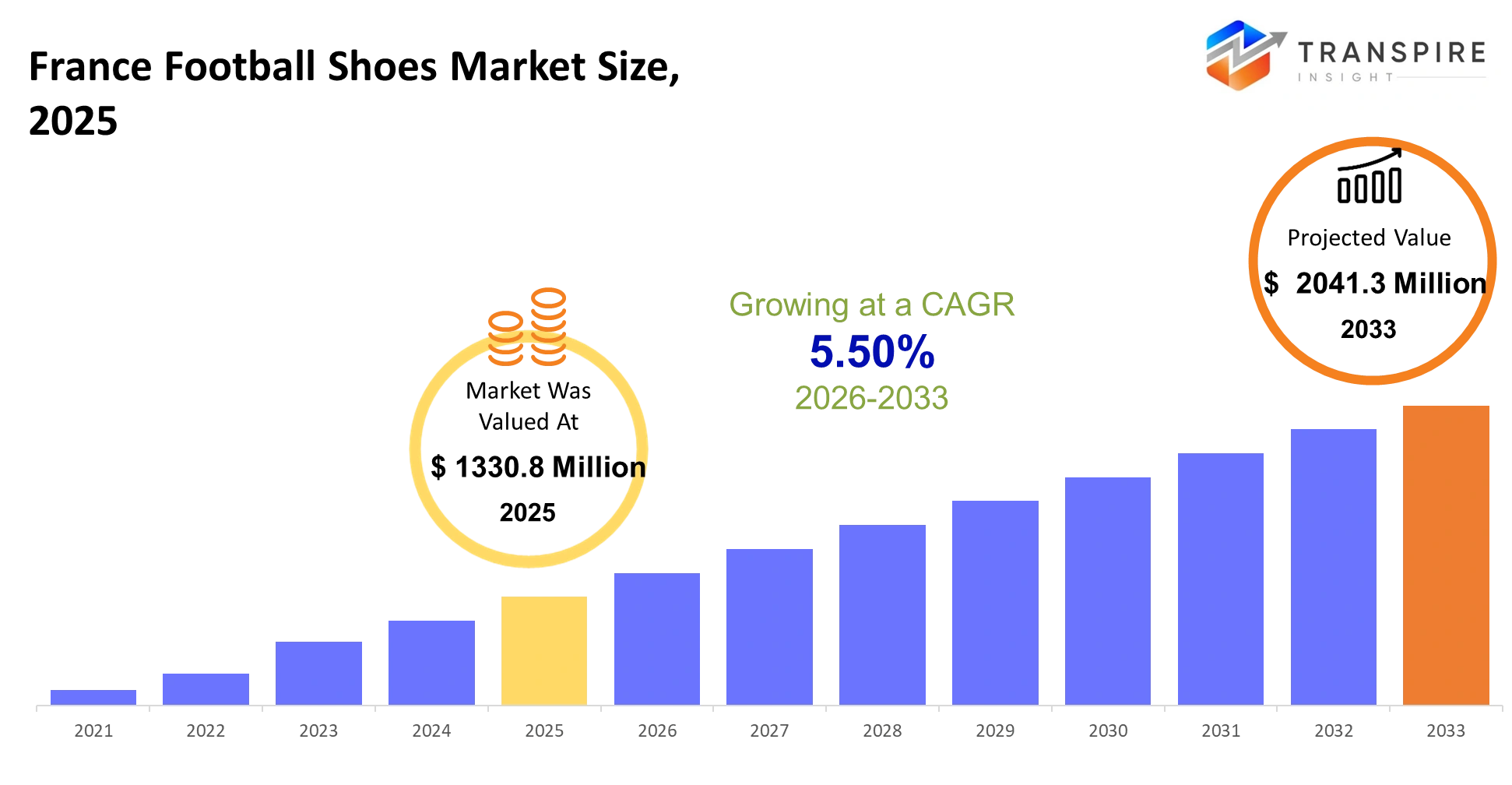
- France Football Shoes Market Size 2025: USD 1330.8 Million
- France Football Shoes Market Size 2033: USD 2041.3 Million
- France Football Shoes Market CAGR: 5.50%
- France Football Shoes Market Segments: By Type (Firm Ground, Soft Ground, Indoor Shoes, Turf Shoes, Others); By Application (Professional Sports, Amateur Sports, Training, Others); By End-User (Men, Women, Kids, Athletes, Others); By Distribution (Online, Retail Stores, Brand Outlets, Others)
To learn more about this report,  Download Free Sample Report
France Football Shoes Market Summary
The France Football Shoes Market was valued at USD 1330.8 Million in 2025. It is forecast to reach USD 2041.3 Million by 2033. That is a CAGR of 5.50% over the period.
The France Football Shoes Market supports player performance through its footwear designs which match both the specific pitch conditions and the unique foot biomechanics and playing styles of athletes. Clubs, academies, and amateur players depend on specialized studs and cushioning systems and grip technologies to minimize injury hazards while enhancing their ability to control the ball and move rapidly. The market has undergone complete structural changes during the last three to five years because brands now create products through data-based design processes which use performance data from athletes and material science to develop shoes that are both lightweight and highly responsive.
Supply chain disruptions during the COVID-19 period served as a main catalyst which forced manufacturers to establish local supply chains while they developed their online retail operations. The system enhancement resulted in better inventory management and improved sales through direct-to-consumer channels. Football revenue growth now results from increased player participation and faster equipment replacement and product premiumization which occurs because of performance differences and brand innovation.
Key Market Insights
- The northern part of France together with its urban regions will control more than 40 percent of the market in 2025 because of their extensive club networks and their increased investments in sports facilities.
- The southern part of France will become the fastest developing area until 2033 because of grassroots football programs and regional sports funding initiatives.
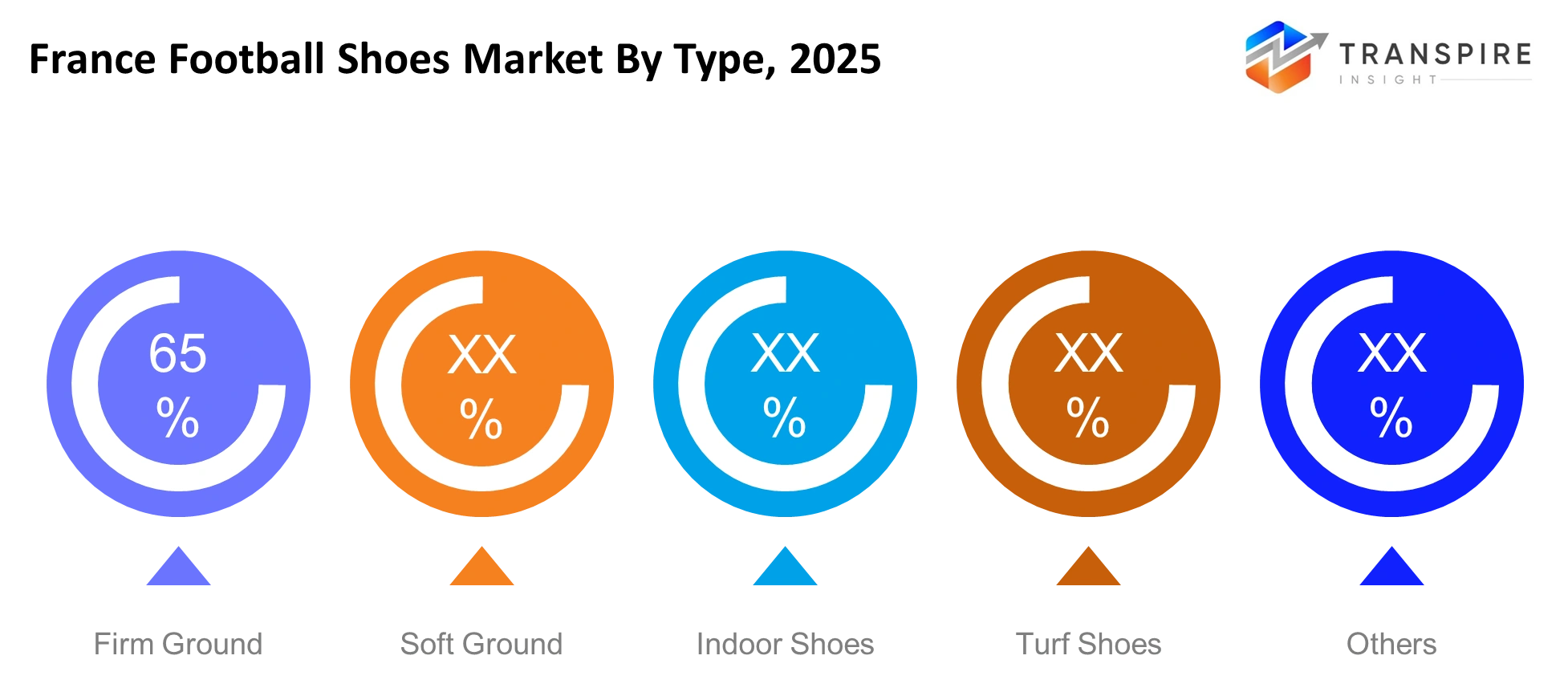
- The market for Firm Ground shoes will reach 35 percent share by 2025 because players across professional leagues use them on natural grass pitches.
- The Turf Shoes segment stands as the second-largest market because more people start using turf shoes at training academies and artificial fields in urban areas.
- The Indoor Shoes market will experience the most rapid growth until 2030 because more youth and amateur players join futsal activities.
- The Professional Sports industry will control more than 45 percent of the market in 2025 because elite athletes secure high-value sponsorships and make regular product updates.
- The training applications market grows rapidly because academies establish organized coaching programs and require durable footwear that can handle multiple surfaces.
- The market shows 60 percent control by men because they play organized football leagues more than other groups in 2025.
- The women segment shows the most rapid expansion because federation funding and increased competition visibility of women's football tournaments have both increased.
- The team-building partnerships between brands and football clubs plus athletes increase brand awareness which leads to greater sales.
- Companies can achieve better profitability through direct-to-consumer channel and e-commerce platform expansion which results in increased customer interaction.
- Companies utilize advanced manufacturing methods and customization technologies to create personalized fit and performance products which give them an edge over their competitors.
What are the Key Drivers, Restraints, and Opportunities in the France Football Shoes Market?
The France Football Shoes Market experiences its main growth driver because athletes now prefer shoes which use advanced materials and biomechanical design to enhance their performance capabilities. The trend developed further when professional clubs and academies started using performance analytics to minimize injuries while enhancing player performance. Consumers now prefer high-performance footwear which enables brands to set higher prices and generate greater income from each sale.
The most important limitation for the market exists because premium football shoes require expensive production processes. The production of advanced materials which include carbon-infused plates and engineered knits leads to higher expenses that result in diminished product accessibility for customers who have budget limitations. The system creates an economic obstacle which affects amateur players because they face financial difficulties that prevent them from entering the market.
A key opportunity exists through the development of women’s football and youth training systems. Sports federations and clubs are expanding their investments in these two areas which results in the formation of new customer segments. The dedicated product lines designed specifically for female athletes with customized fit and biomechanics are becoming increasingly popular. The market shift enables companies to create additional revenue channels while they expand their product lines, which helps them thrive in the market over time.
What Has the Impact of Artificial Intelligence Been on the France Football Shoes Market?
The France Football Shoes Market now undergoes transformation through artificial intelligence which changes both product development activities and manufacturing processes and retail methods. AI-powered design tools now enable brands to study player movement patterns which helps them develop footwear that enhances speed and agility while protecting against injuries. The system uses biomechanical data to determine optimal stud positions and to create flexible materials which results in better athletic performance.
AI technology assists manufacturing companies through its ability to enhance efficiency by automatically handling both quality control tasks and production equipment modifications. The computer vision systems identify faults during production which helps minimize waste while maintaining quality standards. Companies utilize predictive analytics models to forecast demand patterns which enables them to manage their inventory efficiently and decrease excess production.
E-commerce platforms use recommendation engines to provide AI-powered personalized content which improves customer experience. The systems recommend appropriate footwear options based on user preferences and playing conditions which results in higher conversion rates and better customer satisfaction.
The primary obstacle prevents companies from using AI systems because they need to spend large amounts of money to modify their existing manufacturing and retail systems. The limited financial resources and absence of data management systems present difficulties for smaller organizations which leads to slow adoption of technology that provides clear operational advantages.
Key Market Trends
- Football shoe designers shifted their focus to lightweight synthetic materials which emerged between 2020 and 2025 because these materials helped players run faster while decreasing their fatigue during high-intensity matches.
- Post-2021 direct-to-consumer sales channels experienced rapid growth as brands used personalized digital shopping experiences to boost their online revenue.
- The surge in women playing football after 2022 led brands to develop gender-specific footwear which offered customized fitting and biomechanical support.
- Urban artificial pitches and futsal leagues expanded throughout major French cities which created a growing demand for turf and indoor shoes.
- Professional clubs signed more sponsorship agreements which led to changes in consumer behavior that drove amateur athletes to choose high-end products.
- After 2023 sustainable manufacturing practices became more popular among brands which started using recycled materials and decreasing their production carbon emissions.
- Player customization technologies developed to let athletes choose their own fit, color, and performance features which created new ways for brands to connect with customers and control their product prices.
- Post-pandemic supply chain localization strategies emerged to help companies decrease their reliance on overseas production while achieving faster delivery times.
- Brands started using performance analytics to build product designs because this approach helped them create unique products through data-based innovations which delivered measurable advantages to players.
France Football Shoes Market Segmentation
By Type
The type segmentation functions as the primary element which determines product demand and pricing system throughout the France Football Shoes Market. The firm ground variants hold the biggest market share because they are commonly used on natural grass pitches whereas the turf and indoor categories are growing because of the increasing artificial playing surfaces. This segment benefits from clear use-case differentiation which allows footwear design to match pitch conditions and creates a need for regular replacements. The segment maintains its leading position through material innovation and soleplate engineering which create performance-specific product lines.
The growth of this segment occurs through a specific pattern which infrastructure changes and playing surface diversity create, while participation does not drive growth. The demand for footwear has increased because artificial turf facilities and futsal arenas have been established. Product developers will focus on hybrid designs during the forecast period, which allow brands to capture wider user groups through their multiple surface capabilities. Investors and manufacturers will likely prioritize innovation in traction systems and lightweight materials to sustain competitive advantage.
To learn more about this report, Download Free Sample Report
By Application
Football shoes are used in different ways based on their specific applications which drive their demand across various playing levels, while professional sports sustain their dominant market position through expensive purchases and constant product upgrades. The amateur sports and training segments generate substantial demand which coaching programs and community participation help to sustain. The segment maintains its strength because it requires multiple performance standards which need both expensive products and affordable options to meet its demand needs. The brand uses this method to create different price points which help it reach various customer groups.
The segment expands because institutional growth and organized training systems create new development opportunities for sports organizations. Training-oriented footwear generates consistent demand because football academies and grassroots programs need these products for their operations. The training segment will expand its development base as more structured development pathways become available across different regions. Manufacturers have an opportunity to develop products that combine durability with cost performance, which investors should consider for product segments that experience consistent demand throughout the year.
By End-User
The user groups for this system display a hierarchical structure which shows that men control most of the system because they participate in organized leagues and competitive formats at higher rates. Federations and clubs are establishing programs for inclusive development which show gradual progress in both women's sports and youth sports development. Demographic growth enables the segment to succeed because different customer groups need specific products which require special design for their particular needs of fit and comfort and performance requirements. Brands have multiple ways to create new products because of the existing diversity in their product range.
This segment develops its growth patterns through social and institutional changes which operate independently from short-term economic factors. The visibility of women’s football and youth engagement programs has increased which results in a larger consumer base that continues to grow throughout the last few years. The forecast period will see an increase in demand for customized fit footwear which comes with ergonomic design features across all market segments. The inclusive design strategies with specific marketing approaches will become the main focus for product developers and investors who want to achieve sustainable growth.
By Distribution
Consumer behavior research shows that distribution segmentation determines both market reach and margin structures. The retail stores and brand outlets maintain their market dominance because customers can test products directly and purchase items on the spot. Online channels have gained significant share in recent years because people value convenience and direct-to-consumer strategies have become more popular. This segment operates as a bridge between manufacturers and end users, which affects pricing and inventory management and customer interaction methods. Businesses use both offline and online distribution methods to create a hybrid system, which enables them to sell premium products and mass-market items.
The growth trajectory of this segment is closely linked to digital transformation and evolving consumer purchasing behavior. E-commerce platforms and brand-owned websites have enabled personalized recommendations and wider product access, which has led to more users shopping online. The forecast period will see digital channels increase their market share because logistics and return systems continue to develop. Companies that invest in omnichannel strategies and data-driven customer engagement will strengthen market positioning and improve profitability.
What are the Key Use Cases Driving the France Football Shoes Market?
The main application for professional match play matches requires all professional matches because competitive leagues demand their most accurate performance results. Teams and players need specific shoes to their playing surfaces because these shoes help them stay stable while they compete at their fastest speed without increasing their chances of getting injured. The industry experiences continuous buying patterns because products need to be replaced when they become worn out and because design standards undergo changes that require new purchases.
Football academies and community sports programs need training facilities and amateur competitions because these two areas show increasing demand for their services. Coaches and institutions need flexible footwear which can endure multiple training sessions and different match conditions. The youth and semi-professional player base creates consistent demand patterns which benefit this segment through established development systems.
Futsal and small-sided urban football games that take place indoors and on artificial grass fields represent new applications. The combination of recreational fitness programs and corporate sports leagues creates fresh customer demand. The future expansion of these applications will occur because more people will start competing in non-traditional sports activities.
|
Report Metrics |
Details |
|
Market size value in 2025 |
USD 1330.8 Million |
|
Market size value in 2026 |
USD 1403.6 Million |
|
Revenue forecast in 2033 |
USD 2041.3 Million |
|
Growth rate |
CAGR of5.50% from 2026 to 2033 |
|
Base year |
2025 |
|
Historical data |
2021 - 2024 |
|
Forecast period |
2026 - 2033 |
|
Report coverage |
Revenue forecast, competitive landscape, growth factors, and trends |
|
Regional scope |
France |
|
Key company profiled |
Nike, Adidas, Puma, Under Armour, New Balance, Mizuno, Umbro, Lotto, ASICS, Diadora, Joma, Kappa, Decathlon, Skechers, Fila |
|
Customization scope |
Free report customization (country, regional & segment scope). Avail customized purchase options to meet your exact research needs. |
|
Report Segmentation |
By Type (Firm Ground, Soft Ground, Indoor Shoes, Turf Shoes, Others); By Application (Professional Sports, Amateur Sports, Training, Others); By End-User (Men, Women, Kids, Athletes, Others); By Distribution (Online, Retail Stores, Brand Outlets, Others) |
Which Regions are Driving the France Football Shoes Market Growth?
The France Football Shoes Market is predominantly controlled by Northern and Île-de-France regions because they have multiple professional clubs and training academies and retail stores. The Paris metropolitan area maintains continuous product demand because its residents engage in football throughout the year and have high purchasing capacity. The existence of elite leagues together with their sponsorship ecosystems maintains high product sales rates and drives customers to choose premium products. The region receives advantages from its established sports facilities and its distribution systems, which provide swift product delivery and enhanced brand presence.
Western France functions as a reliable secondary market because it generates continuous income through its mix of amateur and semi-professional soccer activities. The region develops through community outreach activities, which base their expansion on active grassroots initiatives rather than expenses from elite sports organizations. The local training centers and club networks for regional sports generate stable demand patterns, which particularly apply to their training equipment and mid-tier shoe products. The region maintains stable operations, which attract brands that prefer controlled sales growth instead of seeking immediate market share.
The southern and southeastern regions of France experience their strongest development through recent financial backing for artificial turf fields and futsal courts. The player base, which started growing in 2022, has expanded through municipal development initiatives and increased youth sports participation. The combination of tourism-based seasonal leagues and sports events leads to increased footwear usage during peak tourist times. The region provides market entrants and investors with expansion opportunities through their specialized product development and regional distribution methods, which will operate from 2026 until 2033.
Who are the Key Players in the France Football Shoes Market and How Do They Compete?
The France Football Shoes Market shows a semi-consolidated market structure because global brands control premium segments while regional brands and private-label brands compete for lower-priced products. The competition process depends on three factors which are performance innovation and brand influence and direct-to-consumer distribution methods instead of cost leadership. Established companies use product development together with athlete endorsements to protect their market share, while smaller companies target indoor and training footwear markets. The market remains highly competitive because companies need to create unique products that deliver measurable performance results and digital user interaction.
Nike develops new technologies through its technology-based research, which uses its owned materials and athlete performance data to improve traction, fit, and responsiveness. The company uses performance analytics to create product designs that enable faster product development cycles. Adidas uses material engineering and sustainability efforts as its competitive advantage, which enables the company to create lightweight products that include recycled materials to serve both professional users and eco-friendly customers. Puma uses speed-focused products together with low-cost pricing methods to win over young athletes while growing their presence in semi-professional markets.
Decathlon operates on a model that prioritizes cost efficiency, providing affordable football shoes that meet essential needs of most consumers. The company's main advantage comes from its ability to manage all aspects of its supply chain, which gives the company control over product prices and stock levels. New Balance creates a unique market position through its shoe design process, which enables athletes to select their preferred fitting style, while the company uses ergonomic design for players who need to maintain comfortable body movements and stay safe from injuries. The companies extend their operations through club partnerships and e-commerce development and retail growth between different regions to gain both premium customers and high-volume customers.
Company List
- Nike
- Adidas
- Puma
- Under Armour
- New Balance
- Mizuno
- Umbro
- Lotto
- ASICS
- Diadora
- Joma
- Kappa
- Decathlon
- Skechers
- Fila
Recent Development News
In March 2026, Nike launched a new generation of Mercurial football boots featuring advanced traction technology. The innovation enhances speed performance and strengthens Nike’s premium product positioning.https://www.nike.com (Nike Official).
In January 2026, Adidas entered a partnership with a European football academy network to co-develop performance footwear. This collaboration supports product testing and accelerates innovation cycles.https://www.adidas-group.com (Adidas Group).
What Strategic Insights Define the Future of the France Football Shoes Market?
The France Football Shoes Market is developing towards an ecosystem which uses performance measurement and digital technology to create competitive advantages through product development and direct customer connection. The upcoming 5 to 7 years will see brand success determined by their capacity to create distinctive footwear through biomechanical data analysis which provides actual benefits during athletic performance. The upcoming transition will benefit businesses which allocate funds to research and development while decreasing their time needed for product testing and market entry.
A hidden danger exists because material prices particularly for advanced synthetics and specialized components experience unpredicted cost changes. Input cost fluctuations will result in two outcomes which will either decrease profit margins or create the need for price changes that will decrease demand among mid-tier customers. The current market offers an emerging opportunity for companies that develop women's football footwear since product design remains insufficiently developed even though female participation rates continue to grow.
Market participants should prioritize modular design and localized production strategies to reduce supply risk while enabling faster customization. Companies which develop products that meet changing player needs and regional market trends will achieve superior success in building long-lasting business value.
France Football Shoes Market Report Segmentation
By Type
- Firm Ground
- Soft Ground
- Indoor Shoes
- Turf Shoes
- Others
By Application
- Professional Sports
- Amateur Sports
- Training
- Others
By End-User
- Men
- Women
- Kids
- Athletes
- Others
By Distribution
- Online
- Retail Stores
- Brand Outlets
- Others
Frequently Asked Questions
Find quick answers to common questions.
The confirmed 2033 market size figure in USD 2041.3 Million.
Key segments for the France Football Shoes Market are By Type (Firm Ground, Soft Ground, Indoor Shoes, Turf Shoes, Others); By Application (Professional Sports, Amateur Sports, Training, Others); By End-User (Men, Women, Kids, Athletes, Others); By Distribution (Online, Retail Stores, Brand Outlets, Others).
Major France Football Shoes Market players are Nike, Adidas, Puma, Under Armour, New Balance, Mizuno, Umbro, Lotto, ASICS, Diadora, Joma, Kappa, Decathlon, Skechers, Fila.
The France Football Shoes Market size is USD 1330.8 Million in 2025.
The France Football Shoes Market CAGR is 5.50% from 2026 to 2033.
- Nike
- Adidas
- Puma
- Under Armour
- New Balance
- Mizuno
- Umbro
- Lotto
- ASICS
- Diadora
- Joma
- Kappa
- Decathlon
- Skechers
- Fila
Recently Published Reports
-
Apr 2026
Bottled Water Market
Bottled Water Market Size, Share & Analysis Report By Product Type (Still Bottled Water, Carbonated Bottled Water, Functional Bottled Water, and Others), By Packaging (PET, Cans, and Others), By Sales Channel (Supermarkets/Hypermarkets, Convenience Stores/Drug Stores, Grocery Stores/Club Stores, Foodservice, and Others) and Geography (North America, Europe, Asia-Pacific, Middle East and Africa, South and Central America), 2021 - 2032
-
Apr 2026
Color Cosmetic Packaging Market
Color Cosmetic Packaging Market Size, Share & Analysis Report By Application (Mascara Packaging, Liquid Packaging, and Liquid Face), By Type (Tubes & Bottles, Pens & Markers, Compacts & Containers, and Droppers & Pumps), and Geography (North America, Europe, Asia-Pacific, Middle East and Africa, South and Central America), 2021 - 2031
-
Apr 2026
External Microphone For Camera Market
External Microphone For Camera Market Size, Share & Analysis Report By Type (Shotgun Microphone, Lavalier Microphone, and Others), By Application (Digital Camera, Professional Video Camera, and Others), and Geography (North America, Europe, Asia-Pacific, Middle East and Africa, South and Central America), 2021 - 2031
-
Apr 2026
Foot Orthotic Insoles Market
Foot Orthotic Insoles Market Size, Share & Analysis Report By Type (Pre-fabricated, and Custom-made), By Material (Thermoplastic, Composite Carbon Fiber, and Others), By Distribution Channel (Drug Stores, Hospitals & Clinics, and Others), and Geography (North America, Europe, Asia-Pacific, Middle East and Africa, South and Central America), 2021 - 2031