

France Books Market Size & Forecast:
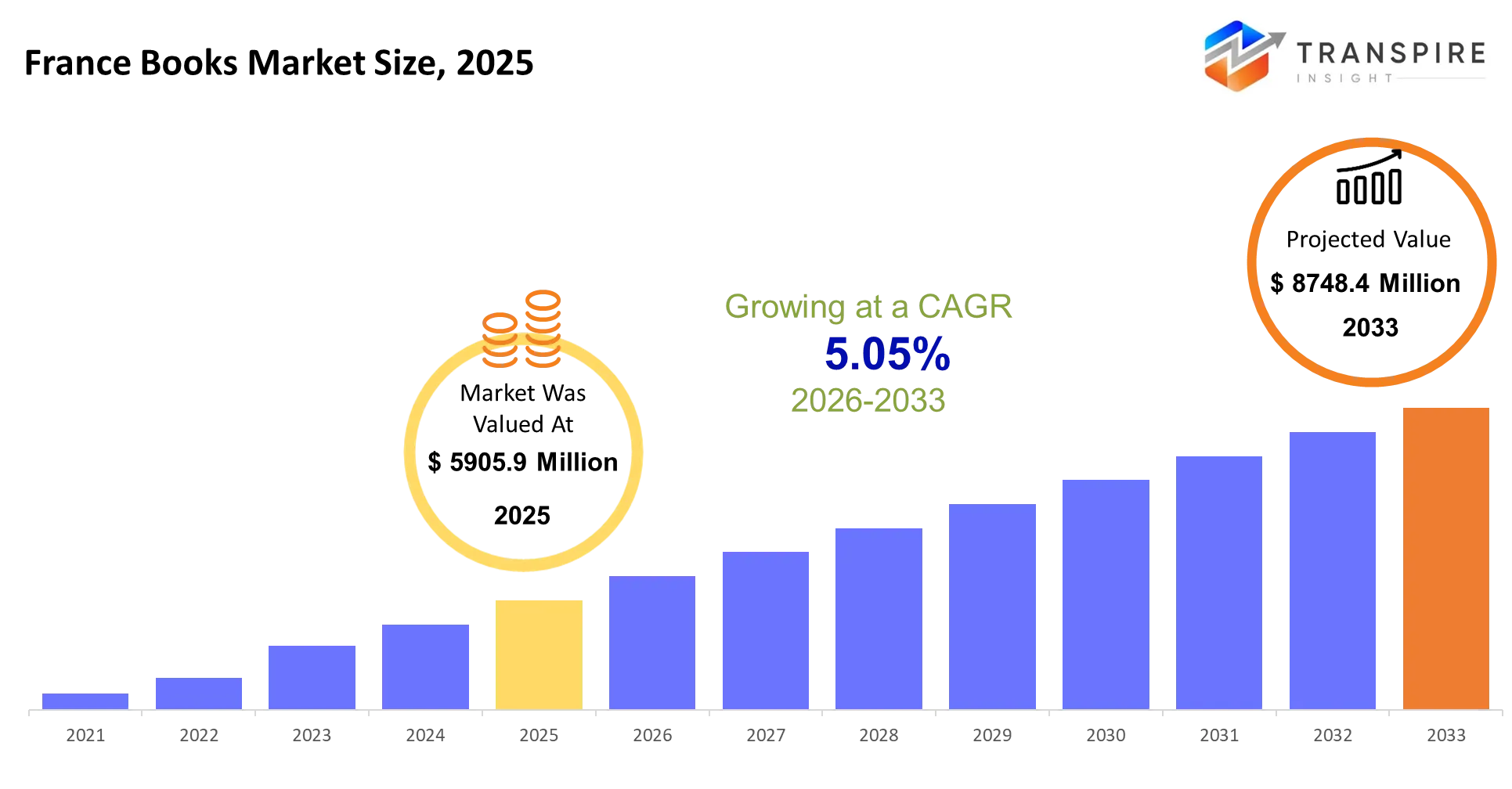
- France Books Market Size 2025: USD 5905.9 Million
- France Books Market Size 2033: USD 8748.4 Million
- France Books Market CAGR: 5.05%
- France Books Market Segments: By Type (Printed Books, E-books, Audiobooks, Others); By Application (Education, Fiction, Non-fiction, Professional, Others); By End-User (Students, Professionals, General Readers, Institutions, Others); By Distribution (Online, Bookstores, Libraries, Others)
To learn more about this report,  Download Free Sample Report
France Books Market Summary
The France Books Market was valued at USD 5905.9 Million in 2025. It is forecast to reach USD 8748.4 Million by 2033. That is a CAGR of 5.05% over the period.
The book market in France operates as a cultural and business system which connects publishers and authors and distributors and digital platforms to provide printed and digital reading materials for educational and entertainment and professional development purposes. The system maintains essential literacy reading habits while it enables publishers to track their operations from manuscript creation until their products reach retail markets.
The market has undergone a structural transformation during the past three to five years because consumers now prefer digital content which includes e-books and audiobooks through subscription services and platform-based reading systems. The COVID-19 pandemic created a major force that drove this transformation because it limited customer access to physical bookstores while it compelled businesses to establish online sales systems and digital library services. The publishing and printing industries have faced pressure to adopt more sustainable practices through environmental regulations which forced publishers to optimize their printing processes and use environmentally friendly production methods.
The financial performance of digital publishing companies has improved through these transformations which have also changed how urban retail networks rely on traditional bookstores.
Key Market Insights
- The French book market now experiences a shift toward digital-first reading which results in e-book and audiobook formats becoming more popular than printed books among city residents.
- Île-de-France brings the France Books Market its largest market share through its 2025 publishing centers and its extensive retail distribution.
- Provence-Alpes-Côte d'Azur shows the fastest growth between 2025 and 2033 because more people visit for cultural experiences and bookstores continue to develop throughout the region.
- The French book market maintains its 55 percent share through printed books which receive particular support from educational institutions and literary fiction releases.
- Audiobooks represent the fastest developing product category which demonstrates strong growth because people use mobile devices and subscribe to audio services throughout France.
- Educational publishing holds the dominant application share of nearly 40% which educational institutions establish through their curriculum needs and purchasing patterns.
- Trade and fiction publishing is the fastest-growing application segment because readers use digital discovery platforms to search for self-help content and lifestyle materials.
- The France Books Market sees more than 60% of its market demand coming from individual consumers which indicates that French people maintain strong reading practices.
- The fastest-growing market segment consists of corporate and institutional customers who purchase digital learning solutions and professional development materials.
- The competitive landscape of the book industry gets shaped by Hachette Livre and Editis and Gallimard and Penguin Random House and HarperCollins and Amazon Books through their digital development and market expansion efforts.
- The France Books Market now uses AI recommendation systems together with hybrid distribution methods and e-commerce networks to create competitive advantages.
What are the Key Drivers, Restraints, and Opportunities in the France Books Market?
The structural transformation which drives growth for the business operates through digital reading ecosystems that universities establish through their subscription services and mobile application platforms. Publishers and distributors have increasingly adopted direct-to-consumer digital channels which enable them to decrease their dependence on traditional bookstore networks. The pandemic period brought disruptions that reshaped consumer purchasing habits which led to the widespread adoption of online book discovery and consumption methods. Digital catalogs enable publishers to develop ongoing revenue streams while consumers can access content through digital catalogs which provide them with quicker and wider content availability.
The publishing industry faces a critical challenge because publishing rights and pricing rules remain divided between print and digital content. France protects its book industry through strong cultural protection laws which include fixed pricing regulations that prevent retailers from discounting books excessively. The law decreases retailers' ability to set prices because it prevents them from participating in price competition through their platforms. Print publishing costs have reached high levels which maintain their impact on profit margins for all publishers, but they hit small independent publishers hard because their operations face budget restrictions.
The field of AI-driven personalization presents an opportunity which publishers should use to develop multilingual digital publishing capabilities. Publishers can better reach specific audience segments and international readers through adaptive recommendation systems which work with automated translation tools. AI-assisted editorial workflows together with metadata optimization technologies enable better digital platform discoverability which results in extra revenue for backlist titles and underused catalogs.
What Has the Impact of Artificial Intelligence Been on the France Books Market?
Artificial intelligence transforms the French book industry because it enables publishers to improve their operations through better control of their production and distribution processes while engaging with readers through both digital and print media. AI-powered tools now operate in publishing environments because they provide automated manuscript editing support together with metadata tagging and content categorization functions which help lessen editorial tasks while accelerating the release process for upcoming publications.
Machine learning algorithms enable publishers and retailers to synchronize their printing operations with actual customer demand through its inventory forecasting system and demand prediction system. AI-powered recommendation engines on digital platforms provide personalized reading suggestions which result in higher customer engagement and increased sales of both e-books and audiobooks. The systems have successfully enhanced content discoverability because they guide readers toward niche or backlist titles which had previously struggled to attract attention.
The implementation process remains challenging for mid-sized publishers because they face two main obstacles which include the complex integration process and the expensive deployment expenses. The second obstacle occurs because training data quality varies which leads to decreased recommendation accuracy when dealing with specialized literary fields and multilingual content. The lack of standardized publishing systems creates barriers that prevent smooth AI integration throughout the complete value chain of publishing operations.
AI technology enables publishers to enhance their operational performance while developing their publishing methods which rely on data analysis throughout the entire French book market.
Key Market Trends
- E-book adoption increased significantly between 2021–2025 as digital libraries expanded across France Books Market ecosystems.
- The audiobook platforms experienced rapid growth because people started listening to audiobooks through their mobile devices and they subscribed to audio streaming services.
- The publishing industry adopted hybrid print-digital models because they wanted to maintain their traditional readership while meeting the needs of their growing online customer base.
- Fnac Darty and Amazon strengthened their market power in online book retail which resulted in changes to distribution systems that operated throughout the entire country.
- Hachette Livre increased its digital catalog investment which helped Europe Books Market in France to progress toward platform-based publishing methods.
- The French educational publishing market maintained steady demand because institutions purchased educational materials that matched their curriculum needs.
- AI-driven recommendation systems enhanced the discoverability of books which resulted in digital platform readers changing their purchasing habits.
- Independent bookstores developed omnichannel business models to fight against e-commerce competition while they tried to bring back local customers.
- Reading platforms that use subscription models increased their presence in the market which transformed their revenue systems from single book sales to ongoing access-based consumption.
France Books Market Segmentation
By Type
The France Books Market maintains its strongest position in printed books because French people have deep cultural reading customs and the country has developed extensive physical bookshops which operate in both urban and rural areas. Physical books continue to dominate because consumers prefer tangible ownership especially for literary works and academic textbooks and reference materials. Educational institutions and libraries also sustain this dominance because structured learning environments require printed content to maintain teaching standards and examination requirements and long-term reference materials.
A gradual structural shift is emerging as digital reading through mobile devices and cloud-based platforms becomes more popular among younger users. Hybrid reading patterns are becoming more common because readers choose between physical and digital formats based on their needs for easy access to materials. Publishers will need to adopt multi-format publishing strategies. because printed books will grow more slowly than digital formats during the forecast period. which will require them to use these strategies to keep their audience engaged while generating stable revenue.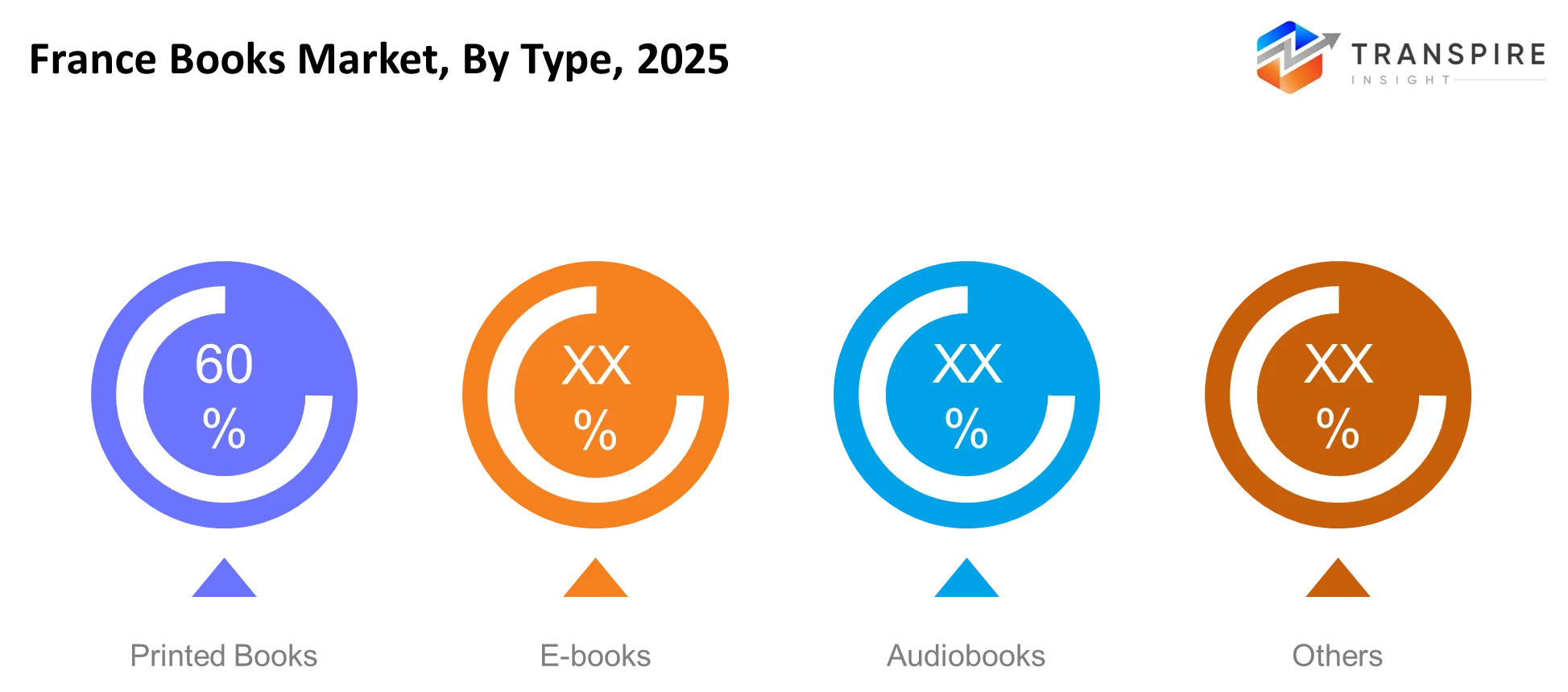
To learn more about this report, Download Free Sample Report
By Application
The France Books Market exists because educational needs require schools and universities and training institutions to purchase structured learning materials. Academic systems depend on standardized textbooks and reference content to support curriculum delivery, examinations, and certification processes. Government-backed education initiatives and institutional procurement systems further strengthen demand stability in this segment, ensuring consistent book usage across formal learning environments.
Fiction and professional content segments are expanding at a faster pace because readers now want customized reading experiences while they work to develop their skills. Digital platforms enable fiction readers to access multiple content libraries immediately, while professionals use digital books to enhance their skills and advance their careers. The forecast period will show application diversity experiencing substantial growth, which will lead publishers to create specialized content portfolios that meet changing reader needs.
By End-User
The France Books Market sees its main customer base as students who drive the market with their need for educational resources which include textbooks and reference materials as well as materials that match their curriculum. The demand from schools and colleges together with coaching centers leads to stable annual student consumption which makes students the most reliable customer group. Academic calendars drive purchasing patterns across the country which enables institutional procurement cycles to maintain their existing power.
The rising demand for skill development and reading that focuses on lifestyle needs is creating greater opportunities for professionals and general readers to extend their market reach. Professionals depend on books to support their ongoing education needs and their certification and career development goals while general readers read both fiction and non-fiction through digital and print media. The study period will show institutions and corporate buyers growing at a steady rate while publishers will need to create reading content that their diversified reading habits require.
By Distribution Channel
The France Books Market shows online distribution as its top channel because e-commerce platforms and digital bookstores and subscription-based reading services continue to expand at a fast pace. Online shopping becomes a preferred option for consumers because it provides easy purchasing and access to more products and better price options. The channel has developed into the fastest growing path which enables both physical and digital book sales because of its strong logistics network and digital payment system.
Bookstores maintain their importance because people continue to read books as part of their cultural traditions and because visitors value the chance to explore physical spaces which display literary and educational materials. Libraries operate as reliable institutional channels which provide public access to educational resources through their systems that lend both physical and digital materials. The forecast period will show online channels growing stronger while bookstores develop their omnichannel systems and libraries transform into centers which provide both digital and physical library access.
What are the Key Use Cases Driving the France Books Market?
The primary application that exists in France Books Market functions as an educational tool because schools and universities plus training institutes depend on textbooks and reference materials to achieve their educational goals which require standardized learning materials. The demand remains constant because educational institutions purchase materials according to their established curriculum and buying schedules.
Digital books now provide trade publishing and professional development content which corporate learners and independent readers use to build their professional skills and develop their careers. The working professional market shows increased demand because subscription platforms and e-learning ecosystems deliver their educational content.
The market now develops AI-powered reading solutions and multilingual digital publishing systems which educational institutions use to test adaptive content delivery methods in their specialized programs. The younger generation and commuters show increasing interest in using audiobooks through their mobile devices and smart devices.
|
Report Metrics |
Details |
|
Market size value in 2025 |
USD 5905.9 Million |
|
Market size value in 2026 |
USD 6195.2 Million |
|
Revenue forecast in 2033 |
USD 8748.4 Million |
|
Growth rate |
CAGR of 5.05% from 2026 to 2033 |
|
Base year |
2025 |
|
Historical data |
2021 - 2024 |
|
Forecast period |
2026 - 2033 |
|
Report coverage |
Revenue forecast, competitive landscape, growth factors, and trends |
|
Regional scope |
France |
|
Key company profiled |
Penguin Random House, Hachette Livre, HarperCollins, Macmillan, Simon & Schuster, Scholastic, Wiley, Oxford University Press, Cambridge University Press, Pearson, Bloomsbury, Bonnier, Pan Macmillan, Egmont, Kodansha |
|
Customization scope |
Free report customization (country, regional & segment scope). Avail customized purchase options to meet your exact research needs. |
|
Report Segmentation |
By Type (Printed Books, E-books, Audiobooks, Others); By Application (Education, Fiction, Non-fiction, Professional, Others); By End-User (Students, Professionals, General Readers, Institutions, Others); By Distribution (Online, Bookstores, Libraries, Others) |
Which Regions are Driving the France Books Market Growth?
The Books Market in France is led by Île-de-France because it contains numerous publishing houses and academic institutions and digital distribution platforms. The national publishing center operates from Paris because all editorial choices and content distribution rights are managed from there. The company maintains its market leadership because it operates efficient bookstore networks and high-quality logistical systems. The region enjoys extensive internet access which allows its residents to quickly start using e-book services and subscription reading platforms. The market operates smoothly because cultural content distribution regulations have established their compliance requirements.
Provence-Alpes-Côte d'Azur serves as a permanent asset to the France Books Market because its cultural economy and tourist-related spending drive market growth. This region demonstrates growth through its various retail outlets which attract customers during different times of the year while it depends less on publishing activities. People read books from local bookstores and libraries during cultural festivals which create a constant demand for books. The area maintains a strong service sector which enables people to spend money on books and educational resources. The company generates dependable income through its secondary revenue streams.
The region of Occitanie shows rapid development because both educational institutions and online shopping for digital products continue to expand. The recent funding for regional distribution systems and library updates has created better access options for both physical and online book collections. The demand for remote learning and hybrid education programs has grown quickly. Government-funded cultural programs are helping younger people develop reading habits. The period from 2026 to 2033 will see publishers who focus on underserved areas experience strong growth opportunities.
Who are the Key Players in the France Books Market and How Do They Compete?
The France Books Market features global publishing groups and regional cultural publishing companies as its main competition forces. The competition between companies relies on their ability to control intellectual property rights and provide diverse content and execute digital platform connections and extend their distribution capabilities. Existing market players use hybrid publishing methods to protect their market share while digital-first companies and platform ecosystems transform how people access products.
Hachette Livre enhances its market position through its extensive catalog ownership and its digital transformation of publishing processes which enables quicker content distribution for both physical books and e-books. Penguin Random House uses its worldwide distribution network and its ability to license rights across different markets to enhance its capacity for generating international revenue. HarperCollins establishes its unique market position through its development of diverse genres and its expansion of digital audiobook services which focus on subscription-based models.
Macmillan competes through academic and professional publishing strength, especially in STEM and higher education content, while Wiley reinforces its advantage in research and technical publishing platforms integrated with digital learning tools. Scholastic keeps its niche market leadership in educational and youth literature through school distribution channels and content that matches curriculum standards. Oxford University Press and Cambridge University Press use their institutional authority and academic validation to establish themselves as leading institutions in research publishing and international educational partnerships.
Company List
- Penguin Random House
- Hachette Livre
- HarperCollins
- Macmillan Publishers
- Simon & Schuster
- Scholastic Corporation
- John Wiley & Sons
- Oxford University Press
- Cambridge University Press
- Pearson plc
- Bloomsbury Publishing
- Bonnier Group
- Pan Macmillan
- Egmont Group
- Kodansha Ltd.
Recent Development News
In March 2026, Hachette Livre announced expansion of its digital publishing infrastructure across Europe to enhance e-book distribution efficiency and AI-driven catalog management.https://www.hachette.com
In January 2026, Penguin Random House entered a strategic partnership with a leading audiobook platform to expand subscription-based audio publishing across European markets, including France.https://www.penguinrandomhouse.com
What Strategic Insights Define the Future of the France Books Market?
The France Books Market is undergoing a fundamental transformation which will establish a digital publishing system that uses content ownership and platform distribution and AI-based personalization to determine its future competitive strength. The publishing industry needs to improve its ability to transform traditional print products into digital assets which can generate subscription-based revenue through data recommendation systems.
The digital distribution channels face a concealed danger because excessive consolidation creates a situation where few platforms will control which content users discover and how much they pay for it which will weaken publishers' power to negotiate. The rising costs of digitizing content together with existing rules that control book pricing will create obstacles for publishers who want to implement aggressive revenue-generating methods.
AI-based multilingual publishing solutions represent a key emerging opportunity which enablesFrench content to reach European and francophone markets through cross-border access. To achieve sustained market dominance, strategic participants should direct their resources towards creating digital systems which support AI-based metadata enhancements and direct-to-consumer business models.
France Books Market Report Segmentation
By Type
- Printed Books
- E-books
- Audiobooks
- Others
By Application
- Education
- Fiction
- Non-fiction
- Professional
- Others
By End-User
- Students
- Professionals
- General Readers
- Institutions
- Others
By Distribution Channel
- Online
- Bookstores
- Libraries
- Others
Frequently Asked Questions
Find quick answers to common questions.
The Confirmed 2033 Market size figure is USD 8748.4 Million.
Key Segments for the France Books Market are By Type (Printed Books, E-books, Audiobooks, Others); By Application (Education, Fiction, Non-fiction, Professional, Others); By End-User (Students, Professionals, General Readers, Institutions, Others); By Distribution (Online, Bookstores, Libraries, Others).
Major France Books Market Players are Penguin Random House, Hachette Livre, HarperCollins, Macmillan, Simon & Schuster, Scholastic, Wiley, Oxford University Press, Cambridge University Press, Pearson, Bloomsbury, Bonnier, Pan Macmillan, Egmont, Kodansha.
The Current France Books Market size is USD 5905.9 Million in 2025.
The France Books Market CAGR is 5.05% from 2026 to 2033.
- Penguin Random House
- Hachette Livre
- HarperCollins
- Macmillan Publishers
- Simon & Schuster
- Scholastic Corporation
- John Wiley & Sons
- Oxford University Press
- Cambridge University Press
- Pearson plc
- Bloomsbury Publishing
- Bonnier Group
- Pan Macmillan
- Egmont Group
- Kodansha Ltd.
Recently Published Reports
-
Apr 2026
Bottled Water Market
Bottled Water Market Size, Share & Analysis Report By Product Type (Still Bottled Water, Carbonated Bottled Water, Functional Bottled Water, and Others), By Packaging (PET, Cans, and Others), By Sales Channel (Supermarkets/Hypermarkets, Convenience Stores/Drug Stores, Grocery Stores/Club Stores, Foodservice, and Others) and Geography (North America, Europe, Asia-Pacific, Middle East and Africa, South and Central America), 2021 - 2032
-
Apr 2026
Color Cosmetic Packaging Market
Color Cosmetic Packaging Market Size, Share & Analysis Report By Application (Mascara Packaging, Liquid Packaging, and Liquid Face), By Type (Tubes & Bottles, Pens & Markers, Compacts & Containers, and Droppers & Pumps), and Geography (North America, Europe, Asia-Pacific, Middle East and Africa, South and Central America), 2021 - 2031
-
Apr 2026
External Microphone For Camera Market
External Microphone For Camera Market Size, Share & Analysis Report By Type (Shotgun Microphone, Lavalier Microphone, and Others), By Application (Digital Camera, Professional Video Camera, and Others), and Geography (North America, Europe, Asia-Pacific, Middle East and Africa, South and Central America), 2021 - 2031
-
Apr 2026
Foot Orthotic Insoles Market
Foot Orthotic Insoles Market Size, Share & Analysis Report By Type (Pre-fabricated, and Custom-made), By Material (Thermoplastic, Composite Carbon Fiber, and Others), By Distribution Channel (Drug Stores, Hospitals & Clinics, and Others), and Geography (North America, Europe, Asia-Pacific, Middle East and Africa, South and Central America), 2021 - 2031