
Market Summary
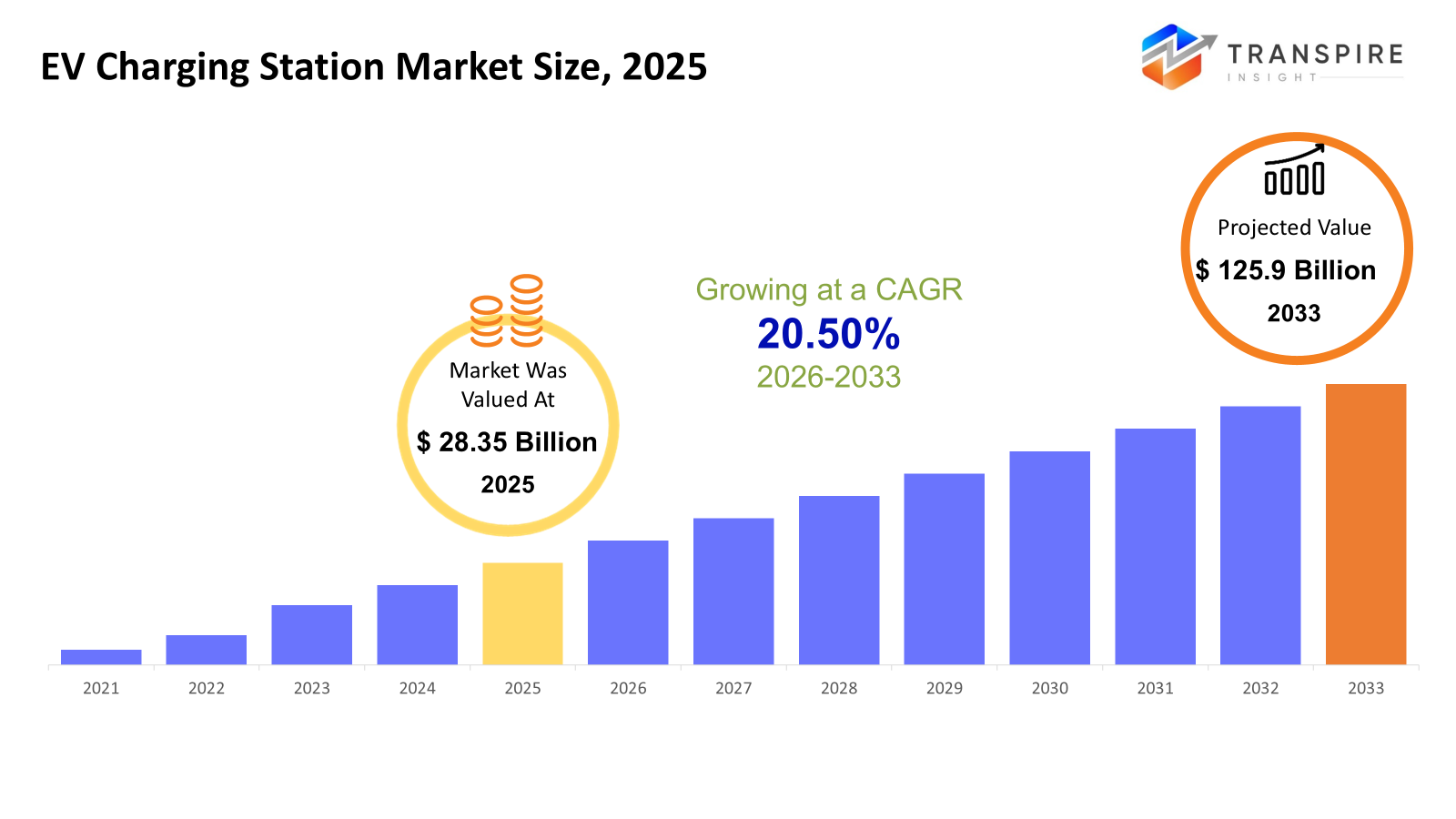
The global EV Charging Station market size was valued at USD 28.35 billion in 2025 and is projected to reach USD 125.9 billion by 2033, growing at a CAGR of 20.50% from 2026 to 2033. The EV charging station market is expected to record a considerable CAGR on account of the increasing adoption of electric vehicles spurred by government regulations on pollution. The development of public charging stations through constant government funding, along with increasing residential charging points, is increasing the base. The development in fast/smart charging technology and the growth in the logistics segment through the increasing adoption of electric vehicles are indirectly fueling the EV charging station market.
Market Size & Forecast
- 2025 Market Size: USD 28.35 Billion
- 2033 Projected Market Size: USD 125.9 Billion
- CAGR (2026-2033): 20.50%
- North America: Largest Market in 2026
- Asia Pacific: Fastest Growing Market
To learn more about this report,  Download Free Sample Report
Key Market Trends Analysis
- North America remains to see an accelerated deployment of public and private charging infrastructure for EVs, aided by federal assistance, utility engagement, as well as private investment, that ranges in focus from fast charging corridors, densification charging, as well as fleet charging in Tier 1 and Tier 2 cities.
- In North America, it is apparent that the United States still acts as the leading growth driver in this region as a result of federal government scale funding projects, an evolving highway fast-charge corridor, as well as involvement by car manufacturers.
- The Asia Pacific region is turning out to be the fastest-growing market for wireless charging due to China’s widespread public charging infrastructure, Japan’s urban electrification schemes, and India’s increasing residential and commercial charging requirements driven by government-backed EV adoption.
- Passenger cars lead the vehicle type as growing consumer EV purchases drive the need for affordable charging options in the residential, commercial, and public sectors, with the help of various incentives and a growing lineup of EVs from automakers.
- Level 2 charging is increasingly gaining acceptance as the ideal level of charging based on an harmonization of charge times, cost of installation infrastructure, and appropriateness for residential areas, offices, and parking lots with defined dwelling times.
- Fast charging stations are being increasingly placed on highways, logistics nodes, and mobility routes to overcome charging time issues and address the problem of range anxiety associated with electric vehicles.
- Residential use is core to the market ambitions of EVs, whose charging patterns, especially at night, are necessary for the everyday use of their owners, thanks to advances in energy management and the falling cost of installation.
So, the market for EV charging stations is growing swiftly, and the major drivers of growth are the increasing adoption of electric vehicles, favorable government policies, and the trend towards eco-friendly transportation. The trend towards urbanization and environmentally conscious people and their encouragement towards eco-friendly transport modes are driving investments in EV charging infrastructure worldwide. The market involves different kinds of vehicles, such as passenger cars and commercial vehicles, with different charging levels- from low-speed household chargers to high-speed DC fast chargers. Advanced technologies adopted, such as smart and modular charging solutions, are quickly lowering the barriers to deployment. Major investors are making huge investments in these integrated networks and in strategic partnerships with automakers and utility providers for easy access and reliability at the end-user level.
The rise in consumer acceptance of EVs and the development initiatives for zero-emission vehicles are promoting the development of charging infrastructure. Urban regions have a relatively high penetration rate due to mass demand, while highways and business centers are encouraging the development of fast-channel charging infrastructure. The EV charging market development is motivated by innovation and development initiatives.
EV Charging Station Market Segmentation
By Vehicle Type
- Passenger Cars
The passenger car market leads the EV charging market as the adoption of electric vehicles keeps increasing among the general public. Government incentives are major drivers of steady market demand.
- Commercial Vehicles
The commercial vehicles industry is slowly adopting electric vehicles. This is because commercial vehicles, like logistics and public transportation, require adequate charging solutions. This has lead to increased investment in depots and charging stations.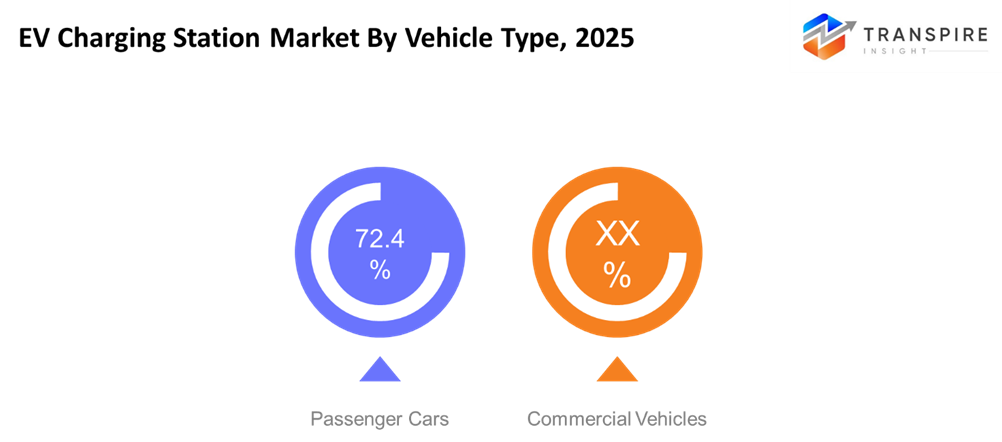
To learn more about this report, Download Free Sample Report
By Level
- L1 (Level 1)
A level 1 charger, which requires a conventional power outlet, is used for low frequency charging purposes. It is suitable for use by homeowners who engage in night charging activities.
- L2 (Level 2)
Level 2 charging stations support faster charging and can be used in commercial parking garages as well as in multi-unit residential buildings. They provide a balance of prices and efficiency in meeting the demands of commuting for EV owners.
- L3 (Level 3 / DC Fast Charging)
Level 3 charging is an important part of highway driving. It is vital because of its fast charging function, ranging anxiety, and use for fleets of vehicles.
By Charger Type
- Fast Chargers
Fast chargers respond to the needs of users who require a quick turnaround time, like fleet operators and highway travelers. Installation begets increased adoption of EVs since waiting times are considerably reduced, although higher upfront and maintenance costs are involved.
- Slow Chargers
Slow chargers can be applied at homes and small businesses. In this respect, they can accomplish an overnight charging process, give less load to a local electrical power grid, and be afforded with daily commuter vehicles.
- Moderate Chargers
Moderately scaled chargers have a tradeoff between their speed and cost of infrastructure. They are increasingly preferred in urban commercial centers, malls, and workplace parking areas where vehicles are parked for a few hours.
By Application
- Commercial
Commercial use such as shopping centers, offices, and logistics networks play a major role in supporting electric fleets as well as employee convenience. Enterprises take advantage of such charging stations to improve their environmental agendas.
- Residential
Domestic charging is also a key driver for adopting EVs, especially in urban and semi-urban areas. Domestic charging is more convenient and affordable with predictable energy management and is therefore the preferable mode for personal users of EVs.
Regional Insights
North America is the leading market in terms of growth in the United States, driven chiefly by the United States but also supported by Canada and Mexico. Major Tier 1 markets in North America are California, New York, and the province of Ontario because of the high density of EVs in these regions, while Tier 2 markets are increasing charging infrastructure in the suburban and intercity areas. The growth is strong in Europe with leading nations such as Germany, the United Kingdom, France, Italy, and Spain, and Tier 1 cities having a dense charging and connectivity network for residents. The Tier 2 regions are primarily expanding freeways and workplace charging to facilitate commuting and interstate travel. The Asia Pacific is the fastest-growing region, with China, Japan, South Korea, and India in the front row. These Tier 1 regions include Beijing, Shanghai, Tokyo, and Seoul; hence, these regions are to have dense urban infrastructure, while Tier 2 cities in India, Australia, and New Zealand will expand the residential and commercial charging coverage.
South America demonstrates early adoption with Brazil and Argentina leading the charge; Tier 1 cities have investments in commercial and public infrastructure, while residential solutions are adopted at a gradual pace in Tier 2 regions. Middle East & Africa experiences its initial growth with UAE, Saudi Arabia, and South Africa as Tier 1 hubs, placing prime focus on urban fleets; Tier 2 regions deploy selective commercial and high-income residential charging.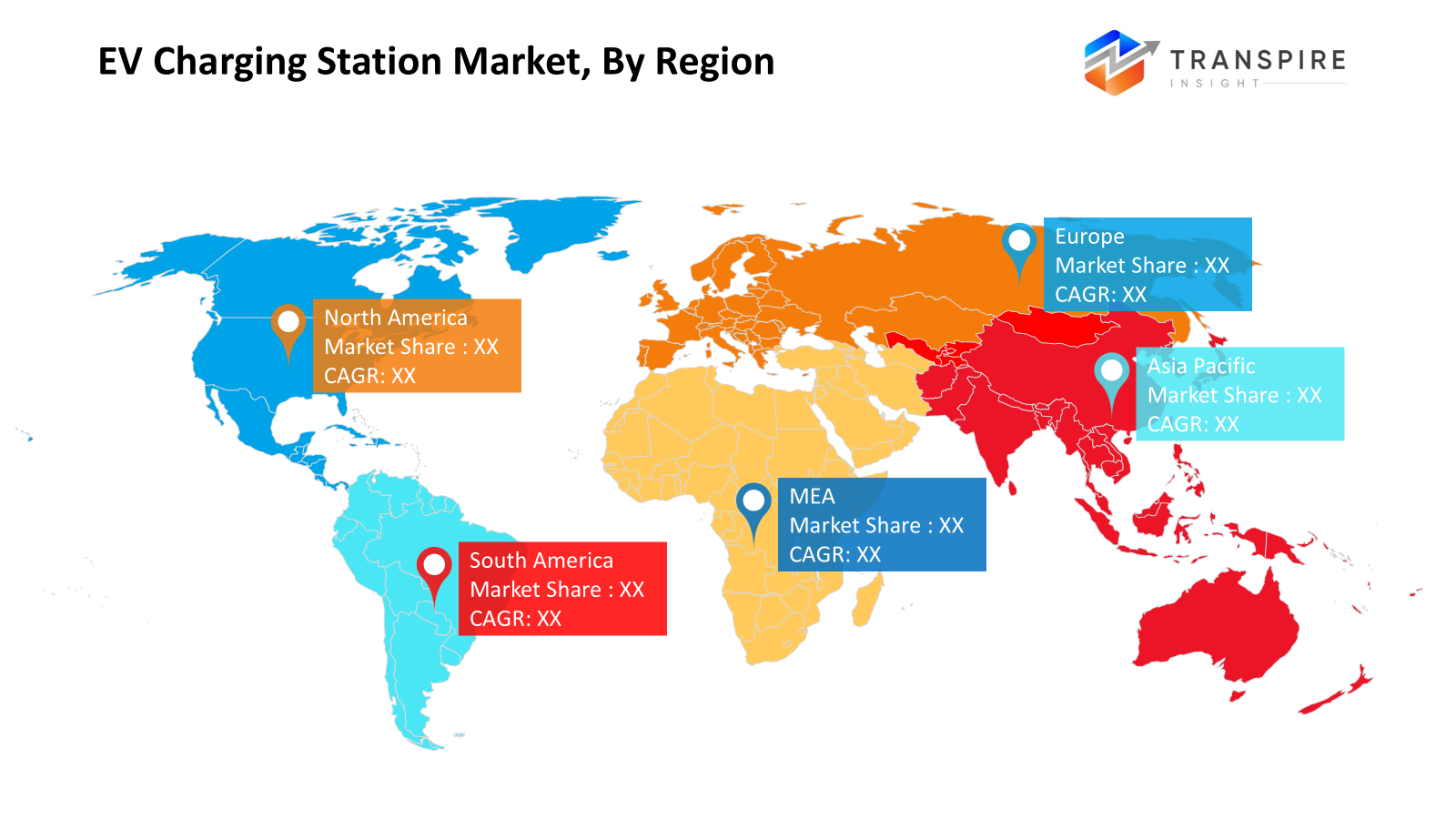
To learn more about this report, Download Free Sample Report
Recent Development News
- October 2025, The United States has now registered its biggest ever quarter regarding the installation of electric vehicle charging stations installing a total of 780 new charging stations at various retail and travel hubs. Such a move is apparent evidence that there is increased adoption of electric vehicles.
(Source:https://www.latimes.com/environment/story/2025-10-09/the-us-is-adding-ev-chargers-at-a-record-pace)
- In September 2025, The company strengthened its overall position in global EV charging infrastructure with about 16.7 million charging points in China, showcasing cumulative monthly electricity use and firmly maintaining its leading market position with widespread installation of charging points.
(Source:https://www.supplychaindive.com/news/ups-rfid-tag-smart-package-initiative-expands-2023/642338/)
|
Report Metrics |
Details |
|
Market size value in 2025 |
USD 28.35 Billion |
|
Market size value in 2026 |
USD 34 Billion |
|
Revenue forecast in 2033 |
USD 125.9 Billion |
|
Growth rate |
CAGR of 20.50% from 2026 to 2033 |
|
Base year |
2025 |
|
Historical data |
2021 – 2024 |
|
Forecast period |
2026 – 2033 |
|
Report coverage |
Revenue forecast, competitive landscape, growth factors, and trends |
|
Regional scope |
North America; Europe; Asia Pacific; Latin America; Middle East & Africa |
|
Country scope |
United States; Canada; Mexico; United Kingdom; Germany; France; Italy; Spain; Denmark; Sweden; Norway; China; Japan; India; Australia; South Korea; Thailand; Brazil; Argentina; South Africa; Saudi Arabia; United Arab Emirates |
|
Key company profiled |
Tesla, Inc., ChargePoint Holdings, Inc., Electrify America, LLC, EVgo Services LLC, Shell Recharge Solutions, ABB Ltd., Blink Charging Co., Siemens AG, BP Pulse, BYD Company Ltd., Bosch Automotive Service Solutions Inc., EO Charging, Pod Point, ALFEN N.V., Webasto Group |
|
Customization scope |
Free report customization (country, regional & segment scope). Avail customized purchase options to meet your exact research needs. |
|
Report Segmentation |
By Vehicle Type (Passenger Cars, Commercial Vehicles), By Level (L1, L2, L3), By Charger Type (Fast, Slow, Moderate) and By Application (Commercial, Residential) |
Key EV Charging Station Company Insights
Tesla, Inc. is also at the forefront of the EV charging infrastructure market with its globally leading Supercharger network across North America, Europe, and the Asia Pacific regions. The company has always used its vehicle ecosystem to roll out fast-charging solutions with peak power of up to 350 kW, which has significantly reduced charging times. The strategic move by Tesla to open its North American Charging Standard (NACS) to non-Tesla car brands is indicative of the company’s shift from its closed charging ecosystem to an open ecosystem. Alongside the use of renewable energy solutions and its customized software solutions, Tesla is driving charging speed and convergence in the EV energy ecosystem.
Key EV Charging Station Companies:
- Tesla, Inc.
- ChargePoint Holdings, Inc.
- Electrify America, LLC
- EVgo Services LLC
- Shell Recharge Solutions
- ABB Ltd.
- Blink Charging Co.
- Siemens AG
- BP Pulse
- BYD Company Ltd.
- Bosch Automotive Service Solutions Inc.
- EO Charging
- Pod Point
- ALFEN N.V.
- Webasto Group
Global EV Charging Station Market Report Segmentation
By Vehicle Type
- Passenger Cars
- Commercial Vehicles
By Level
- L1
- L2
- L3
By Charger Type
- Fast
- Slow
- Moderate
By Application
- Commercial
- Residential
Regional Outlook
- North America
- United States
- Canada
- Mexico
- Europe
- Germany
- United Kingdom
- France
- Spain
- Italy
- Rest of Europe
- Asia Pacific
- Japan
- China
- Australia & New Zealand
- South Korea
- India
- Rest of Asia Pacific
- South America
- Brazil
- Argentina
- Rest of South America
- Middle East & Africa
- Saudi Arabia
- United Arab Emirates
- South Africa
- Rest of the Middle East & Africa
Frequently Asked Questions
Find quick answers to common questions.
The approximate EV Charging Station Market size for the market will be USD 125.9 billion in 2033.
Key segments for the EV Charging Station Market are By Vehicle Type (Passenger Cars, Commercial Vehicles), By Level (L1, L2, L3), By Charger Type (Fast, Slow, Moderate) and By Application (Commercial, Residential)
Major EV Charging Station Market players are Tesla, Inc., ChargePoint Holdings, Inc., Electrify America, LLC, Shell Recharge Solutions, EVgo Services LLC.
The North America region is leading the EV Charging Station Market.
The CAGR of the EV Charging Station Market is 20.50%.
- Tesla, Inc.
- ChargePoint Holdings, Inc.
- Electrify America, LLC
- EVgo Services LLC
- Shell Recharge Solutions
- ABB Ltd.
- Blink Charging Co.
- Siemens AG
- BP Pulse
- BYD Company Ltd.
- Bosch Automotive Service Solutions Inc.
- EO Charging
- Pod Point
- ALFEN N.V.
- Webasto Group
Recently Published Reports
-
Dec 2024
ATV & UTV Market
ATV & UTV Market Size, Share & Analysis Report By Type (ATV, and UTV), By Variants (Less Than 400 CC, 400 CC To 800 CC, and More Than 800 CC), and Geography (North America, Europe, Asia-Pacific, Middle East and Africa, South and Central America), 2021 - 2031
-
Jan 2025
Automotive Central Gateway Module Market
Automotive Central Gateway Module Market Size, Share & Analysis Report By Type (Ethernet Central Gateway Module, CAN Central Gateway Module, LIN Central Gateway Module, and FlexRay), By Application (Powertrain Control, Body Control, Infotainment System, Advanced Driver Assistance Systems (ADAS), and Others), By End User (Passenger Vehicles, and Commercial Vehicles), and Geography (North America, Europe, Asia-Pacific, Middle East and Africa, South and Central America), 2021 - 2031
-
Jan 2025
Automotive Engine Oil Filter Market
Automotive Engine Oil Filter Market Size, Share & Analysis Report By Filter Type (Fuel Filter, Engine Oil Filter, Hydraulic Oil Filter, and Others), By Filter Media (Cellulose, Synthetic, and Micro), By Sales Channel (OEMs, and Aftermarket), By Vehicle Type (Passenger Cars, Light Commercial Vehicles, Heavy Duty Trucks, Buses and Coaches, and Off-road Vehicles), and Geography (North America, Europe, Asia-Pacific, Middle East and Africa, South and Central America), 2021 - 2031
-
Jan 2025
Automotive Parts Aluminium Die Casting Market
Automotive Parts Aluminium Die Casting Market Size, Share & Analysis Report By Production Process (Pressure Die Casting, Vacuum Die Casting, Squeeze Die Casting, Gravity Die Casting), By Application (Body Parts, Engine Parts, Transmission Parts, Battery And Related Components, Other Application Types), and Geography (North America, Europe, Asia-Pacific, Middle East and Africa, South and Central America), 2021 - 2031
Our Clients