
Europe Recycled Metal Market Size & Forecast:
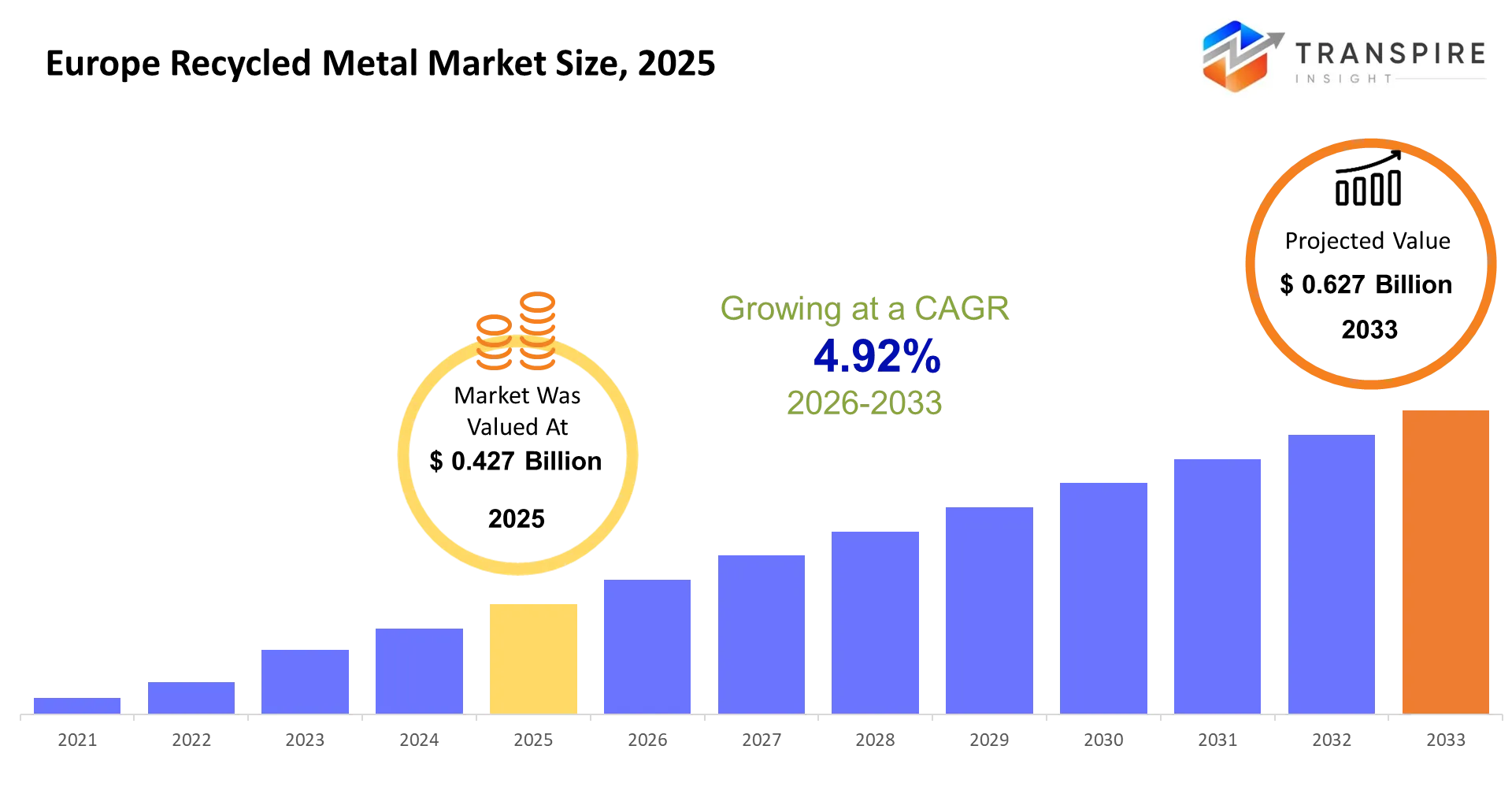
- Europe Recycled Metal Market Size 2025: USD 0.427 Billion
- Europe Recycled Metal Market Size 2033: USD 0.627 Billion
- Europe Recycled Metal Market CAGR: 4.92%
- Europe Recycled Metal Market Segments: By Type (Ferrous Metals, Non-ferrous Metals, Precious Metals, Scrap Metals, Alloy Metals, E-waste Metals, Others), By Application (Construction, Automotive, Manufacturing, Electronics, Shipbuilding, Infrastructure, Others), By End-User (Industrial, Commercial, Government, Recycling Firms, SMEs, Others), By Process (Collection, Sorting, Processing, Smelting, Refining, Reuse, Others).
To learn more about this report,  Download Free Sample Report
Europe Recycled Metal Market Summary:
The Europe Recycled Metal Market size is estimated at USD 0.427 Billion in 2025 and is anticipated to reach USD 0.627 Billion by 2033, growing at a CAGR of 4.92% from 2026 to 2033. The Europe recycled metal market plays a critical role in keeping industrial supply chains operational while reducing dependence on imported virgin raw materials. The automotive industry and construction sector and shipbuilding industry and renewable energy infrastructure and heavy manufacturing sector increasingly use recycled steel and aluminum and copper and other secondary metals because these materials decrease energy usage and maintain stable material expenses.
The market has transformed from cost-saving recycling operations which developed into a vital circular manufacturing process that various industrial sectors use to develop sustainability through their decarbonization programs and carbon footprint measurements which operate throughout Europe.
The energy crisis and supply disruptions which resulted from the Russia-Ukraine conflict created major problems for Europe because they showed the continent's dependence on primary metals and its unstable energy-dependent smelting processes. Manufacturers increased their investments in scrap recovery systems and automated sorting technologies and closed-loop recycling partnerships when electricity and raw material prices rose. The market is experiencing a long-term adoption increase because recycled metals provide economic stability and compliance benefits which organizations need to meet EU sustainability regulations that grow increasingly strict.
Key Market Insights
- The Europe Recycled Metal Market was led by Western Europe which held almost 48% market share in 2025 because of its modern recycling facilities and its strict environmental regulations.
- The German economy generates maximum regional revenue through its automotive industry and machinery sector and industrial metal recovery activities at its steel and aluminum recycling facilities.
- The Northern European market is expected to experience the fastest growth between now and 2030 because of green manufacturing investments and renewable energy metal recovery initiatives.
- The construction sector and modern industrial facilities and cross-border scrap metal trade activities drive Eastern Europe to experience new demand for its services.
- The Europe recycled metals industry reached its highest market share in 2025 when ferrous metals accounted for over 62% of the market because of extensive steel recycling activities in the construction and automotive industries.
- The second-largest category of non-ferrous metals received support from rising demand for aluminum and copper recycling activities within the electrical and renewable energy sectors.
- The recycled aluminum segment will experience the highest growth rate until 2030 because the lightweight vehicle manufacturing industry requires energy-efficient secondary aluminum production systems.
- The European Recycled Metal Market will achieve better material recovery results and improved operational performance by advanced scrap sorting technologies during the forecast period.
- The construction sector used recycled steel in commercial development projects and infrastructure projects which resulted in a 36% market share for construction applications in 2025.
- The automotive manufacturing industry serves as the primary application area because European Union carbon reduction goals require more recycled aluminum to enter production for electric vehicles.
What are the Key Drivers, Restraints, and Opportunities in the Europe Recycled Metal Market?
The European Recycled Metal Market experiences its most powerful growth because EU industrial decarbonization policies and emissions trading systems create stricter carbon reduction requirements that European businesses must follow. The steel and aluminum smelting operations which consume high amounts of energy during steel production experienced severe cost increases because European energy prices doubled after the Russia-Ukraine conflict. Manufacturers adopted recycled metal procurement methods because these metals need less energy to process and produce fewer greenhouse gas emissions compared to traditional metals. Businesses in the automotive construction and machinery sectors established permanent supply contracts with recyclers to protect their financial interests and fulfill their environmental reporting obligations. The new process resulted in increased recycled metal transactions and the construction of new scrap processing facilities throughout Western Europe.
The market experiences its main limitation from two factors which include the unavailability of scrap materials and the disorganized collection process. The European Union needs to create a complete system which allows for metal recovery across its member states because its current system lacks proper cross-border recovery capabilities and faces challenges from illegal scrap exports and insufficient collection systems which affect recyclers' ability to obtain feedstock. The solution to this problem requires a lengthy process because it needs both municipal waste management systems and industrial dismantling networks and extended infrastructure development programs. Eastern and Southern Europe face plant operation restrictions and construction delays because of these regulations.
The next major growth opportunity of the market development process will be created by advanced automated sorting technologies. AI-enabled optical sorting and sensor-based metal separation systems help increase aluminum and copper scrap purity recovery rates. The Netherlands and Germany are expanding their investments in smart recycling facilities, which enable recyclers to produce higher-grade secondary metals that meet the requirements of electric vehicles and renewable energy systems and precision manufacturing applications.
What Has the Impact of Artificial Intelligence Been on the Europe Recycled Metal Market?
The Europe Recycled Metal Market experiences operational changes because artificial intelligence together with advanced digital technologies create better material recovery operations and shorter downtime periods and improved scrap supply chain traceability. Recycling facilities are increasingly deploying AI-enabled optical sorting systems, robotic scrap separation equipment, and sensor-based analytics platforms to automate metal identification and classification processes. The systems identify ferrous and non-ferrous metals through a method that achieves better results than manual sorting which results in metal recovery operations that operate with higher purity rates while decreasing the amount of material that gets lost during processing.
Machine learning models find application in predictive maintenance for shredders furnaces conveyor systems and baling equipment. Recyclers use vibration data together with temperature changes and equipment load patterns to forecast component failures before they lead to operational breakdowns. The European processing plants that operate multiple locations report better equipment uptime metrics together with decreased maintenance expenses and lower energy usage after they implemented predictive analytics into their operational workflows. The operators use digital monitoring platforms to handle furnace temperatures and processing cycles which leads to better energy efficiency and ensures compliance with EU emissions reporting standards.
The adoption of AI technology encounters a major obstacle because organizations must pay high costs to integrate systems while they receive inconsistent data about scrap composition. The mid-sized recyclers continue to use outdated equipment that fails to work with modern digital systems which creates high automation costs and operational difficulties during their initial period.
Key Market Trends
- European steelmakers increased their use of recycled scrap materials after 2022 to manage their rising electricity expenses that stemmed from their main metal production activities.
- Automotive manufacturers changed their purchasing methods after 2021 because they wanted to use recycled aluminum materials which would lower their vehicle emissions throughout their complete vehicle lifespan while safeguarding their compliance with European Union regulations.
- Between 2023 and 2025 Germany and the Netherlands developed AI-powered sorting centers which boosted their ability to recover pure aluminum and copper materials.
- The Russia-Ukraine war created supply chain disruptions that led to tighter regulations for cross-border scrap metal transportation because this conflict created supply chain disruptions which resulted in increased demand for regional material sourcing.
- Major recyclers including Aurubis AG and European Metal Recycling expanded their automated recovery plant investments after the energy market disruptions of 2022.
- The EU carbon accounting regulations established more robust supplier tracking requirements which led industrial purchasers to utilize digital systems for monitoring their recycled metal acquisition from suppliers.
- The demand for recycled copper increased after 2023 because renewable energy projects needed extensive grid modernization and offshore wind power development across all Northern European countries.
- The mid-size market sector recyclers adopted predictive maintenance software between 2022 and 2025 because this technology enabled them to reduce unexpected downtime while increasing their processing capacity.
- New recycling facilities located in Eastern European markets because manufacturers needed cheaper processing centers which would serve as links to their industrial production routes.
- Construction companies started using recycled steel materials instead of new steel materials which they had previously used for their construction projects after public infrastructure tenders introduced new carbon intensity standards in 2024.
Europe Recycled Metal Market Segmentation
By Type
The type segment of the market identifies ferrous metals as its leading material because steel recycling operations occur throughout construction sites and automobile production facilities and industrial equipment manufacturing plants. The existing collection system together with the accessible collection system enables steel scrap to be processed at high volumes throughout Germany and France and Italy. The second largest market share for non-ferrous metals belongs to aluminum and copper because renewable energy systems and electric vehicles and power transmission networks need lightweight materials with conductive properties.
The categories of precious metals and e-waste metals represent smaller markets which deliver high value because electronics recovery and urban mining programs support their existence. Industrial buyers now focus on alloy metals and mixed scrap streams because they need dependable secondary raw material sources to deal with unpredictable primary metal market fluctuations. The demand for high-purity aluminum and copper recovery will increase because European industrial supply chains create new procurement standards through their low-carbon manufacturing targets which drive funding for advanced separation technologies.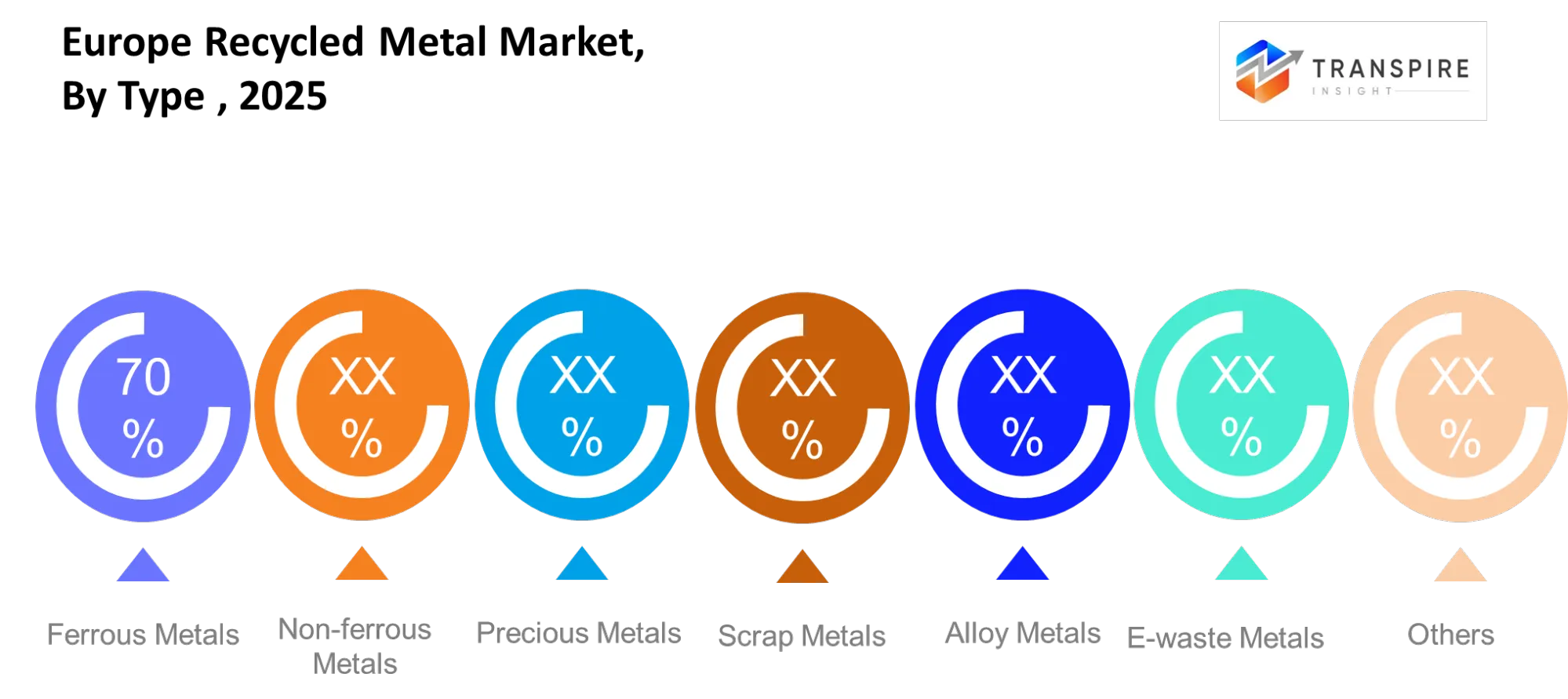
To learn more about this report, Download Free Sample Report
By Application
The leading application segment of construction industry projects uses recycled steel and aluminum materials because these materials reduce construction costs while meeting low-carbon infrastructure requirements. Public infrastructure projects across Western Europe increasingly specify recycled metal content in procurement contracts which creates stable demand for metal recycling. The automotive manufacturing industry has strong growth potential because electric vehicle production increases and demand for lightweight recycled aluminum components expands. Secondary metals enable manufacturing and industrial machinery operations to achieve significant cost savings during periods of energy and raw material price fluctuations.
The aerospace industry and shipbuilding sector use copper recovery methods and corrosion-resistant alloys for their operations. The implementation of renewable energy transmission projects through infrastructure modernization initiatives leads to increased usage of recycled copper. Future application trends show that recyclers will establish closer partnerships with industrial manufacturers because buyers demand traceable secondary metals which possess high purity and meet both carbon disclosure standards and operational performance needs.
By End-User
Industrial enterprises account for the largest end-user share because steel mills automotive producers machinery manufacturers and foundries consume substantial volumes of recycled ferrous and non-ferrous metals. Industrial customers now prefer to establish long-term scrap supply contracts because this practice enables them to minimize their risk from changing virgin metal prices and new emissions regulations. Recycling companies function as vital components of the market because their complete processing systems enable them to collect materials more efficiently and recover more materials. Commercial buyers which include construction contractors and metal distributors continue to expand their procurement of recycled materials for sustainability certification compliance in commercial development projects.
Government-supported procurement programs also influence purchasing patterns through public transportation and infrastructure investments requiring lower carbon intensity materials. The adoption of recycled feedstock by smaller manufacturers has emerged as an industrial growth trend that benefits small and medium-sized enterprises. The future end-user market will favor companies who can implement traceable sourcing systems together with digital material verification methods for their industrial purchasing processes.
By Process
The process section of operations depends mainly on sorting and processing activities since effective material separation results in better recovery results and higher operational profits and more effective industrial use in future processes. Recyclers who need to handle more difficult mixed-metal waste streams are increasingly adopting advanced sorting technologies which combine AI-based optical sensors with robotic systems and automated shredding equipment. The essential nature of collection operations persists because the existing municipal and industrial scrap networks operate as separate systems which create feedstock inconsistencies throughout various European regions. The smelting and refining processes function as vital processes for recovering aluminum, copper, and specialty alloys in countries which possess advanced industrial systems like Germany and the Netherlands.
Manufacturers are expanding their reuse activities because they want to develop direct closed-loop recycling networks which will decrease transportation expenses while enhancing supply chain dependability. The future of process development will direct its attention toward automation and digital traceability and energy-efficient refining systems because industrial customers demand higher-purity recycled materials which can meet the requirements for electric vehicles and renewable energy equipment and precision manufacturing processes.
What are the Key Use Cases Driving the Europe Recycled Metal Market?
Construction remains the primary use case for recycled metals across Europe because infrastructure developers and commercial builders increasingly rely on recycled steel and aluminum to meet carbon intensity targets in public procurement projects. The development of large transportation corridors together with rail system extensions and urban renewal initiatives creates ongoing requirements because European Union sustainability regulations and unstable basic metal prices.
The automotive and industrial manufacturing sectors experience continuous growth in their use of lightweight recycled aluminum and copper feedstock which electric vehicle manufacturers and machinery producers require. The demand for secondary conductive metals increases because renewable energy infrastructure projects require substantial amounts of these metals to construct wind farms and grid modernization initiatives and battery production facilities.
Recycling electronic waste streams for battery storage systems and advanced electronics manufacturing creates new opportunities to recover recycled rare metals. European maritime operators now require tighter emissions documentation together with complete material traceability which drives shipbuilding and offshore energy platform operators to test higher recycled alloy content.
|
Report Metrics |
Details |
|
Market size value in 2025 |
USD 0.427 Billion |
|
Market size value in 2026 |
USD 0.448 Billion |
|
Revenue forecast in 2033 |
USD 0.627 Billion |
|
Growth rate |
CAGR of 4.92% from 2026 to 2033 |
|
Base year |
2025 |
|
Historical data |
2021 - 2024 |
|
Forecast period |
2026 - 2033 |
|
Report coverage |
Revenue forecast, competitive landscape, growth factors, and trends |
|
Regional scope |
Europe (Germany, United Kingdom, France, Italy, Spain and Rest of Europe) |
|
Key company profiled |
ArcelorMittal, Sims Metal Management, Nucor, European Metal Recycling, Schnitzer Steel, Tata Steel, Aurubis, Commercial Metals Company, Gerdau, Liberty Steel, OmniSource, Kuusakoski, SA Recycling, David J Joseph, EMR Group |
|
Customization scope |
Free report customization (country, regional & segment scope). Avail customized purchase options to meet your exact research needs. |
|
Report Segmentation |
By Type (Ferrous Metals, Non-ferrous Metals, Precious Metals, Scrap Metals, Alloy Metals, E-waste Metals, Others), By Application (Construction, Automotive, Manufacturing, Electronics, Shipbuilding, Infrastructure, Others), By End-User (Industrial, Commercial, Government, Recycling Firms, SMEs, Others), By Process (Collection, Sorting, Processing, Smelting, Refining, Reuse, Others) |
Which Regions are Driving the Europe Recycled Metal Market Growth?
The recycled metal market in Western Europe leads because of its established industrial framework and its developed waste recovery systems and its enforced carbon reduction standards. The collection and processing networks in Germany France and the Netherlands operate effectively through their automated sorting systems and integrated steel recycling facilities and established transportation systems. The EU emissions policies together with the circular economy mandates force manufacturers to increase their use of secondary metal materials in automotive and construction and industrial production. The strong partnerships among recyclers and industrial buyers and municipal authorities and technology providers enable the region to maintain its leadership position while developing advanced recovery systems.
Northern Europe has the second-highest market share because its industrial development strategy provides market stability while its industrial output capacity. The countries of Sweden Norway and Denmark possess dependable renewable energy systems which help their energy-dependent recycling and refining operations decrease their operational expenses. Regional manufacturers use recycled aluminum and copper to produce components for electric vehicles and offshore wind systems and power transmission equipment without experiencing the supply instability that affects other markets. The region generates stable revenue streams for recyclers and secondary metal processors through its consistent sustainability policies and its structured industrial investment patterns.
The Eastern European market has become the fastest developing market because industrial modernization efforts and increased investment in recycling facilities. The three countries of Poland, Romania and the Czech Republic have implemented system upgrades for their scrap collection operations and industrial dismantling processes and their automated processing plants to meet European Union sustainability targets. Recycling companies establish new facilities in regions near automotive and machinery production centers because manufacturing activity increases and their operational costs decrease. The period from 2026 to 2033 will create multiple investment opportunities which investors can use to develop processing facilities and international scrap trade operations and technology-based recycling businesses.
Who are the Key Players in the Europe Recycled Metal Market and How Do They Compete?
The Europe recycled metal market exists as a moderately fragmented market which experiences increasing consolidation since larger processors acquire regional scrap operators and build automated recovery systems. The competition now focuses on four factors which include processing efficiency and material purity and supply chain integration and stable scrap volume access instead of basic price competition. Established recyclers use technology upgrades and long-term industrial supply agreements to protect their market position, while smaller companies target specific recovery markets which include electronic waste and specialty alloys and battery-related metals. The transportation costs and feedstock availability create a major competitive advantage for companies because their manufacturing facilities exist near automotive and construction and renewable energy production centers.
Aurubis AG uses its advanced copper refining system together with its closed-loop recycling system to create high-purity industrial products. The company uses its strong position in the German manufacturing sector to expand its secondary copper processing capacity which will meet the increasing demand from renewable energy and electric vehicle markets. European Metal Recycling operates large-scale collection and processing facilities which use their extensive port access and border-crossing logistics systems. The company improves its operational efficiency through investments in automated sorting systems and export infrastructure, which allows the company to handle complex mixed scrap materials at its multiple European sites.
Norsk Hydro competes through low-carbon recycled aluminum production which uses renewable energy sources from its Northern European operational facilities. The company offers automotive and construction clients better emissions tracking systems which exceed the capabilities of traditional aluminum supply chains. ArcelorMittal is expanding its control over steelmaking and scrap collection operations to decrease its dependence on fluctuating iron ore prices and energy expenses. Sims Metal develops digital monitoring systems together with AI-powered sorting technologies to enhance collection efficiency and facility growth capabilities throughout its European recycling operations.
Company List
- ArcelorMittal
- Sims Metal Management
- Nucor
- European Metal Recycling
- Schnitzer Steel
- Tata Steel
- Aurubis
- Commercial Metals Company
- Gerdau
- Liberty Steel
- OmniSource
- Kuusakoski
- SA Recycling
- David J Joseph
- EMR Group
Recent Development News
In April 2026, Aurubis CEO expects US copper demand to reduce Comex stockpile: German metals producer Aurubis confirmed progress on the second phase of its recycling plant expansion strategy, driven by rising copper demand linked to data centers and energy infrastructure. The company stated it may further expand recycling operations depending on market conditions later in 2026.
Source: https://www.reuters.com
In February 2026, Recycling body opposes EU scrap aluminium export curbs: The European recycled metal sector saw a major policy-related development after recycling organizations challenged proposed EU restrictions on aluminium scrap exports. Industry groups warned the move could distort recycling economics and hurt recyclers across Europe. The development directly affects companies involved in aluminium scrap processing and circular supply chains.
Source: https://www.reuters.com
What Strategic Insights Define the Future of the Europe Recycled Metal Market?
The Europe Recycled Metal Market is transforming its operational system through the implementation of an integrated circular industrial supply framework which transforms recycled metals into primary materials. The automotive, renewable energy, and heavy manufacturing sectors initiate this transition because they need to fulfill their industrial decarbonization objectives while dealing with energy price changes and carbon accounting regulations. Businesses will gain their market edge through the next five to seven years by obtaining access to high-purity scrap streams and automated recovery systems and digitally traceable supply chains which fulfill procurement compliance needs.
The first hidden risk emerges when large processors establish exclusive long-term scrap supply agreements which create growing feedstock concentration pressure that restricts raw material supply for small recyclers and new market entrants. Eastern Europe presents an emerging opportunity to develop battery-related metal recovery and electronic waste processing because infrastructure investment and EU industrial modernization programs create new processing capabilities. To secure stable feedstock access market participants should invest in AI-enabled sorting technology and cross-border collection partnerships and closed-loop industrial contracts before supply competition becomes more intense.
Europe Recycled Metal Market Report Segmentation
By Type
- Ferrous Metals
- Non-ferrous Metals
- Precious Metals
- Scrap Metals
- Alloy Metals
- E-waste Metals
- Others
By Application
- Construction
- Automotive
- Manufacturing
- Electronics
- Shipbuilding
- Infrastructure
- Others
By End-User
- Industrial
- Commercial
- Government
- Recycling Firms
- SMEs
- Others
By Process
- Collection
- Sorting
- Processing
- Smelting
- Refining
- Reuse
- Others
Frequently Asked Questions
Find quick answers to common questions.
The Approximate Europe Recycled Metal Market size for the Market will be USD 0.627 Billion in 2033.
The key Segments of the Europe Recycled Metal Market are By Type (Ferrous Metals, Non-ferrous Metals, Precious Metals, Scrap Metals, Alloy Metals, E-waste Metals, Others), By Application (Construction, Automotive, Manufacturing, Electronics, Shipbuilding, Infrastructure, Others), By End-User (Industrial, Commercial, Government, Recycling Firms, SMEs, Others), By Process (Collection, Sorting, Processing, Smelting, Refining, Reuse, Others).
Major Players in the Europe Recycled Metal Market are ArcelorMittal, Sims Metal Management, Nucor, European Metal Recycling, Schnitzer Steel, Tata Steel, Aurubis, Commercial Metals Company, Gerdau, Liberty Steel, OmniSource, Kuusakoski, SA Recycling, David J Joseph, EMR Group.
The current market size of the Europe Recycled Metal Market is USD 0.427 Billion in 2025.
The Europe Recycled Metal Market CAGR is 4.92%.
- ArcelorMittal
- Sims Metal Management
- Nucor
- European Metal Recycling
- Schnitzer Steel
- Tata Steel
- Aurubis
- Commercial Metals Company
- Gerdau
- Liberty Steel
- OmniSource
- Kuusakoski
- SA Recycling
- David J Joseph
- EMR Group
Recently Published Reports
-
Apr 2026
Healthcare Polymer Packaging Market
Healthcare Polymer Packaging Market Size, Share & Analysis Report By Packaging Type (Syringes, IV Bottles and Pouches, Clamshells, Blisters, Bottles & Jars, Containers, Tubes, IV Parental Packaging, Others), By Type (Regulated, Non-regulated), By Polymer Type (LDPE (Low-Density Polyethylene), HDPE (High-Density Polyethylene), Homo-polymer (Homo), Random Copolymer (Random), Block Copolymer (Block), PET, Polystyrene, Polyvinyl Chloride, Polyamide/EVOH, Others), and Geography (North America, Europe, Asia-Pacific, Middle East and Africa, South and Central America), 2021 - 2031
-
Apr 2026
Hydrophilic Tape (Waterstop) Market
Hydrophilic Tape (Waterstop) Market Size, Share & Analysis Report By Type (Bentonite-Based Hydrophilic Tape, Rubber-Based Hydrophilic Tape), By Application (Residential Buildings, Commercial Buildings, Infrastructure Projects), and Geography (North America, Europe, Asia-Pacific, Middle East and Africa, South and Central America), 2021 - 2031
-
Apr 2026
Metalens Market
Metalens Market Size, Share & Analysis Report By Type (Visible Light Metalens, and Infrared Metalens), By Application (Consumer Electronics, Automotive Electronics, Industrial, Medical, and Others), and Geography (North America, Europe, Asia-Pacific, Middle East and Africa, South and Central America), 2021 - 2031
-
Apr 2026
PBT Resin Market
PBT Resin Market Size, Share & Analysis Report By Type (Reinforced PBT Resin, Unreinforced PBT Resin), By Processing Method (Injection Molding, Extrusion, Blow Molding, Others), By End-User (Automotive, Electrical & Electronics, Consumer Appliances, Industrial Machinery, Medical Devices, Packaging, Others), and Geography (North America, Europe, Asia-Pacific, Middle East and Africa, South and Central America), 2021 - 2031