

Europe Punnet Packaging Market Size & Forecast:
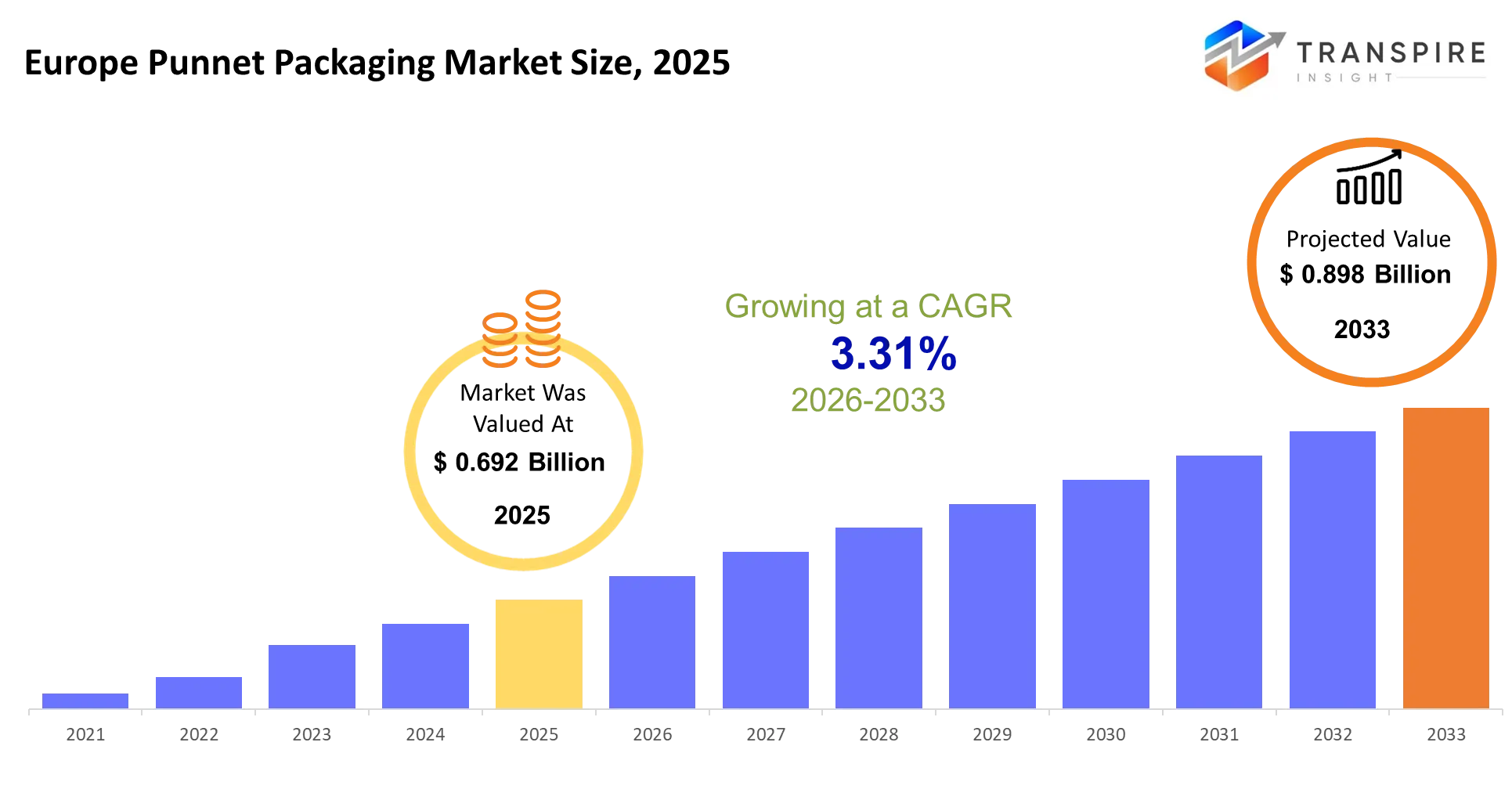
- Europe Punnet Packaging Market Size 2025: USD 0.692 Billion
- Europe Punnet Packaging Market Size 2033: USD 0.898 Billion
- Europe Punnet Packaging Market CAGR: 3.31%
- Europe Punnet Packaging Market Segments: By Type (Plastic Punnets, Paper Punnets, Biodegradable Punnets, Others); By Application (Fruits, Vegetables, Bakery Products, Meat Packaging, Ready-to-eat Foods, Others); By End-User (Food Producers, Retailers, Supermarkets, FMCG Companies, Exporters, Others); By Material (PET, PP, Paperboard, Others)).
To learn more about this report,  Download Free Sample Report
Europe Punnet Packaging Market Summary:
The Europe Punnet Packaging Market size is estimated at USD 0.692 Billion in 2025 and is anticipated to reach USD 0.898 Billion by 2033, growing at a CAGR of 3.31% from 2026 to 2033. The European fresh produce supply chain uses punnet packaging because it protects fragile items such as berries and cherry tomatoes and mushrooms and provides ventilation and visibility and transportability and shelf stacking efficiency. The system decreases product loss while increasing product lifetime and enabling grocery stores to track inventory through barcode systems.
Market trends during the last three to five years have shifted toward recyclable and fiber-based punnets because retailers and EU circular economy regulations now require these materials. The new packaging system required customers to select PET packaging that included recycled materials and molded pulp products instead of using traditional rigid plastic packages. The introduction of stricter single-use plastic regulations across multiple European Union nations operating single-use plastic regulations prompted retailers to implement complete packaging redesigns immediately.
The pressure from regulations changed how organizations selected their suppliers. The market share increased for suppliers who provided compliant scalable solutions while manufacturers dedicated resources to developing fresh materials and production equipment which converted sustainability requirements into business revenue.
Key Market Insights
- The European Punnet Packaging Market market in Western Europe maintains its largest market share through its 2025 market share of 45% which results from its superior retail systems and its enforcement of extensive packaging rules.
- Through 2030 Northern Europe demonstrates the fastest growth rate because of its aggressive plastic waste reduction initiatives and its widespread implementation of fiber-based punnet packaging.
- The market for recycled PET (rPET) punnets reaches its leading position through its 2025 market share of over 40% which exists because of its ability to expand production and meet EU recycling requirements.
- The market for conventional plastic punnets holds the second-largest position which represents approximately 30% of market share because of their use in supply chains that prioritize cost efficiency.
- Molded pulp and fiber punnets are expected to become the most rapidly expanding market segment which will experience more than 8% annual growth until 2030 because of rising demand for environmentally friendly products.
- The market share for fresh fruit applications reaches 55% in 2025 because berries and grapes need special packaging that provides both protection and airflow.
- The organic and premium produce packaging market represents the most rapidly expanding application segment because retailers need higher profit margins and branding requirements.
- Supermarkets and retail chains together represent the largest share of end-user demand which accounts for 60% of total market volume in the European Punnet Packaging Market during 2025.
- The e-commerce grocery platforms market segment represents the most rapidly expanding end-user category because online food delivery services are increasing and there is a rising demand for durable packaging.
What are the Key Drivers, Restraints, and Opportunities in the Europe Punnet Packaging Market?
Your data training extends until the end of October in the year 2023. The European Punnet Packaging Market experiences its main growth driver through regulations which restrict single-use plastics especially through the EU Single-Use Plastics Directive and national packaging taxes which have been in effect since 2021. The regulations required retailers to complete their transition from using virgin plastic punnets to implementing recyclable rPET and fiber-based solutions within established deadlines. The procurement process moved towards compliant packaging solutions which resulted in increased sustainable punnets order quantities. The regulatory requirements brought additional income to converters who had recycling capabilities while they established extended partnerships with major supermarket systems.
The principal obstacle which restricts operational capacity functions through the restricted supply and fluctuating costs of premium recycled PET and molded fiber materials. The European regions have different levels of recycling capacity which leads to production delays for food-grade rPET. The production of fiber alternatives requires manufacturers to invest in new equipment and production facilities which demands substantial financial investment and extended period of time before they reach profitability. The existing limitations force smaller manufacturers to adopt slower processes which result in delayed market entry and high production expenses that prevent them from serving price-sensitive customers.
The advanced fiber molding technologies together with the growth of local manufacturing facilities in Eastern Europe create a significant business opportunity. The investment in high-speed molded pulp systems now enables businesses to produce punnets which are both lightweight and durable and work with automated packing systems. Poland and Romania have become emerging manufacturing centers which offer cost-effective production options that enable suppliers to deliver products to Western European retailers with shorter delivery times and reduced transportation expenses.
What Has the Impact of Artificial Intelligence Been on the Europe Punnet Packaging Market?
Current artificial intelligence advancements combined with digital technology innovations are modernizing punnet packaging processes through bettering their manufacturing accuracy and supply chain management capabilities. The converters utilize AI-based visual technology on their thermoforming and filling processes to identify micro-cracks and seal defects and contamination issues which results in decreased product rejections and reduced material waste. The automated control systems adjust their forming temperatures and cycle speeds according to actual production information which results in stable output quality and reduced energy expenses during high-volume manufacturing operations.
Machine learning models enable predictive maintenance through their analysis of vibration metrics and pressure information and thermal readings which they collect from forming and molding machines. The systems have the ability to predict component lifespan which allows them to schedule maintenance work before breakdowns happen thus increasing operational time while decreasing disruptive equipment failures. Artificial intelligence demand forecasting tools enable businesses to synchronize production activities with retail demand patterns and seasonal agricultural cycles which results in better inventory management and reduced unnecessary production of perishable packaging materials.
The technologies produce operational improvements which result in decreased material waste and enhanced production efficiency and successful food safety compliance through their traceability systems. The high integration expenses together with the fragmented data systems of outdated machinery create constraints that prevent organizations from adopting new technologies because these issues reduce AI model performance during actual manufacturing operations.
Key Market Trends
- Retailers which include Tesco and Carrefour have replaced original plastic punnets with rPET packaging solutions since 2021 to fulfill their packaging tax obligations.
- The adoption of fiber-based punnets increased after 2022 because European Union waste regulations became more stringent which forced producers to enlarge their molded pulp manufacturing operations despite facing greater expenses.
- From 2020 to 2025 supply chains moved towards implementing closed-loop recycling systems as converters started using food-grade rPET to maintain steady access to essential raw materials.
- Berry producers adopted ventilated stackable punnets between 2021 and 2024 to decrease transit damage which resulted in longer shelf life and reduced retail shrink rates.
- After 2022 Smurfit Kappa and other manufacturers expanded their fiber packaging product lines because retailers required them to create plastic-free fresh produce display areas.
- E-commerce grocery growth since 2020 required punnet designs to develop greater rigidity combined with tamper-proof features which enabled efficient last-mile delivery while minimizing product returns.
- After 2023 Eastern Europe transformed into a manufacturing center because Poland and Romania started to receive investment due to their cheaper labor costs and their proximity to Western markets.
- The period between 2022 and 2025 saw increased automation adoption because AI-based inspection systems tested products at high-speed thermoforming lines which resulted in reduced product defect rates and improved process consistency.
- After 2021 private-label supermarket brands developed sustainable packaging solutions faster than branded producers did because they used packaging redesign to create distinct competitive advantages.
- Material innovation shifted after 2022 toward hybrid designs which combine fiber bases with thin plastic films because this approach enables products to maintain recyclability while providing essential moisture protection.
Europe Punnet Packaging Market Segmentation
By Type
European companies operate their existing thermoforming equipment to create plastic punnets which continue to dominate their market because customers prefer their high-speed packaging method. PET-based plastic materials demonstrate their market dominance because they enable manufacturers to produce transparent containers which show high strength and complete recycling capability, while paper and biodegradable punnets show growth from their current smaller market presence. Premium retail channels attract paper punnets because they enable stores to show products differently while achieving their goals to decrease plastic waste.
Biodegradable materials encounter two main challenges which involve their production expenses and their ability to perform effectively in environments with high moisture levels. Demand patterns show a clear split between cost-sensitive bulk supply chains that still favor plastic and premium segments that shift toward fiber. The upcoming designs will use hybrid systems which deliver structural strength but require less plastic material. Manufacturers need to create new materials which will not slow down their production process, while investors are searching for alternative solutions which will fulfill regulatory requirements but allow their operations to continue running smoothly.
By Application
The dominant market segment for fruits exists because people consume berries and grapes and tomatoes which need products with ventilation and protection and attractive visual design. The vegetable market segment holds second place because different products require different packaging solutions which result in restricted packaging options. The market for bakery products and ready-to-eat foods exists as two smaller segments which experience continuous growth because retailers need products that enable portion control and extended display time.
Meat packaging remains limited because stricter hygiene and barrier requirements stop companies from using other packaging methods. The growth patterns of different product categories show multiple variations because fruits need packaging which weighs less and allows air passage but ready meals need packaging which maintains its shape and protects against tampering. Future research shows that punnet designs will become more customized to match the specific needs of different products. Flexible manufacturing systems will be essential for producers and packaging suppliers because they need to operate multiple production functions without incurring additional expenses.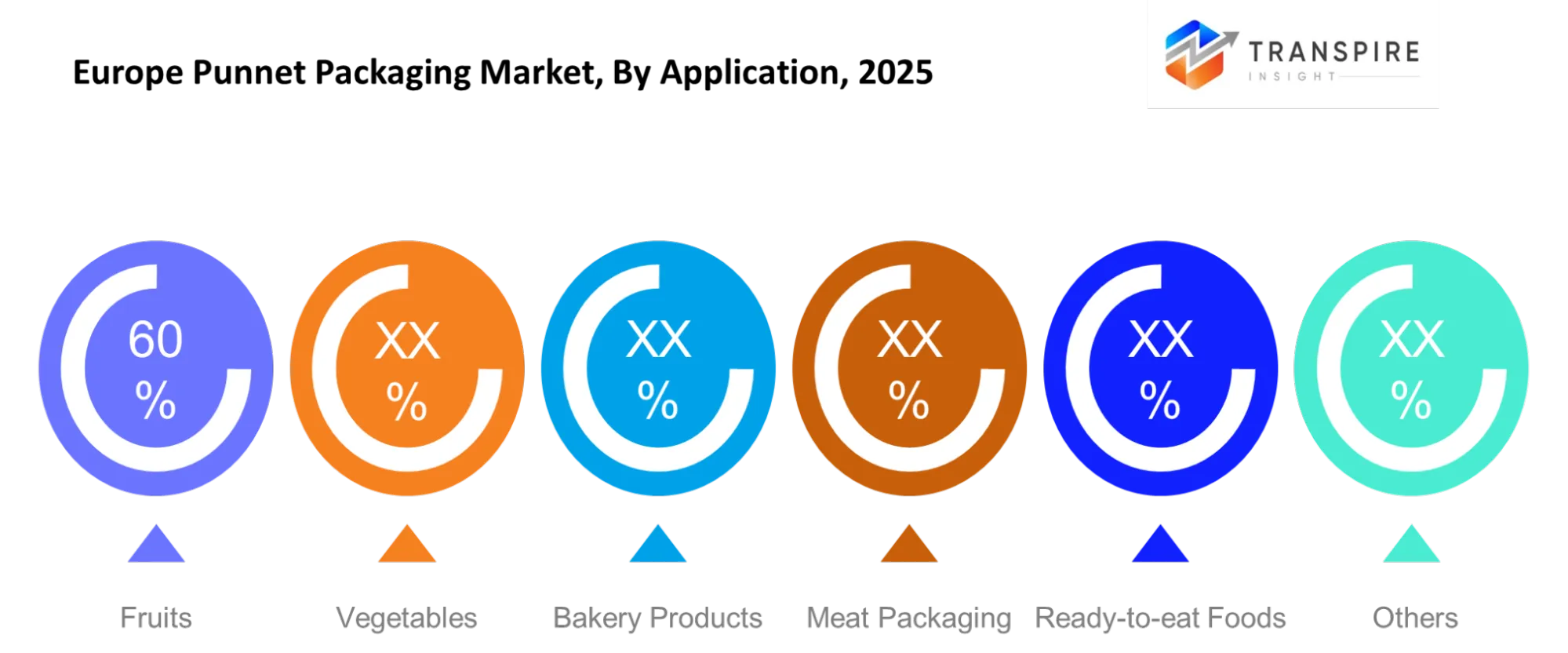
To learn more about this report, Download Free Sample Report
By End-User
The primary consumer market of retailers and supermarkets maintains its dominant market position because they manage their own packaging standards and develop their own private brands. The food industry supplies main customers for packaging materials which food producers use in complete supply chain systems to produce their goods and manage their transportation needs. Exporters represent a critical niche because international shipments require packaging solutions that meet strength and regulatory standards.
The main business activities of FMCG companies focus on value-added products which include ready-to-eat food items. Retailers drive the sustainability targets of their customers which results in suppliers needing to implement immediate changes. Exporters choose packaging materials that provide strength and uniformity because they want to decrease product damage during shipping. The future business environment will lead to retailers and packaging companies working together to create packaging solutions that meet regulatory requirements. Sustainable development commitments will create long-term supply contracts which will benefit both investors and manufacturers.
By Material
PET plastic controls the material segment because of its ability to be recycled. because of its transparent nature. which connects with current recycling processes. The market share of PP materials exists at lower levels because they only serve high-temperature applications. The market for PP materials has decreased because of their recycling challenges. Paperboard has become the most rapidly expanding material because of environmental regulations and retailer pledges to decrease plastic consumption.
The material of paperboard contains two main restrictions which prevent its use in specific applications. The market for biodegradable polymers and other materials exists as a niche market because of their cost and performance limitations. The market demonstrates a slow transition towards materials that support circular economy objectives while preserving their operational capabilities. The future of material science research will focus on developing coatings and composites which enhance barrier performance while maintaining recyclability.
What are the Key Use Cases Driving the Europe Punnet Packaging Market?
The primary application for the distribution of fresh fruit products focuses on the distribution of berries and grapes and cherry tomatoes which pass through major retail grocery networks. The products need stackable punnets that provide ventilation because this packaging solution minimizes product damage while extending product freshness during international shipping and retail display. The supermarket supply chains experience constant product movement which creates high demand for this particular application.
FMCG brands and supermarket private labels are expanding their reach into adjacent use cases which focus on ready-to-eat foods and bakery segments. Rigid punnets with tamper-evident features serve these categories by enabling portion control and maintaining hygiene standards while displaying products attractively in both chilled aisles and takeaway formats.
The new business applications for organic produce exports and premium snack packaging need fiber-based punnets which exporters and niche brands use to comply with EU packaging regulations while creating environmentally friendly product displays.
|
Report Metrics |
Details |
|
Market size value in 2025 |
USD 0.692 Billion |
|
Market size value in 2026 |
USD 0.715 Billion |
|
Revenue forecast in 2033 |
USD 0.898 Billion |
|
Growth rate |
CAGR of 3.31% from 2026 to 2033 |
|
Base year |
2025 |
|
Historical data |
2021 - 2024 |
|
Forecast period |
2026 - 2033 |
|
Report coverage |
Revenue forecast, competitive landscape, growth factors, and trends |
|
Regional scope |
Europe (Germany, United Kingdom, France, Italy, Spain and Rest of Europe) |
|
Key company profiled |
Amcor, Berry Global, DS Smith, Smurfit Kappa, Mondi, Sonoco, Huhtamaki, Sealed Air, Coveris, Pactiv Evergreen, International Paper, WestRock, Stora Enso, Graphic Packaging, UFP Technologies |
|
Customization scope |
Free report customization (country, regional & segment scope). Avail customized purchase options to meet your exact research needs. |
|
Report Segmentation |
By Type (Plastic Punnets, Paper Punnets, Biodegradable Punnets, Others); By Application (Fruits, Vegetables, Bakery Products, Meat Packaging, Ready-to-eat Foods, Others); By End-User (Food Producers, Retailers, Supermarkets, FMCG Companies, Exporters, Others); By Material (PET, PP, Paperboard, Others)) |
Which Regions are Driving the Europe Punnet Packaging Market Growth?
The market in Western Europe functions as the leading market because EU packaging regulations receive strict enforcement and the region possesses efficient retail logistics systems. The three countries of Germany France and the Netherlands create market demand through their supermarket chains which require products to use recyclable materials and maintain product traceability through special punnet designs. The advanced recycling system produces enough food-grade rPET material which enables companies to maintain their high-volume production operations. The existing system which includes converters material suppliers and retailers enables companies to develop compliant packaging solutions at a rapid pace.
Southern Europe functions as a stable market because it possesses strong agricultural production and fresh produce industries that focus on exports. Spain and Italy depend on punnets to safeguard their valuable fruits during European distribution through long-distance shipping. The market demand stays steady because of regular harvest seasons and existing trade routes which operate without needing extra regulatory enforcement. The region achieves predictable procurement patterns through its strong connections between growers and packaging suppliers and exporters.
Eastern Europe experiences rapid development because companies invested in packaging production facilities and established cost-effective manufacturing centers. After 2022 Poland and Romania expanded their production capabilities to draw Western European customers who wanted to pay lower prices and receive products more quickly. Advanced thermoforming and fiber molding technologies received widespread adoption because EU funding together with industrial modernization programs supported their implementation. The current growth situation enables new businesses and investors to establish scalable operations while capturing the increasing regional demand which will last until 2033.
Who are the Key Players in the Europe Punnet Packaging Market and How Do They Compete?
The market for Punnet packaging in Europe faces competition from two different market forces which drive either market consolidation or market fragmentation. The large converters control high-volume retail contracts while the smaller regional companies focus on niche markets and export-oriented business operations. The existing companies maintain their market share through long-term agreements with retailers plus their ability to meet industry standards yet new companies have started to compete effectively with their sustainable fiber products and their ability to produce goods at local facilities. The primary basis of competition has shifted from cost alone to a mix of material innovation, regulatory compliance, and supply chain reliability.
DS Smith develops its fiber-based innovations through its circular design framework which enables the company to substitute plastic punnets with recyclable paper products that meet the requirements of fresh produce packaging. This approach directly supports retailer sustainability objectives which results in high customer loyalty. Smurfit Kappa uses its ability to produce paper products at scale to supply integrated paper resources which enables the company to deliver consistent product quality while developing new designs that can be introduced to multiple European markets. The two companies expand their businesses through collaborations with supermarket chains and through their development of fiber molding facilities.
Coveris compete through their hybrid solutions which use recycled plastics together with barrier technologies that protect perishable products from obsolescence. Infia uses its rPET thermoforming expertise to create lightweight punnets which premium fruit exporters select for their high-clarity properties. ILIP develops closed-loop recycling systems which help them acquire feedstock materials while meeting European Union regulatory requirements. The companies achieve growth through their regional production facility investments and technology enhancements which decrease operational expenses.
Company List
- Amcor
- Berry Global
- DS Smith
- Smurfit Kappa
- Mondi
- Sonoco
- Huhtamaki
- Sealed Air
- Coveris
- Pactiv Evergreen
- International Paper
- WestRock
- Stora Enso
- Graphic Packaging
- UFP Technologies
Recent Development News
In January 2026, a fibre-based punnet developed for fresh produce: Metsä Spring confirmed that its Muoto punnet system has entered pre-commercial testing across European supply chains. The solution is positioned for fruit and berry packaging and aligns with upcoming EU packaging waste regulation requirements.
Source: https://renewable-carbon.eu
In January 2026, DS Smith Partners with Serele Super to Replace 10 Million Plastic Trays: DS Smith expanded its sustainable packaging footprint in Europe by collaborating with Romanian agribusiness Serele Super. The initiative replaces plastic trays used in fresh produce supply chains with recyclable fibre-based punnet solutions.
Source: https://packagingeurope.com
What Strategic Insights Define the Future of the Europe Punnet Packaging Market?
The European Punnet Packaging Market now operates under a unified material system. The new development combines recyclable plastics with fiber materials to create hybrid designs which meet both compliance and performance standards. The European Union packaging regulations have become stricter while retailers enforce procurement standards that require recyclable materials which maintain product durability and shelf life. The next 5-7 years will see value distribution changes that favor suppliers who match material science expertise with production capabilities that support multiple materials instead of single-material solutions.
Secondary threat exists because feedstock dependency needs food-grade recycled PET and premium fiber materials which exist in short supply. Recycling operations will face severe restrictions because of waste collection policy changes and any disruptions that affect recycling activities which will lead to material shortages that increase expenses and reduce profits despite constant demand.
The market for advanced barrier-coated fiber punnets creates new business prospects because these punnets enable companies to extend their packaging choices for products that require moisture protection. The companies must invest in coating technologies and localized production for their business needs to achieve first-mover advantage of this industry transition.
Europe Punnet Packaging Market Report Segmentation
By Type
- Plastic Punnets
- Paper Punnets
- Biodegradable Punnets
- Others
By Application
- Fruits
- Vegetables
- Bakery Products
- Meat Packaging
- Ready-to-eat Foods
- Others
By End-User
- Food Producers
- Retailers
- Supermarkets
- FMCG Companies
- Exporters
- Others
By Material
- PET
- PP
- Paperboard
- Others
Frequently Asked Questions
Find quick answers to common questions.
The Approximate Europe Punnet Packaging Market size for the Market will be USD 0.898 Billion in 2033.
The key segments of the Europe Punnet Packaging Market are By Type (Plastic Punnets, Paper Punnets, Biodegradable Punnets, Others); By Application (Fruits, Vegetables, Bakery Products, Meat Packaging, Ready-to-eat Foods, Others); By End-User (Food Producers, Retailers, Supermarkets, FMCG Companies, Exporters, Others); By Material (PET, PP, Paperboard, Others).
Major Players in the Europe Punnet Packaging Market are Amcor, Berry Global, DS Smith, Smurfit Kappa, Mondi, Sonoco, Huhtamaki, Sealed Air, Coveris, Pactiv Evergreen, International Paper, WestRock, Stora Enso, Graphic Packaging, UFP Technologies.
The Current Market size of the Europe Punnet Packaging Market is USD 0.692 Billion in 2025.
The Europe Punnet Packaging Market CAGR is 3.31%.
- Amcor
- Berry Global
- DS Smith
- Smurfit Kappa
- Mondi
- Sonoco
- Huhtamaki
- Sealed Air
- Coveris
- Pactiv Evergreen
- International Paper
- WestRock
- Stora Enso
- Graphic Packaging
- UFP Technologies
Recently Published Reports
-
Apr 2026
Healthcare Polymer Packaging Market
Healthcare Polymer Packaging Market Size, Share & Analysis Report By Packaging Type (Syringes, IV Bottles and Pouches, Clamshells, Blisters, Bottles & Jars, Containers, Tubes, IV Parental Packaging, Others), By Type (Regulated, Non-regulated), By Polymer Type (LDPE (Low-Density Polyethylene), HDPE (High-Density Polyethylene), Homo-polymer (Homo), Random Copolymer (Random), Block Copolymer (Block), PET, Polystyrene, Polyvinyl Chloride, Polyamide/EVOH, Others), and Geography (North America, Europe, Asia-Pacific, Middle East and Africa, South and Central America), 2021 - 2031
-
Apr 2026
Hydrophilic Tape (Waterstop) Market
Hydrophilic Tape (Waterstop) Market Size, Share & Analysis Report By Type (Bentonite-Based Hydrophilic Tape, Rubber-Based Hydrophilic Tape), By Application (Residential Buildings, Commercial Buildings, Infrastructure Projects), and Geography (North America, Europe, Asia-Pacific, Middle East and Africa, South and Central America), 2021 - 2031
-
Apr 2026
Metalens Market
Metalens Market Size, Share & Analysis Report By Type (Visible Light Metalens, and Infrared Metalens), By Application (Consumer Electronics, Automotive Electronics, Industrial, Medical, and Others), and Geography (North America, Europe, Asia-Pacific, Middle East and Africa, South and Central America), 2021 - 2031
-
Apr 2026
PBT Resin Market
PBT Resin Market Size, Share & Analysis Report By Type (Reinforced PBT Resin, Unreinforced PBT Resin), By Processing Method (Injection Molding, Extrusion, Blow Molding, Others), By End-User (Automotive, Electrical & Electronics, Consumer Appliances, Industrial Machinery, Medical Devices, Packaging, Others), and Geography (North America, Europe, Asia-Pacific, Middle East and Africa, South and Central America), 2021 - 2031