

Auditing Services Market Summary:
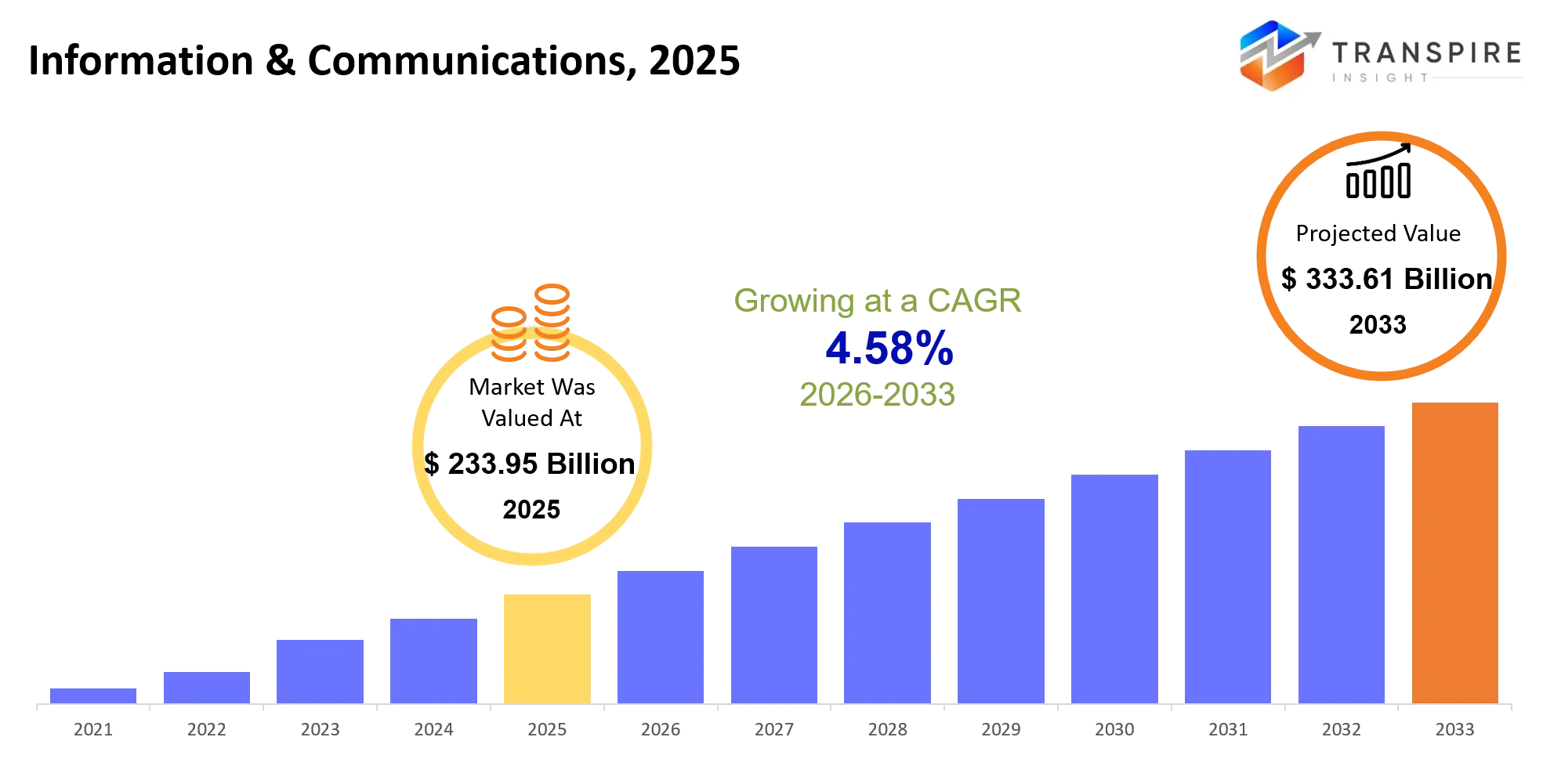
As per Transpire Insight Analysis, the Auditing Services Market size is estimated at USD 233.95 billion in 2025 and is anticipated to reach USD 333.61 billion by 2033, growing at a CAGR of 4.58% from 2026 to 2033.
auditing services provide organisations with assistance in examining their financial records, internal controls, compliance, technologies, and operations so that any potential risk is discovered and managed before it becomes a problem. In the past three to five years the way audits are done has shifted. It has moved away from slow, document-focused methods toward more modern data-driven and continuous ways of working. Cloud platforms, analytics, remote teamwork tools and artificial intelligence are now playing a big role in how audit evidence is gathered and checked. One major reason for this shift is the growth of artificial intelligence in different parts of businesses. As AI becomes more common, companies need governance, clearer controls, better transparency and independent assurance. These needs have made it essential to have audit practices. At the time, rules and regulations are becoming stricter. Reporting requirements are also getting more complicated. That means there’s a demand for auditors who have specialised knowledge. As companies create digital data every day, using technology to assist with auditing allows teams to examine much larger data sets quickly. This leads to risk detection and faster decision-making. Because of these benefits technology-assisted auditing is being used widely across all kinds of industries.
Auditing Services Market Size & Forecast:
- Market Size 2025: USD 233.95 Billion
- Expected Market Value (2033): USD 333.61 Billion
- Forecast CAGR (2026–2033): 4.58%
- Leading Region in 2025: North America
- Fastest Growing Region: Asia-Pacific
- Key Company Profiles: Deloitte, PwC, EY, KPMG, BDO, Grant Thornton, RSM, Baker Tilly, Crowe, Forvis Mazars, Moore Global, Nexia International, CLA, EisnerAmper, Wipfli
Key Market Insights:
The market is evolving into a technology-oriented one, while conventional assurance still plays a significant part in demand. External audit represents the biggest segment, and internal audit as well as technology-oriented services, are becoming increasingly significant due to the development of risk management and IT controls.
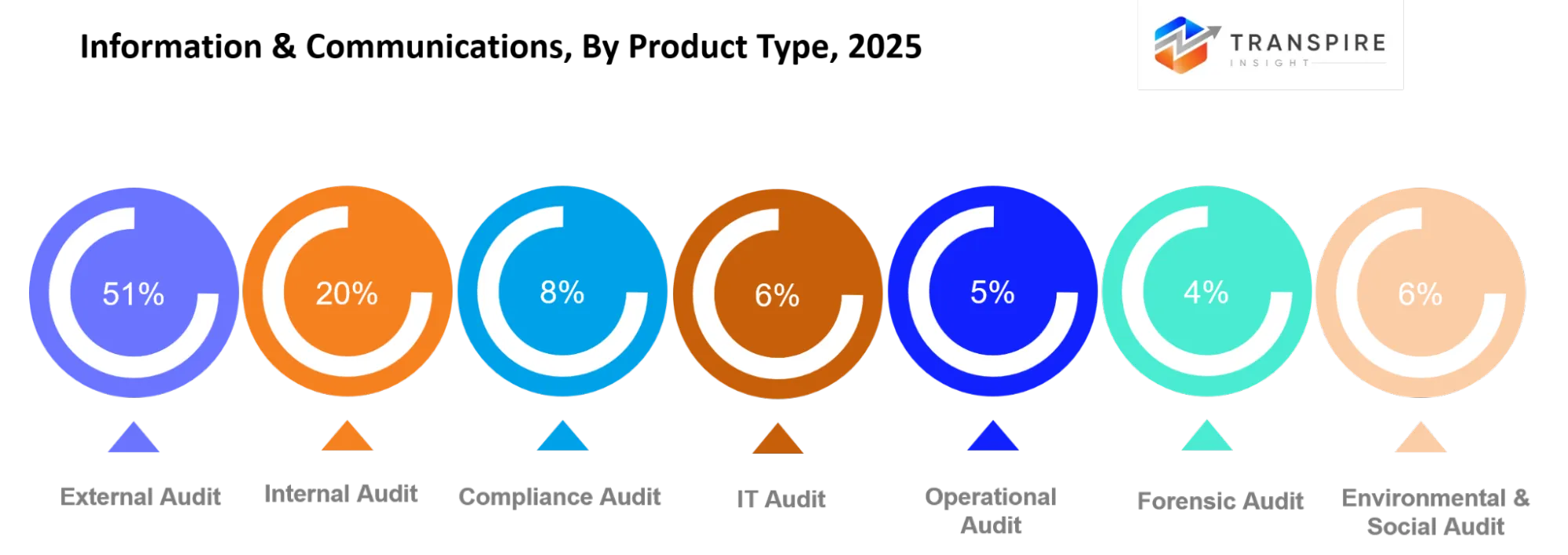
- The external audit continues to occupy the dominant market share of 51.00% due to organisations’ reliance on independent financial audits and testing of evidence through the use of technology.
- The internal audit makes up 20.00% of the market and grows at a CAGR of 4.60%, driven by increasing emphasis on continuous risk assessment, internal controls, and operational performance.
- The compliance audit accounts for 8.00% of the market in line with the requirement of compliance by organisations concerning governance and control.
- The IT audit comprises 6.00% of the market as companies rely on cloud computing services, enterprise applications, security systems, and digital information management.
- The forensic audit accounts for 4.00% of the market, driven by the need to conduct investigations into any financial irregularity, misconduct, or suspicious transaction.
What are the Key Drivers, Restraints, and Opportunities in the Auditing Services Market?
Drivers
Growth is being fueled by the move to technology-based assurance due to greater data volume, cybersecurity threats, and increased control requirements faced by organisations. Continued need for independent review of financial information through the use of digital tools to assist firms in analysing transactions and exceptions. The catalyst is due to the increase in cloud systems, AI-enabled workflows, and regulation, which increases the evidence required by firms to prove. It enables revenue growth by enabling audit service providers to expand into risk, technology, compliance, and assurance services.
Restraints
A restraint is that there are not many professionals who are competent in the fields of accounting as well as data analytics, cyber security, artificial intelligence, and technological risk. Such a scenario increases costs and slows down the process of engagement, especially where small audit firms and less digitally mature clients are involved.
Opportunities
The opportunity can be found in continuous and AI-enabled auditing where firms may invest in technologies providing automated testing, anomaly detection, remote evidence gathering, and assurance technologies. The case of Deloitte expanding its AI-enabled audit capabilities by 2026 and KPMG implementing AI into Clara proves the direction in which providers go and the demand in AI governance and assurance will bring new opportunities to North America, Europe, and digitizing Asia-Pacific.
What Has the Impact of Artificial Intelligence Been on the Auditing Services Market?
The use of Artificial Intelligence in auditing services is changing the traditional approach by shifting the majority of the repetitive review process from manual to automated analysis. Audit platforms can analyse transaction populations, detect abnormalities, compare the information in different systems, and prioritise areas that demand professional judgment. It is helpful in risk assessment, control testing, financial information analysis, compliance testing, and IT audits. Artificial Intelligence also helps in adding a new capability of prediction in the audit process. Models can detect anomalies, transactions deviating from expectations, and assist audit teams in identifying high-risk areas. For instance, Deloitte’s Omnia has the feature of connected agentic intelligence to help audit teams coordinate and perform more robust risk analysis. However, artificial intelligence cannot substitute for the professional scepticism of the auditor. Poor-quality data, lack of system integration, faulty models, privacy issues, and lack of accountability can impact the process. Implementation of artificial intelligence requires significant resources that can hinder its use for small organisations.
Instance
In June 2025, Generative AI and agentic AI were integrated into Omnia, an audit platform used by Deloitte to support auditors in automating their workflows, data analysis, and risk identification. This will see a rise in adoption of AI in the auditing field as well as the need for AI governance and assurance services.
Key Market Trends:
Auditing is shifting from a periodic process to a continuous one because of digitalisation, which makes information about transactions and controls more frequent.
- The use of AI in testing is taking over manual activities that can be described as repetitive, which enables auditors to spend more time on exceptions, judgement, and high-risk areas.
- Cloud audit solutions are becoming significant because of the operations of their clients in distributed systems and the need for secure and fast evidence sharing.
- Remote auditing has evolved from being an emergency solution into a delivery approach based on digital documentation and collaboration.
- Continuous auditing has gained importance since firms desire early detection of control breakdowns rather than relying on the next planned audit period.
- Technology risk is becoming an increasingly significant aspect of audit engagement because cloud, cybersecurity, automation, and AI are increasingly becoming essential to core business processes.
- AI governance has created new assurance needs for controls, data integrity, transparency, accountability, and responsible usage of models.
Auditing Services Market Segmentation
By Types
The external audit has the highest share in the market at 51.00% due to its contribution to the independent review of financial statements, controls, and practices. The internal audit occupies 20.00% and is growing at a rate of 4.60% CAGR owing to increased focus on risk management and control improvement. The compliance audit constitutes 8.00%, IT audit 6.00%, operational audit 5.00%, forensic audit 4.00%, environmental & social audit 3.00%, and other types 3.00%. The provided figures include both environmental and social audits, so there is no separate percentage allocated to Environmental Audit and Social & Sustainability Audit.
By Service
Financial audit is highly linked to regulatory and reporting obligations, and operational audit and advisory and consulting services provide greater scope for the provider to assist in process improvement and risk management. Investigation audit is important where there are suspected irregularities that need a deeper analysis, and information system audit is important where there is a need to focus on technology, access, integrity, and dependability of systems. The services of risk assurance and tax assurance provide specialist services in the area of compliance and governance.
By End User
BFSI and Government agencies need extensive assurance due to financial controls, regulatory and accountability requirements. Manufacturing firms have needs for audit in the areas of financial reporting, operations, supply chain management, quality systems, and technology. Healthcare organisations have complex needs in terms of data, compliance, and controls. Retail and consumer organisations need assurance in digital transactions and distributed operations. Similarly, IT and communications, energy and utilities and other sectors are having increasing needs in the areas of technology and risk.
By Delivery Mode
In-house auditing remains relevant for organisations that have already set up internal teams of auditors, while the outsourced and co-sourced approaches help companies gain access to specialised skills without developing all skills internally. Remote auditing becomes increasingly relevant since the evidence can be gathered and reviewed in cloud-based systems. The continuous auditing and technology-assisted approaches are being developed as companies aim for quicker insight into control exceptions and operational risks. The hybrid delivery approach is likely to stay relevant since the clients will be able to combine their internal knowledge with the skills of specialists.
By Organisation Size
Large organisations continue to be significant clients of the auditing firms because of their organisational complexity, presence of different reporting entities, and high regulatory exposure. The medium-sized companies tend to use the services of external or co-sourced service providers to obtain the specialised skills and avoid the costs of large in-house teams. Small-sized companies can utilise the services of an outsourced audit provider to comply with reporting and compliance needs and avoid fixed costs associated with hiring staff.
What are the Key Use Cases Driving the Auditing Services Market?
The external audit use case would be appropriate here, since it helps to achieve independent auditing of financial statements, reporting, and evidence, which is consistent with the needs of organisations. Organisations utilise these solutions to enhance the confidence of investors, regulators, creditors, boards, and other parties. Use cases are growing in internal control testing, compliance, IT control, business process assurance, risk assurance, and tax assurance. Clinical audit BFSI, government, manufacturing, healthcare, and technology companies need more and more specialised reviews, as their systems become more complicated. New use cases include continuous auditing, remote evidence, AI governance, model risk, and assurance of technology-enabled processes. These use cases tie together auditing and digital transformation and enable the vendors to perform more thorough analysis of larger data sets.
|
Report Metrics |
Details |
|
Market size value in 2025 |
USD 233.95 Billion |
|
Market size value in 2026 |
USD 243.90 Billion |
|
Revenue forecast in 2033 |
USD 333.61 Billion |
|
Growth rate |
CAGR of 4.58% from 2026 to 2033 |
|
Base year |
2025 |
|
Historical data |
2021 - 2024 |
|
Forecast period |
2026 - 2033 |
|
Report coverage |
Revenue forecast, competitive landscape, growth factors, and trends |
|
Regional scope |
United States; Canada; Mexico; United Kingdom; Germany; France; Italy; Spain; Denmark; Sweden; Norway; China; Japan; India; Australia; South Korea; Thailand; Brazil; Argentina; South Africa; Saudi Arabia; United Arab Emirates |
|
Key company profiled |
Deloitte, PwC, EY, KPMG, BDO, Grant Thornton, RSM, Baker Tilly, Crowe, Forvis Mazars, Moore Global, Nexia International, CLA, EisnerAmper, Wipfli |
|
Customization scope |
Free report customization (country, regional & segment scope). Avail customized purchase options to meet your exact research needs. |
|
Report Segmentation |
Type (External Audit, Internal Audit, Compliance Audit, IT Audit, Environmental Audit, Social & Sustainability Audit, Forensic Audit, Operational Audit); Service (Financial Audit, Operational Audit, Advisory & Consulting, Investigation Audit, Information-System Audit, Risk Assurance, Tax Assurance, Others); End User (BFSI, Government, Manufacturing, Healthcare, Retail & Consumer, IT & Communications, Energy & Utilities, Others); Delivery Mode (In-House, Outsourced, Co-Sourced, Remote Audit, Continuous Audit, Hybrid Audit, Technology-Assisted, Others); Organization Size (Large Enterprises, Medium Enterprises, Small Enterprises, Public Companies, Private Companies, Government Organizations, Nonprofits, Others) |
Which Regions are Driving the Auditing Services Market Growth?
North America
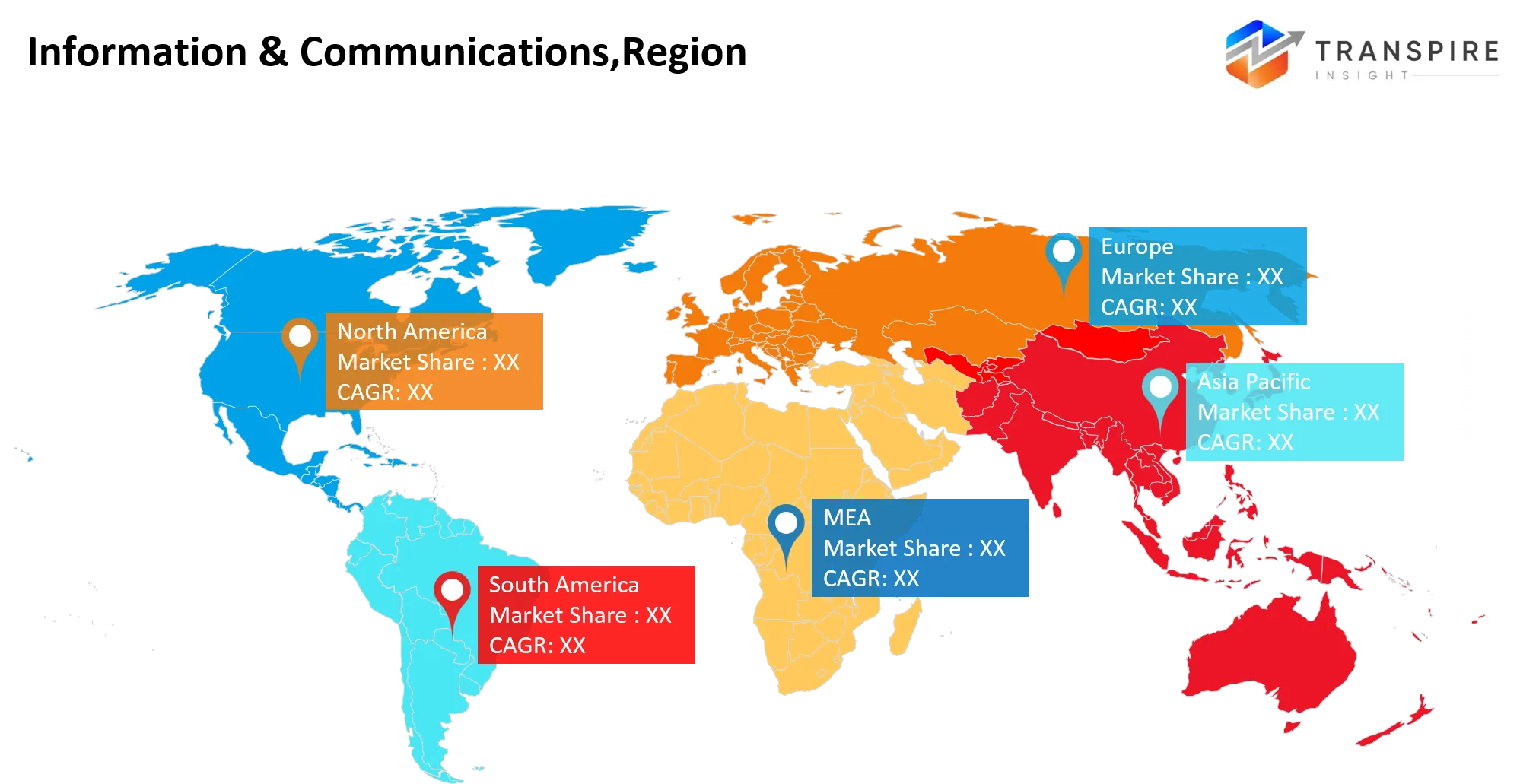
North America holds the largest market share of 37.20%, which is enabled by the presence of well-established capital markets, corporate governance systems, and regulatory requirements. Large-scale companies and financial institutions generate demand for independent audits of finances, compliance, technology, and risks on a continual basis. Besides, the region offers a good ecosystem of professional service companies, cloud platforms, and advanced analytics providers. Continuous investments in AI governance and automation of audit processes lead to rising demands for specialised assurance services.
Europe
Europe holds 30.00% of the total market and is still considered to be an important one since organisations act under strict reporting, governance, sustainability, privacy, and compliance requirements. In comparison with North America, the demand is driven by complex regulations and the need for control documentation in cross-border operations. A wide range of manufacturing companies, financial organisations, the government sector, and multinational organisations ensures recurring demand for auditing services.
In February 2025, the European Commission introduced the Omnibus Package that aims to make changes to the sustainability reporting requirements, thus creating ongoing responsibilities for organisations and assurance providers regarding sustainability reporting.
Asia-Pacific
Asia-Pacific holds a share of 22.00% and is the most rapidly growing region with a CAGR of 6.30%. Due to the high level of digital transformation, growth of business operations, investments in technologies, as well as more stringent governance standards, the demand for audit and assurance services will increase. Businesses are using cloud-based systems and processes powered by artificial intelligence, thus creating a demand for technology risk management and controls.
In August 2025, KPMG Australia announced an increase in Audit & Assurance revenues for FY25 due to investments in AI technologies and ESG assurance.
Who are the Key Players in the Auditing Services Market and how do they compete?
The competition in the worldwide auditing service industry is driven by the professional-services networks that integrate traditional auditing services with technology, consulting, tax, risk management, and sector knowledge. , Deloitte, PwC, EY, and KPMG are developing digital technologies and AI-based assurance services while retaining human analysis and professional judgment. Thus, competition is moving from the execution of the fundamental audit procedures to the scope of data collection, technology capabilities, specialised assurance, customer experience, and emerging risks management. Deloitte is using AI-based audit processes in the course of Omnia development and additional controls and assurance capabilities. The key differentiation points here include scale and technology integration. The firm's expansion strategy relies on the use of intelligent agents in audit and risk management processes. PwC focuses on the development of digital audit services, including such products as Data PRO, Acquisition Hub, and Assurance for AI. Here, the firm is paying attention to efficient data preparation and AI system trust-building. KPMG continues developing Clara with intelligent agents and AI Assurance services.
Auditing Services Market companies
- Deloitte
- PwC
- EY
- KPMG
- BDO
- Grant Thornton
- RSM
- Baker Tilly
- Crowe
- Forvis Mazars
- Moore Global
- Nexia International
- CLA
- EisnerAmper
- Wipfli
Recent Development News
In April 2026, EY unveiled the deployment of agentic AI on an enterprise-wide scale within the context of Assurance. The strategy involves incorporating the use of AI within its audit technologies and also delivering new assurance services using AI.
In June 2025, PwC introduced Assurance for AI. This was aimed at offering independent assurance and associated services for AI, particularly concerning governance, transparency, and responsible operation.
What Strategic Insights Define the Future of the Auditing Services Market?
The future of the international auditing services market will be based on the use of technology for providing continuous and risk-based assurance, not periodic audits. Future auditing companies will be more likely to use a combination of professional judgment with the use of AI, big data, analytics, cloud platforms, and other technologies in order to analyse large volumes of data and detect exceptions. However, one hidden risk will be associated with the quick adoption of new technologies in case of unreliable data, lack of AI governance, and the lack of adequate skills among employees of organisations. On the other hand, it will be an emerging opportunity for AI assurance, model risk assessment, cybersecurity, and technology governance services. Firms may also grow through remote and continuous audits in quickly digitising regions. As a strategy, firms should invest in secure platforms using AI, develop multidisciplinary talent, offer industry-specific assurance services, and control human involvement in automation.
Type
- External Audit
- Internal Audit
- Compliance Audit
- IT Audit
- Environmental Audit
- Social & Sustainability Audit
- Forensic Audit
- Operational Audit
Service
- Financial Audit
- Operational Audit
- Advisory & Consulting
- Investigation Audit
- Information-System Audit
- Risk Assurance
- Tax Assurance
- Others
End User
- BFSI
- Government
- Manufacturing
- Healthcare
- Retail & Consumer
- IT & Communications
- Energy & Utilities
- Others
Delivery Mode
- In-House
- Outsourced
- Co-Sourced
- Remote Audit
- Continuous Audit
- Hybrid Audit
- Technology-Assisted
- Others
Organization Size
- Large Enterprises
- Medium Enterprises
- Small Enterprises
- Public Companies
- Private Companies
- Government Organizations
- Nonprofits
- Others
Frequently Asked Questions
Find quick answers to common questions.
The auditing services market size was valued at USD 233.95 Billion in 2025 and is poised to reach USD 333.61 Billion by 2033, expanding at a 4.58% CAGR.
Key segments for the auditing services market are Type (External Audit, Internal Audit, Compliance Audit, IT Audit, Environmental Audit, Social & Sustainability Audit, Forensic Audit, Operational Audit); Service (Financial Audit, Operational Audit, Advisory & Consulting, Investigation Audit, Information-System Audit, Risk Assurance, Tax Assurance, Others); End User (BFSI, Government, Manufacturing, Healthcare, Retail & Consumer, IT & Communications, Energy & Utilities, Others); Delivery Mode (In-House, Outsourced, Co-Sourced, Remote Audit, Continuous Audit, Hybrid Audit, Technology-Assisted, Others); Organization Size (Large Enterprises, Medium Enterprises, Small Enterprises, Public Companies, Private Companies, Government Organizations, Nonprofits, Others)
Growth is primarily driven by increased financial complexities, increased risk and compliance management needs, the digital revolution, cybersecurity issues, and increased use of artificial intelligence and data analytics in audit services.
The market is led by major manufacturers including Deloitte, PwC, EY, KPMG, BDO, Grant Thornton, RSM, Baker Tilly, Crowe, Forvis Mazars, Moore Global, Nexia International, CLA, EisnerAmper, and Wipfli
The auditing services market share dynamics will be impacted by North America, as it has 37.20% of the market share, thanks to the strict regulatory requirements, the existence of prominent auditing service providers, a developed financial infrastructure, and demand for risk management services.
Opportunities in the market for auditing services lie in increasing demand for digital and IT auditing, AI-driven auditing, risk and compliance services, cybersecurity auditing, ESG and sustainability assurance, and outsourcing of auditing services.
- Deloitte
- PwC
- EY
- KPMG
- BDO
- Grant Thornton
- RSM
- Baker Tilly
- Crowe
- Forvis Mazars
- Moore Global
- Nexia International
- CLA
- EisnerAmper
- Wipfli
About the Authors

Mayur Shinde
I am Mayur Shinde, a Senior Research Analyst at Transpire Insight, specializing in the Automotive & Transportation and Information & Communication Technology (ICT) Industry. My work focuses on analyzing emerging market trends, technological advancements, competitive landscapes, and industry developments to deliver accurate, data-driven insights. I am passionate about transforming complex market information into clear, actionable content that helps businesses, professionals, and decision-makers stay informed and make confident strategic decisions.

Chakradhar Khansole
Chakradhar serves as the Research Director at Transpire Insight, bringing over 8 years of experience in technology, innovation, and strategic market intelligence. He specializes in transforming complex market data into actionable business insights that enable organizations to make informed, growth-oriented decisions. Recognized for his strategic vision and analytical expertise, Chakradhar leads high-impact research initiatives, delivering comprehensive market assessments, competitive intelligence, and forward-looking industry analysis.
Recently Published Reports
-
Apr 2026
3D Optical Profiler Market
3D Optical Profiler Market Size, Share & Analysis Report By Type (Desktop 3D Optical Profiler, and Portable 3D Optical Profiler), By Technology (Confocal Technology, and White Light Interference), By End-Use Industry (Manufacturing, Research Institutions, Automotive, Aerospace and Defense, Medical Devices, and Other), and Geography (North America, Europe, Asia-Pacific, Middle East and Africa, South and Central America), 2021 - 2031
-
Apr 2026
Depth Sensor Market
Depth Sensor Market Size, Share & Analysis Report By Type (Infrared Depth Sensors, Time-of-Flight (ToF) Sensors, Stereo Vision Sensors, Structured Light Sensors, Ultrasonic Depth Sensors), By Application (Automotive, Robotics, Gaming, Consumer Electronics, Industrial Automation, Healthcare, Security & Surveillance, Others), By End Users (Automotive Manufacturers, Consumer Electronics Companies, Healthcare Providers, Industrial Companies, Security Agencies, Gaming Companies, Robotics Companies, Others), and Geography (North America, Europe, Asia-Pacific, Middle East and Africa, South and Central America), 2021 – 2031
-
Apr 2026
Digital Manufacturing Market
Digital Manufacturing Market Size, Share & Analysis Report By Component (Hardware, Software, and Services), By Technology (Robotics, 3D Printing, Internet of Things (IoT), and Others), By Application (Automotive and Transportation, Aerospace and Defense, Consumer Electronics, Industrial Machinery, and Others), By Process Type (Computer-Based Designing, Computer-Based Simulation, Computer 3D Visualization, Analytics, and Others), and Geography (North America, Europe, Asia-Pacific, Middle East and Africa, South and Central America), 2021 – 2031
-
Apr 2026
Digital Visa Services Market
Digital Visa Services Market Size, Share & Analysis Report By Type (Individual Travelers, Group Travelers), By Application (Tourism, Business Travel, Others), and Geography (North America, Europe, Asia-Pacific, Middle East and Africa, South and Central America), 2021 – 2031