
Asia Pacific Flavored and Functional Water Market Size & Forecast:
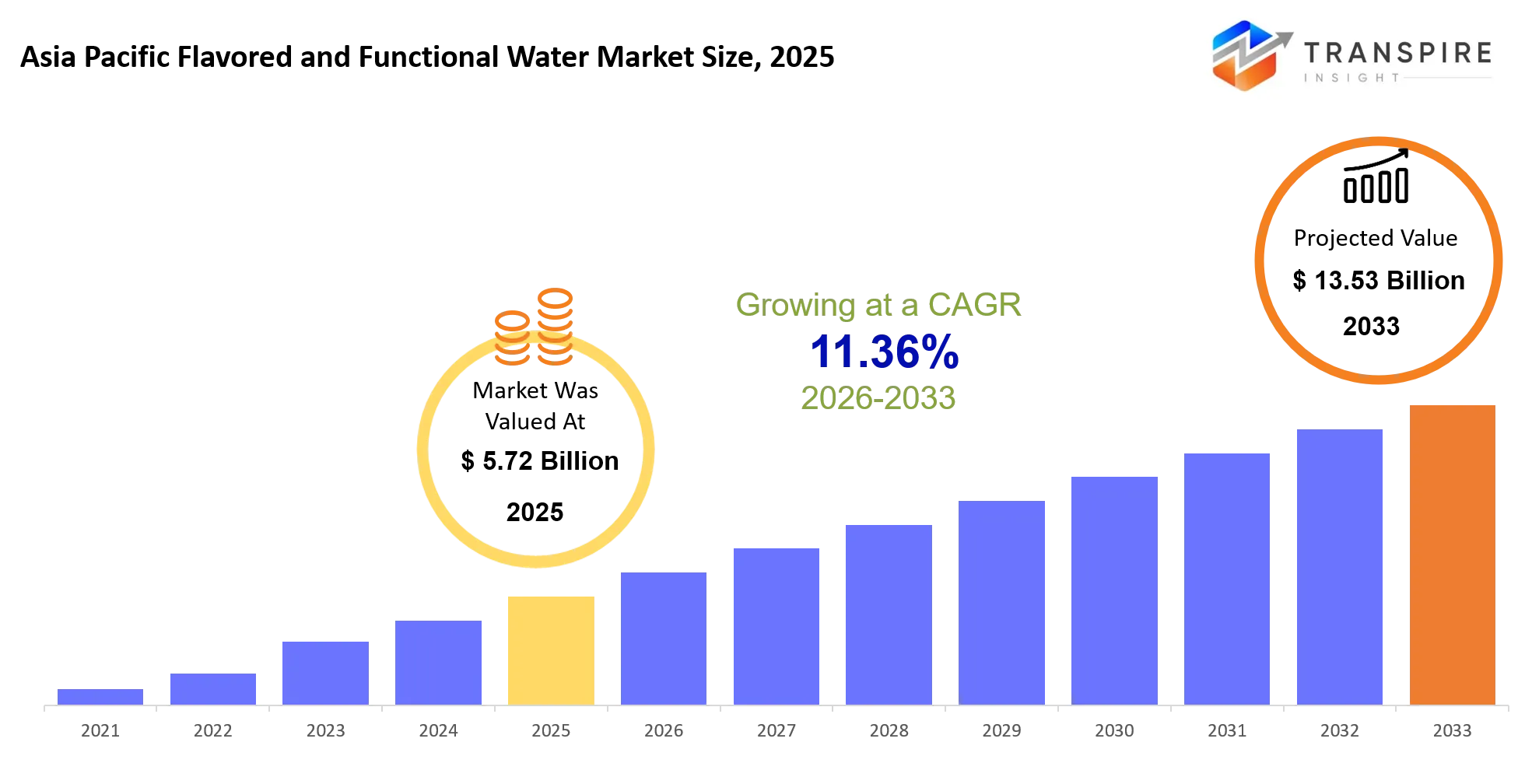
- Asia Pacific Flavored and Functional Water Market Size 2025: USD 5.72 Billion
- Asia Pacific Flavored and Functional Water Market Size 2033: USD 13.53 Billion
- Asia Pacific Flavored and Functional Water Market CAGR: 11.36%
- Asia Pacific Flavored and Functional Water Market Segments: By Product Type (Vitamin-infused Water, Flavored Sparkling Water, Electrolyte Water, Protein Water, Others); By Distribution Channel (Supermarkets, Online Retail, Convenience Stores, Others); By End User (Fitness Consumers, Millennials, Athletes, Others)
To learn more about this report,  Download Free Sample Report
Asia Pacific Flavored and Functional Water Market Summary
The Asia Pacific Flavored and Functional Water Market was valued at USD 5.72 Billion in 2025. It is forecast to reach USD 13.53 Billion by 2033. That is a CAGR of 11.36% over the period.
The Asia Pacific flavored and functional water market kinda serves people who want hydration but also, you know, extra health perks. You’ll notice products with vitamins, minerals, electrolytes, antioxidants, proteins, and botanical extracts. It’s kind of like an other option to carbonated soft drinks and sweetened juices but it’s also connected to wellness goals—energy management, hydration, immunity support, and digestive health— in a more rounded way.
Over the last five years , though, the market has been shifting in a more structural way , moving away from standard flavored water toward multifunctional beverages that blend hydration with nutrition plus those wellness claims. This shift has been helped by regulatory frameworks in places like Japan, Australia, China, and South Korea , where labeling rules let companies use approved functional ingredients. Then COVID 19 came in and, I mean, that sped up the interest in immunity-focused and health-oriented drinks, which changed how consumers buy things. And as manufacturers keep launching products that target specific benefits, offer premium formulations, and use clean-label ingredients , consumers are more okay paying higher prices. That leads to stronger revenue streams and also nudges wider distribution through retail and e-commerce across the region.
Key Market Insights
- East Asia kinda rules the Asia Pacific Flavored and Functional Water Market overall, with a 42% market share in 2025, mainly driven by Japan , and China.
- South Asia on the other hand is moving the quickest, expected to keep growing through 2033, backed by urban retail expansion and more people reaching for premium drinks, like really leaning into that idea.
- On the product side, vitamin-enriched functional water is out in front, holding roughly 35% market share, mostly because wellness messaging is everywhere.
- Electrolyte-enhanced water sits as the second-largest segment, and it benefits from sports hydration needs, plus that active lifestyle consumption trend , that is hard to ignore.
- Protein-infused and botanical-functional water is the fastest-growing category, projected to grow faster than the broader industry pace through 2033.
- When it comes to sales, retail supermarkets and hypermarkets together bring in almost 45% of total sales, and they keep strong shelf presence for premium beverage brands.
- E-commerce is the fastest-growing sales channel, supported by subscription models and those direct-to-consumer beverage options that feel more convenient.
- For end users, health-conscious adults are leading, with more than 50% of flavored and functional water consumption.
- And the customer group growing the fastest is Millennials and Gen Z, they tend to favor low-sugar, multifunctional hydration products.
- All this is still being reshaped by product innovation, premium formulations, and strategic expansion from PepsiCo , Coca-Cola, Nestlé, Suntory, and Nongfu Spring.
What are the Key Drivers, Restraints, and Opportunities in the Asia Pacific Flavored and Functional Water Market?
The main driver of market expansion is basically the move away from high sugar drinks, toward products that show measurable functional advantages. Governments across Asia Pacific have taken stronger steps on nutrition labeling rules and they keep pushing sugar-reduction plans, so beverage producers feel encouraged to tweak their lineups. This kind of shift has made things feel more supportive for water brands that are vitamin infused, electrolyte enhanced, or even positioned as immunity supporting. And as shoppers increasingly see drinks as part of their everyday wellness routine, manufacturers end up making more money using premium pricing plus value added formulations.
The biggest restraint is still the rather high cost of producing these functional products. Functional ingredients, specialized blends, and premium packaging can get expensive fast. Vitamins, botanical extracts, probiotics, and protein isolates for example they need thorough quality checks, plus regulatory compliance. All of those expenses can squeeze affordability, especially in price sensitive markets, and that really becomes a wall for smaller manufacturers. Because ingredient sourcing and regulatory approval procedures cannot be shortened quickly, this pressure keeps holding back wider market reach.
6yOne big opportunity sits in personalized and science backed hydration options. Beverage companies are putting real money into tailored formulas for sports recovery , digestive support , cognitive focus , and metabolic wellness too. Places like India, Indonesia, and Vietnam look pretty promising in a quiet way, partly because the middle class is growing and modern retail is getting built out faster. Some firms will probably do better if they mix functional innovation with digital health ecosystems , and also lean on subscription based distribution models. If they play it right, they might unlock the next step for broad market growth, you know overall momentum.
What Has the Impact of Artificial Intelligence Been on the Asia Pacific Flavored and Functional Water Market?
Artificial intelligence is in a way, now reshaping beverage manufacturing, product development, and even supply chain operations across the flavored and functional water industry. Beverage firms are starting to use AI- powered analytics to sort through consumer likes, spotlight flavor trends , and make new product cycles move quicker. Machine learning models look at purchasing patterns across both retail and e-commerce channels, and this in turn helps manufacturers tune inventory planning as well as promotional tactics.
On top of that, advanced digital tools are backing production efficiency, more or less all the time. Smart manufacturing setups track ingredient utilization, filling steps, packaging performance, and quality signals in near real time. Predictive maintenance algorithms spot potential equipment troubles before they actually fail, so downtime drops and plant output tends to rise. A few beverage manufacturers are also rolling out digital twin technologies, to basically imitate production flows and improve resource use, which also helps with process tuning. With these systems, waste is cut down , packaging gets used more effectively, and day to day costs can be lowered.
Meanwhile, AI driven demand forecasting has made supply chain visibility sharper. That means companies can respond faster to seasonal swings in demand and to different regional consumption patterns. As a result, products stay available more consistently, and retailer relations often feel stronger. Still, there is a notable snag: the expense of bringing AI platforms into older, legacy manufacturing sites. Smaller beverage producers usually don’t have enough data infrastructure or the hands on technical know-how needed to fully benefit from advanced analytics, and that makes adoption slower across parts of the market.
Key Market Trends
- Since 2021, water-that-feels-vitamin - enriched launches have grown, like beverage brands sorta reposition hydration around wellness perks, and yeah it’s been noticeable.
- Functional ingredients—electrolytes, collagen, probiotics, and botanicals—have moved out of the “only niche” vibe into mainstream shelves, you know the kind.
- In Japan, manufacturers rolled out more water products with functional labels between 2024 and 2026, and that helped push the premium hydration space harder.
- After 2020 , e-commerce beverage sales started taking more market share, so subscription purchasing and direct-to-consumer routes became more common, in practice.
- At the same time manufacturers cut the sugar levels while fine tuning flavor systems, to match what people are expecting across city areas.
- Regional companies are also leaning on local fruits, herbs, and botanical ingredients, as a way to stand apart from global rivals who tend to look more similar.
- Premium packaging—sustainable materials, and lighter bottles—has shown up more often across major beverage lines. Investments in manufacturing automation have improved operational flexibility, and made it easier to launch new products faster.
- Big beverage players kept expanding “science-backed” hydration ranges, aiming at sports recovery, immunity support, daily wellness.
- And since 2023, cross category innovation has made the lines blurry between bottled water, sports drinks, and nutritional beverages, kind of all blending together.
Asia Pacific Flavored and Functional Water Market Segmentation
By Product Type
Vitamin infused Water kinda supports hydration with extra nutrients that help keep daily wellness steady and the body functioning in a balanced way. There is strong demand especially among city consumers who want a simple drink, but with extra health backing. This portion still holds a big share in functional beverages across Asia Pacific, partly because more working people are leaning toward preventive health routines. Product development keeps moving toward cleaner labels, less sugar overall, and ingredients that stay consistent in quality, like not shifting too much batch to batch.
Flavored Sparkling Water keeps getting adopted, mostly since it has that refreshing taste, plus a reduced sugar formula that people tend to like. Electrolyte Water fits active hydration well, because it helps restore mineral balance during workouts and also in hot climate conditions, so it shows up a lot in sports and outdoor lifestyles. Protein Water delivers light nutrition for fitness minded consumption and also for post workout recovery needs. Other options include herbal blends, botanical infusions, and specialty functional formulas that hit those more niche wellness needs within urban retail shelves.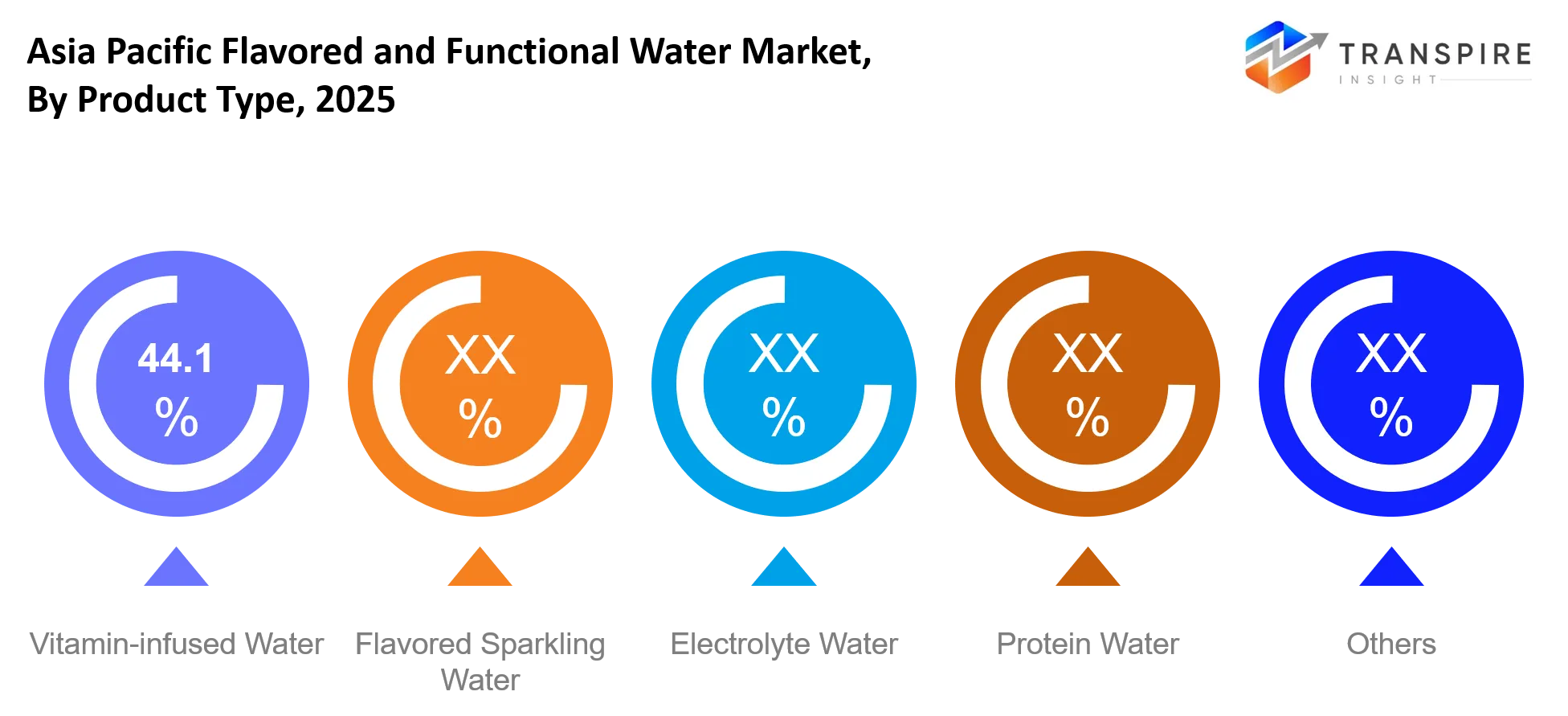
To learn more about this report, Download Free Sample Report
By Distribution Channel
Supermarkets are still pretty much the main distribution way, thanks to broad product visibility ,and because consumers can get there without much hassle. How items sit on shelves, in-store promos, and those bundled pricing schemes usually help keep sales strong across the big retail chains. This route also brings in a big slice of overall beverage sales, because there’s a lot of everyday foot traffic, and people tend to trust the physical format more. Also bulk buying kind of locks in a steady product rotation, mainly in city areas.
Online Retail keeps growing ,since digital marketplaces make it easier to compare products, manage subscription plans, and get doorstep delivery. A lot of the momentum comes from e-commerce taking more ground in major urban areas across Asia Pacific and from customers liking direct-to-consumer beverage brands more and more. Convenience Stores meanwhile cover the quick-need moments, mostly in crowded spots and city centers, with constant footfall ,especially when it comes to single-serve packaging. Other options also show up, like vending machines, gyms, and specialty health stores ,that help maintain focused availability in certain locations.
By End User
Fitness Consumers are a pretty major demand base, mainly because more people seem to want hydration products that really back up active lifestyles and exercise recovery, you know. When consumption becomes regular like that, product penetration in city fitness markets tends to get stronger, especially around gyms, and wellness centers. People in this segment often go for electrolyte plus protein based drinks, like for performance help, and also to keep hydration balance steady during workouts.
Millennials are a big reason adoption stays high, they tend to prefer low sugar options and “functional beverage” type choices that match their day to day routine. There is also strong exposure to health trends and digital marketing, which boosts brand engagement ,and usually leads to repeat purchases. Athletes often lean on electrolyte and protein hydration products for endurance, recovery support, and general performance maintenance across training cycles. Other groups too, like office workers , students, and health-conscious individuals. They usually prefer functional hydration rather than traditional sugary drinks, and that supports a consistent baseline demand across retail channels.
What are the Key Use Cases Driving the Asia Pacific Flavored and Functional Water Market?
The biggest use case still feels like daily hydration, but with functional benefits tacked on it. People are getting more likely to pick vitamin-rich and electrolyte based water drinks as a stand in for the old soft drinks. This kind of use case drives the highest demand too because it sort of blends convenience, water replenishment, and wellness value into one single beverage.
Another use case keeps expanding in the sports and fitness lane. Athletes, people going to the gym, and generally more active consumers are choosing electrolyte enhanced and protein fortified water products for recovery, and also for performance support. At the same time, corporate professionals tend to lean on functional hydration options meant for energy boosting and cognitive wellness during those long work hours.
More new and emerging applications include digestive-support water with probiotics, plus botanical infused beverages aimed at relaxation, and stress management. There are also personalized hydration products that connect to digital wellness platforms, which is getting a lot of attention lately. Even if these areas are still niche, they could turn into major growth pockets across the forecast window as manufacturers keep refining targeted functional formulations.
|
Report Metrics |
Details |
|
Market size value in 2025 |
USD 5.72 Billion |
|
Market size value in 2026 |
USD 6.37 Billion |
|
Revenue forecast in 2033 |
USD 13.53 Billion |
|
Growth rate |
CAGR of 11.36% from 2026 to 2033 |
|
Base year |
2025 |
|
Historical data |
2021 - 2024 |
|
Forecast period |
2026 - 2033 |
|
Report coverage |
Revenue forecast, competitive landscape, growth factors, and trends |
|
Regional scope |
Asia Pacific (India, China, Japan, Australia, South Korea, Rest of Asia Pacific) |
|
Key company profiled |
PepsiCo, Coca-Cola, Nestlé, Danone, Suntory, Nongfu Spring, Tata Consumer Products, Bisleri, Hint Water, Talking Rain, Keurig Dr Pepper, Asahi Group, Unilever, Wahaha, Britvic |
|
Customization scope |
Free report customization (country, regional & segment scope). Avail customized purchase options to meet your exact research needs. |
|
Report Segmentation |
By Product Type (Vitamin-infused Water, Flavored Sparkling Water, Electrolyte Water, Protein Water, Others); By Distribution Channel (Supermarkets, Online Retail, Convenience Stores, Others); By End User (Fitness Consumers, Millennials, Athletes, Others) |
Which Regions are Driving the Asia Pacific Flavored and Functional Water Market Growth?
East Asia seems to lead the market kinda mostly because its beverage industry is more advanced, and there are strong rules around functional foods , plus people already really accept health oriented products. Japan still acts as a big part of that story, with well known functional beverage categories and then those premium hydration innovations. China kind of supports the growth in a practical way, thanks to its huge manufacturing capability, and also wide retail distribution, so products do not just sit. And overall, the region gets to rely on a pretty mature set up of ingredient suppliers, research institutions, and beverage makers.
Oceania comes in as the second-largest contributor, but it doesn’t match East Asia exactly . It leans more toward premium wellness drinks, and also clean-label formulations that sound simple and clear. Australia has kept demand steady for low sugar hydration products , and for functional beverages as well, helped by strong retail coverage. People there actively look for transparent ingredient labeling, and for health claims that feel evidence based, not just marketing talk. That kind of consistency translates into reliable revenue chances for both local and international brands, over time.
South Asia is the fastest growing regional market through 2033 . Rapid urbanization, plus newer retail expansion, plus easier access to premium beverages, all together shifted how people buy in India and around neighboring countries. Also, investments in distribution networks, cold chain infrastructure, and e-commerce platforms made products show up more often and more conveniently. For investors and new entrants, South Asia feels appealing because it has a very large consumer base, and the per capita consumption of functional beverages is still relatively low.
Who are the Key Players in the Asia Pacific Flavored and Functional Water Market and How Do They Compete?
The competition stays somewhat consolidated, with multinational beverage players still holding big parts of the market, while regional brands keep pushing back through localized formulations, and pricing tactics that feel more on-the-ground. Here the main drivers are product distinction, ingredient innovation, trust in the brand, and distribution muscle, not just one thing. Also companies seem to switch to wellness positioning more often, instead of leaning on the classic beverage branding, which is kind of the whole point lately.
PepsiCo tends to center on hydration that does multiple jobs, and it uses its huge regional distribution channels. It’s still broadening its functional beverage lineup, and it’s putting money into digital manufacturing projects, not only factories but the systems around them. Coca-Cola highlights premium hydration brands and functional beverage innovation, but it also leans hard on its big retail presence across Asia Pacific. Suntory, for its part, stands out with functional products that are backed by scientific support, and with strong know how on regulations inside Japan.
Nestlé fights in a slightly different lane, using premium bottled water brands, and nutrition oriented hydration solutions. Nongfu Spring, meanwhile, benefits from deep reach at home and it keeps doing localized product development, step by step. Overall these firms keep expanding through product innovation, manufacturing investments, strategic partnerships, and regional market entry moves that keep sharpening their competitive position.
Company List
- PepsiCo
- Coca-Cola
- Nestlé
- Danone
- Suntory
- Nongfu Spring
- Tata Consumer Products
- Bisleri
- Hint Water
- Talking Rain
- Keurig Dr Pepper
- Asahi Group
- Unilever
- Wahaha
- Britvic
Recent Development News
In May 2026, PepsiCo launched its 2026 Asia Pacific Greenhouse Program Impact Edition. The initiative supports scaling sustainability and innovation solutions across the company's regional operations, strengthening long-term beverage production capabilities.https://www.pepsico.com
In May 2026, PepsiCo launched Propel Clear Protein, a functional hydration product combining protein, fiber, and electrolytes. The launch highlights growing investment in multifunctional hydration products that bridge nutrition and beverage categories.https://www.pepsico.com
In October 2025, Suntory Beverage & Food introduced Tokusui, the first water-category product under its Tokucha functional beverage brand. The launch expanded Suntory's presence in functional hydration and strengthened competition in premium health-focused water products.https://www.suntory.co.jp
What Strategic Insights Define the Future of the Asia Pacific Flavored and Functional Water Market?
The market is sort of drifting toward very specialized hydration products that blend wellness benefits, nutritional functionality, and kinda premium consumer experiences. The main push behind this shift seems to be the overlap between health-minded buying habits and then all the advances in ingredient science and personalized nutrition, like it’s all coming together. In the next five to seven years, manufacturers will likely compete more on measurable functional results, not just on a variety of flavors alone or that same old approach.
There’s also a less obvious risk running in the background—costs may keep climbing for specialty ingredients, vitamins, botanical extracts, and sustainable packaging materials. If supplies get disrupted, or raw material prices jump , margins could get squeezed and product pricing might become less friendly for developing markets. At the same time though, personalized hydration solutions that connect to digital health platforms are becoming a real opportunity. Businesses that merge functional beverages with wellness ecosystems can create tighter consumer loyalty and more repeat purchases over time, plus that steadier recurring revenue. So market players should really focus on evidence-based formulations, build stronger regional ingredient sourcing networks, and grow digital engagement approaches , in order to lock in long term advantage.
Asia Pacific Flavored and Functional Water Market Report Segmentation
By Product Type
- Vitamin-infused Water
- Flavored Sparkling Water
- Electrolyte Water
- Protein Water
- Others
By Distribution Channel
- Supermarkets
- Online Retail
- Convenience Stores
- Others
By End User
- Fitness Consumers
- Millennials
- Athletes
- Others
Frequently Asked Questions
Find quick answers to common questions.
The Expected Asia Pacific Flavored and Functional Water Market size for the market will be USD 13.53 Billion in 2033.
Key Segments for the Asia Pacific Flavored and Functional Water Market are By Product Type (Vitamin-infused Water, Flavored Sparkling Water, Electrolyte Water, Protein Water, Others); By Distribution Channel (Supermarkets, Online Retail, Convenience Stores, Others); By End User (Fitness Consumers, Millennials, Athletes, Others)
Major Asia Pacific Flavored and Functional Water Market Players are PepsiCo, Coca-Cola, Nestlé, Danone, Suntory, Nongfu Spring, Tata Consumer Products, Bisleri, Hint Water, Talking Rain, Keurig Dr Pepper, Asahi Group, Unilever, Wahaha, Britvic.
The Current Asia Pacific Flavored and Functional Water Market size is USD 5.72 Billion in 2025.
The Asia Pacific Flavored and Functional Water Market CAGR is 11.36% from 2026 to 2033.
- PepsiCo
- Coca-Cola
- Nestlé
- Danone
- Suntory
- Nongfu Spring
- Tata Consumer Products
- Bisleri
- Hint Water
- Talking Rain
- Keurig Dr Pepper
- Asahi Group
- Unilever
- Wahaha
- Britvic
About the Authors

Chetan Dhatrak
I’m Chetan Dhatrak, a Senior Research Analyst at Transpire Insight, specializing in the Consumer Goods, Foods and Beverages industry. I focus on analyzing market trends, consumer behavior, competitive landscapes, and industry developments to deliver accurate, data-driven insights. My research at Transpire Insight is built on credible sources and in-depth analysis, helping businesses and readers better understand market dynamics, emerging opportunities, and evolving consumer preferences. I’m committed to creating reliable, well-researched content that supports informed decision-making and reflects the latest developments in the consumer goods and food & beverage sectors.

Chakradhar Khansole
Chakradhar serves as the Research Director at Transpire Insight, bringing over 8 years of experience in technology, innovation, and strategic market intelligence. He specializes in transforming complex market data into actionable business insights that enable organizations to make informed, growth-oriented decisions. Recognized for his strategic vision and analytical expertise, Chakradhar leads high-impact research initiatives, delivering comprehensive market assessments, competitive intelligence, and forward-looking industry analysis.
Recently Published Reports
-
Apr 2026
Baby Infant Formula Market
Baby Infant Formula Market Size, Share & Analysis Report By ype (Infant Milk, Follow On Milk, Specialty Baby Milk, Growing-Up Milk), By Ingredient (Carbohydrate, Fat, Protein, Minerals, Vitamins, and Others), By Product Form (Powder, Liquid, and Ready-to-feed), By Distribution Channels (Supermarket/Hypermarket, Specialty Store, Pharmacies, Online Retail, and Others), and Geography (North America, Europe, Asia-Pacific, Middle East and Africa, South and Central America), 2021 - 2031
-
Apr 2026
Edible Insects for Animal Feed Market
Edible Insects for Animal Feed Market Size, Share & Analysis Report By Type (Insect Powder, Insect Meal, Insect Bar, Insect Paste, Insect Oil, and Others), By Insect Type (Beetles, Cricket, Caterpillar, Hymenoptera, Orthoptera, Tree Bugs, and Others), By Application (Livestock, Pet Food, and Aquaculture), By Livestock Type (Poultry, Swine, and Others), and Geography (North America, Europe, Asia-Pacific, Middle East and Africa, South and Central America), 2021 - 2031
-
Apr 2026
Food Industry Disinfection and Bacterial Control Market
Food Industry Disinfection and Bacterial Control Market Size, Share & Analysis Report By Type (Chemical Disinfectants, Physical Disinfectants, and Biocides and Antimicrobials), By Application (Food Processing Equipment Surface Disinfection, Food Preparation Areas Surface Disinfection, Storage Areas Surface Disinfection, Anti-microbial Coatings Food Preservation, and Preservative Solutions Food Preservation), By End User (Meat and Poultry Processing, Dairy Processing, Seafood Processing, Bakery and Confectionery, Restaurants and Commercial Kitchens, and Food Service Providers), By Sales Channel (Online, Offline), and Geography (North America, Europe, Asia-Pacific, Middle East and Africa, South and Central America), 2021 - 2031
-
May 2026
Freeze Dried Food Market
Freeze Dried Food Market Size, Share & Analysis Report By Product Type (Fruits, Vegetables, Freeze-Dried Dairy Products, Freeze-Dried Meat and Seafood, Freeze-Dried Pet Food, and Prepared Meal), By Nature (Organic, and Conventional), By Form (Powdered, Granules, and Diced), By End Use (Breakfast Cereals, Dairy Products, Bakery & Confectionery, Nutritional Bars & Supplements, Powdered Beverages, Snacks, and Retail (Household)), and Geography (North America, Europe, Asia-Pacific, Middle East and Africa, South and Central America), 2021 - 2031