

Asia Pacific Canned RTD Cocktails Market Summary
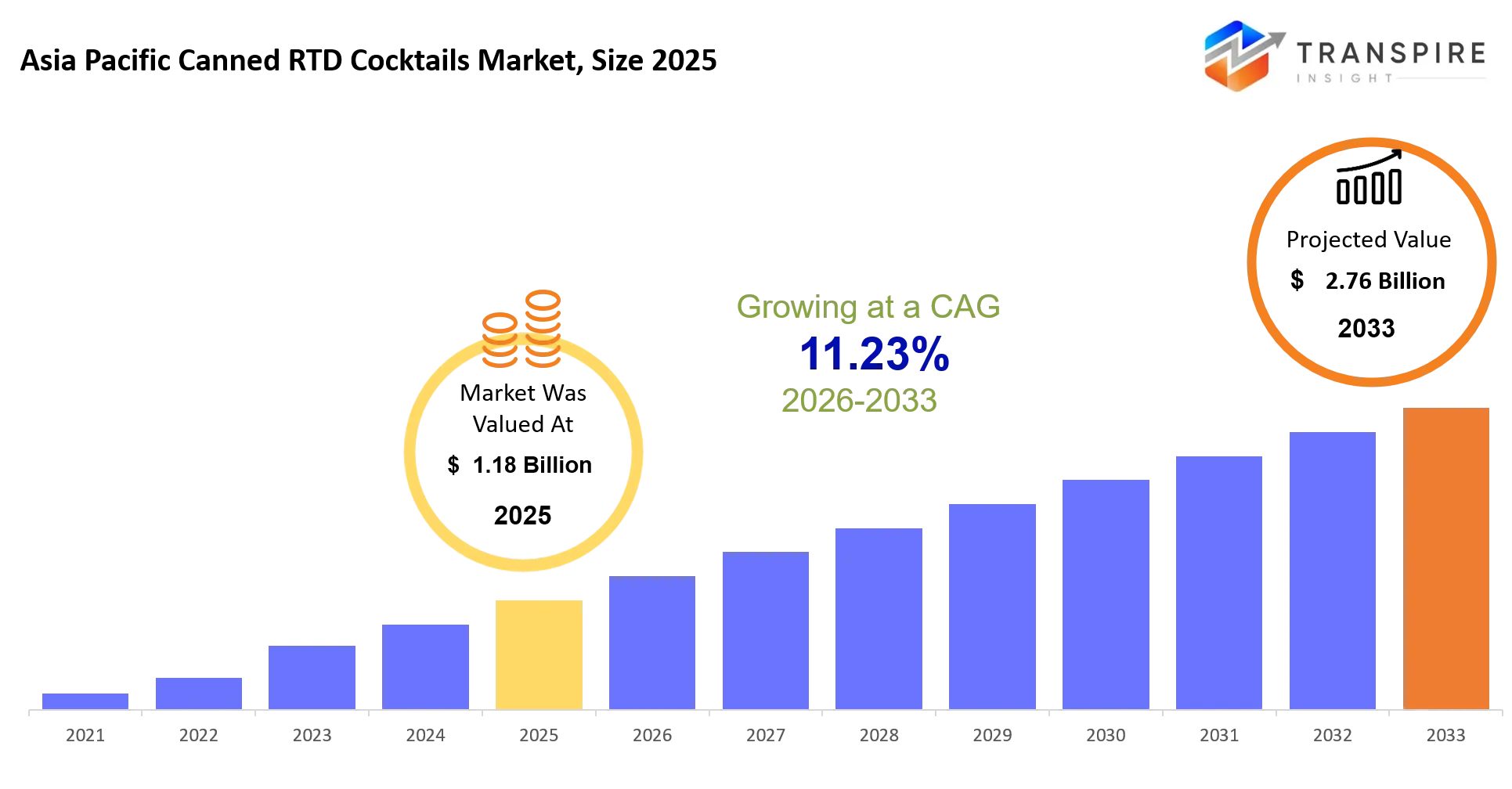
As per Transpire Insight Analysis, the Asia Pacific Canned RTD Cocktails Market size is estimated at USD 1.18 Billion in 2025 and is anticipated to reach USD 2.76 Billion by 2033, growing at a CAGR of 11.23% from 2026 to 2033.
The Asia Pacific Canned RTD Cocktails market mainly caters to folks who want bar-style blended drinks, in a carry-anywhere, ready-to-drink format, without the whole hassle, extra tools, or real hands-on experience that cocktail making usually requires. In a way this whole category became one of those important growth lanes for beverage makers, retailers, convenience stores and yes also hospitality operators, who are seeking premium choices that line up with quick, modern routines and those kinds of outdoor hangout meals and drinks moments.
Over the last 5 years, momentum has shifted away from the more classic spirit-forward styles, and toward premium canned cocktails with natural ingredients, craft-like recipes and a reduced sugar focus. This change really accelerated after the COVID-19 pandemic, which disrupted buying patterns and habits ,so more consumers leaned into off-premise alcohol habits and retail distribution moved faster, particularly through supermarkets and e-commerce paths.
As brands rolled out new flavours and invested in better looking, premium packaging, canned RTD cocktails ended up showing up for broader audiences. That really helped with shelf presence and it also backed stronger average selling prices, plus it created fresh revenue chances across both mature Asia Pacific regions and the newer emerging ones as well.
Asia Pacific Canned RTD Cocktails Market Size & Forecast:
- Asia Pacific Canned RTD Cocktails Market Size 2025: USD 1.18 Billion
- Expected Market Value 2033: USD 2.76 Billion
- Forecast CAGR: 11.23%
- Leading region in 2025: Japan
- Fastest Growing region: India
- Key Profile: Diageo, Bacardi, Suntory Holdings, Asahi Group, Kirin Holdings, Coca-Cola, Pernod Ricard, Brown-Forman, Beam Suntory, Anheuser-Busch InBev, Heineken, Molson Coors, Campari Group, Kirin Brewery, Thai Beverage
Key Market Insights
- Japan kinda dominated the Asia Pacific Canned RTD Cocktails Market in 2025 with around 39% of the market, and it’s backed by those more mature RTD drinking habits and ongoing premium product refreshes.
- India however is expected to move the quickest during 2025–2033 , mostly because urban consumers keep rising, premiumisation is taking hold, and organised retail distribution keeps getting wider.
- On the product side, spirit-based canned cocktails were in front, taking close to 58% in 2025 , which comes through stronger premium positioning plus higher average selling prices.
- Malt-based canned cocktails sit in second place, more or less, because the favourable taxation arrangements help broader retail availability in several Asia Pacific countries.
- Tequila-based canned cocktails are forecast to grow the fastest all the way through 2033 , supported by premium flavour experimentation and younger legal-age consumers who actually want something new.
- When you look at channels, off-trade retail made up about 68% share in 2025. This is pretty much due to supermarkets, convenience stores and e-commerce, all expanding the selection of premium beverages.
- Online retail platforms are projected to keep being the fastest-growing application channel through 2033 as well , supported by digital promotions and direct to consumer alcohol delivery.
- For end users, individual consumers still seem to be in the lead, with about 82% in 2025, which basically points to everyday convenience buying and those at home tasting moments that happen pretty often.
- At the same time, hospitality , and foodservice operators should remain the fastest-growing end user segment through 2033, fueled by premium canned cocktail menus and outdoor entertainment venues.
What are the Key Drivers, Restraints, and Opportunities in the Asia Pacific Canned RTD Cocktails Market?
The main force pushing market growth is kinda premiumisation across alcoholic beverages. People are more and more leaning toward premium ready-to-drink options, they want dependable quality and, well, no prep. That movement sped up once modern retail chains, convenience stores, and digital commerce started stacking premium beverage shelves after the pandemic, it felt like it was everywhere at once. Manufacturers then shifted toward spirit-based recipes, natural ingredients, and some limited edition flavor drops. With higher average selling prices, revenue got a boost while broader distribution helped customers buy again more often, especially across urban markets.
The most noticeable structural obstacle still is fragmented alcohol rules and taxation approaches across Asia Pacific countries. Approvals for products, labelling expectations, and excise setups vary a lot, so it becomes harder to roll out the same thing quickly across the whole region. Planning production gets tricky too, because companies often need country-specific packaging and specific formulations. From the Transpire Insight review of regional procurement notices and launch timing, supply chain concentration stays the key execution risk. Ingredient sourcing, plus aluminium can availability, can also trigger cost swings, which means delays for launches and less momentum for revenue growth.
One big chance is in premium low-alcohol , and functional ready to drink cocktails with botanical ingredients, natural flavours, and lower sugar recipes. If you look at it more closely , investments in digital retail setup plus cold chain logistics across India , Southeast Asia and Australia, really do make for easier launch conditions. Businesses that mix local taste profiles with premium branding, and they use data driven consumer insights too, are probably positioned to grab the next phase of regional market growth .
What Has the Impact of Artificial Intelligence Been on the Asia Pacific Canned RTD Cocktails Market?
Artificial intelligence is kinda reshaping beverage production and commercial planning across the Asia Pacific canned RTD cocktail market , and it’s doing it fast. More manufacturers now deploy AI-driven quality inspection tools, those systems watch over filling precision, carbonation levels, packaging soundness, and label compliance as the whole thing runs through automated lines. With digital monitoring in the mix, they end up cutting down product waste and keeping the output steadier even when they’re pushing huge production batches .
Machine learning, on top of that, really does help a lot with demand forecasting. It sort of pulls together retail performance and seasonal shifts, promotional push, and those local consumption habits across separate regions, in a way that feels pretty practical. Producers then take those insights to tune their production timing and inventory distribution before the busiest windows, so you get fewer out-of-stock moments, and also less money stuck in unnecessary warehousing. Besides that, AI-enabled supply chain planning boosts procurement decisions for aluminium cans, spirits, flavour ingredients, and the packaging inputs as well, which helps manufacturers react quicker when market conditions start moving around.
On the operations side, predictive maintenance is improving efficiency too, because it can spot equipment failure signals before it actually stops production. Automated scheduling plus warehouse optimisation shortens lead times and supports higher plant utilisation. Still though, AI rollouts aren’t totally smooth. Integration costs stay high, especially for small and medium beverage producers, while retail data is pretty fragmented across the many Asia Pacific markets, and that reduces forecasting quality. Then there’s uneven digital infrastructure, and regulatory reporting isn’t the same everywhere, so advanced analytics can lose impact in cross-border operations, sometimes quite noticeably.
Key Market Trends
- From 2021 to 2025, premium spirit based canned cocktails kinda quietly swapped out the value focused options across bigger markets. This ended up lifting average selling prices, and improving retailer margins , pretty consistently.
- In 2024–2025 Japanese manufacturers pushed harder into premium flavor portfolios, which helped open up more export opportunities around Southeast Asia.
- Aluminium packaging suppliers also put money into extra production capacity after 2022, to keep up with growing beverage can needs across Asia Pacific.
- Digital alcohol retail platforms actually saw stronger premium beverage sales since 2021, and that kind of nudged producers toward online exclusive variants like they were already prepared to test things out.
- From 2023 to 2025, a lot of manufacturers began putting out lower sugar and botanical ingredient based formulations, basically to widen their premium ready to drink range without easing up.
- Suntory Holdings and Asahi Group Holdings also ramped up premium RTD launches, leaning on regional fruit flavors, and throwing in limited edition seasonal releases here and there.
- At the same time, regional beverage companies shifted more to automated production lines from 2022 onward, which improved packaging efficiency, raised product consistency, and gave manufacturing more room to maneuver.
- After 2023 , premium tequila based canned cocktails showed up as one of the quickest growing categories, pulled along by younger adult tastes that seem to hold steady.
- And during 2024–2025, beverage producers formed strategic partnerships with convenience retail chains , which expanded shelf availability across India, South Korea, and parts of Southeast Asia.
Asia Pacific Canned RTD Cocktails Market Segmentation
By Product Type :
Vodka cocktails keep landing the biggest slice of revenue, mostly because of the clean flavour look, it goes pretty well with fruit, herbs, and those sparkling add-ins. Premium vodka recipes, and also the lower-sugar type, still help retail sales in both developed and emerging economies. Rum-based cocktails stay pretty solid, driven by tropical flavour notes and seasonal releases, the kind that fit holiday drinking and outside hangs. Whiskey-based cocktails are also getting more attention lately, since premium canned drinks let people enjoy classic cocktail vibes without any real prep.
Gin-based cocktails keep moving forward, with botanical ingredients plus citrus pairings, and those craft-leaning recipes that basically justify the higher price. Tequila cocktails, though, feel like the fastest-growing group, because premium spirits are getting more accepted among younger legal-age consumers across multiple regional markets. Then there are other options, like wine-based mixes and mixed spirit cocktails , which add extra variety and help with innovation and shelf stand-out. In general, continuous flavour tuning and premium packaging should keep product diversification pretty central as the category grows more and more.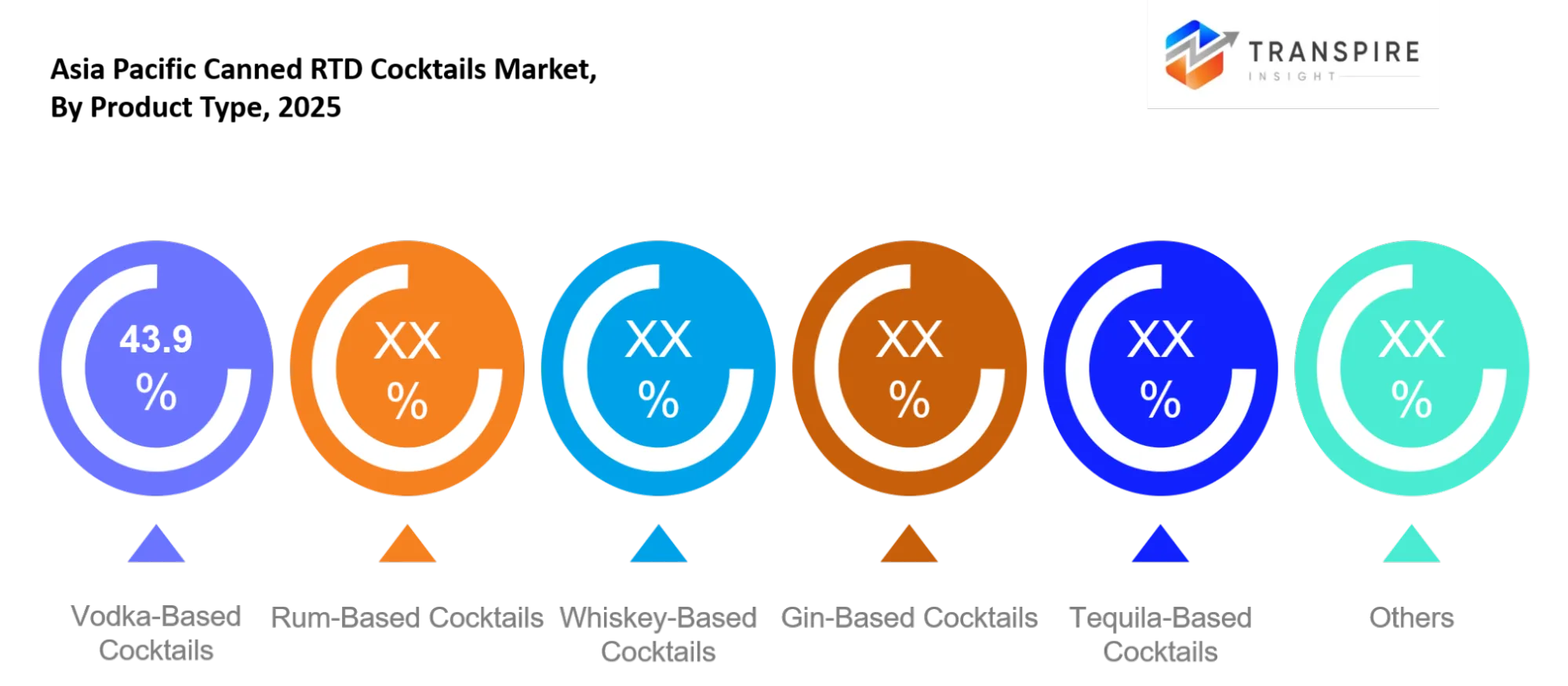
By Flavor :
Citrus flavours take up a leading share, mostly because the refreshing taste profile still works for year round use, and for many kinds of drinking moments. Lemon, lime, orange and grapefruit pairings keep showing up in new product releases across supermarkets and convenience retail channels, pretty consistently. Berry flavours keep pretty steady demand through strawberry, raspberry , blueberry, and mixed fruit combinations , which tends to appeal to premium consumers who want a more balanced sweetness. Tropical flavours also keep stretching out, as mango pineapple passion fruit and coconut versions keep getting noticed, especially in warmer climates.
Cola flavoured cocktails stay relevant via spirit and cola combinations that feel familiar and get broad consumer acceptance. Herbal flavours keep building the premium angle, by bringing in botanical extracts plus natural ingredients that help make a clearer product distinction. Other flavour groups, including seasonal and limited edition combinations, nudge repeat purchases and also help keep brand visibility up. Even with all that, ongoing flavour innovation will stay one of the key drivers behind product development and how the items perform on the retail shelf.
By Distribution Channel :
Supermarkets and hypermarkets keep generating the highest sales, mainly because wide-ranging product assortment and promotional campaigns really help the products show up more often , and more clearly. Convenience stores still matter a lot for those impulse buys especially in city areas, where ready-to-drink beverages match a fast paced daily life. Liquor stores also keep backing premium choices, not just with local brands but with wider catalogs of imported stuff and craft canned cocktails. Online retail keeps growing too, since digital shopping platforms make it easier to access products while also extending promotional reach.
Meanwhile bars and restaurants are starting to add premium canned cocktails into their beverage lists, partly because it improves serving efficiency, and cuts down prep time. Hospitality venues can benefit just the same , they get steadier quality and a simpler approach to inventory management thanks to packaged cocktail solutions. Other distribution paths, like specialty beverage retailers and travel retail outlets, are still creating extra sales opportunities. In general, a broader channel expansion should strengthen market penetration across both established and developing economies.
By Packaging Size :
Packaging sizes in the 250 ml to 350 ml range are basically the top option, because that sort of serving balance fits how one person drinks, and it also supports a more premium image . Smaller and more compact packs make things easier to carry, just simpler for day to day use, and they tend to optimize shelf space in retail . Meanwhile, anything under 250 ml still pulls in shoppers who want portion-controlled drinks, or who prefer trial buying before moving to bigger formats. Those smaller cans also work well when brands build premium multipack variety for home use.
Once you go over 350 ml, the angle shifts toward shoppers looking for extra value, especially for social meetups and outdoor moments. Producers keep adding new size choices, trying to line up with evolving consumption habits and regional retail expectations, too. Other options, like limited-edition sizes, or mixed multipacks, also add useful merchandising paths across current retail channels. Overall, this kind of packing flexibility will keep mattering for expanding customer reach and holding, or improving, category competitiveness.
By End User :
Adults are still the biggest consumer group really, because convenient premium beverages somehow match casual get togethers, home entertainment, and outdoor moments . Millennials bring in a lot of sales too, largely due to their liking for premium flavour profiles , creative packaging, and easy to consume formats. Gen Z keeps shaping what comes next as they push for fruit-forward recipes, lower-alcohol choices , and packaging that looks more visually striking. On top of that , brand involvement via digital marketing helps nudge people toward buying more often in this segment.
Meanwhile, the hospitality space keeps growing in use, since restaurants, hotels, entertainment sites, and event organisers want beverage service that is efficient while staying consistent in quality . Packaged cocktails also cut down prep time, while still holding a standardised taste across different locations. There are other end-user areas too, like travel, recreation, and specialty entertainment venues, and these keep opening up more growth lanes . With premium product innovation and wider distribution, the category should keep developing steadily over the long run.
What are the Key Use Cases Driving the Asia Pacific Canned RTD Cocktails Market?
Retail consumption via supermarkets, hypermarkets and convenience stores still looks like the main use case behind these sales. Urban working adults and the more premium beverage crowd tend to grab canned ready to drink cocktails, because the flavor consistency, portion control, and how portable they are, simply match with home get-togethers, weekend downtime, and those outdoor moments where you do not want to faff around with mixing equipment.
Meanwhile, hospitality players are widening their adoption pretty steadily, across hotels, restaurants, resorts and entertainment spaces. Event organisers, plus catering companies, are also leaning on canned cocktails to keep beverage service calmer and faster. It also helps them keep the taste locked in, while reducing the time spent on prep, and tightening inventory management during festivals, concerts and even corporate functions, you know.
On top of that, airline lounges, premium rail journeys, and travel retail locations are starting to show up as emerging applications, with solid long term promise. Premium tourism operators and luxury leisure venues are now checking branded canned cocktails too , to deliver a more standardised beverage experience, while still dealing with food safety rules, storage realities, and day to day operational efficiency across several service spots.
|
Report Metrics |
Details |
|
Market size value in 2025 |
USD 1.18 Billion |
|
Market size value in 2026 |
USD 1.31 Billion |
|
Revenue forecast in 2033 |
USD 2.76 Billion |
|
Growth rate |
CAGR of 11.23% from 2026 to 2033 |
|
Base year |
2025 |
|
Historical data |
2021 - 2024 |
|
Forecast period |
2026 - 2033 |
|
Report coverage |
Revenue forecast, competitive landscape, growth factors, and trends |
|
Regional scope |
Asia Pacific (India, China, Japan, Australia, South Korea, Rest of Asia Pacific) |
|
Key company profiled |
Diageo, Bacardi, Suntory Holdings, Asahi Group, Kirin Holdings, Coca-Cola, Pernod Ricard, Brown-Forman, Beam Suntory, Anheuser-Busch InBev, Heineken, Molson Coors, Campari Group, Kirin Brewery, Thai Beverage . |
|
Customization scope |
Free report customization (country, regional & segment scope). Avail customized purchase options to meet your exact research needs. |
|
Report Segmentation |
By Product Type (Vodka-Based Cocktails, Rum-Based Cocktails, Whiskey-Based Cocktails, Gin-Based Cocktails, Tequila-Based Cocktails, Others); By Flavor (Citrus, Berry, Tropical, Cola, Herbal, Others); By Distribution Channel (Supermarkets & Hypermarkets, Convenience Stores, Liquor Stores, Online Retail, Bars & Restaurants, Others); By Packaging Size (Below 250 ml, 250–350 ml, Above 350 ml, Others); By End User (Adults, Millennials, Gen Z Consumers, Hospitality Sector, Others) |
Which Regions are Driving the Asia Pacific Canned RTD Cocktails Market Growth?
Japan takes the biggest chunk in the Asia Pacific Canned RTD Cocktails Market, roughly 39% of the regional revenue, and it sort of makes sense. Tight alcohol rules, pretty advanced retail groundwork, plus a high comfort level with ready to drink alcoholic beverages, all together put things in a favourable spot for premium canned cocktails. There are strong home grown beverage brands, aluminium can suppliers that are already well established, and distribution channels that run fairly smoothly, so new products can be rolled out often and still show up nationwide. With flavour changes happening, premium branding staying on track, and steady retail spending, Japan should keep that regional lead all the way through the forecast window.
Australia sits next, mainly because premium alcohol consumption habits and mostly steady retail regulations lead to more predictable buying. You also have a mature supermarket landscape, liquor focused retailers, and consumer budgets that still hold up, which keeps sales steady in both city and outlying areas. Beverage makers keep putting money into premium product lineups instead of chasing only price fights, and that tends to protect longer term profitability. So overall, Australia becomes a dependable recurring revenue source even with only moderate population growth.
India is expected to see the quickest, sort of fastest expansion as organized retail keeps growing , digital commerce also picks up pace and people keep buying more premium beverages across many big cities. Lately there has been fresh investment in modern retail infrastructure, plus imported as well as premium alcoholic options are becoming more available which makes the whole category more visible. At the same time, cold chain logistics is expanding , and distribution networks are getting broader , so manufacturers can reach consumer groups that go beyond the usual traditional metropolitan areas. If this keeps going it should open up promising chances for regional producers, international beverage companies, and investors focused on longer term growth between 2026 and 2033.
Who are the Key Players in the Asia Pacific Canned RTD Cocktails Market and How Do They Compete?
Competition across the Asia Pacific Canned RTD Cocktails Market stays kind of moderately consolidated, where international beverage companies run head to head with solid domestic producers. In practice the fight is mostly about product creativity, flavour development, premium branding, and sheer distribution, not just price, or at least that’s how it looks most of the time. Established manufacturers keep market share by rolling out frequent product launches, while newer brands tend to lean on premium ingredients, more distinctive flavours and digital first retail tactics, to nudge loyalty and make the relationship stick.
Suntory Holdings manages to stand out with locally developed flavours that fit Japanese consumer tastes and those seasonal buying patterns. They keep pushing continuous product launches, plus investing in premium ready-to-drink categories, which boosts retail visibility across parts of Asia. Asahi Group Holdings zeroes in on premium fruit based cocktails, and they back it up with wide beverage distribution networks so expansion can move quickly through supermarkets and convenience stores. Kirin Holdings, meanwhile, strengthens its position via efficient domestic production, broad retail partnerships, and ongoing flavour innovation that encourages repeat purchases rather than one time grabs.
Diageo is doing this expansion thing in the regions, by rolling out premium spirit- based canned cocktails that kind of orbit globally recognised brands, so people quickly get strong brand recognition in a bunch of markets. Bacardi Limited then leans into premium rum-based ready-to-drink products , and it partners with regional distributors so the market access gets wider while they still keep the product quality very consistent. Beam Suntory keeps putting money into premium cocktail innovation and also geographic expansion, mixing well known whisky brands with a more convenient ready-to-drink format, which feels tailored for premium consumers across emerging Asia Pacific markets.
Company List
- Diageo
- Bacardi
- Suntory Holdings
- Asahi Group
- Kirin Holdings
- Coca-Cola
- Pernod Ricard
- Brown-Forman
- Beam Suntory
- Anheuser-Busch InBev
- Heineken
- Molson Coors
- Campari Group
- Kirin Brewery
- Thai Beverage
Recent Development News
In January 2026, Suntory Global Spirits appointed Davin Nugent as President of Global Ready-To-Drink to accelerate worldwide RTD growth and category expansion. The leadership investment reinforces long-term product development and international expansion strategies for premium canned cocktails, including brands relevant to Asia Pacific.
Source https://www.suntoryglobalspirits.com/
In February 2026, Suntory Holdings confirmed the launch of THE PEEL (Lemon) in Japan and additional -196 RTD flavour extensions while expanding canned On The Rocks products internationally. These product launches and portfolio investments strengthened innovation in premium ready-to-drink cocktails and supported continued category growth across key Asia Pacific markets. Source https://www.suntory.com/
What Strategic Insights Define the Future of the Asia Pacific Canned RTD Cocktails Market?
The Asia Pacific Canned RTD Cocktails Market is kinda moving toward a more premium, and also locally adapted product landscape. You can see the growth is going to depend less on pure volume expansion, and more on product differentiation, retail sophistication, and stronger digital distribution. Local flavour development, premium ingredient choices, and data-driven product planning will nudge the competitive positioning, as consumer preferences get more varied across regional markets.
There is also a quiet little risk, sort of hidden, in how aluminium can production is concentrated and how imported spirit supply is handled. So if there is a disruption, or even sustained cost increases, margins could get squeezed even if sales performance stays healthy. On the flip side, an emerging opportunity is showing up in travel retail, premium hospitality, and cross-border e-commerce. In those channels, higher-value ready to drink products can reach more affluent consumers, as regional tourism keeps expanding.
So market participants will likely do well by putting money into flexible manufacturing, regional sourcing partnerships, and market specific product portfolios. That approach helps reduce supply risk while still improving responsiveness to changing consumer preferences, and also to regulatory requirements.
Asia Pacific Canned RTD Cocktails Market Report Segmentation
By Product Type
- Vodka-Based Cocktails
- Rum-Based Cocktails
- Whiskey-Based Cocktails
- Gin-Based Cocktails
- Tequila-Based Cocktails
By Flavor
- Citrus
- Berry
- Tropical
- Cola
- Herbal
By Distribution Channel
- Supermarkets & Hypermarkets
- Convenience Stores
- Liquor Stores
- Online Retail
- Bars & Restaurants
By Packaging Size
- Below 250 ml
- 250–350 ml
- Above 350 ml
By End User
- Adults
- Millennials
- Gen Z Consumers
- Hospitality Sector
Frequently Asked Questions
Find quick answers to common questions.
The Expected Asia Pacific Canned RTD Cocktails Market size for the market will be USD 2.76 Billion in 2033.
Key segments for the Asia Pacific Canned RTD Cocktails Market are By Product Type (Vodka-Based Cocktails, Rum-Based Cocktails, Whiskey-Based Cocktails, Gin-Based Cocktails, Tequila-Based Cocktails, Others); By Flavor (Citrus, Berry, Tropical, Cola, Herbal, Others); By Distribution Channel (Supermarkets & Hypermarkets, Convenience Stores, Liquor Stores, Online Retail, Bars & Restaurants, Others); By Packaging Size (Below 250 ml, 250–350 ml, Above 350 ml, Others); By End User (Adults, Millennials, Gen Z Consumers, Hospitality Sector, Others).
Major Asia Pacific Canned RTD Cocktails Market players are Diageo, Bacardi, Suntory Holdings, Asahi Group, Kirin Holdings, Coca-Cola, Pernod Ricard, Brown-Forman, Beam Suntory, Anheuser-Busch InBev, Heineken, Molson Coors, Campari Group, Kirin Brewery, Thai Beverage.
The current Asia Pacific Canned RTD Cocktails Market size is USD 1.18 Billion in 2025.
The Asia Pacific Canned RTD Cocktails Market CAGR is 11.23% from 2026 to 2033.
- Diageo
- Bacardi
- Suntory Holdings
- Asahi Group
- Kirin Holdings
- Coca-Cola
- Pernod Ricard
- Brown-Forman
- Beam Suntory
- Anheuser-Busch InBev
- Heineken
- Molson Coors
- Campari Group
- Kirin Brewery
- Thai Beverage
About the Authors

Chetan Dhatrak
I’m Chetan Dhatrak, a Senior Research Analyst at Transpire Insight, specializing in the Consumer Goods, Foods and Beverages industry. I focus on analyzing market trends, consumer behavior, competitive landscapes, and industry developments to deliver accurate, data-driven insights. My research at Transpire Insight is built on credible sources and in-depth analysis, helping businesses and readers better understand market dynamics, emerging opportunities, and evolving consumer preferences. I’m committed to creating reliable, well-researched content that supports informed decision-making and reflects the latest developments in the consumer goods and food & beverage sectors.

Chakradhar Khansole
Chakradhar serves as the Research Director at Transpire Insight, bringing over 8 years of experience in technology, innovation, and strategic market intelligence. He specializes in transforming complex market data into actionable business insights that enable organizations to make informed, growth-oriented decisions. Recognized for his strategic vision and analytical expertise, Chakradhar leads high-impact research initiatives, delivering comprehensive market assessments, competitive intelligence, and forward-looking industry analysis.
Recently Published Reports
-
Apr 2026
Baby Infant Formula Market
Baby Infant Formula Market Size, Share & Analysis Report By ype (Infant Milk, Follow On Milk, Specialty Baby Milk, Growing-Up Milk), By Ingredient (Carbohydrate, Fat, Protein, Minerals, Vitamins, and Others), By Product Form (Powder, Liquid, and Ready-to-feed), By Distribution Channels (Supermarket/Hypermarket, Specialty Store, Pharmacies, Online Retail, and Others), and Geography (North America, Europe, Asia-Pacific, Middle East and Africa, South and Central America), 2021 - 2031
-
Apr 2026
Edible Insects for Animal Feed Market
Edible Insects for Animal Feed Market Size, Share & Analysis Report By Type (Insect Powder, Insect Meal, Insect Bar, Insect Paste, Insect Oil, and Others), By Insect Type (Beetles, Cricket, Caterpillar, Hymenoptera, Orthoptera, Tree Bugs, and Others), By Application (Livestock, Pet Food, and Aquaculture), By Livestock Type (Poultry, Swine, and Others), and Geography (North America, Europe, Asia-Pacific, Middle East and Africa, South and Central America), 2021 - 2031
-
Apr 2026
Food Industry Disinfection and Bacterial Control Market
Food Industry Disinfection and Bacterial Control Market Size, Share & Analysis Report By Type (Chemical Disinfectants, Physical Disinfectants, and Biocides and Antimicrobials), By Application (Food Processing Equipment Surface Disinfection, Food Preparation Areas Surface Disinfection, Storage Areas Surface Disinfection, Anti-microbial Coatings Food Preservation, and Preservative Solutions Food Preservation), By End User (Meat and Poultry Processing, Dairy Processing, Seafood Processing, Bakery and Confectionery, Restaurants and Commercial Kitchens, and Food Service Providers), By Sales Channel (Online, Offline), and Geography (North America, Europe, Asia-Pacific, Middle East and Africa, South and Central America), 2021 - 2031
-
May 2026
Freeze Dried Food Market
Freeze Dried Food Market Size, Share & Analysis Report By Product Type (Fruits, Vegetables, Freeze-Dried Dairy Products, Freeze-Dried Meat and Seafood, Freeze-Dried Pet Food, and Prepared Meal), By Nature (Organic, and Conventional), By Form (Powdered, Granules, and Diced), By End Use (Breakfast Cereals, Dairy Products, Bakery & Confectionery, Nutritional Bars & Supplements, Powdered Beverages, Snacks, and Retail (Household)), and Geography (North America, Europe, Asia-Pacific, Middle East and Africa, South and Central America), 2021 - 2031