

Aluminum Composite Panel Market Summary:
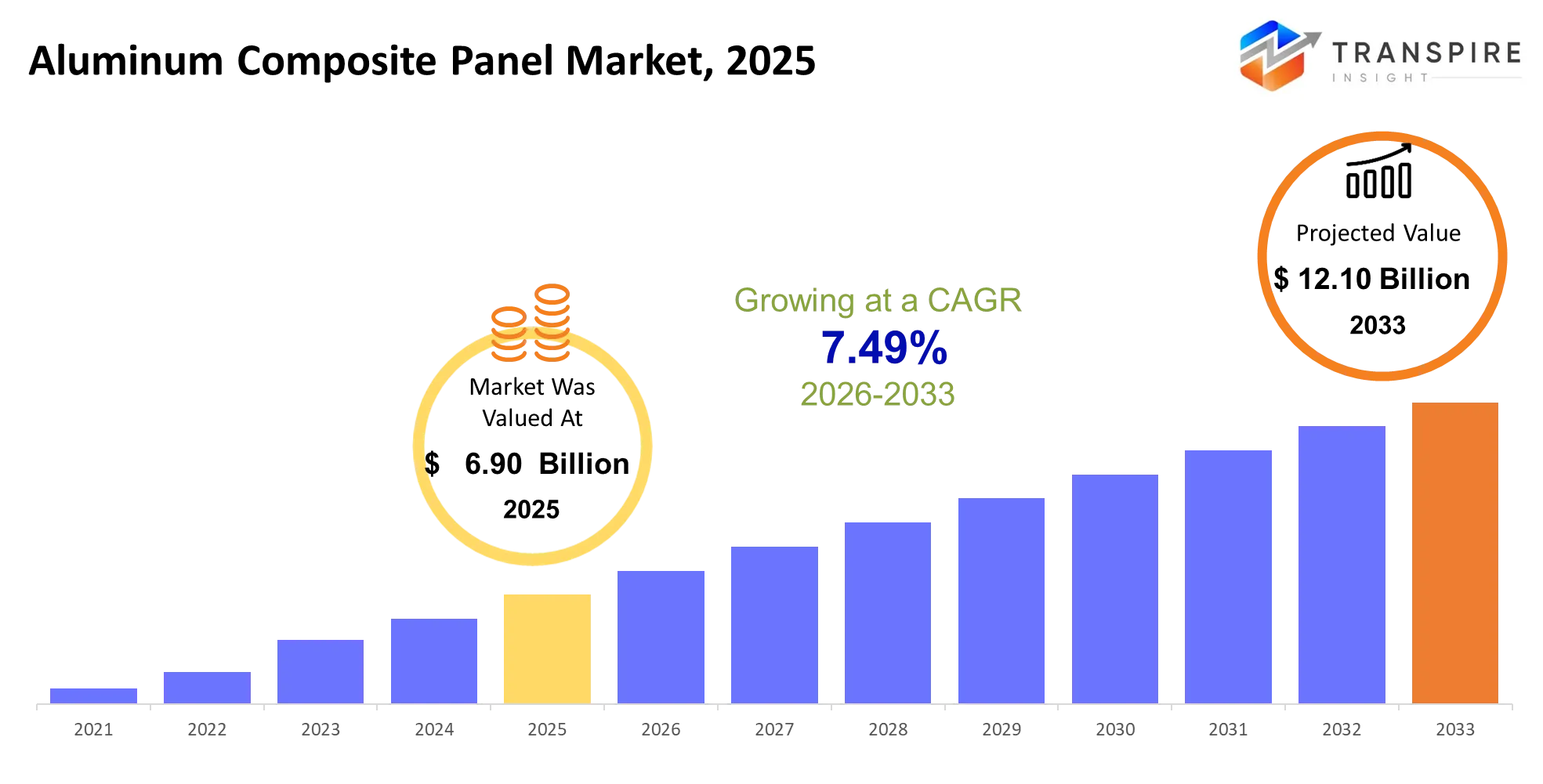
As per Transpire Insight Analysis, the Aluminum Composite Panel Market size is estimated at USD 6.90 billion in 2025 and is anticipated to reach USD 12.10 billion by 2033, growing at a CAGR of 7.49% from 2026 to 2033.
The aluminum composite panel market is changing requirements in how buildings look on the outside, how spaces inside are designed, how signs are made and other uses where light materials are needed for architecture. In the next three to five years, people who buy these panels have paid more attention to how well they resist fire how long they last how easy they are to shape, and how good they are for the environment. A big change has been moving toward panels that do not catch fire easily or are not able to burn, especially as rules for building safety have gotten stricter. At the time, taking care of the environment has become something people think about when they buy these panels, not just something they like for looks. More building work fixing up the outside of buildings and needing materials is helping more people use aluminum composite panels because these panels are easier to work with and look good while also standing up well to wear and tear.
Aluminum Composite Panel Market Size & Forecast:
- Market Size 2025: USD 6.90 Billion
- Expected Market Value (2033): USD 12.10 Billion
- Forecast CAGR (2026–2033): 7.49%
- Leading Region in 2025: Asia Pacific
- Fastest Growing Region: Middle East & Africa
- Key Company Profiles: 3A Composites, Arconic, Mitsubishi Chemical, Alcoa, Fairfield Metal, Shanghai Yaret, Jyi Shyang, Alubond USA, Alstrong Enterprises, Shanghai Huayuan, Seven Group, Goodsense, Alpolic, Etalbond, Guangzhou Xinghe
Key Market Insights:
The market will move towards high-performance panels, while construction continues to be the largest source of demand. Development efforts for products will emphasise fire resistance, recyclability, design flexibility, and ease of installation.
- The Building & Construction segment holds 54.40%, which validates the use of construction as the major application area.
- The companies are increasingly developing their solutions for the façade and architecture as they look for light cladding materials.
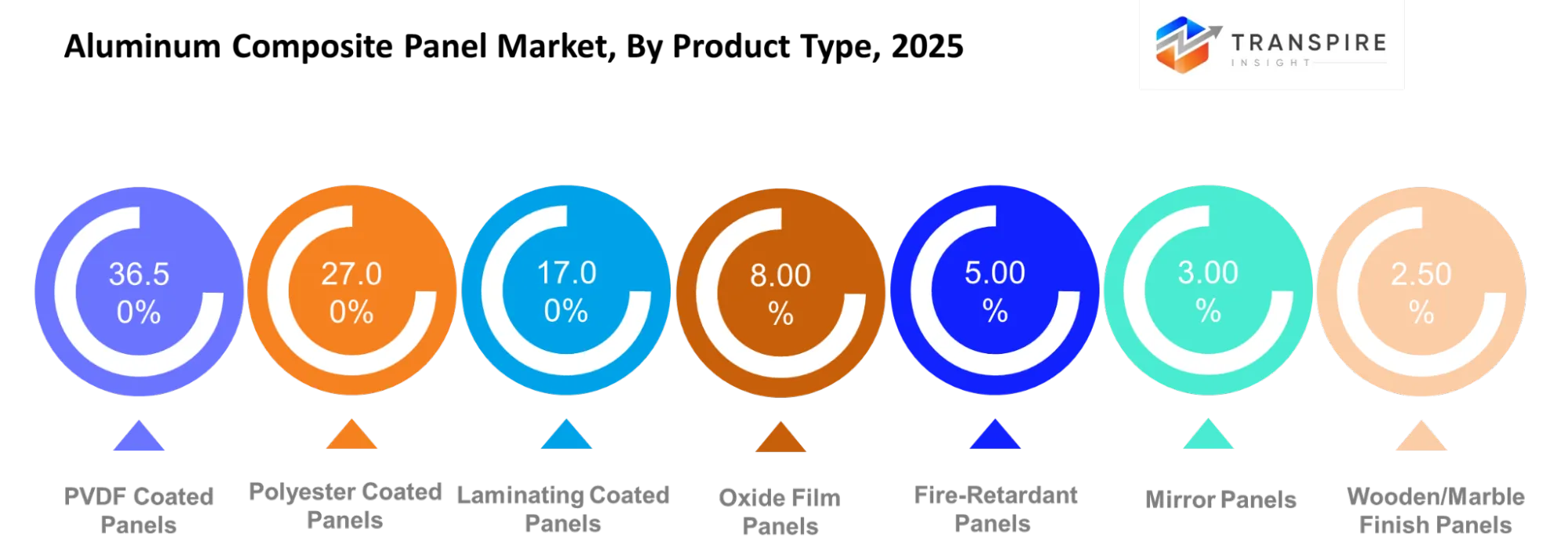
- The PVDF Coated Panels hold 36.50%, accounting for the leading category of products within the market.
- Their popularity as a material for the exterior façade remains one of the drivers behind their demand.
- The Polyester Coated Panels make up 27.00% of the market, driven by the fact that they are suitable for projects where appearance, coating properties, and price play an important role in choosing a material.
- The Laminating Coated Panels make up 17.00% of the market, driven by the increasing focus on customising the surfaces.
What are the Key Drivers, Restraints, and Opportunities in the Aluminum Composite Panel Market?
Drivers
The driving growth includes increased utilisation of aluminum composite panels in construction applications. The trend towards light-weight façades and fire-retardant panels will drive the need for the product. There is an increased focus on fire safety issues, and hence fire-resistant panels have become more popular.
Restraints
The increased price of the fire-retardant and specialised aluminium composite panels is still one of the main drawbacks. The usage of advanced cores, testing, and installation may lead to the rise in costs of the project. This is an issue that exists due to the necessity to maintain competitive pricing.
Opportunities
Development of the market can be realised through sustainable products, recycled aluminum, and advanced panel technology. Development of panels made from recycled materials gives producers a chance to fulfil sustainability criteria without compromising the performance of the panels. Growth in developing markets in construction, especially those in Asia Pacific and the Middle East & Africa, is also another way through which producers may benefit.
What Has the Impact of Artificial Intelligence Been on the Aluminum Composite Panel Market?
Artificial Intelligence is revolutionising the aluminum composite panel business via production monitoring, quality control, demand planning, and design optimisation. Computer vision can assist in detecting various defects and issues such as surface problems, uneven coatings, scratches, size differences, and other problems during the manufacturing process. AI-powered forecasting is able to incorporate the order history, project schedules, inventory levels, and local demand to better plan production and avoid excessive inventory. What concerns design, digital visualisation technologies can be used to examine the colours, textures, shapes, and placement of panels before production starts. Businesses also introduce digital product selection and specification services to facilitate the selection of proper materials. 3A Composites offers digital tools and resources for designing façades and selecting proper materials. Several factors limit the use of AI, such as the cost of implementation, integration with current manufacturing systems, the quality of production data, and human involvement. Consequently, AI is going to assist engineers and operators rather than replacing them.
Instance
In July 2025, Envitect introduced artificial intelligence-based design programs coupled with CNC machining for ACP applications, resulting in customizable façade patterns, better accuracy in production, and minimised wastage of materialshttps://envitect.com/will-ai-cnc-machines-change-how-india-designs-with-acp-sheets/
Key Market Trends:
The industry is moving from traditional material selection to performance- and sustainability-based purchasing practices. Fire resistance, recycled material, customisation, and installation time are increasingly becoming key considerations in panel specifications.
- Façade fire performance has become significant as more building codes and project specifications emphasise façade safety and non-combustible systems.
- Recyclable manufacturing of panels has become common practice with the emergence of new products made of recycled aluminium instead of standard primary aluminium.
- The use of lightweight systems is still important, especially when it can help simplify transportation, handling, production, and installation processes.
- Fire-resistant mineral cores are in high demand in regions that require façade systems with superior fire performance.
- Digital specification tools have become more useful for comparing finishes, applications, dimensions, and technical parameters before placing an order.
- Circular products have become the focus of the industry that shifts from virgin material to recycling solutions.
Aluminum Composite Panel Market Segmentation
By product type
PVDF Coated Panels have the largest market share, accounting for 36.50% of the total. This is attributed to high demand for exterior coatings that are both durable and provide a consistent appearance. Polyester Coated Panels come second, making up 27.00% of the total; they offer an affordable alternative for the balancing act between coating quality and appearance. Laminating Coated Panels make up 17.00%, while Oxide Film Panels make up 8.00%. Fire-Retardant Panels make up 5.00%, which is projected to be the fastest-growing market with a 5.20% CAGR due to heightened fire safety consciousness. Mirror Panels make up 3.00%, while Wooden/ Marble Finish Panels make up 2.50%.
By core type
The market is classified into Polyethene, Fire-Retardant Mineral Core, Honeycomb Core, Corrugated Core, Polyurethane Core, Thermoplastic Core, and Other Polymer Cores. Polyethene cores find applications in situations that require lightweight and economical production. But fire-retardant mineral cores are becoming more important due to the increasing focus on fire resistance in construction projects. Honeycomb and corrugated cores cater to projects where stiffness with certain weight is required, and polyurethane and thermoplastic cores cater to special purposes.
By application
the aluminum composite panels are used in Building Cladding, Curtain Walls, Roofing, Interior Decoration, Advertising & Signage, Automotive, Transportation, and Industrial Applications. The building applications form the primary demand segment with a 54.40% share in the provided segmentation. Curtain walls and cladding make use of the panels' flat nature, formability, and low weight. Interior decoration and advertising expand the scope of the market beyond the traditional use of the panels in facades.
By construction type
the applications include Exterior Façades, Interior Walls, Partitions, Ceilings, Columns, Canopies, Balconies, and Signboards. Exterior façades continue to be one of the most significant applications, as panels have an opportunity to offer both aesthetic quality and durability, as well as an easy installation process. Interior walls, partitions, and ceilings create additional need for panels. The applications like canopies, balconies, columns, and signboards present smaller but more diverse range of applications, especially when designers need uniform finish of various architectural constructions.
By thickness
the products are classified as <3mm, 3-4mm, 4-6mm, 6-8mm, 8-10mm, >10mm, and Custom Thickness. The choice of the panels' thickness is based on structural needs, method of installation, place of application, and project specifications. Having standard ranges of thicknesses simplifies manufacturing as well as sourcing, while custom thickness is flexible. Having multiple thicknesses helps in choosing panels based on their weight and rigidity.
By end-user
the market is categorised into Residential, Commercial, Industrial, Transportation, Retail, Hospitality, Government, and Institutional. Buildings & Construction is the leading segment, accounting for 54.40% of the total market share, as there is extensive usage of these finishing materials in commercial, residential, institutional, and other construction applications. Commercial buildings and retail stores will have a wide range of finishes, while hotels will use decorative finishes to create unique designs.
What are the Key Use Cases Driving the Aluminum Composite Panel Market?
Use case for building cladding panels. Application areas are Building & Construction. Climbing walls are well-suited for façades since they combine lightweight, smooth surfaces, durability, and flexibility in design. New applications such as curtain walls, roofs, internal decoration, balconies, canopies, partition walls, and sign boards have been added to the applications list. Architectural themes with unique finishes can be created using residential, commercial, retail, and hospitality applications. Potential new applications involve fire-resistant façades, sustainable panels made of recycled aluminium, and architectural finishes.
|
Report Metrics |
Details |
|
Market size value in 2025 |
USD 6.90 Billion |
|
Market size value in 2026 |
USD 7.30 Billion |
|
Revenue forecast in 2033 |
USD 12.10 Billion |
|
Growth rate |
CAGR of 7.49% from 2026 to 2033 |
|
Base year |
2025 |
|
Historical data |
2021 - 2024 |
|
Forecast period |
2026 - 2033 |
|
Report coverage |
Revenue forecast, competitive landscape, growth factors, and trends |
|
Regional scope |
United States; Canada; Mexico; United Kingdom; Germany; France; Italy; Spain; Denmark; Sweden; Norway; China; Japan; India; Australia; South Korea; Thailand; Brazil; Argentina; South Africa; Saudi Arabia; United Arab Emirates |
|
Key company profiled |
3A Composites, Arconic, Mitsubishi Chemical, Alcoa, Fairfield Metal, Shanghai Yaret, Jyi Shyang, Alubond USA, Alstrong Enterprises, Shanghai Huayuan, Seven Group, Goodsense, Alpolic, Etalbond, Guangzhou Xinghe |
|
Customization scope |
Free report customization (country, regional & segment scope). Avail customized purchase options to meet your exact research needs. |
|
Report Segmentation |
Product Type (PVDF Coated Panels, Polyester Coated Panels, Laminating Coated Panels, Oxide Film Panels, Fire-Retardant Panels, Mirror Panels, Wooden Finish Panels, Marble Finish Panels); Core Type (Polyethylene, Fire-Retardant Mineral Core, Honeycomb Core, Corrugated Core, Polyurethane Core, Thermoplastic Core, Other Polymer Cores); Application (Building Cladding, Curtain Walls, Roofing, Interior Decoration, Advertising & Signage, Automotive, Transportation, Industrial Applications); Construction Type (Exterior Facades, Interior Walls, Partitions, Ceilings, Columns, Canopies, Balconies, Signboards); Thickness (<3 mm, 3–4 mm, 4–6 mm, 6–8 mm, 8–10 mm, >10 mm, Custom Thickness); End User (Residential, Commercial, Industrial, Transportation, Retail, Hospitality, Government, Institutional) |
Which Regions are Driving the Aluminum Composite Panel MarketGrowth?
North America
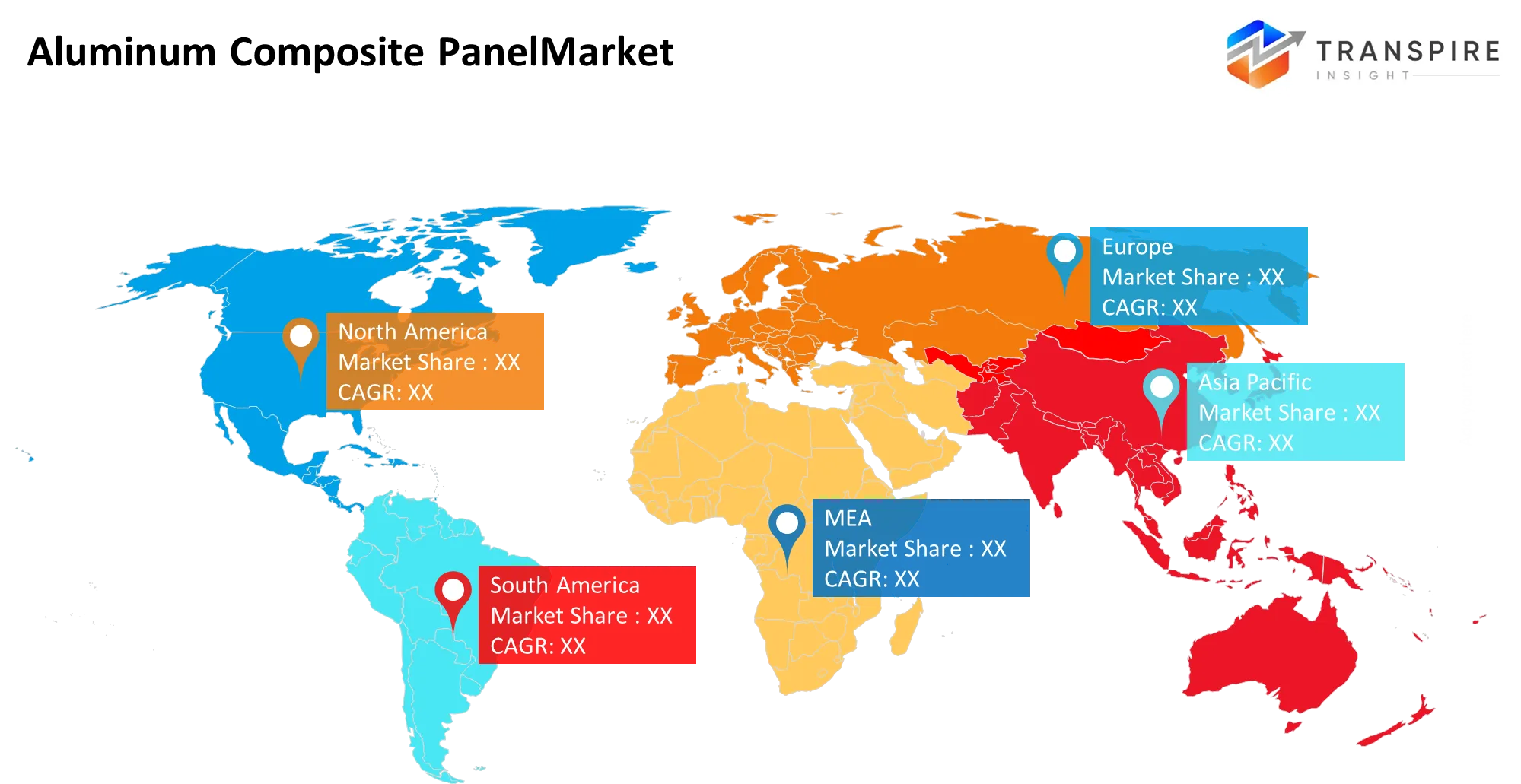
North America holds a 20.00% share of the worldwide aluminum composite panel market. This region has a developed ecosystem for architectural products, renovation activities, and the requirement for durable façade materials. Firms like Arconic Architectural Products supply composite materials along with pre-painted aluminium and bonded sheet systems for architectural applications.
In July 2026, Arconic released its 2025 Sustainability Report, which emphasised more attention to circularity, recovered materials, and sustainable aluminum production. Arconic also supplies architectural façade products such as Reynobond composite material in North America.https://www.arconic.com/about-us/-/asset_publisher/qkwp/content/arconic-publishes-2025-sustainability-report
Europe
Europe holds a 25.00% share in the market and in fire performance, sustainability and architectural designs. Stability in the region can be attributed to the presence of well-known façade companies and technical standards for the choice of materials. Recycled content materials like ALUCOBOND® circular represent the circular construction trend in Europe
In January 2025, 3A Composites introduced ALUCOBOND circular, which is an aluminium composite panel comprising 89% recycled aluminium. According to the manufacturer, ALUCOBOND circular decreases CO₂ emissions in the product's cover sheets and facilitates a closed-loop system by recycling of production waste to make panels.https://www.alucobond.com/en/news-dates/news/news-details/alucobond-r-circular-closing-the-loop/
Asia Pacific
Asia Pacific is leading with 41.10% because of the construction work that goes on in the area, along with urbanisation, infrastructure investments, and commercial buildings. There is a big construction base in this region, which opens up prospects for various uses, such as facades, roofing, interiors, and signage purposes.
In January 2025, Viva Composite Panel released SOLID X, which the company claims is India’s first pre-coated and ready-to-install solid aluminium panel at BAU Expo in Germany.https://vivaacp.com/newsmedia
Who are the Key Players in the Aluminum Composite Panel Marketand how do they compete?
Competition in the aluminum composite panel industry depends on performance, fire rating, surface finish, sustainability, technical support, and production capabilities. Apart from competing using panel pricing, firms compete using specialised solutions such as those related to architectural facades, renovations, interiors, and heavy-duty construction.3A Composites takes an innovative and sustainable approach through the ALUCOBOND brand. The differentiation of this firm depends on the availability of panels that are fire-rated and non-combustible, a wide range of finishes and panels that contain recycled content. This firm's ALUCOBOND circular brand contains recycled aluminium content, providing a strong position in circular construction. Mitsubishi Chemical's ALPOLIC brand differentiates through the wide range of metal composite materials and architectural designs. The participation of this firm in Milan Design is indicative of the approach that links material technology with architectural and design projects. Arconic Architectural Products differentiates through composite panels, pre-painted aluminium, bonded sheets, wide ranges of finishes, and specifications of aluminium in North America and ly. This strategy increasingly involves sustainability and circular approaches in its aluminium portfolio.
Aluminum Composite Panel Market companies
- 3A Composites
- Arconic
- Mitsubishi Chemical
- Alcoa
- Fairfield Metal
- Shanghai Yare
- Jyi Shyang
- Alubond USA
- Alstrong Enterprises
- Shanghai Huayuan
- Seven Group
- Goodsense
- Alpolic
- Etalbond
- Guangzhou Xinghe
Recent Development News
In June 2025,3A Composites extended the positioning of ALUCOBOND® for balcony uses, stressing lightweight construction, scratch resistance, availability in many colours, and the ability to install the product. This improvement increases the application fields of the product apart from traditional façade uses.https://www.alucobond.com/en/news-dates/news/news-details/alucobond-r-for-stylish-balconies/
In July 2026, Arconic released its Sustainability Report with information about the circular economy throughout its products, operations, and collaborations. The firm announced the re-integration of over 58,000 tons of reclaimed materials provided by customers, suggesting that recycled material traceability has become an important issue for its aluminium business.https://www.arconic.com/about-us/-/asset_publisher/qkwp/content/arconic-publishes-2025-sustainability-report
What Strategic Insights Define the Future of the Aluminum Composite Panel Market?
The future of the aluminum composite panel industry will revolve around a blend of fire-resistant performance, recycling capabilities, design versatility, and installation ease over price and traditional finishing options. The most promising opportunities will arise in areas where these qualities can be combined by companies without generating substantial additional costs or obstacles. A hidden threat facing the industry is increased complexity in the area of façade compliance: Panel performance must be evaluated not in isolation but in connection with insulation materials, substructures, fastener systems, and complete wall assemblies. Testing and certification become even more important, as does technical assistance. Sustainable products represent an upcoming trend, especially in connection with recycled aluminum as a value-added element in product lines. The launch of ALUCOBOND circular shows how recycled materials can become part of an existing panel product line. From a strategic perspective, companies should focus on producing fire-resistant cores, sustainable products, digital specification tools, regional technical assistance, and keeping production costs competitive.
Product Type
- PVDF Coated Panels
- Polyester Coated Panels
- Laminating Coated Panels
- Oxide Film Panels
- Fire-Retardant Panels
- Mirror Panels
- Wooden Finish Panels
- Marble Finish Panels
Core Type
- Polyethylene
- Fire-Retardant Mineral Core
- Honeycomb Core
- Corrugated Core
- Polyurethane Core
- Thermoplastic Core
- Other Polymer Cores
Application
- Building Cladding
- Curtain Walls
- Roofing
- Interior Decoration
- Advertising & Signage
- Automotive
- Transportation
- Industrial Applications
Construction Type
- Exterior Facades
- Interior Walls
- Partitions
- Ceilings
- Columns
- Canopies
- Balconies
- Signboards
Thickness
- <3 mm
- 3–4 mm
- 4–6 mm
- 6–8 mm
- 8–10 mm
- 10 mm
- Custom Thickness
End User
- Residential
- Commercial
- Industrial
- Transportation
- Retail
- Hospitality
- Government
- Institutional
By Regional Analysis
North America
- US
- Canada
- Mexico
Europe
- Germany
- UK
- France
- Italy
- Spain
- Russia
- Rest of Europe
Asia Pacific
- China
- Japan
- India
- South Korea
- Australia
- Rest of Asia Pacific
South America
- Brazil
- Argentina
- Rest of South America
Middle East & Africa
- UAE
- Saudi Arabia
- Qatar
- South Africa
- Rest of the Middle East & Africa
Frequently Asked Questions
Find quick answers to common questions.
The aluminum composite panel market size was valued at USD 6.90 billion in 2025 and is poised to reach USD 12.10 billion by 2033, expanding at a 7.49% CAGR.
Key segments for the aluminum composite panel market are Product Type (PVDF Coated Panels, Polyester Coated Panels, Laminating Coated Panels, Oxide Film Panels, Fire-Retardant Panels, Mirror Panels, Wooden Finish Panels, Marble Finish Panels); Core Type (Polyethylene, Fire-Retardant Mineral Core, Honeycomb Core, Corrugated Core, Polyurethane Core, Thermoplastic Core, Other Polymer Cores); Application (Building Cladding, Curtain Walls, Roofing, Interior Decoration, Advertising & Signage, Automotive, Transportation, Industrial Applications); Construction Type (Exterior Facades, Interior Walls, Partitions, Ceilings, Columns, Canopies, Balconies, Signboards); Thickness (<3 mm, 3–4 mm, 4–6 mm, 6–8 mm, 8–10 mm, >10 mm, Custom Thickness); End User (Residential, Commercial, Industrial, Transportation, Retail, Hospitality, Government, Institutional)
Growth is primarily driven by increased construction work, increased infrastructural development, the need for light and durable building materials, and increased use of energy-efficient and aesthetically pleasing external products.
The market is led by major manufacturers including 3A Composites, Arconic, Mitsubishi Chemical, Alcoa, Fairfield Metal, Shanghai Yaret, Jyi Shyang, Alubond USA, Alstrong Enterprises, Shanghai Huayuan, Seven Group, Goodsense, Alpolic, Etalbond, Guangzhou Xinghe
The Asia-Pacific accounts for 41.10% of the worldwide market of aluminium composite panels, which is attributed to the fast pace of construction, urbanisation, infrastructure developments, and increasing demand for light yet sturdy building material.
Commercial opportunities in the aluminium composite panels market include the increasing demand for sustainable building materials, the increasing application of these panels in modern construction and infrastructure projects, increasing demand from renovation works, and fire-resistant and energy-saving panels.
- 3A Composites
- Arconic
- Mitsubishi Chemical
- Alcoa
- Fairfield Metal
- Shanghai Yare
- Jyi Shyang
- Alubond USA
- Alstrong Enterprises
- Shanghai Huayuan
- Seven Group
- Goodsense
- Alpolic
- Etalbond
- Guangzhou Xinghe
About the Authors

Pankaj Ghogare Patil
I am Pankaj Ghogare Patil, a Senior Research Analyst at Transpire Insight, specializing in the Pharmaceutical, Chemicals & Materials, Healthcare IT, and Biotechnology industry. My expertise lies in conducting comprehensive market research, analyzing industry trends, evaluating competitive landscapes, and translating complex data into actionable insights. At Transpire Insight, I closely follow emerging technologies, regulatory developments, and market innovations to create accurate, well-researched, and informative content that helps businesses and professionals make informed decisions. I am committed to producing credible, evidence-based articles that reflect industry best practices while making technical topics accessible and valuable for a broad audience.

Chakradhar Khansole
Chakradhar serves as the Research Director at Transpire Insight, bringing over 8 years of experience in technology, innovation, and strategic market intelligence. He specializes in transforming complex market data into actionable business insights that enable organizations to make informed, growth-oriented decisions. Recognized for his strategic vision and analytical expertise, Chakradhar leads high-impact research initiatives, delivering comprehensive market assessments, competitive intelligence, and forward-looking industry analysis.
Recently Published Reports
-
May 2026
Healthcare Polymer Packaging Market
Healthcare Polymer Packaging Market Size, Share & Analysis Report By Packaging Type (Syringes, IV Bottles and Pouches, Clamshells, Blisters, Bottles & Jars, Containers, Tubes, IV Parental Packaging, Others), By Type (Regulated, Non-regulated), By Polymer Type (LDPE (Low-Density Polyethylene), HDPE (High-Density Polyethylene), Homo-polymer (Homo), Random Copolymer (Random), Block Copolymer (Block), PET, Polystyrene, Polyvinyl Chloride, Polyamide/EVOH, Others), and Geography (North America, Europe, Asia-Pacific, Middle East and Africa, South and Central America), 2021 - 2031
-
Apr 2026
Hydrophilic Tape (Waterstop) Market
Hydrophilic Tape (Waterstop) Market Size, Share & Analysis Report By Type (Bentonite-Based Hydrophilic Tape, Rubber-Based Hydrophilic Tape), By Application (Residential Buildings, Commercial Buildings, Infrastructure Projects), and Geography (North America, Europe, Asia-Pacific, Middle East and Africa, South and Central America), 2021 - 2031
-
Apr 2026
Metalens Market
Metalens Market Size, Share & Analysis Report By Type (Visible Light Metalens, and Infrared Metalens), By Application (Consumer Electronics, Automotive Electronics, Industrial, Medical, and Others), and Geography (North America, Europe, Asia-Pacific, Middle East and Africa, South and Central America), 2021 - 2031
-
Apr 2026
PBT Resin Market
PBT Resin Market Size, Share & Analysis Report By Type (Reinforced PBT Resin, Unreinforced PBT Resin), By Processing Method (Injection Molding, Extrusion, Blow Molding, Others), By End-User (Automotive, Electrical & Electronics, Consumer Appliances, Industrial Machinery, Medical Devices, Packaging, Others), and Geography (North America, Europe, Asia-Pacific, Middle East and Africa, South and Central America), 2021 - 2031