Market Summary
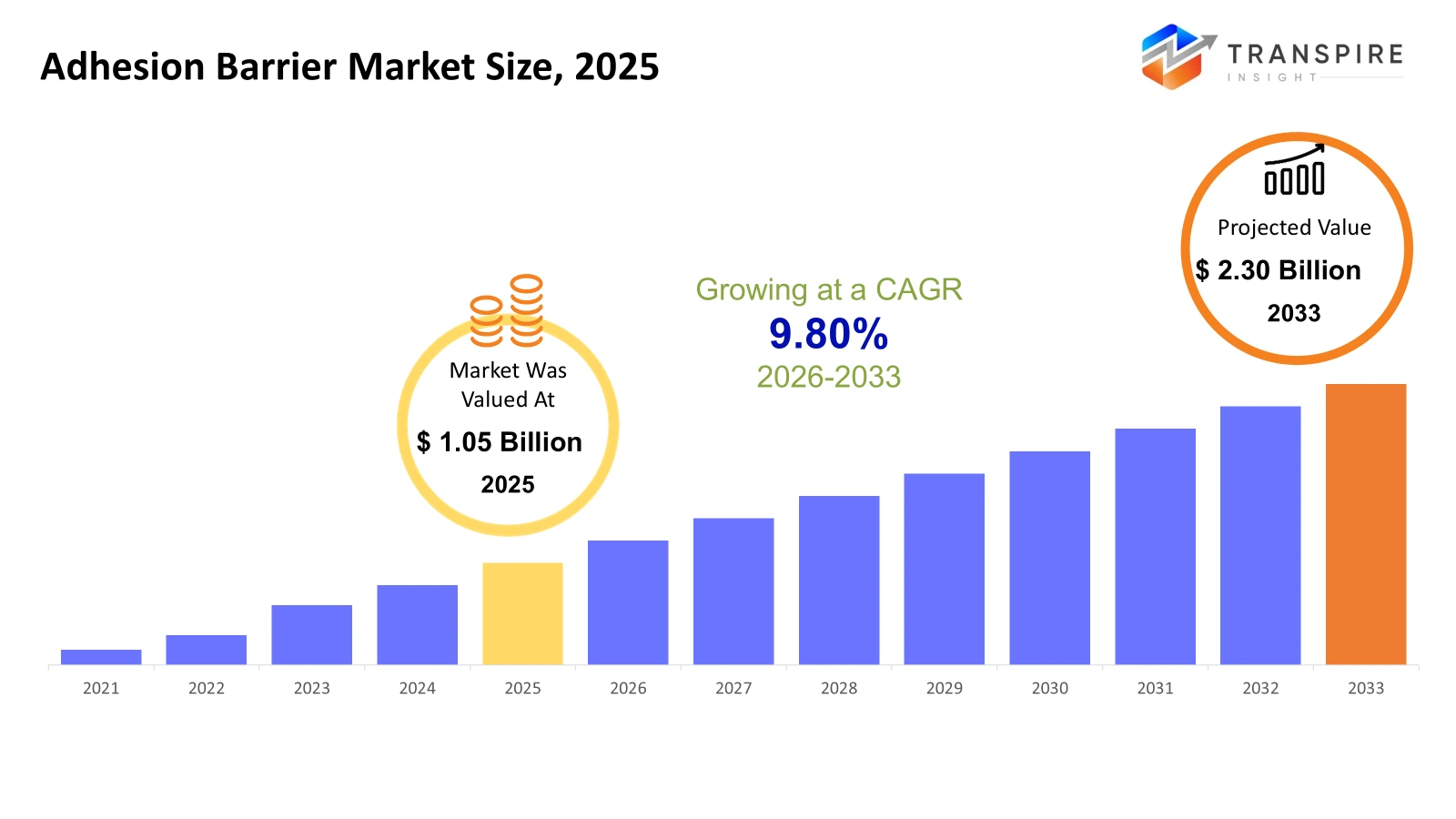
The global Adhesion Barrier market size was valued at USD 1.05 billion in 2025 and is projected to reach USD 2.30 billion by 2033, growing at a CAGR of 9.80% from 2026 to 2033. The adhesion barrier market is growing globally because more surgeries are being done worldwide in areas like gynecology, abdomen and orthopedic surgeries. People are becoming more aware of problems that can happen after surgery like adhesions and the cost to healthcare. They are choosing to use adhesion barriers to prevent these issues. New and better materials, for adhesion barriers are being developed, such as ones that can dissolve in the body and synthetic ones. This is helping the adhesion barrier market grow. Hospitals and healthcare are also improving in developing countries. More people are choosing to have invasive surgeries, which is also helping the adhesion barrier market grow.
Market Size & Forecast
- 2025 Market Size: USD 1.05 Billion
- 2033 Projected Market Size: USD 2.30 Billion
- CAGR (2026-2033): 9.80%
- North America: Largest Market in 2026
- Asia Pacific: Fastest Growing Market
To learn more about this report,  Download Free Sample Report
Key Market Trends Analysis
- North America is growing steadily because it has a lot of surgeries, good insurance systems and people are using procedures to prevent adhesions a lot. The use of technology in surgeries that're less invasive and good approvals from regulators help keep the demand for advanced barriers that dissolve in the body stable.
- The United States is the part of the market, in this region because it has a lot of gynecologic and abdominal surgeries people are more aware of the legal issues that can happen after surgery and there are many big manufacturers that make new and better synthetic barriers.
- The Asia Pacific region is growing fast. This is because healthcare is getting better more surgeries are being done insurance is covering more and surgeons are learning about problems with adhesions and how to save money in the run.
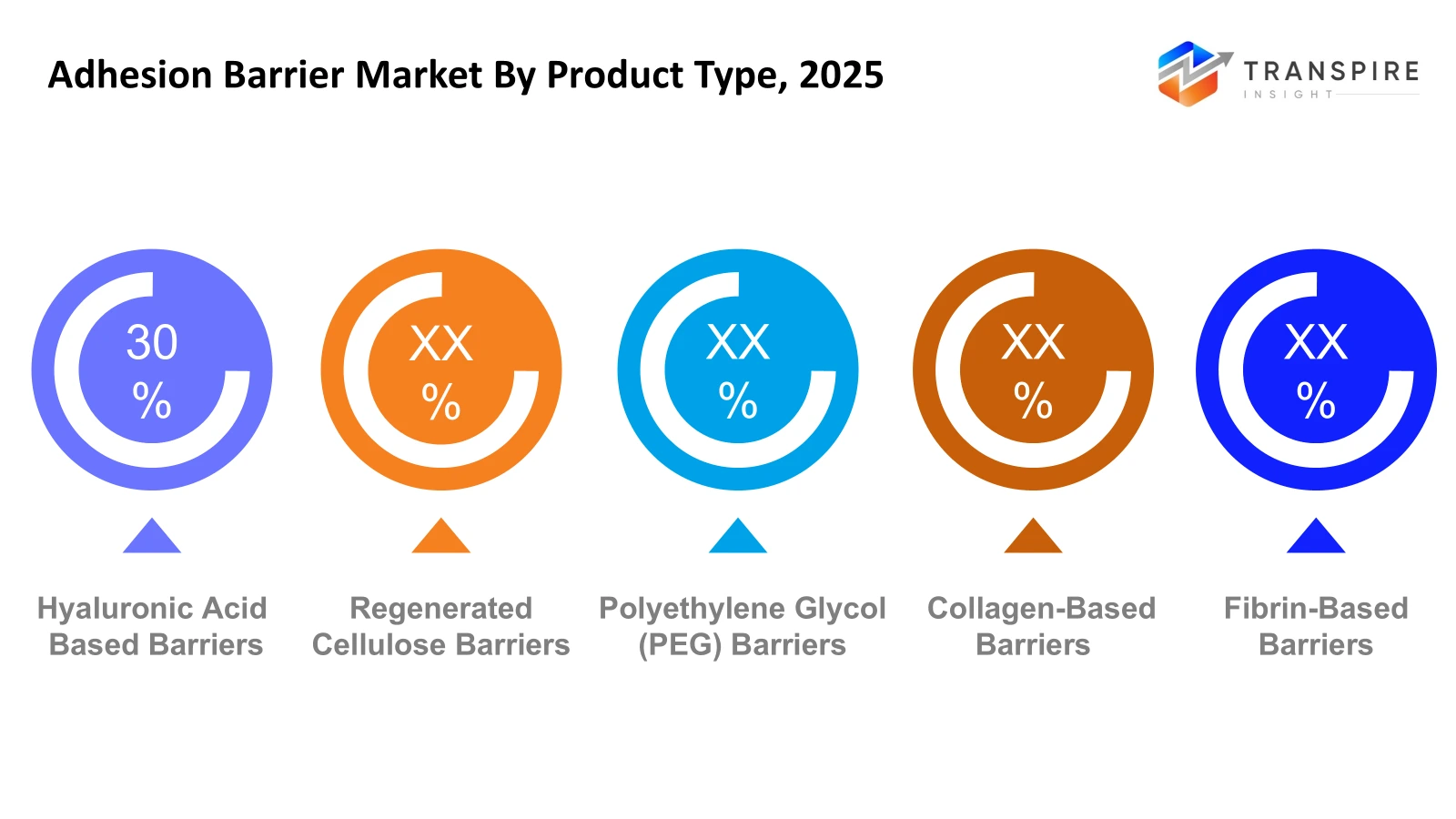
- Hyaluronic acid-based barriers are the most popular type of product. They are good because they work well with the body help patients get better and surgeons, like using them for all kinds of surgeries whether they are small or big.
- Film and mesh products are popular because they are easy to use in surgeries. They are also good at helping tissues heal properly after trauma.
- Gynecologic surgery uses these products a lot. This is because many women get adhesions in their pelvis and abdomen. They also have repeat surgeries.
- Hospitals use these products the most. This is because complex surgeries to prevent adhesions happen in hospitals, with good equipment and care.
The Global Adhesion Barrier Market is about medical devices that help prevent something called post-operative adhesions. These adhesions are like scars that form inside our body after we have surgery. They can connect our organs and tissues in a way that's not normal. Adhesion barriers are things that get used during surgery to keep tissues apart while our body is healing. The Global Adhesion Barrier Market has lots of types of these barriers. They can be made from materials or from natural things. The Global Adhesion Barrier Market includes these barriers in the form of films, gels and liquids. Doctors use these barriers when they are doing surgeries on women or on peoples stomachs or when they are doing surgeries on bones, hearts, brains or when they are doing surgeries on the parts of our body that help us go to the bathroom. The Global Adhesion Barrier Market is very important, for all these types of surgeries.
The market for tools is really growing because more and more people around the world are having surgery. This is especially true for surgeries that're not very invasive and for complicated surgeries on the stomach area, where there is a big risk of scar tissue forming. Doctors and nurses are becoming more aware of the things that can happen when scar tissue forms, like chronic pain not being able to have babies and blockages in the bowels. So they are starting to use things that can prevent this from happening.
The fact that special kinds of plastic that can dissolve in the body are getting better and working well in hospitals is making surgeons more confident in using them. If we look at parts of the world North America is ahead because they do a lot of surgeries and have a good system, for paying for them. The Asia Pacific area is growing fast because they are building more hospitals and doing more surgeries. There are a lot of companies making innovative surgical tools, which is making the market very competitive.
Adhesion Barrier Market Segmentation
By Product Type
- Hyaluronic Acid Based Barriers
Hyaluronic acid-derived barriers currently dominate the product type market because of their excellent biocompatibility, predictable bioresorbability, and well-established clinical efficacy in abdominal and gynecologic surgery. Ease of use and lower inflammation rates are additional factors that contribute to greater surgeon preference in advanced healthcare facilities.
- Regenerated Cellulose Barriers
Regenerated cellulose barriers continue to be in steady demand because of their established clinical use, good mechanical separation properties, and cost-effectiveness over high-quality synthetic barriers. Their widespread use in open surgery is a major factor in their steady demand in hospital settings.
- Polyethylene Glycol (PEG) Barriers
PEG barriers are becoming popular because they can be made to fit needs they are flexible like a special kind of gel and they can be used in operations that do not require a lot of cutting. The fact that PEG barriers can work well with tissues that're not perfectly flat makes them very useful so we are starting to see them used more often in hospitals that have the latest technology. PEG barriers are really good, for surgeries that need to be simple.
- Collagen-Based Barriers
Collagen-based barriers have a strong positioning in the market as they are naturally derived and have good tissue compatibility. The rising demand for biologically derived materials in selective surgical procedures, especially those requiring lower exposure to synthetic materials, will support moderate but stable market growth.
- Fibrin-Based Barriers
Fibrin-based barriers have a niche market as they are versatile products for hemostasis and adhesion prevention. However, their relatively higher costs and lack of durability in complex surgical procedures will moderate their overall adoption in the broader surgical applications.
To learn more about this report, Download Free Sample Report
By Formulation
- Film/Mesh
Film and mesh formulations lead the way because of the ease of implantation in open surgeries and the ability to provide good structural strength during the healing of tissues. Their known rates of absorption and extensive clinical data further boost the confidence of surgeons in using them consistently.
- Gel
Gel formulations are getting really popular. This is especially true for surgeries that're minimally invasive and laparoscopic. The reason for this is that gel formulations are very good at covering surfaces that're not even. Gel formulations are also very versatile. This means they can be used in different ways. This versatility makes surgical procedures more efficient. It also means that gel formulations are in demand for advanced surgical settings. Gel formulations are supporting this growing demand because they are so useful, in these situations.
- Liquid
Liquid formulations are used for specialized surgical applications where uniform tissue coverage is necessary. Although relatively smaller in market share, their ability to reach difficult-to-access areas of the body supports incremental growth in complex surgical procedures.
By Application
- Gynecological Surgery
Surgery for women is the area where this is used with a lot of problems from scar tissue and a big focus, on saving fertility. People are becoming more aware of the problems that can happen after surgery. This is a big reason why doctors are starting to use things to prevent scar tissue in their normal routine.
- General & Abdominal Surgery
General and abdominal surgery is another major use area with a high volume of procedures worldwide and a high risk of adhesions. Preventive use is increasingly recognized as cost-effective in minimizing readmissions and managing complications.
- Orthopedic Surgery
People are having surgery more and more often. This is because lots of people need to have joints replaced or fixed. Doctors also want to make sure that people do not feel too stiff after surgery and that their tissues heal properly.. With orthopedic surgery the risk of bad scar tissue forming is not as high as it is with surgery on the belly. Orthopedic surgery is still an option, for many people who need it.
- Cardiovascular Surgery
Cardiovascular surgery adoption is selective in high-risk re-operations, where the presence of scar tissue poses complications. Adoption is steady, driven by the increasing number of cardiac procedures.
- Neurological Surgery
Neurological surgery is a kind of surgery. The main goal here is to prevent tissue from forming. This is really important to protect the nerves. Technological progress is helping a bit more. It is slowly making these surgeries more effective. The impact is still not huge. It is getting better over time. Neurological surgery needs this kind of progress. It helps doctors do a job.
- Urological Surgery
Urological surgery is a moderate-demand application that is influenced by pelvic and abdominal surgery wherein the risk of adhesion affects the outcome of recovery.
By End-User
- Hospitals
Hospitals lead the end-user market due to the concentration of complex and high-volume surgical procedures that demand adhesion prevention. The presence of advanced infrastructure, payment systems, and purchasing power enhances long-term demand in the end-user market.
- Ambulatory Surgical Centers (ASCs)
Ambulatory Surgical Centers are experiencing a gradual adoption rate driven by an increase in outpatient surgical procedures and cost-effective strategies. The relatively lower complexity of procedures hinders widespread use compared to the large hospital systems.
- Specialty Clinics
Specialty clinics represent a smaller market share, mainly in gynecological or urological procedures. The growth rate is moderate and driven by an increase in procedural specialization and patient demand for dedicated surgical care facilities.
Regional Insights
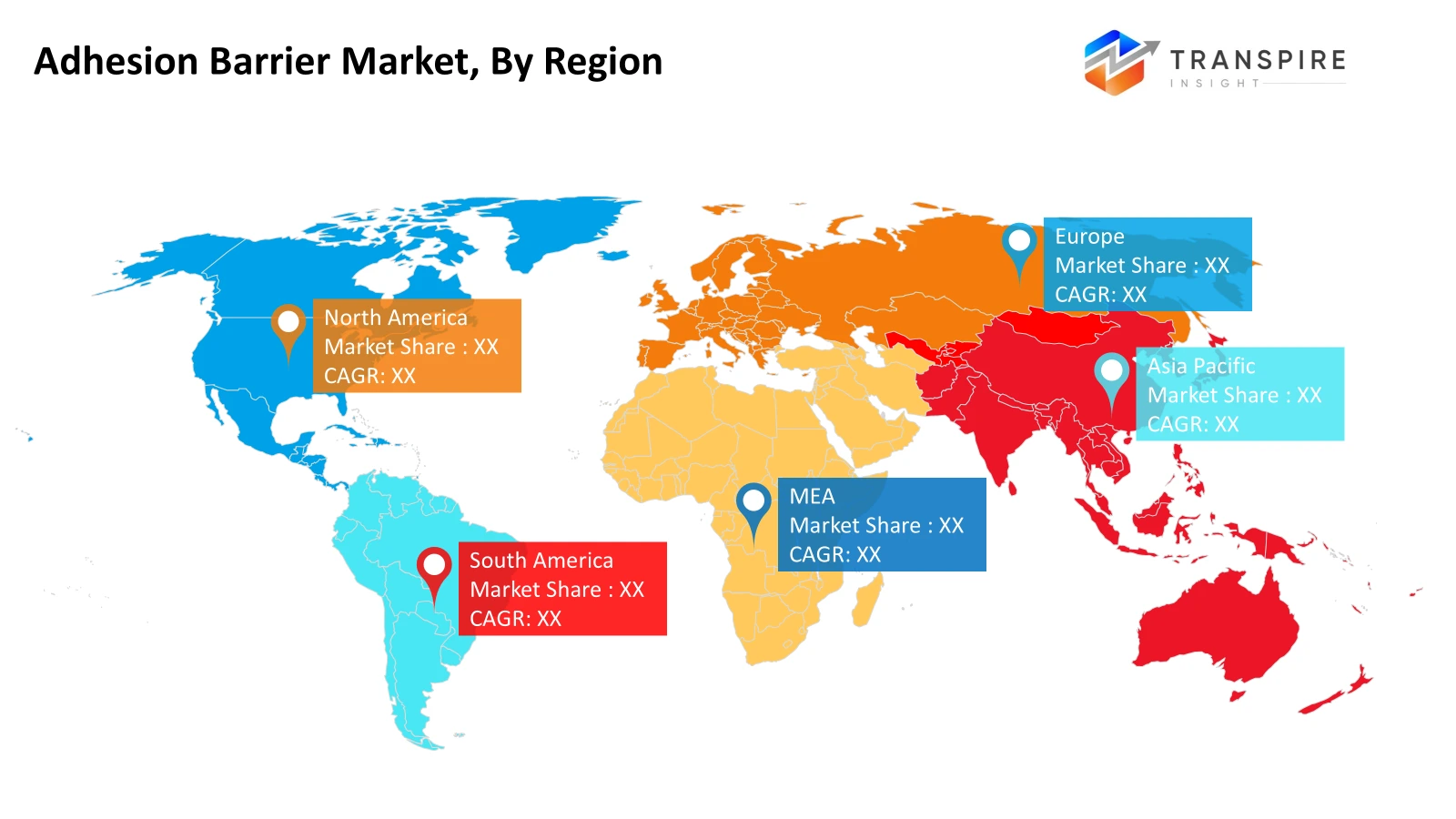
The North America market is still the market. It is mainly driven by countries, like the United States and Canada. These countries have a lot of surgeries, insurance and use advanced medical products.
The Mexican market is growing slowly. This is because hospitals are getting better and more procedures are being done.. The high cost of products is a problem.
The Europe market is a mature and steadily growing market, with Tier 1 countries such as Germany, the United Kingdom, and France leading the way due to their well-organized healthcare infrastructure and regulatory support. Spain and Italy are upper Tier 2 markets with stable surgical volumes, while the Rest of Europe market is a moderate growth market, driven by public healthcare expenditure patterns.
The Asia Pacific is the most rapidly growing market, with Tier 1 countries including Japan and Australia & New Zealand, where highly advanced surgical procedures drive the demand for high-end products. China, South Korea, and India are classified as Tier 2 fast-growing countries because of increased access to healthcare, and the Rest of Asia Pacific is an emerging market.
The South America market is driven by Tier 1 Brazil and Tier 2 Argentina, with the Rest of South America experiencing a slow adoption rate. The Middle East & Africa is a growing market, with Tier 1 Saudi Arabia and the United Arab Emirates, and South Africa and the Rest of Middle East & Africa as developing markets.
To learn more about this report, Download Free Sample Report
Recent Development News
- November 5, 2025, announcement detailing strong 22% Commercial Channel revenue growth driven by its regenerative solutions, including hyaluronic acid portfolio and progress toward PMA filing for key products
(Source:https://www.biospace.com/press-releases/anika-completes-divestiture-of-parcus-medical)
- May 1, 2025, Baxter International Inc. announced its official financial results for Q1 2025, showing a 5 % increase in sales from continuing operations to $2.63 billion, outperforming previous guidance. The press release highlights Baxter’s ongoing transformation strategy, focused execution and innovation across its medical products and therapies segments, which include advanced surgery solutions such as surgical hemostat, sealant and adhesion prevention products.
|
Report Metrics |
Details |
|
Market size value in 2025 |
USD 1.05 Billion |
|
Market size value in 2026 |
USD 1.20 Billion |
|
Revenue forecast in 2033 |
USD 2.30 Billion |
|
Growth rate |
CAGR of 9.80% from 2026 to 2033 |
|
Base year |
2025 |
|
Historical data |
2021 – 2024 |
|
Forecast period |
2026 – 2033 |
|
Report coverage |
Revenue forecast, competitive landscape, growth factors, and trends |
|
Regional scope |
North America; Europe; Asia Pacific; Latin America; Middle East & Africa |
|
Country scope |
United States; Canada; Mexico; United Kingdom; Germany; France; Italy; Spain; Denmark; Sweden; Norway; China; Japan; India; Australia; South Korea; Thailand; Brazil; Argentina; South Africa; Saudi Arabia; United Arab Emirates |
|
Key company profiled |
Baxter International, Inc., Johnson & Johnson, Medtronic plc, Integra LifeSciences Holdings Corporation, Becton, Dickinson and Company (BD), Anika Therapeutics, Inc., FzioMed, Inc., Getinge AB, Terumo Corporation, B. Braun SE, GUNZE LIMITED, CGBIO (CG Bio Inc.), Hangzhou Singclean Medical Products Co., Ltd., MAST Biosurgery AG, AlloSource. |
|
Customization scope |
Free report customization (country, regional & segment scope). Avail customized purchase options to meet your exact research needs. |
|
Report Segmentation |
By Product Type: Hyaluronic Acid Based Barriers, Regenerated Cellulose Barriers, Polyethylene Glycol (PEG) Barriers, Collagen-Based Barriers, Fibrin-Based Barriers; By Formulation: Film/Mesh, Gel, Liquid; By Application: Gynecological Surgery, General & Abdominal Surgery, Orthopedic Surgery, Cardiovascular Surgery, Neurological Surgery, Urological Surgery; By End-User: Hospitals, Ambulatory Surgical Centers (ASCs), Specialty Clinics |
Key Adhesion Barrier Company Insights
Johnson & Johnson is a prominent competitor in the adhesion barrier market, utilizing its broad global surgical franchise and existing relationships with hospitals and surgeons. The company is committed to developing innovative bioresorbable and synthetic barrier technologies, especially in gynecologic and abdominal surgery, with comprehensive clinical validation. R&D expenditures, regulatory knowledge, and strategic acquisitions improve product differentiation and market reach. Diversified global reach, along with organized distribution channels and educational programs for surgeons, improves adoption. Ongoing innovation in minimally invasive procedures places Johnson & Johnson on the forefront of competitive leadership and growth in established and emerging markets.
Key Adhesion Barrier Companies:
- Baxter International, Inc.
- Johnson & Johnson
- Medtronic plc
- Integra LifeSciences Holdings Corporation
- Becton, Dickinson and Company (BD)
- Anika Therapeutics, Inc.
- FzioMed, Inc.
- Getinge AB
- Terumo Corporation
- Braun SE
- GUNZE LIMITED
- CGBIO (CG Bio Inc.)
- Hangzhou Singclean Medical Products Co., Ltd.
- MAST Biosurgery AG
- AlloSource
Global Adhesion Barrier Market Report Segmentation
By Product Type
- Hyaluronic Acid Based Barriers
- Regenerated Cellulose Barriers
- Polyethylene Glycol (PEG) Barriers
- Collagen-Based Barriers
- Fibrin-Based Barriers
By Formulation
- Film / Mesh
- Gel
- Liquid
By Application
- Gynecological Surgery
- General & Abdominal Surgery
- Orthopedic Surgery
- Cardiovascular Surgery
- Neurological Surgery
- Urological Surgery
By End-User
- Hospitals
- Ambulatory Surgical Centers (ASCs)
- Specialty Clinics
Regional Outlook
- North America
- United States
- Canada
- Mexico
- Europe
- Germany
- United Kingdom
- France
- Spain
- Italy
- Rest of Europe
- Asia Pacific
- Japan
- China
- Australia & New Zealand
- South Korea
- India
- Rest of Asia Pacific
- South America
- Brazil
- Argentina
- Rest of South America
- Middle East & Africa
- Saudi Arabia
- United Arab Emirates
- South Africa
- Rest of the Middle East & Africa
Frequently Asked Questions
Find quick answers to common questions.
The approximate Adhesion Barrier Market size for the market will be USD 2.30 billion in 2033.
Key segments for the Adhesion Barrier Market are By Product Type: Hyaluronic Acid Based Barriers, Regenerated Cellulose Barriers, Polyethylene Glycol (PEG) Barriers, Collagen-Based Barriers, Fibrin-Based Barriers; By Formulation: Film/Mesh, Gel, Liquid; By Application: Gynecological Surgery, General & Abdominal Surgery, Orthopedic Surgery, Cardiovascular Surgery, Neurological Surgery, Urological Surgery; By End-User: Hospitals, Ambulatory Surgical Centers (ASCs), Specialty Clinics.
Major Adhesion Barrier Market players are Baxter International, Inc., Johnson & Johnson, Medtronic plc, Integra LifeSciences Holdings Corporation, Becton.
The North America region is leading the Adhesion Barrier Market.
The CAGR of the Adhesion Barrier Market is 9.80%.
- Baxter International, Inc.
- Johnson & Johnson
- Medtronic plc
- Integra LifeSciences Holdings Corporation
- Becton, Dickinson and Company (BD)
- Anika Therapeutics, Inc.
- FzioMed, Inc.
- Getinge AB
- Terumo Corporation
- Braun SE
- GUNZE LIMITED
- CGBIO (CG Bio Inc.)
- Hangzhou Singclean Medical Products Co., Ltd.
- MAST Biosurgery AG
- AlloSource
Recently Published Reports
-
Apr 2026
AI in Diabetic Retinopathy Market
AI in Diabetic Retinopathy Market Size, Share & Analysis Report By Type (Screening AI Systems, Diagnostic AI Systems, and Predictive AI Models), By Application Segment (Hospitals, Ophthalmology Clinics, Diagnostic Centers, and Research and Development), and Geography (North America, Europe, Asia-Pacific, Middle East and Africa, South and Central America), 2021 - 2031
-
Apr 2026
Psychometric Tests Market
Psychometric Tests Market Size, Share & Analysis Report By Type (Personality Tests, Ability/Aptitude Tests, Skill/Knowledge Tests, and Others), By Application (Talent Acquisition and Talent Management), and Geography (North America, Europe, Asia-Pacific, Middle East and Africa, South and Central America), 2021 – 2031
-
Apr 2026
Rare Biological Sample Collection Market
Rare Biological Sample Collection Market Size, Share & Analysis Report By Type (Isolation Kits & Reagent, Blood Collection Tubes, and Others), By Application (Oncology, Transcriptomics, Pharmacogenomics, and Others), and Geography (North America, Europe, Asia-Pacific, Middle East and Africa, South and Central America), 2021 – 2031
-
May 2026
Patient Lift Pendant Market
Patient Lift Pendant Market By Product Type (Wired Pendants, Wireless, Programmable), By Operation Type(Manual, Electric), By End-Users (Healthcare Professionals, Patients), By Application (Hospitals, Homecare, Rehabilitation Centers, Others), By Industry Analysis, Size, Share, Growth, Trends, and Forecasts 2021-2033
Our Clients
.jpg)